Water in the Basement After Rain? Here's Why and How to Stop It
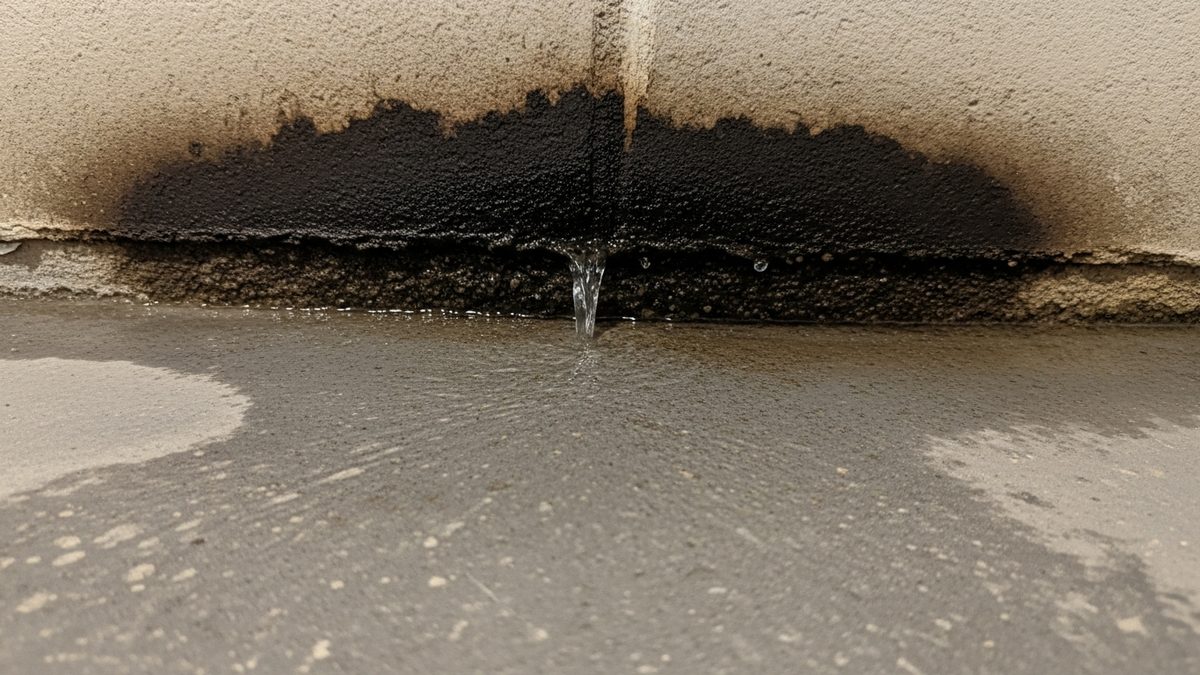
A basement that only gets wet after rain is telling you something specific: water is collecting against the foundation and finding a way in. This guide covers the most common causes, how to track down the entry point, what you can fix yourself, and when to bring in a pro.
If your basement is actively flooding right now, start with what to do when your basement is actively flooding, then return here to fix the root cause.
Why your basement floods after rain
Almost all basement water problems that show up after rain come down to one thing: water is collecting against your foundation and finding a way in. Here are the most common reasons that happens.
Clogged or short gutters and downspouts. When gutters are clogged or downspouts discharge right next to the house, roof runoff soaks into the soil against the foundation. This is the most common cause of wet basements — and the easiest to fix.
Ground sloping toward the house. Soil should drop at least 6 inches over the first 10 feet away from the house, per InterNACHI and the International Residential Code. Flat or reversed grade sends rainwater straight toward the foundation.
Hydrostatic pressure. Saturated soil pushes against foundation walls from every direction. FEMA's basement flood mitigation guidance notes that water-saturated soil can exert hundreds of pounds of force per square foot. That pressure drives water through hairline cracks and porous concrete that would otherwise hold fine.
Cracks in walls or the floor. Concrete develops cracks as a house settles. Water seeping up through the floor after rain points to uplift pressure from below — a sign the soil under the slab is fully saturated.
Window-well pooling. Debris-filled window wells fill with water during heavy rain and overflow against the window frame and surrounding masonry.
No drainage system or a failed sump pump. Older homes often have no interior drainage. In newer homes, a sump pump that fails during a storm has nowhere to send collected water. See our guide to a sump pump that isn't working if that fits your situation.
How to find where it's getting in
Before you spend money on a fix, spend some time figuring out where the water is actually entering.
Note the location. A single wet wall points to that side of the house — a downspout, low grading, or a crack nearby. Water across the whole floor suggests a drainage or hydrostatic pressure issue.
Watch during or right after rain. Go into the basement with a flashlight while rain is falling or within the first hour after it stops. Fresh seepage is much easier to trace than an old dried stain.
Inspect gutters and grading. Walk the perimeter and check where downspouts discharge. Look for any pooling against the house and assess the slope of the soil.
Look for cracks and efflorescence. Efflorescence is the white, chalky mineral deposit on concrete or block walls — a reliable sign that water has been moving through the wall repeatedly. Any crack near an efflorescence stain is worth a closer look.
For cracks in the foundation itself, see our guide on foundation cracks and when to worry before deciding on a repair approach.
DIY fixes that often work
For many homeowners, especially those with newer foundations and no structural issues, the fixes are straightforward and inexpensive.
Clean and extend downspouts. Every downspout should discharge at least 4 to 6 feet from the foundation. Extension kits cost under $20 and this single step eliminates the problem entirely for many homes.
Regrade the soil. Add compactable fill soil (not mulch, which holds moisture) and rake it to slope away from the house at roughly 5 to 10 percent. Avoid planting shrubs right against the foundation.
Clear window wells and add covers. Remove debris, confirm there is a gravel layer at the bottom for drainage, and add a clear plastic well cover ($15 to $40) to keep rain out.
Seal minor cracks. Hydraulic cement or polyurethane crack filler from a hardware store can block water through small, non-structural cracks. These are not a long-term fix for moving or structural cracks.
When it's a bigger job for a pro
Some situations go beyond what caulk and a shovel can handle.
Interior drain tile system. A perimeter drainage channel under the floor slab collects water and routes it to a sump basin before it can surface. This is the most common professional fix for recurring seepage.
Sump pump system. A pro can install or upgrade a pump. A battery backup is worth the added cost — storms that flood basements often knock out power.
Exterior waterproofing membrane. Excavating to the footing, applying a membrane to the outside of the wall, and installing a footing drain keeps water away from the wall entirely — the most thorough solution but also the most involved.
Foundation crack injection. A pro can inject polyurethane foam or epoxy into active cracks to seal them from the inside out.
Call a licensed waterproofing contractor when water enters in large volumes, appears at multiple spots, DIY patches have failed, or the problem is getting worse.
Safety and mold note
Standing water and electricity are a dangerous combination. Switch off the breakers for the basement before entering, and call your utility company if you are unsure which breakers apply.
The EPA notes that mold can begin growing on wet surfaces within 24 to 48 hours. Basements are already low-airflow environments, so dry out fast: run a dehumidifier and fans, remove wet rugs and cardboard, and inspect any drywall or wood framing the water reached.
What it typically costs
Here are rough price ranges for 2025-2026. Costs vary significantly by region, basement size, and the specific contractor.
DIY prevention (gutters, grading, window wells, minor crack sealing): $50 to $400 depending on what is needed. Always the right starting point.
Sump pump installation: $600 to $2,500. Battery backup adds $300 to $600.
Interior drain tile / perimeter drainage system: $40 to $100 per linear foot; full-perimeter jobs typically run $4,000 to $12,000.
Exterior waterproofing membrane (full excavation): $8,000 to $15,000 or more — the most comprehensive option.
Foundation crack injection (professional): $400 to $1,500 per crack depending on length and method.
Common mistakes
- Stopping at a cosmetic fix. Interior waterproof paint addresses appearance, not cause. Water will push through or around it.
- Skipping the sump backup. Power outages and heavy rain arrive together. A pump with no battery backup is a liability on the worst possible night.
- Planting shrubs or mulch against the foundation. Both hold moisture against the wall and can press roots into cracks.
- Ignoring a slow seep. Repeated small intrusions widen cracks, deposit minerals, and keep conditions perfect for mold.
- Assuming it is a foundation problem. Most basement water issues stem from surface drainage — gutters, grading, downspouts — not a failing foundation. Rule those out before committing to major work.
How to prevent it
- Clean gutters at least twice a year.
- Keep downspout extensions in place and aimed away from the house.
- Check grading every few years — soil settles and can slowly reverse slope.
- Test your sump pump before storm season by pouring water into the pit.
- Maintain window well covers and clear them after storms.
FAQ
Does homeowners insurance cover basement water from rain? Standard homeowners policies usually do not cover gradual rain-driven intrusion. Flood insurance (through the National Flood Insurance Program or a private carrier) covers exterior flooding but typically has a 30-day waiting period. Check your policy before assuming you are covered.
Can I fix a wet basement myself? Often yes — if the cause is gutters, grading, or window wells. Those are fully DIY-friendly. Drainage systems, crack injection, and exterior excavation call for a professional.
How long does interior drain tile last? A properly installed system can last 20 to 30 years or more. Sump pumps typically need replacement every 7 to 10 years and should be tested before storm season.
My basement only leaks during heavy rain. Is that a minor problem? Not necessarily. It means you have a threshold — once enough water builds up, it finds a way in. That threshold tends to drop over time as cracks widen or drainage worsens. Fixing it while the problem is predictable is easier than waiting until it happens with every moderate storm.
Is efflorescence dangerous? Efflorescence itself is just mineral deposits — not a health hazard. But it signals repeated water movement through the wall, which means mold conditions are likely present nearby.
Get a free quote from a waterproofing pro
Wet basements get worse over time. If you have ruled out gutters and grading and water is still finding its way in, a licensed waterproofing contractor can inspect the foundation, identify the entry points, and give you a clear picture of what the fix involves.
Get a free, no-obligation quote from a waterproofing professional in your area.
Sources
- FEMA — Basement Flood Mitigation
- U.S. EPA — A Brief Guide to Mold, Moisture and Your Home
- InterNACHI — Inspecting Foundation Drainage (IRC R405)
- InterNACHI — The Hidden Threat: How Poor Grading and Landscaping Can Flood Your Foundation
- InterNACHI — Basic Waterproofing for Basements
- This Old House — How Much Does Basement Waterproofing Cost? (2026 Pricing)
- Highlander Waterproofing — Basement Waterproofing Costs 2025
Disclaimer
The information on this page is provided for general educational purposes only and is offered "as is" and "as available," without warranties of any kind, whether express or implied — including, without limitation, any warranties of accuracy, completeness, reliability, merchantability, or fitness for a particular purpose. It is not professional advice and is not a substitute for inspection, diagnosis, or repair by a licensed, qualified professional.
Home systems involving gas, electricity, water, refrigerant, fire, or structural components can be hazardous, and requirements vary by local code and jurisdiction. Any inspection, diagnosis, repair, installation, or other action referenced on this page should be performed by a licensed professional. You should not rely on this content to perform such work yourself. To the fullest extent permitted by law, [Company Name] and its owners, employees, and contributors assume no responsibility or liability for any injury, death, property damage, or other loss arising out of or in connection with the use of, or reliance on, this information.
If you smell gas or suspect a carbon monoxide leak, leave the area immediately and call 911 or your gas utility from a safe location.