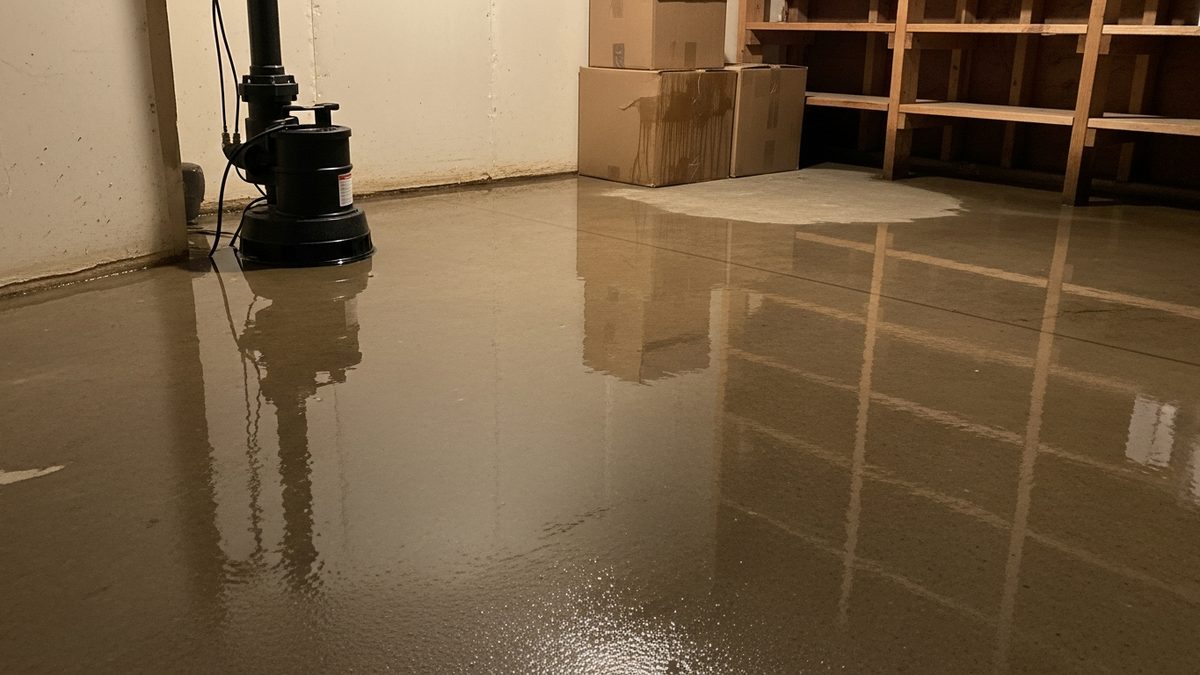
You open the basement door and water is staring back at you. Your first instinct is to run down and start moving things — but that instinct can get you killed. A flooded basement is a home emergency that demands a specific order of operations, and electricity comes first, every time.
This guide walks you through what to do in plain language, in the right sequence, from the moment you discover the water all the way through cleanup and calling your insurance company.
Safety first (before you step in the water)
This is the most important section in this entire article. Do not skip it.
Standing water and live electricity can kill you. When a basement floods, the water can reach outlets, subpanels, appliances, and wiring on the lower walls. You cannot tell just by looking whether electricity is flowing through the water. Electrocution in flooded spaces is a documented cause of death during flood events, and it can happen instantly.
The CDC's guidance on reentering a flooded home is direct: if you have standing water and you can reach the main electrical panel from a dry location, turn the power off before entering. If you have to walk through the water to reach the breaker box, do not do it. Call a licensed electrician to cut the power for you instead.
While you are sorting out the electrical situation, also check for gas. If you smell anything like rotten eggs or a sulfur odor near the basement, do not enter at all. Open the outside doors if you can do it safely, get everyone out of the house, and call your gas company or 911 from outside. A gas leak combined with floodwater is a life-threatening combination.
Once a qualified person has confirmed electricity to the flooded area is off — and you do not smell gas — you can enter carefully using rubber boots. Use a battery-powered flashlight rather than a candle or torch.
What to do right now
After you have confirmed it is safe to enter, work through these steps in order:
- Confirm power is off to the flooded zone (see above).
- Shut off the water supply if the flood came from a plumbing failure. The main shutoff is usually where the supply line enters the house — near the water meter, along a basement wall, or in a utility closet. Turning this off stops a burst pipe or failed appliance line from adding more water.
- Do not turn the HVAC on. If your furnace, air handler, or ductwork was touched by floodwater, running the system will spread mold and contaminated air through the whole house. Have it inspected before using it.
- Ventilate carefully. Open basement windows and exterior doors if weather allows to start moving air through, but hold off on running fans until you have done an initial cleaning of visible mold — fans can spread mold spores if you run them too early.
- Photograph everything before you move anything. This is your insurance documentation — more on that below.
Find out where the water is coming from
The source of the flood changes both the cleanup approach and the long-term fix. There are four main culprits:
Sump pump failure. Sump pumps are the first line of defense against groundwater, and they most often fail during heavy storms — which is exactly when you need them most. Power outages knock out standard sump pumps, and many older units simply wear out. If your sump pit is full and the pump is not running, check whether the outlet has power and whether the float switch is stuck.
Groundwater and storm intrusion. After heavy rain, saturated soil builds up pressure against your foundation walls and floor slab. Water finds any crack, joint, or gap it can. This type of flooding typically appears at the base of walls or pushes up through floor cracks. It often gets worse over time as the cracks widen.
Burst or leaking pipe. A supply line — a hot water heater line, a washing machine hose, a frozen pipe that cracked — can release a large volume of clean water quickly. Shut off the main water supply immediately (step 2 above). This type of water is generally less of a contamination hazard than the other sources.
Sewer backup. This is the most hazardous type of basement flood. When a municipal sewer main gets overwhelmed by heavy rain, or when a blockage builds up in your lateral line, wastewater can reverse direction and come up through floor drains. This water is considered Category 3 ("black water") by restoration professionals — it contains pathogens and must be handled with full personal protective equipment. If you suspect a sewer backup, wear waterproof gloves, rubber boots, and eye protection, and strongly consider calling a pro rather than cleaning it yourself.
Cleanup and preventing mold
Speed is everything once the water is out. The EPA's guidance on flood cleanup states that mold can begin growing on wood, drywall, carpet, and furniture within 24 to 48 hours of water exposure. The CDC echoes this: get the space dried out as fast as possible to prevent mold from taking hold.
Removing the water. For significant standing water, a submersible pump or transfer pump will remove water much faster than a wet/dry vacuum. Place the pump at the lowest point of the basement floor. Once the bulk of the water is out, a wet/dry vacuum handles remaining puddles and pulls water out of low spots. Do not pump water out faster than the surrounding soil can handle if you have a flooded basement during an active flood event — dropping the water level inside too fast can cause pressure imbalances that crack an older foundation.
Pulling out soaked materials. Carpeting, carpet padding, drywall, and insulation that has been saturated are almost always a loss. These porous materials hold moisture deep inside and are nearly impossible to dry completely before mold sets in. The EPA advises discarding materials that cannot be fully cleaned and dried. Take photos before you pull anything out.
Cleaning surfaces. Once wet materials are removed, scrub hard surfaces with clean water and detergent. The EPA recommends cleaning before you apply any disinfectant — disinfectants do not work on surfaces that still have dirt or organic material on them. After cleaning, you can apply an EPA-registered disinfectant. Do not mix bleach with any other cleaning products, and never combine bleach with ammonia.
Drying the space out. Run dehumidifiers continuously and position fans to push air out through windows rather than circulating it around the room. The EPA recommends keeping this up for days to weeks — not just until things feel dry to the touch. You can use an inexpensive moisture meter (available at any hardware store) to check walls, subfloor, and framing. Materials should read 15 percent or below before you close them up or paint over them.
The 24-to-48-hour window is real. Acting fast is not just advice — it is the difference between a cleanup job and a mold remediation project. Mold remediation adds significant cost and complexity. If for any reason you cannot complete drying quickly (you are waiting on power to be restored, for example), document the situation and call a water damage professional as soon as possible.
When to call a pro
Some basement floods are manageable as a DIY project. Others are not. Call a licensed water damage restoration contractor when:
- There is more than an inch or two of standing water across a large area
- The source is a sewer backup or any water that may contain sewage
- You can see or smell mold already growing
- Structural materials — wood framing, load-bearing walls, the slab itself — appear damaged
- You cannot dry the space out within 24 to 48 hours on your own
- The HVAC system was submerged or exposed to floodwater
- You are not certain electrical power to the area has been safely verified as off
The EPA notes that people with asthma, weakened immune systems, or other respiratory conditions should not participate in flood cleanup at all. Children and pregnant women should also stay out of flooded spaces. In those households, hiring a professional from the start is the right call.
When hiring, look for contractors certified by the Institute of Inspection, Cleaning and Restoration Certification (IICRC) or affiliated with professional organizations the EPA recognizes, such as the National Environmental Health Association (NEHA) or the American Industrial Hygiene Association (AIHA).
What it typically costs
Costs vary widely based on the volume of water, the contamination level, and how much structural material needs to be removed. Here are rough US ranges based on 2025 to 2026 contractor data:
- Basic cleanup, small flood, clean water: $500 to $1,500
- Moderate basement flood, standard cleanup and drying: $2,000 to $7,000 (the most common range for a typical finished or semi-finished basement)
- Extensive damage with structural material removal: $5,000 to $15,000 or more
- Sewer backup cleanup (Category 3 water): $2,800 and up, often significantly more
- Mold remediation added on top: $1,500 to $6,000 for a typical basement area
- Waterproofing repair to prevent recurrence: $3,000 to $15,000 depending on the method (interior drainage system vs. exterior excavation)
Homeowners insurance typically covers sudden and accidental water damage from a burst pipe but often excludes groundwater flooding and sewer backup unless you have added specific riders. Flood damage from rising groundwater or storm surge usually requires a separate flood insurance policy, often through FEMA's National Flood Insurance Program (NFIP). Review your policy before you assume you are covered.
Common mistakes to avoid
- Entering standing water before confirming power is off. This is the most dangerous mistake possible.
- Turning on the HVAC system. Running a contaminated HVAC spreads mold throughout the house.
- Waiting to see if things dry on their own. Every hour matters once the 24-to-48-hour clock starts.
- Throwing things away before documenting them. Your insurance adjuster needs photos of damaged items and their serial numbers before anything is discarded.
- Running fans before cleaning visible mold. Fans spread mold spores before mold is cleaned off surfaces.
- Using a generator inside the house or garage. Carbon monoxide from a generator can be lethal indoors. The EPA and CDC both state generators must be used at least 20 feet away from any door, window, or vent.
- Mixing cleaning products. Never add bleach to other chemicals. The combination can produce toxic fumes.
- Replacing flooring before the slab is fully dry. The EPA recommends taping a piece of clear plastic to the concrete slab and waiting 16 hours — if moisture appears on the underside, the slab is not ready yet.
How to prevent basement flooding
Once you have dealt with the immediate emergency, it is worth addressing why the flood happened and what you can do to prevent the next one.
- Install a battery backup sump pump. The standard electric sump pump fails exactly when you need it most — during a storm that knocks out the power. A battery backup system kicks in automatically and can run for hours without grid power.
- Add a backwater valve to your sewer lateral. This one-way valve lets wastewater flow out of your house but physically prevents it from coming back in. It is one of the most effective defenses against sewer backup.
- Extend and redirect downspouts. Downspouts that discharge right next to the foundation send a concentrated stream of water toward your basement walls during every rainstorm. Extensions that carry water at least six feet away from the house make a real difference.
- Grade the soil away from the foundation. The ground around your house should slope away from the walls, not toward them. A slope of about one inch per foot for the first six feet is the general recommendation.
- Seal foundation cracks. Small cracks in poured concrete or block walls can be injected with hydraulic cement or polyurethane foam as a short-term measure, though recurring water intrusion often requires a more comprehensive interior drainage system.
- Consider interior waterproofing. A French drain system along the perimeter of the basement floor, combined with a reliable sump pump, is the most common long-term solution for homes with chronic groundwater intrusion.
FAQ
Can I enter my basement if there is standing water in it?
Not until you have confirmed that electricity to the area is off. If you can turn off the main panel from a dry location, do that first. If you would need to enter the water to reach the breaker, call a licensed electrician. Do not assume the water is safe to walk through.
How quickly does mold start growing after a basement flood?
The EPA states that mold can begin growing on wood, drywall, carpet, and furniture within 24 to 48 hours of water exposure. The goal is to have the space dried out within 24 to 48 hours to prevent mold from getting established. If that is not possible, call a water damage professional.
Does homeowners insurance cover a flooded basement?
It depends on the cause. Most standard homeowners policies cover sudden, accidental water damage from a plumbing failure like a burst pipe. They typically do not cover groundwater flooding, sewer backup, or flood damage from outside the home unless you have purchased specific endorsements or a separate flood policy. Check your policy and call your insurer as soon as possible after the flood.
What is the difference between a sump pump and a sewage ejector pump?
A sump pump removes groundwater from a pit in the lowest part of your basement and sends it away from the house. A sewage ejector pump handles wastewater from basement bathrooms or laundry drains and pumps it up to the main sewer line. Both can fail and cause flooding, but a sewage ejector failure is a Category 3 contamination event requiring professional cleanup.
Should I try to dry out my basement myself or call a pro right away?
If the flood was from a clean water source, the volume was manageable, and you can act quickly, many homeowners handle it themselves. But if the water came from a sewer backup, if mold is already visible, if the area is larger than about 10 square feet of affected material, or if you cannot dry things out within 24 to 48 hours, it is strongly advisable to call a certified water damage restoration contractor.
Is it safe to use bleach on a flooded basement floor?
Only after you have physically cleaned the surface with detergent and water first. The EPA is clear that bleach and other disinfectants do not work on dirty surfaces — the physical cleaning step comes first. Never mix bleach with ammonia or other cleaning chemicals, as the combination produces toxic fumes.
Get a free quote from a local pro
Whether you need emergency water extraction today or want a professional waterproofing assessment to prevent the next flood, getting an expert on-site is often the fastest way to protect your home and your wallet.
Get a free quote from a vetted waterproofing or water damage restoration professional near you. Local Service Group connects homeowners with screened, reviewed local pros — no obligation, no pressure, just solid help when you need it.
Sources
- CDC — Safety Guidelines: Reentering Your Flooded Home: https://www.cdc.gov/floods/safety/reentering-your-flooded-home-safety.html
- EPA — Flood Cleanup to Protect Indoor Air and Your Health: https://www.epa.gov/emergencies-iaq/flood-cleanup-protect-indoor-air-and-your-health
- EPA — A Brief Guide to Mold, Moisture and Your Home: https://www.epa.gov/mold/brief-guide-mold-moisture-and-your-home
- EPA — Mold Cleanup in Your Home: https://www.epa.gov/mold/mold-cleanup-your-home
- FEMA — How Do I Start My Flood Claim?: https://www.fema.gov/flood-insurance/resources-practitioners/file-your-claim
- Angi — How Much Does It Cost to Cleanup a Flooded Basement? (2026 Data): https://www.angi.com/articles/flooded-basement-cleanup-cost.htm
- HomeGuide — Basement Flooding Repair Cost (2026): https://homeguide.com/costs/basement-flooding-repair-cost
Disclaimer
The information on this page is provided for general educational purposes only and is offered "as is" and "as available," without warranties of any kind, whether express or implied — including, without limitation, any warranties of accuracy, completeness, reliability, merchantability, or fitness for a particular purpose. It is not professional advice and is not a substitute for inspection, diagnosis, or repair by a licensed, qualified professional.
Home systems involving gas, electricity, water, refrigerant, fire, or structural components can be hazardous, and requirements vary by local code and jurisdiction. Any inspection, diagnosis, repair, installation, or other action referenced on this page should be performed by a licensed professional. You should not rely on this content to perform such work yourself. To the fullest extent permitted by law, [Company Name] and its owners, employees, and contributors assume no responsibility or liability for any injury, death, property damage, or other loss arising out of or in connection with the use of, or reliance on, this information.
If you smell gas or suspect a carbon monoxide leak, leave the area immediately and call 911 or your gas utility from a safe location.