Sump Pump Not Working Before a Storm? Emergency Checks to Try Now
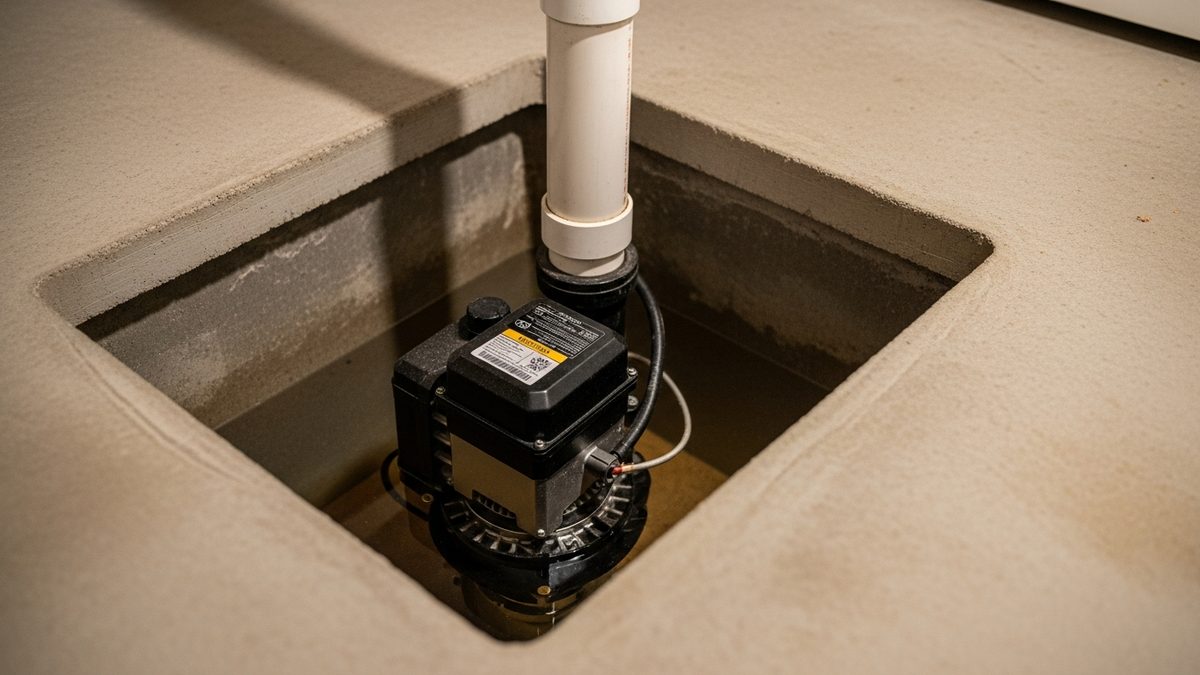
The forecast says heavy rain is coming. You head downstairs to check the sump pump — and it's sitting silent in a pit of still water. Most failures have simple causes you can fix in under 15 minutes. Work through these checks now, before the storm hits.
If water is already rising, see our guide on what to do if your basement is flooding. For background on why water gets in during rain, see why water gets into a basement after rain.
Fast checks to run right now
Work through these in order.
1. Is it getting power? Plug a lamp or phone charger into the same outlet. If that doesn't work, the outlet — not the pump — is the problem. Check your breaker panel for any tripped breaker and reset it. Also look for a nearby GFCI outlet (the kind with "Test" and "Reset" buttons, found in utility rooms and garages). A tripped GFCI cuts power to the whole circuit. Press Reset firmly. This is the single most common reason a sump pump appears completely dead.
2. Pour a bucket of water into the pit. Slowly pour about five gallons into the sump pit until the water level rises near the top. The pump should kick on automatically. If it does, the pump is fine — there just wasn't enough water in the pit to trigger it. If it stays quiet, keep going.
3. Check the float switch. The float is a small bobber — ball or cylinder — that rises with the water level and signals the pump to run. Cut the power first (see Safety below), then reach in and check that the float moves freely up and down without hitting the pit wall or pump housing. A zip tie or plastic clip can keep it away from the wall.
4. Check the discharge line and check valve. The pump pushes water through a pipe that exits the house. In cold weather, that pipe can freeze solid and block flow — the motor runs but water has nowhere to go. Check the outside termination point. Also look at the check valve (the one-way fitting on the vertical pipe just above the pump) and make sure it's seated correctly and not stuck closed.
5. Listen for a hum with no water movement. If you hear the motor running but the pit level isn't dropping, the impeller is likely jammed with gravel or silt. Don't let it run this way — it will burn out the motor fast. This one needs a pro or a pump replacement.
Most likely reasons it failed
- Tripped breaker or GFCI — the most common cause by far
- Stuck float switch — especially in tight pits where the float rubs the wall
- Clogged intake or impeller — gravel and silt build up over time
- Frozen or blocked discharge line — most common in winter storms
- Burned-out motor — often from running dry or years of hard use
- Age — most pumps last 7 to 10 years; an older pump failing is no surprise
Safety first
Water and electricity together can be fatal. Before you reach into the pit or touch the pump, unplug it from the wall or shut off its dedicated breaker. Never put your hands in the water while the pump is plugged in, even if you think the GFCI protects you — it doesn't protect against all hazards. Keep a flashlight handy and work carefully around any wall outlets near the pit.
Backup options before the storm
If the pump is dead and the storm is hours away:
Battery backup pump: The best option. It sits in the same pit, runs on a dedicated battery, and kicks on automatically whether the main pump fails or the lights go out. Zoeller and Wayne Pumps make widely available residential models.
Water-powered backup pump: Uses municipal water pressure to create suction — no electricity needed. Works well in city homes with good pressure, but uses city water while running and isn't ideal in rural areas.
Portable utility pump: A submersible transfer pump from any hardware store removes water manually through a garden hose. It won't run on its own, but it buys time until a repair is made.
Move valuables now. Don't wait to see how the storm develops. Get rugs, boxes, electronics, and documents off the basement floor before the rain starts.
When to call a pro
Call a licensed plumber or waterproofing contractor right away if the pump has power and the float is free but it still won't run, you hear humming with no water movement, the pump can't keep up, the discharge line is frozen, the pump is 10 or more years old and acting up, or you smell burning near the motor. Call now — don't wait until the basement is flooding.
What it typically costs
Sump pump repair (2025–2026): $400–$550 on average, depending on the failed component.
New pump installation: $645–$2,120 for most homeowners, averaging around $1,365 per HomeAdvisor's 2025 data. A straightforward swap in an accessible basement lands on the lower end.
Battery backup system: $150–$600 for the unit plus $100–$300 to install.
Water damage restoration: A flood caught too late typically costs $1,400–$5,000 or more to dry out and restore, not counting damaged belongings.
Common mistakes
Never testing it. A quick bucket test twice a year catches most problems before they matter.
No backup system. Power outages hit hardest during severe storms — exactly when you need the pump most. A battery backup is inexpensive protection.
Unplugging it and forgetting. It happens. Someone borrows the outlet, never plugs the pump back in, and discovers the problem during the next storm. Tape a reminder label to the outlet.
Ignoring an aging pump. A 10-year-old pump is overdue. Proactive replacement costs far less than the flood it causes when it finally fails.
How to prevent a failure
- Test quarterly: Pour a bucket into the pit every three months and confirm the pump kicks on.
- Clean the pit annually: Remove gravel, silt, and debris so they can't clog the intake.
- Install a battery backup: The single most effective protection against both pump failure and power outages.
- Add a high-water alarm: A float alarm — including smart models that text your phone — gives you warning before the pit overflows.
- Schedule annual service: A plumber can check the float, check valve, and discharge line once a year and catch small problems early.
FAQ
How do I test my sump pump before a storm? Pour a five-gallon bucket of water slowly into the pit. The pump should switch on automatically and empty the pit, then shut off. If it doesn't respond, start with the power and float checks above.
Can a sump pump fail during a power outage? Yes — and that's the highest-risk scenario, because outages are most likely during the heavy storms that demand the most from your pump. A battery backup pump runs independently of your home's electricity and solves this problem directly.
How long does a sump pump last? Most submersible pumps last 7 to 10 years; pedestal models (motor above the pit) can reach 20 to 25 years with good maintenance. Any pump over 10 years old that's acting up — odd sounds, constant cycling, slow response — should be replaced proactively.
My pump runs constantly. Is that a problem? Yes. It usually means one of three things: more water than it can handle, a float stuck in the "on" position, or a failed check valve letting water drain back into the pit and retrigger the pump in a loop. All three need attention before the motor burns out.
Get a free quote from a vetted plumber near you
If your sump pump isn't working and a storm is closing in, don't leave it to chance. Local Service Group connects homeowners with licensed plumbers and waterproofing professionals near them — at no cost to you. Get your free quote today and have a qualified pro assess the pump before the water rises.
Sources
- Ready.gov (FEMA / U.S. Department of Homeland Security) — Floods: https://www.ready.gov/floods
- HomeAdvisor — How Much Does Sump Pump Replacement Cost? (2025 Data): https://www.homeadvisor.com/cost/plumbing/install-a-sump-pump/
- Wayne Water Systems — Residential Sump Pump Products and Resources: https://www.waynepumps.com
- Zoeller Pump Company — Residential Sump Pump Products: https://www.zoellerpumps.com
- U.S. Environmental Protection Agency — A Brief Guide to Mold, Moisture and Your Home: https://www.epa.gov/mold/brief-guide-mold-moisture-and-your-home
Disclaimer
The information on this page is provided for general educational purposes only and is offered "as is" and "as available," without warranties of any kind, whether express or implied — including, without limitation, any warranties of accuracy, completeness, reliability, merchantability, or fitness for a particular purpose. It is not professional advice and is not a substitute for inspection, diagnosis, or repair by a licensed, qualified professional.
Home systems involving gas, electricity, water, refrigerant, fire, or structural components can be hazardous, and requirements vary by local code and jurisdiction. Any inspection, diagnosis, repair, installation, or other action referenced on this page should be performed by a licensed professional. You should not rely on this content to perform such work yourself. To the fullest extent permitted by law, [Company Name] and its owners, employees, and contributors assume no responsibility or liability for any injury, death, property damage, or other loss arising out of or in connection with the use of, or reliance on, this information.
If you smell gas or suspect a carbon monoxide leak, leave the area immediately and call 911 or your gas utility from a safe location.