Cracks in Your Foundation: Which Ones Are Serious (and Which Aren't)
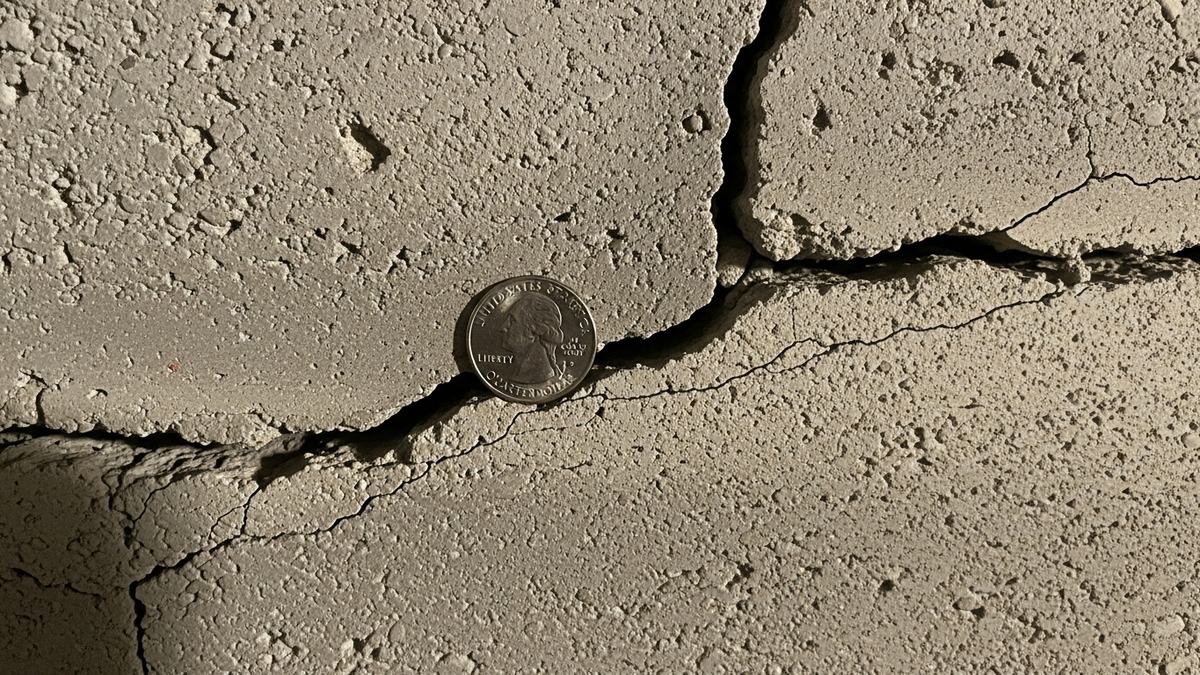
You head down to the basement and spot a crack running along the wall. Your stomach drops. Is the house about to fall apart, or is this just part of normal aging? The good news is that most foundation cracks are not emergencies. The bad news is that a small number of them are genuinely serious — and they can get a lot worse if you ignore them.
This guide will show you how to read what you're looking at, separate the "no big deal" cracks from the ones that need professional attention right away, and give you a realistic sense of what repairs cost.
How to read a foundation crack
Before you panic or shrug it off, take a closer look. A few things matter a lot:
Direction. Is the crack running straight up and down (vertical), side to side (horizontal), or at an angle (diagonal)? This tells you more than almost anything else.
Width. A crack thinner than a credit card — roughly under 1/16 of an inch — is far less concerning than one you can slip a pencil into.
Displacement. Stand back and look at both edges of the crack. Are they flush with each other, or has one side shifted up, down, or inward? Even a small step-up means two parts of the wall have moved relative to each other.
Length and pattern. A short, isolated crack behaves differently from a crack that runs the full height or length of a wall, or a pattern of several cracks appearing close together.
Active or stable. Has the crack changed recently? Fresh, sharp edges with clean white concrete inside often mean the crack is newer. Old cracks frequently show discoloration, dust, or old water stains along their edges.
With those details in mind, here is how each common crack type stacks up.
Which cracks are usually harmless
Hairline shrinkage cracks are the most common type you will ever find in a poured concrete foundation. They are thinner than a human hair to a fraction of a millimeter wide, and they form for a simple reason: concrete shrinks as it dries and cures. According to InterNACHI, restraint to shrinkage is the most common cause of concrete cracking — the surface dries and shrinks at a different rate than the concrete underneath it, creating tension that cracks the surface layer. This process is normal and expected. Hairline cracks that are not growing, not leaking water, and have no displacement are typically a cosmetic issue.
Vertical cracks that are narrow (under 1/8 of an inch), have no displacement, and are not growing are usually caused by normal settlement. As a house settles into the soil over its first few years — and again after unusually wet or dry stretches — the foundation adjusts slightly. Narrow vertical cracks are the most common result of that adjustment and are generally not a structural concern. They should still be sealed to keep water out, but they rarely require structural repair.
The important exception: a vertical crack that is wider at the top than the bottom (or vice versa), that shows displacement, or that is growing steadily deserves a professional look.
Which cracks are serious
Horizontal cracks are the most alarming type, period. When you see a crack running roughly sideways across a basement or crawl space wall, it means the wall is being pushed inward by soil pressure from outside. Wet clay soils expand significantly when they absorb water, and frost in cold climates makes things worse — the freeze-thaw cycle adds tremendous lateral force against the wall. A wall that is bowing inward because of this pressure is a structural emergency. Left alone, a bowing wall can buckle and fail. Any horizontal crack wider than 1/8 of an inch, or any crack accompanied by visible inward bowing of the wall, needs a structural engineer or foundation contractor to look at it promptly.
Stair-step cracks in block or brick foundations follow the mortar joints in a staircased diagonal pattern. This pattern almost always indicates differential settlement — one part of the foundation is sinking or shifting more than an adjacent section. The crack follows the mortar joints because mortar is weaker than the blocks themselves, so the wall fails along the path of least resistance. Narrow stair-step cracks that are stable may just need monitoring and repointing, but cracks wider than 1/4 of an inch, cracks with visible displacement across the joint face, or cracks that are growing are a sign of active movement that needs professional evaluation.
Diagonal cracks at a 45-degree angle in poured concrete walls also point to differential settlement. When one corner of the foundation sinks and another holds still, the wall shears diagonally. A small diagonal crack that has been stable for years may not be urgent. A wide or growing diagonal crack — especially one near a corner — is a red flag.
Wide cracks of any direction — meaning anything over 1/4 of an inch — should always be evaluated by a pro. Width on its own indicates significant movement has already taken place.
Cracks that are actively leaking water need attention regardless of their size or direction. Water intrusion through a foundation crack speeds up deterioration of both the concrete and any steel reinforcement inside it, and it creates conditions for mold.
How to monitor a crack yourself
For cracks that are not clearly an emergency, keeping track of whether they are growing is the single most useful thing you can do. A stable crack that hasn't changed in a year or two is almost always less serious than one that has grown a quarter inch in three months.
The simplest method: use a pencil to mark a line across each end of the crack and write the date next to it. Check back every month or two. If the crack extends past your marks, or if the width increases, document it with a photo and share what you've found with a professional.
A slightly more precise approach is to use a feeler gauge — the thin metal strips sold at auto parts stores for measuring spark plug gaps. They range from about 0.004 to 0.025 inches thick and let you measure the width at a specific point so you have a baseline to compare against later. According to FEMA's structural collapse guidance, adhesive tape placed across a crack can also reveal movement if the tape tears or separates over time.
When you take photos, put a coin or a ruler next to the crack for scale. Photos taken from the same distance and angle over time tell a much clearer story than memory alone.
When to call a pro
Call a foundation contractor or structural engineer right away if you see any of the following:
- A horizontal crack, especially one with visible inward bowing of the wall
- Any crack wider than 1/4 of an inch
- A crack that has grown noticeably in the past few months
- Displacement across a crack — one side higher or lower than the other
- Water coming through a crack
- Multiple new cracks appearing at the same time
- Doors or windows on upper floors that suddenly stick or stop latching
- Floors that feel noticeably uneven or sloped in a new way
These are signs that something structural may be actively changing. A structural engineer can give you an unbiased assessment of what is happening and what, if anything, needs to be fixed. Many foundation contractors will offer a free inspection, which is useful, but an engineer who is not also selling repairs gives you the most objective opinion.
What repairs typically cost
Costs vary widely depending on the type of crack, the repair method, your foundation material, and your region. Here are approximate ranges based on current US market data:
Non-structural crack sealing (hairline or stable vertical cracks): Contractors typically inject these with epoxy or polyurethane foam. Epoxy cures rigid and works best for cracks that are not moving; polyurethane stays flexible and handles seasonal movement better. Expect to pay roughly $250 to $800 per crack for this type of repair.
Minor structural repairs (diagonal or stair-step cracks with active movement): These range from about $1,000 to $5,000 depending on severity and method.
Bowing or horizontal wall repair: This is where costs climb sharply. Carbon fiber straps bonded to the wall to stop further movement typically run $900 to $2,000 per strip. Wall anchors installed through the wall and into stable soil outside run $500 to $1,000 each. Helical tiebacks for more severe bowing range from $1,000 to $3,000 each. Major wall stabilization or partial wall replacement can push into the $10,000 to $30,000 range.
Foundation underpinning (when the soil below the foundation can no longer support the load): Helical pier or push pier systems to stabilize a settling foundation typically cost $2,000 to $12,000 for minor situations and $10,000 to $30,000 or more for significant settlement.
Complete foundation replacement: In extreme cases, the only option is to lift the house and replace the foundation entirely — a project that commonly runs $25,000 to $75,000 or more.
A structural engineer consultation to assess the situation and recommend the right approach typically runs $500 to $3,000. Many foundation contractors waive or credit their inspection fee if you hire them for the repair, but as noted above, an independent engineer gives you the most objective picture.
Note: these are approximate 2025–2026 ranges. Your actual cost will depend on your location, foundation type, and the specific conditions found during inspection.
Common mistakes to avoid
Patching a crack with caulk or hydraulic cement and calling it done. Surface patching stops water temporarily but does nothing about the underlying cause. If the soil pressure, drainage problem, or settlement that caused the crack is still there, the patch will re-crack and the wall will keep moving.
Waiting too long on horizontal cracks. Horizontal cracks and bowing walls get worse over time and the longer you wait, the more expensive the fix becomes.
Hiring the first contractor who says it's urgent. Foundation repair is an industry where aggressive sales tactics are not uncommon. Getting two or three estimates — and ideally an independent engineer's assessment — before committing to a major repair is worth the time.
Ignoring water entry. A crack that lets water in will erode the concrete over time, corrode steel reinforcement, and create mold. Even a cosmetic crack should be sealed for waterproofing purposes.
Assuming old repairs mean old problems. If you see evidence of previous crack repairs, find out when they were done and whether the crack has re-opened. A re-cracked patch suggests the underlying cause was never addressed.
How to prevent foundation problems
You cannot control every soil condition or weather event, but you can do a lot to reduce the stress on your foundation:
Keep water away from the foundation. This is the single most important thing you can do. Make sure the ground around your house slopes away from the foundation — at least 6 inches of drop over the first 10 feet is the standard recommendation. Water pooling next to the foundation is one of the leading causes of hydrostatic pressure and settlement.
Maintain gutters and downspouts. Clogged gutters overflow right next to the foundation. Downspouts should discharge water at least 5 to 10 feet away from the house. Splash blocks or underground drainage pipes help move water further away.
Manage soil moisture. Clay-rich soils expand when wet and shrink when dry. Consistently wet-dry cycles put repeated stress on foundation walls. Avoid overwatering foundation plantings, and consider adding a soaker hose during long dry spells in climates with expansive soils.
Keep large trees at a safe distance. Tree roots draw moisture from the soil, which causes clay soils to shrink and can undermine foundation support. As a general rule, large trees should be planted at least 15 to 20 feet from the house.
Seal small cracks early. A hairline crack that lets water in will widen over time as freeze-thaw cycles work on it. A $20 tube of polyurethane caulk applied early can prevent a much more expensive repair later.
Schedule a periodic inspection. Having a qualified home inspector or foundation contractor look at your foundation every 5 years or so — and after any major weather event like a drought, flood, or earthquake — can catch problems while they're still minor.
FAQ
Q: Are sticking doors and windows a sign of foundation problems?
A: They can be. When a foundation settles or heaves unevenly, it twists the framing above it, which throws door and window openings slightly out of square, so they stick, will not latch, or leave gaps at the top or bottom. One sticking door in humid weather is usually just swelling. But several doors or windows sticking at once, especially alongside new wall cracks, sloping floors, or gaps where walls meet ceilings, points to foundation movement worth a professional evaluation.
Q: Is it normal to have cracks in a newer home's foundation? A: Yes. Concrete shrinks as it cures, so hairline shrinkage cracks in a poured concrete foundation are normal and expected — even in homes that are just a year or two old. What you do not want to see in a new home is displacement, horizontal cracks, or cracks that are already widening.
Q: Does homeowners insurance cover foundation crack repair? A: Usually not for the most common causes. Most policies exclude damage from settling, soil movement, and gradual deterioration. Coverage may apply for sudden, unexpected events like a burst pipe that causes soil erosion under the foundation, vehicle impact, or certain weather events. Check your policy and ask your insurer if you're unsure.
Q: I see water seeping through a crack after heavy rain. How urgent is that? A: It depends on what kind of crack it is. Water entry through a hairline or vertical crack is a waterproofing problem and should be sealed, but it is not necessarily a structural emergency. Water coming through a horizontal crack or a wide crack with displacement is more serious because the water itself indicates ongoing hydrostatic pressure against the wall. Get it looked at promptly.
Q: Can I fix a foundation crack myself? A: For cosmetic hairline cracks, yes — a DIY epoxy or polyurethane injection kit from a hardware store can seal the crack and keep water out. For anything structural — horizontal cracks, bowing walls, significant displacement, or active water pressure — DIY repair is not appropriate. These conditions require professional evaluation and engineered solutions.
Q: How long does foundation crack repair take? A: Epoxy or polyurethane injection repairs on a non-structural crack can typically be done in a few hours. More involved structural repairs like carbon fiber strapping or wall anchors may take one to two days. Underpinning or pier installation for settlement can take several days to a week depending on how many piers are needed and site conditions.
Q: My neighbor says their foundation cracks are fine. Does that mean mine are? A: Not necessarily. Foundations vary by age, construction method, soil type, drainage conditions, and history. Two houses on the same block can have very different foundation conditions. Your neighbor's experience is not a reliable guide for your own situation.
If you've spotted a crack that concerns you, the smartest next step is to get eyes on it from a qualified foundation professional. A vetted local pro can tell you exactly what you're dealing with — and whether you need a simple seal job, a structural fix, or just peace of mind that everything is fine.
Get a free quote from a vetted foundation pro near you. Use the form on this page to connect with licensed, reviewed foundation specialists in your area at no cost to you.
Sources
- https://www.nachi.org/shrinkage-cracks-in-concrete.htm
- https://inspectapedia.com/structure/Diagonal_Cracks_in_Block_Foundations.php
- https://homeguide.com/costs/foundation-crack-repair-cost
- https://www.fema.gov/pdf/emergency/usr/module2b.pdf
- https://stablwall.com/horizontal-foundation-cracks-why-theyre-serious-and-what-to-do-next/
- https://foundationintegrityauthority.com/symptoms/stair-step-cracks/
- https://www.homeadvisor.com/cost/foundations/repair-a-foundation/
Disclaimer
The information on this page is provided for general educational purposes only and is offered "as is" and "as available," without warranties of any kind, whether express or implied — including, without limitation, any warranties of accuracy, completeness, reliability, merchantability, or fitness for a particular purpose. It is not professional advice and is not a substitute for inspection, diagnosis, or repair by a licensed, qualified professional.
Home systems involving gas, electricity, water, refrigerant, fire, or structural components can be hazardous, and requirements vary by local code and jurisdiction. Any inspection, diagnosis, repair, installation, or other action referenced on this page should be performed by a licensed professional. You should not rely on this content to perform such work yourself. To the fullest extent permitted by law, [Company Name] and its owners, employees, and contributors assume no responsibility or liability for any injury, death, property damage, or other loss arising out of or in connection with the use of, or reliance on, this information.
If you smell gas or suspect a carbon monoxide leak, leave the area immediately and call 911 or your gas utility from a safe location.