Most clogged drains can be cleared without a plumber using tools you already own. Work through the six methods below from simplest to most involved.
Start here: how bad is the clog?
Spend thirty seconds diagnosing before you reach for a tool.
One slow or stopped drain almost always means a local blockage — hair, soap scum, or grease inside that single fixture's drain line or P-trap. Any method below should fix it.
Multiple drains slowing at the same time points to the main sewer line. When the kitchen sink, a bathroom sink, and the tub are all slow on the same day — especially if toilets are gurgling — the blockage is beyond what a hand tool can reach.
Skip to "When to call a plumber" if that sounds like your situation. Learn more about when slow drains across the whole house signal a main-line problem.
What you'll need
Gather only what fits the method you're trying:
- Kettle or large pot
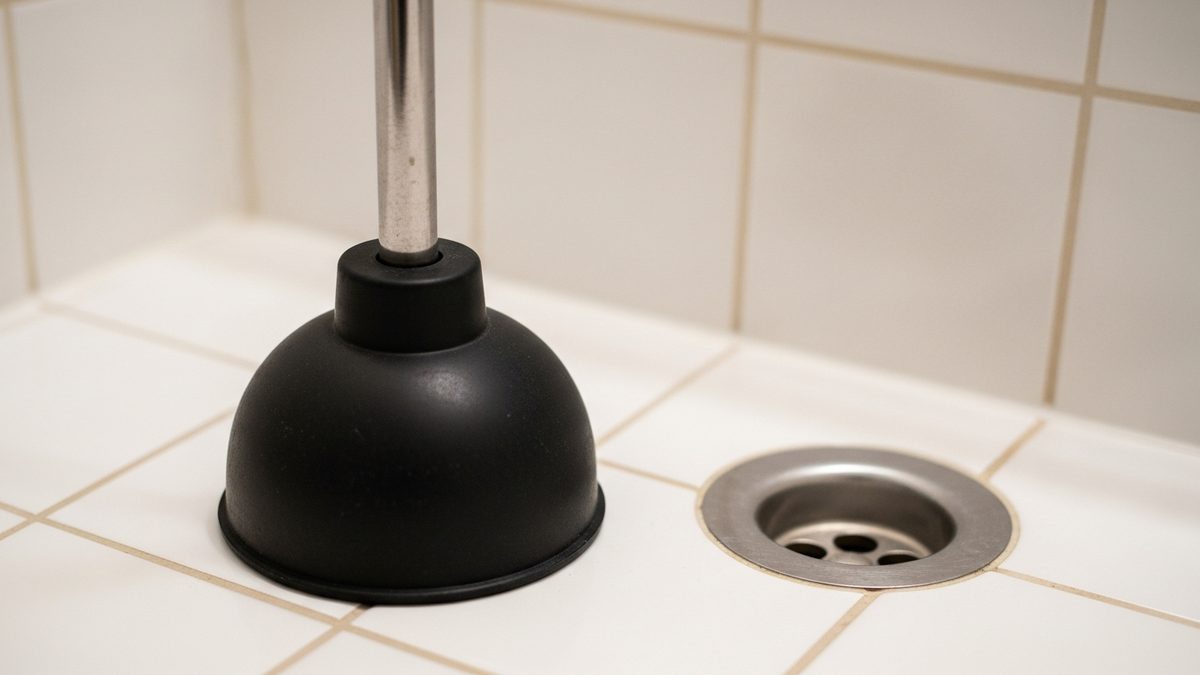
- Cup plunger (flat-bottom rubber dome — not a flange/toilet plunger)
- Baking soda and white vinegar
- Adjustable pliers, bucket, and old towels
- Drain snake / hand auger (~$25–$40 at hardware stores)
- Wet/dry shop vacuum (optional)
- Rubber gloves
Method 1: Boiling water / hot water
Best for: Grease buildup in kitchen sinks; any partial clog.
Boil two quarts of water — or use the hottest tap water if you have older PVC plastic pipes (boiling water can soften PVC joints). Remove standing water first, then pour slowly in two or three stages with fifteen-second pauses. Run the tap. No improvement means a physical blockage; move to the next method.
Method 2: Plunger (the right way)
Best for: Sinks, tubs, and shower drains with a physical clog.
Use a cup plunger (flat-rim rubber dome) for sinks and tubs — not a flange plunger, which is shaped for toilets and won't seal on a flat surface. The two keys: right type, complete seal.
- Leave one to two inches of water in the basin. Water, not air, transmits the pressure pulse.
- Block the overflow hole near the top of the sink or tub with a wet rag. This keeps pressure from escaping.
- Center the cup over the drain and press down slowly to push air out of the dome before you start. A cup full of air acts like a shock absorber and wastes your effort.
- Pump in sharp, quick strokes for about fifteen seconds, then pull the plunger up fast on the final stroke to reverse-pressure the clog.
- Repeat two to three times if needed.
For fixture-specific guidance, see how to unclog a kitchen sink or how to unclog a bathtub or shower drain.
Method 3: Baking soda and vinegar
Best for: Mild organic clogs — hair, soap, light grease — in bathroom drains.
Baking soda and white vinegar react to produce carbon dioxide. The fizzing loosens soft organic buildup. It won't dissolve a serious compacted clog, but handles partial ones well and doubles as a monthly maintenance flush.
- Pull out any visible hair or debris by hand.
- Pour one cup of baking soda down the drain, followed immediately by one cup of white vinegar.
- Cover the drain with a stopper or folded rag to direct the fizz downward.
- Wait at least fifteen minutes (up to an hour for stubborn buildup).
- Flush with the hottest tap water available for a full minute.
This method is safe for all pipe materials and leaves no chemical residue.
Method 4: Clean the P-trap
Best for: Under-sink drains where the plunger and baking soda haven't worked.
The P-trap — the U-shaped pipe under your sink — holds water to block sewer gases and is also where heavy debris and grease collect. Cleaning it takes about ten minutes.
- Clear the cabinet under the sink and place a bucket below the P-trap.
- Unscrew the slip-joint nuts on each end of the trap by hand (or with pliers if needed — go easy on plastic fittings).
- Pull the trap free, drain it into the bucket, and scrub out any buildup with an old brush.
- Reinstall, hand-tighten, then snug up each nut a quarter-turn with pliers. Run water and check for leaks.
Method 5: Drain snake or hand auger
Best for: Clogs deeper in the drain line than a plunger can reach.
A hand auger ($25–$40 at any hardware store) is a flexible steel cable in a drum. Feed it in, rotate when you hit resistance, and either break through or hook the blockage to pull it out. One tool handles most household drain clogs and lasts for years.
- Remove the drain cover and insert the cable slowly until you feel resistance.
- Lock the cable with the thumbscrew, then rotate the drum handle clockwise to bore through or wind up the clog.
- Alternate directions if the clog feels solid, then retract the cable slowly while wiping it with a rag.
- Flush with hot water for a minute to clear loosened debris.
- Clean and dry the cable before storing — left wet, the steel cable rusts.
Do not use a drain snake in a toilet. The uncoated cable tip can scratch and crack porcelain.
Method 6: Wet/dry vacuum
Best for: Shallow clogs close to the drain opening — blockages just below the stopper that plunging hasn't moved.
- Switch to wet mode and remove the standard dry filter.
- Wrap the hose end with a wet rag, press it firmly over the drain to create a seal.
- Run the vacuum at its highest setting for fifteen to twenty seconds.
- Check the drum for debris, then flush the drain with hot water.
Important: Skip this method if you've recently used a chemical drain cleaner. Suction can pull those caustic liquids back up toward your face.
Why you should avoid chemical drain cleaners
Chemical drain cleaners sometimes clear soft clogs, but most plumbers recommend against regular use.
They damage pipes. Caustic (lye-based) formulas generate heat that softens PVC and attacks rubber seals. Acid formulas (sulfuric or hydrochloric acid) thin copper, galvanized steel, and cast iron pipe walls over time.
Failed applications make things worse. If the product doesn't fully dissolve the clog, you're left with corrosive liquid sitting on the blockage. Following up with a plunger or snake risks splashing that chemical at your face.
Safety and environmental concerns. Fumes irritate lungs and eyes. When these products flush to the sewer, they can alter wastewater pH enough to disrupt treatment plant bacteria — a concern under EPA Clean Water Act standards.
Enzyme-based drain treatments are a safer monthly maintenance option: biodegradable, pipe-safe, and non-toxic.
When to call a plumber
Call a plumber when you see:
- Multiple drains backing up at the same time — this is a main sewer line problem
- Sewage smell inside the house — cracked drain line, dried-out trap, or a venting issue; hydrogen sulfide gas is toxic at sufficient levels
- The same drain clogs repeatedly — root intrusion, pipe scale, or a partial collapse are common culprits
- Water backs up into a different fixture — running the washer backs up the kitchen sink, for example
- Gurgling sounds or water stains in unexpected spots — possible break inside the wall or slab
How to prevent clogs
- Bathroom: Put a hair catcher over the tub and shower drain. Empty it after every shower — this one habit stops most bathroom clogs.
- Kitchen: Never pour cooking grease down the drain. It hardens as it cools and builds up inside pipes. Let it cool in an old can and trash it. Use a mesh strainer, and run cold water for fifteen seconds after every garbage disposal use.
- All drains: Flush monthly with hot water, then baking soda and vinegar, to clear early buildup before it becomes a clog.
FAQ
How do I know if it's a local clog or a main-line problem? One slow fixture means a local blockage. Two or more fixtures slow at once — especially if a toilet is involved — points to the main sewer line. See when slow drains across the whole house signal a main-line problem.
Can I use a drain snake on PVC pipe? Yes. A hand auger fed in carefully is safe for PVC. Large electric augers pose more risk — a stuck cable can twist and crack a fitting.
Is it safe to plunge after using a chemical drain cleaner? No. Wait at least an hour, wear eye protection and gloves, and flush with plenty of water before trying any mechanical method.
How long should baking soda and vinegar sit? At least fifteen minutes; up to an hour for stubborn buildup.
When should I rent a power auger instead of a hand snake? If a 25-foot hand snake hasn't reached the clog, a power auger ($40–$60/day at tool-rental shops) has more reach. But a recurring clog usually means a pipe problem — a camera inspection will tell you more than a bigger tool.
Get a vetted plumber near you
If the methods above haven't worked — or you're seeing multiple slow drains, a sewage smell, or a clog that keeps returning — it's time for a licensed plumber.
Local Service Group connects homeowners with background-checked plumbers. Get free quotes from local pros, no commitment required.
Get free plumber quotes near you
Sources
- InterNACHI, Sewer Scope Inspection Standards of Practice — https://www.nachi.org/sewer-scope-sop.htm
- InterNACHI, Residential Plumbing Overview for Inspectors — https://www.nachi.org/plumbingcoursereleased2008.htm
- NuFlow Midwest, Does Chemical Drain Cleaner Cause Plumbing Pipe Corrosion? — https://www.nuflowmidwest.com/does-chemical-drain-cleaner-cause-plumbing-pipe-corrosion/
- Western Rooter, The Hidden Dangers of Chemical Drain Cleaners — https://westernrooter.com/are-chemical-drain-cleaners-safe-the-hidden-dangers-plumbers-want-you-to-know/
- Bob Vila, How to Use a Plunger — https://www.bobvila.com/articles/how-to-use-a-plunger/
- Today's Homeowner, How to Use a Drain Snake (And When You Shouldn't) — https://todayshomeowner.com/plumbing/guides/how-to-use-drain-snake/
- Roto-Rooter, How to Prevent a Drain Clog — https://www.rotorooter.com/blog/drains/how-to-prevent-a-drain-clog/
- Drain Blaster Bill, How to Use a Wet/Dry Vacuum to Unclog a Drain — https://www.drainblasterbill.com/About/Blog/entryid/128/how-to-use-a-wetdry-vacuum-to-unclog-a-drain
- David Suzuki Foundation, How to Unclog a Drain Without Harsh Chemicals — https://davidsuzuki.org/living-green/how-to-unclog-a-drain/
Disclaimer
The information on this page is provided for general educational purposes only and is offered "as is" and "as available," without warranties of any kind, whether express or implied — including, without limitation, any warranties of accuracy, completeness, reliability, merchantability, or fitness for a particular purpose. It is not professional advice and is not a substitute for inspection, diagnosis, or repair by a licensed, qualified professional.
Home systems involving gas, electricity, water, refrigerant, fire, or structural components can be hazardous, and requirements vary by local code and jurisdiction. Any inspection, diagnosis, repair, installation, or other action referenced on this page should be performed by a licensed professional. You should not rely on this content to perform such work yourself. To the fullest extent permitted by law, [Company Name] and its owners, employees, and contributors assume no responsibility or liability for any injury, death, property damage, or other loss arising out of or in connection with the use of, or reliance on, this information.
If you smell gas or suspect a carbon monoxide leak, leave the area immediately and call 911 or your gas utility from a safe location.