A slow bathtub or shower drain is one of the most common plumbing problems homeowners face — and it is almost always fixable without calling anyone. The clog is usually right at the stopper, and you can pull most of it out by hand in ten minutes.
This guide walks you through every step, from pulling the stopper to snaking the line, and covers what not to do. For a broader look at household drain clogs, see our guide to how to unclog a drain.
Why tub and shower drains clog
Tub and shower drains share the same two culprits almost every time.
Hair is the primary cause. The American Academy of Dermatology notes the average person sheds 50 to 100 hairs a day. In the shower, wet hair snags on the stopper mechanism just below the drain cover and builds into a dense mat within weeks.
Soap scum binds the hair into a solid plug. Bar soap is made with fats that react with tap-water minerals to form a waxy residue, coating pipe walls and gluing hair strands together.
Hard-water mineral deposits add to both problems. The U.S. Geological Survey estimates roughly 85 percent of American homes have hard water. Calcium and magnesium scale on pipe walls gives soap scum extra surface to grip and narrows the opening over time.
Because the clog is nearly always near the top of the drain, you can clear it with inexpensive tools — no chemicals needed.
What you'll need
- Flathead and Phillips screwdrivers
- Plastic drain-cleaning tool (zip-it tool — a few dollars at any hardware store)
- Cup plunger
- Wet rag
- Baking soda and white vinegar (one cup each)
- Kettle of boiling water
- Hand-operated drain snake (optional, for deep clogs)
- Rubber gloves
Step by step
Step 1 — Remove and clean the stopper or strainer
The stopper is almost always where the bulk of the clog lives. Pull it out before doing anything else. Common tub stopper types remove differently:
- Lift-and-turn: Lift and rotate counterclockwise. A small set screw on the knob may need backing out first.
- Push-pull: Pull to open, unscrew the knob counterclockwise, lift off.
- Toe-touch: Press to open, unscrew the cap counterclockwise.
- Pop-up (lever-operated): Controlled by a rocker arm linked to the overflow plate. Lift the stopper straight up and pull the whole assembly out. Clean hair off the rocker arm.
For shower stalls, the strainer usually pries up with a flathead screwdriver or unscrews at a center screw. Clean all hair and soap scum off the stopper before setting it aside.
Step 2 — Pull out hair with a zip-it tool
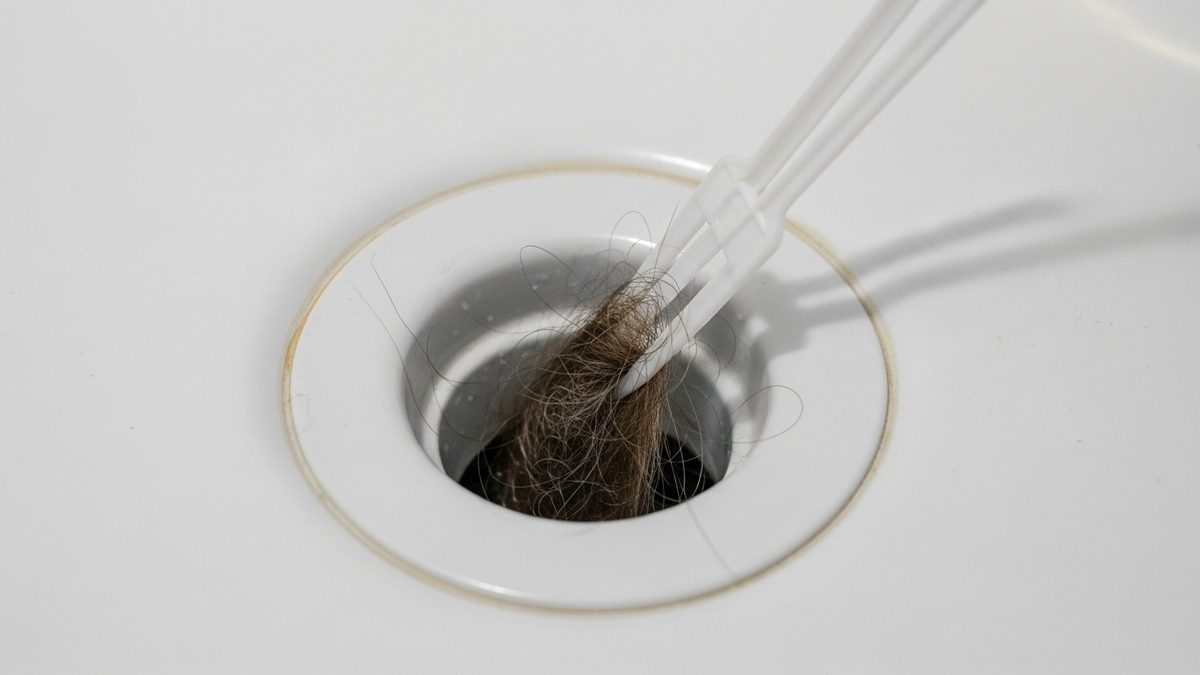
Insert a plastic drain-cleaning tool (zip-it tool) into the drain — these thin, barbed strips grab hair on the way out. Push 4 to 6 inches down, twist a quarter turn, and pull slowly. Repeat, rotating slightly each pass, until nothing comes out. Throw the pulled hair in the trash. This one step clears most tub and shower clogs.
Step 3 — Flush with boiling water
Pour a full kettle of boiling water into the drain in two or three slow passes, 30 seconds apart. Heat softens soap-scum buildup on pipe walls. With PVC pipes, use the hottest tap water instead to avoid softening the plastic. Run the faucet and check whether the drain has cleared.
Step 4 — Plunge the drain (cover the overflow first)
On a bathtub, plunging without sealing the overflow does almost nothing — air escapes through the overflow plate rather than pushing against the clog.
Press a wet rag firmly over the overflow opening (the small cover plate near the bottom of the tub wall). Place a cup plunger over the drain, add an inch or two of water to create a seal, and plunge vigorously for 20 to 30 seconds. Lift sharply on the final stroke. Run water and repeat if needed.
Step 5 — Baking soda and vinegar
Pour one cup of dry baking soda into the drain, then immediately one cup of white vinegar. Cover the drain for 15 to 20 minutes to keep the reaction inside the pipe, then flush with hot water. This loosens soft soap-scum residue and is safe for all pipe types — though it will not dissolve a dense hair clog, which is why the zip-it tool comes first.
Step 6 — Snake the drain
For a stubborn clog, a hand-operated drain snake reaches deeper than any of the previous methods. Snaking through the overflow plate is usually more effective for bathtubs because it bypasses the stopper assembly entirely.
Remove the two screws on the overflow cover plate, pull the plate and linkage out of the wall, and feed the snake into the pipe opening. Crank clockwise as you push forward, work through resistance, then rinse the cable as you retract it. Reassemble the cover plate and test.
What to avoid
Skip chemical drain cleaners, especially for repeated use. Products containing sulfuric acid or sodium hydroxide (lye) generate heat that can warp PVC and damage chrome fittings. They are hazardous and largely ineffective on hair. A zip-it tool is faster, safer, and more effective.
When to call a plumber
Most single-drain tub or shower clogs are straightforward DIY jobs. Call a licensed plumber if:
- You have completed all six steps and the drain is still slow or blocked
- More than one drain in the house is slow at the same time
- The toilet gurgles when the tub drains, or vice versa
- You notice a sewage or rotten-egg smell from the drain
- Water backs up into the tub from the toilet or floor drain
The last three signs point to the main sewer line, not an individual fixture. See how to unclog a drain for more on telling the difference.
How to prevent tub and shower clogs
A mesh or silicone hair-catcher drain cover costs two to five dollars and eliminates most clogs before they start. Rinse it after every shower. Flush the drain with a kettle of hot water once a month to keep soap scum soft, and clean the stopper linkage once or twice a year.
FAQ
How often do tub and shower drains clog? Without a hair catcher, a slowdown every two to three months is typical. With a strainer and monthly hot-water flushes, most homeowners go years between clogs.
Can I use a toilet plunger on a tub drain? A flat cup plunger seals better over a flat tub drain. A toilet (flange) plunger is shaped for the curved toilet bowl and delivers weaker suction here.
Why does my drain smell even after I clear the clog? A lingering odor usually means the P-trap has dried out or still has residue. Run hot water for a minute to refill it. A persistent rotten-egg smell is sewer gas — call a plumber, because a damaged trap can let dangerous gases into the home.
Does baking soda and vinegar actually work? It softens loose soap scum and is safe for all pipes. It will not dissolve a dense hair clog. Use it as a monthly maintenance flush, not an emergency fix.
My stopper will not come out. What do I do? Soap-scum buildup around the threads is the usual culprit. Clean around the base, then try steady counterclockwise pressure by hand. If it still does not move, a plumber can remove it without damaging the finish.
If you have worked through these steps and the drain still will not clear, a vetted local plumber can diagnose and fix it the same day. Get a free quote from a licensed plumber near you.
Sources
- American Academy of Dermatology Association. "Hair Loss: Who Gets It and Causes." aad.org.
- U.S. Geological Survey. "Hardness of Water." water.usgs.gov.
- U.S. Environmental Protection Agency. "WaterSense: Showerheads." epa.gov/watersense/showerheads.
- Plumbing-Heating-Cooling Contractors Association (PHCC). Consumer plumbing resources. phccweb.org.
- This Old House. "How to Unclog a Bathtub Drain." thisoldhouse.com.
Disclaimer
The information on this page is provided for general educational purposes only and is offered "as is" and "as available," without warranties of any kind, whether express or implied — including, without limitation, any warranties of accuracy, completeness, reliability, merchantability, or fitness for a particular purpose. It is not professional advice and is not a substitute for inspection, diagnosis, or repair by a licensed, qualified professional.
Home systems involving gas, electricity, water, refrigerant, fire, or structural components can be hazardous, and requirements vary by local code and jurisdiction. Any inspection, diagnosis, repair, installation, or other action referenced on this page should be performed by a licensed professional. You should not rely on this content to perform such work yourself. To the fullest extent permitted by law, [Company Name] and its owners, employees, and contributors assume no responsibility or liability for any injury, death, property damage, or other loss arising out of or in connection with the use of, or reliance on, this information.
If you smell gas or suspect a carbon monoxide leak, leave the area immediately and call 911 or your gas utility from a safe location.