Outlet Hot, Sparking, or Smells Like Burning? Here's How Dangerous It Is
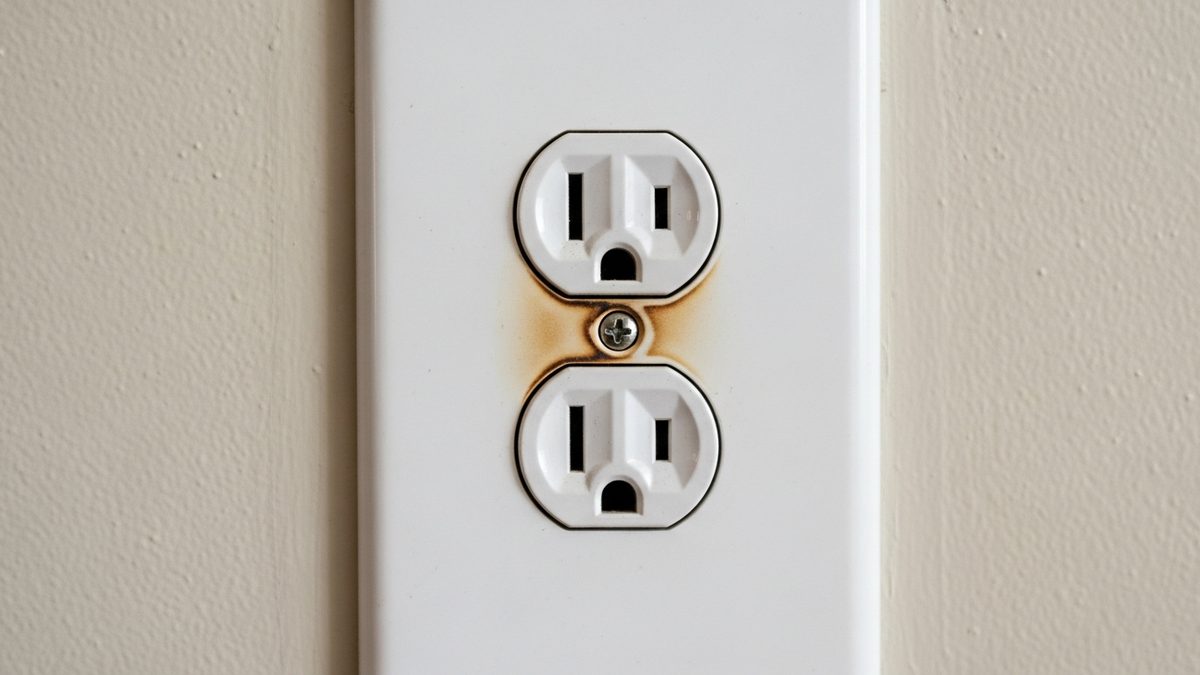
If your outlet feels hot, you're seeing sparks, or you're getting a burning smell from an outlet or your electrical panel, stop what you're doing. These are not quirks to monitor over a few days — they are warning signs of a potential fire or shock hazard that needs attention right now.
Is a hot or burning-smelling outlet dangerous?
Yes — with one narrow exception.
A slightly warm outlet cover can be normal in a couple of specific situations: dimmers that handle higher loads generate a small amount of heat, and USB charging outlets contain internal circuitry that can run a few degrees above room temperature. That kind of barely-noticeable warmth, with nothing plugged in that is actively charging or dimming, is generally within design tolerances.
Everything else is a red flag. According to the U.S. Consumer Product Safety Commission (CPSC), outlet and switch faceplates that feel hot — painful to the touch or visibly discolored — indicate a potential fire hazard in the outlet, switch, or the wiring behind it. The CPSC is direct: discontinue use immediately and get a qualified electrician involved as soon as possible.
A burning smell makes the situation more urgent. Overheated or damaged wiring gives off the distinctive odor of burning insulation, and that smell often appears before any visible smoke does. Electrical fires frequently start inside walls, in crawlspaces, or behind panels where they can spread for minutes before triggering a smoke alarm. The Electrical Safety Foundation International (ESFI) reports that home electrical fires cause an estimated 51,000 fires, nearly 500 deaths, more than 1,400 injuries, and $1.3 billion in property damage each year.
The same urgency applies when the smell is coming from your electrical panel rather than a wall outlet. The panel is the point where power enters every circuit in your home, and a burning odor there suggests wiring or a breaker is overheating somewhere in the system. If you notice a buzzing electrical panel alongside that smell, the risk is compounded.
Warning signs that mean act now
These are the signs that call for immediate action — not a wait-and-see approach:
- Burning or hot-plastic smell coming from an outlet, switch, or electrical panel
- Outlet cover or switch plate that is hot to the touch (not just slightly warm)
- Discoloration or scorch marks on an outlet, cover plate, or the wall around it
- Visible sparks when plugging in or unplugging a device
- Smoke — any amount, from any part of the electrical system
- Melting or deformed outlet covers or plug blades
- Buzzing, crackling, or sizzling sounds coming from an outlet or the panel
- A breaker that keeps tripping on the circuit connected to that outlet — this is often the panel's way of flagging the same underlying problem (see our guide on a breaker that keeps tripping)
What to do right now
1. Stop using the outlet immediately. Do not plug anything else in, and do not use the switch if that is where the problem is.
2. Unplug devices if you can do so safely. If the outlet feels hot but there is no smoke or active sparking, it is generally safe to grasp the plug body (not the cord) and unplug it. If you see smoke or active sparking, skip this step.
3. Shut off the breaker for that circuit. Go to your electrical panel and switch off the breaker that controls the affected outlet or area. If you are not sure which breaker it is, shut off the main breaker. Leave the breaker off until the circuit has been inspected.
4. Never use water on an electrical fire. Water conducts electricity and will make the situation worse. If you have a fire extinguisher, it must be a Class C (or multipurpose ABC) rated unit. If fire has spread beyond a single small point, do not attempt to fight it yourself.
5. Call 911 if you see smoke, flame, or smell persistent burning. Get everyone out of the house and call 911. Do not re-enter until firefighters say it is safe. Electrical fires can smolder inside walls for a long time before becoming visible.
6. Call a licensed electrician before restoring power. Once any immediate danger is addressed, a licensed electrician needs to identify the root cause before the circuit is used again. This is not optional — using a faulty circuit restarts the risk.
What's causing it
Hot or burning-smelling outlets usually trace back to one of these five problems:
Loose or corroded connections Every wire in your home connects to terminals and contact points. When a connection works loose over years of thermal expansion and contraction, resistance builds at that joint. Resistance generates heat. That heat can char insulation and ignite nearby materials inside the wall cavity — often with no visible warning on the outside of the outlet.
Backstabbed wiring Many outlets installed in older homes used a shortcut called "backstabbing" — pushing the wire into a spring-loaded hole in the back of the outlet rather than wrapping it around a screw terminal. The CPSC specifically flags these back-wire push-in connections as prone to loosening and overheating over time. A backstabbed outlet can feel fine for years and then start running hot as the connection degrades.
Overloaded circuit A standard 15-amp residential circuit can handle about 1,500 watts at one time. Plug in more than that — a space heater plus a hair dryer on the same circuit, for example — and the wiring carries more current than it was designed for. The breaker should trip, but if it is slow to respond or slightly oversized, heat builds in the wiring and outlet first.
Damaged or aging wiring Insulation cracks, wires chafe against framing or staples, and rodents occasionally chew through conductors. Any of these create a path for current to arc, spark, or leak — generating heat at the damaged point.
Aluminum wiring Homes built between roughly 1965 and 1973 were often wired with aluminum instead of copper. Aluminum expands and contracts more than copper and is far more likely to develop loose connections at outlets and switches over time. The CPSC found that homes wired with aluminum are 55 times more likely to have outlet connections reach fire-hazard conditions than copper-wired homes. If your home is from this era, aluminum wiring deserves special attention from a licensed electrician.
Why this is electrician-only
Diagnosing a hot or burning outlet means opening the wall box, testing connections, inspecting wire condition, and evaluating the circuit back to the panel. That work requires knowledge of the National Electrical Code, the right tools to test live circuits safely, and the ability to spot secondary hazards (like a nearby wire that is also damaged) that a homeowner checking their own work would likely miss.
Beyond diagnosis, the fix might involve replacing the outlet, re-terminating connections with the proper torque, replacing a section of wire, or upgrading an older backstabbed outlet to a screw-terminal type. Any of those tasks in the wrong hands creates new hazards.
ESFI is clear on this point: the best way to protect your home against electrical fires is to hire a qualified, licensed electrician to perform any electrical work. This is exactly that kind of work.
How to prevent it
- Do not overload circuits. Major appliances should plug directly into wall outlets, not extension cords or power strips. Never run two high-draw appliances on the same circuit at the same time.
- Replace outdated outlets. Outlets more than 15–20 years old, or any outlet that wobbles or grips plugs loosely, should be replaced by a licensed electrician.
- Ask about AFCI protection. Arc-fault circuit interrupters (AFCIs) detect the kind of arcing that standard breakers miss. The CPSC estimates that 50 percent of electrical fires could be prevented with proper AFCI protection. The current National Electrical Code requires them in most rooms in new construction.
- Schedule periodic inspections. The CPSC recommends having your electrical system inspected if it has not been looked at in 10 or more years, or if you are noticing any warning signs.
- Test smoke detectors monthly. A working smoke detector is your last line of defense if an electrical fire starts inside a wall where you cannot see it.
FAQ
Q: Is it dangerous when an outlet sparks as you plug something in?
A: A single tiny spark at the instant you plug something in can be normal, since it is just a brief draw of current. What is not normal is a large spark or shower of sparks, repeated sparking, a popping sound, smoke, a burning smell, or a spark when nothing is being plugged in. Those point to a short, loose wiring, or a worn-out outlet that can start a fire. Stop using the outlet and have a licensed electrician check it.
Can a hot outlet start a fire even if nothing is plugged in? Yes. Power runs to the outlet at all times on most standard circuits. If the wiring or connections inside the box are damaged or loose, heat can build and ignite surrounding materials regardless of whether anything is plugged in.
Is it okay to just flip the breaker back on after I shut it off? Not until a licensed electrician has found and fixed the cause. Resetting the breaker restores current to a circuit that already showed signs of overheating, which restarts the hazard.
What if only one outlet on the circuit is hot but the others seem fine? The problem is localized to that outlet or the wiring immediately behind it. That narrows the diagnostic work, but it still requires an electrician to open the box and inspect it. Do not assume the other outlets on the circuit are problem-free until the root cause is confirmed.
My panel smells like burning but no outlets seem hot — what now? Treat this as an emergency. Shut off your main breaker if you can safely reach the panel, leave your home, and call an electrician (or 911 if you see smoke or suspect active fire). A burning smell at the panel can mean a breaker, a bus bar connection, or a wire inside the panel is overheating — and the panel feeds every circuit in your house.
Can I use a USB outlet that gets warm? A USB outlet that is slightly warm to the touch during active charging is usually within normal limits. If it becomes hot, smells like burning, or shows any discoloration, stop using it and have it inspected.
Get a licensed electrician near you
A hot, sparking, or burning outlet should never sit on a to-do list. If you are seeing any of the warning signs described above, the right move is to stop using that circuit and get a licensed electrician out to take a look. Local Service Group connects homeowners with vetted, licensed electrical pros who can diagnose the problem and fix it safely. Get a free quote and find a qualified electrician near you today.
Sources
- U.S. Consumer Product Safety Commission — Guide to Home Wiring Hazards (CPSC Publication 518): https://www.cpsc.gov/s3fs-public/518.pdf
- Electrical Safety Foundation International — Home Electrical Fires: https://www.esfi.org/home-electrical-fires/
- Electrical Safety Foundation International — Home Safety: https://www.esfi.org/home-safety/
- National Fire Protection Association — Electrical Home Fire Safety: https://www.nfpa.org/education-and-research/home-fire-safety/electrical-safety-in-the-home
Disclaimer
The information on this page is provided for general educational purposes only and is offered "as is" and "as available," without warranties of any kind, whether express or implied — including, without limitation, any warranties of accuracy, completeness, reliability, merchantability, or fitness for a particular purpose. It is not professional advice and is not a substitute for inspection, diagnosis, or repair by a licensed, qualified professional.
Home systems involving gas, electricity, water, refrigerant, fire, or structural components can be hazardous, and requirements vary by local code and jurisdiction. Any inspection, diagnosis, repair, installation, or other action referenced on this page should be performed by a licensed professional. You should not rely on this content to perform such work yourself. To the fullest extent permitted by law, [Company Name] and its owners, employees, and contributors assume no responsibility or liability for any injury, death, property damage, or other loss arising out of or in connection with the use of, or reliance on, this information.
If you smell gas or suspect a carbon monoxide leak, leave the area immediately and call 911 or your gas utility from a safe location.