Why Does My Circuit Breaker Keep Tripping? (And When to Call a Pro)
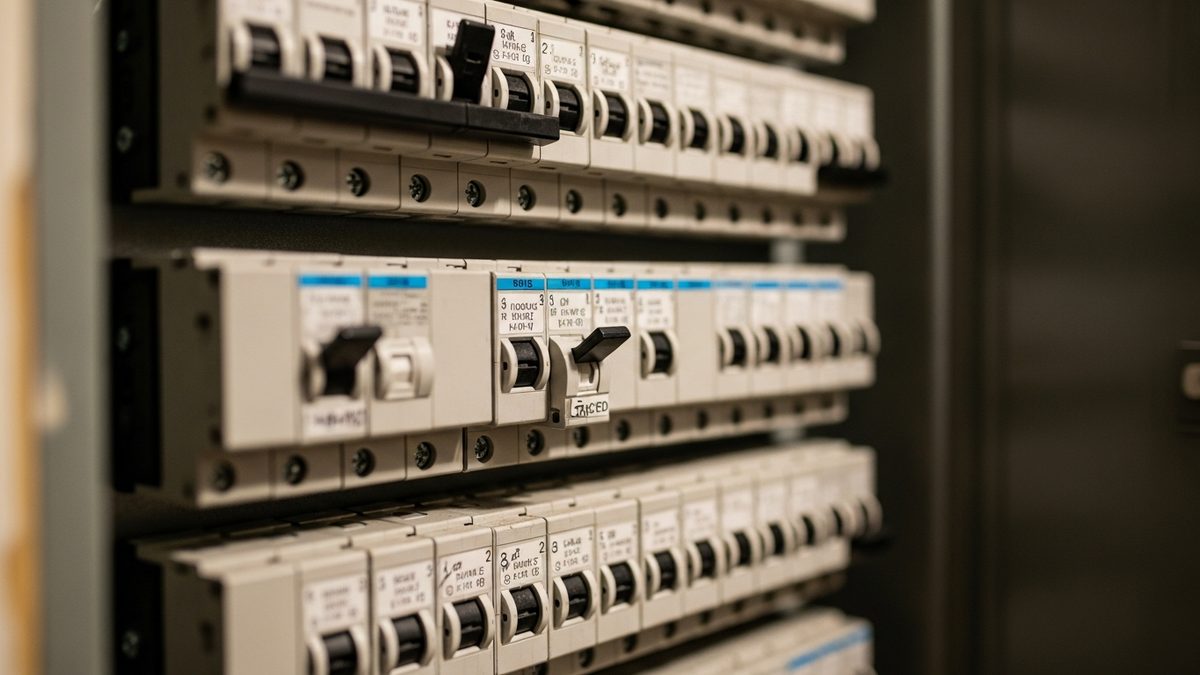
You flip the breaker back on, the lights come up — and then it trips again ten minutes later. It's one of the most frustrating moments a homeowner can have, and it's tempting to just keep resetting until it sticks. The truth is, a breaker that trips over and over is trying to tell you something important. This guide walks you through the most likely reasons, what you can safely check yourself, and when it's time to hand things off to a licensed electrician.
Most likely causes
Breakers trip for a reason every single time. Here's a practical ranking, starting with the most common culprits.
1. Overloaded circuit This is the number-one reason a breaker trips. Every circuit is designed to carry only so much electrical load, and when too many devices run at once, the breaker does exactly what it's supposed to do — it shuts things down to protect the wiring. You might notice this happens after running the microwave while the toaster and coffee maker are all going at the same time. The breaker might also trip after a device has been running for a while, not instantly, which is a classic sign of a thermal (heat-buildup) overload.
2. Short circuit in a connected device or cord A short circuit happens when electricity takes a shortcut it shouldn't — usually because insulation is damaged or something inside a device has failed. Breakers react to this almost instantly. If your breaker trips the moment you plug something in or flip it on, a short circuit in that specific item is a strong possibility.
3. Ground fault A ground fault occurs when current leaks out of its normal path — for example, when a wire touches a grounded metal part or when moisture gets into electrical equipment. Ground faults are especially common on circuits near water, like kitchens, bathrooms, garages, and outdoor outlets. They're a shock hazard, which is why GFCI (ground fault circuit interrupter) breakers and outlets are designed to cut power fast when they detect one.
4. Arc fault Damaged, pinched, or aging wiring can create dangerous sparking called arcing. Standard breakers often can't detect this, which is why newer homes and renovated circuits use AFCI (arc fault circuit interrupter) breakers. The U.S. Consumer Product Safety Commission notes that arcing and sparking in home wiring can cause fires even before a standard breaker would react. If you have an AFCI breaker and it keeps tripping, damaged or deteriorated wiring is worth investigating.
5. A failing breaker Breakers don't last forever. They can wear out over time, or get damaged by moisture, flooding, or years of repeated trips. A breaker that trips under light loads, won't reset properly, or has a history of water exposure may simply need to be replaced — but that's a job for a licensed electrician, not a DIY project.
Troubleshoot it yourself (safely)
You can safely work through these steps as a homeowner — staying completely outside the panel interior the whole time.
-
Make sure it's actually a tripped breaker, not a utility outage. Check whether your neighbors have power. If the rest of your street is fine and only part of your home is dark, you're dealing with a tripped breaker, not an outage.
-
Look for danger signs before you touch anything. Scan the area for a burning smell, smoke, buzzing or sizzling sounds, sparks, or warm/discolored outlet and switch covers. If you find any of these, stop immediately — leave the breaker off and call a licensed electrician. Don't reset it.
-
Unplug or turn off everything on that circuit. This is the simplest, most useful step. Unplug lamps, appliances, and chargers — anything you know is on that circuit. Remove the load entirely before you reset.
-
Reset the breaker correctly, once. Push it firmly to the full OFF position first (tripped breakers often sit in a middle position that looks like ON), then move it back to ON. If it trips again immediately with everything unplugged, that points away from a simple overload. Stop resetting and move to the next steps.
-
Add devices back one at a time. Wait a minute or two between each item. If the breaker trips when you restore one specific device, that item or its cord is likely the problem — stop using it and have it inspected or replaced.
-
Look over visible cords, plugs, and outlets. Use a flashlight and check for crushed or cracked insulation, scorch marks, loose plugs, or any sign of wetness near electrical equipment. Damage you can see is a real clue.
-
For AFCI or GFCI breakers, use only the built-in test button. Many specialty breakers have a test button on the face of the breaker itself. Follow your manufacturer's instructions for that specific model. Third-party plug-in "testers" sold at hardware stores are not an approved way to test AFCI breakers, according to the breaker manufacturer's own guidance.
-
Stop before you open the panel. If the cause isn't obvious after these external checks, that's your stop point. Do not remove the panel cover, do not touch any wiring, and do not swap out the breaker yourself. The remaining likely causes — fixed wiring faults, neutral issues, breaker failure — all require professional diagnosis.
Safety first
A circuit breaker that keeps tripping is a warning signal, not a minor annoyance. OSHA lists electrical shock, electrocution, fire, arc flash, and explosion among the hazards that bad wiring can cause. The CPSC has noted specifically that electrical panel boxes are usually energized even when the main breaker is switched off — meaning the inside of your panel is live even when you think you've cut the power.
Do not keep resetting a breaker if any of these are true:
- It trips again immediately, even with the circuit fully unloaded
- You smell burning, hear buzzing or sizzling, see discoloration around outlets or covers, or notice sparks anywhere
- You or anyone in your household felt a shock or even a mild tingle from a device or outlet on that circuit
- The panel or any nearby wiring was recently exposed to water or flooding
- The breaker's own test button fails to work, or the indicator shows failed protection
In any of these situations, leave the breaker off. The risk of an electrical fire or shock is real, and repeated resets can mask a dangerous problem rather than solve it.
When to call a licensed electrician
A good rule of thumb: your job ends at the panel door.
Bring in a licensed electrician when:
- The breaker trips again with all loads removed (points to a wiring fault or bad breaker)
- You detect a burning smell, hear buzzing, or find a hot or discolored panel, outlet, or switch
- The breaker has tripped more than twice in a short period without an obvious cause
- Your home is older and has never had a wiring inspection
- You've recently added major new appliances or done a renovation
- The panel or wiring has been wet or flooded — don't just dry it out and resume use; have it inspected and replaced as needed by a qualified professional
- You need to replace the breaker itself, add a new circuit, upgrade your panel, or handle any work inside the service panel
Permits are often required for hard-wired electrical work, and the rules vary by city and state. Even in places that allow owner-occupants to do some electrical work, service panel work is a different category entirely because of the live-voltage risk.
What it typically costs
These are rough 2025–2026 US ranges and are not bids. Your actual cost will depend on your location, the scope of work, and local permit requirements.
| Work | Approximate range |
|---|---|
| Basic non-contact voltage tester (DIY screening) | $17–$50 |
| Plug-in GFCI/receptacle tester | $15–$20 |
| Circuit breaker finder | $32–$50 |
| Electrician diagnostic visit / inspection | $125–$500 |
| Replace one branch circuit breaker (pro) | $100–$260 |
| Add a new dedicated circuit (pro) | $250–$900 |
| Replace a main breaker (pro) | $200–$600+ |
| Replace or upgrade a panel (pro) | $500–$4,000+ depending on amps and scope |
| Upgrade to 200-amp service (pro) | $1,300–$2,500+ |
AFCI and dual-function AFCI/GFCI breakers cost significantly more than standard breakers as parts, so professional totals for specialty circuits run higher than for basic replacements.
Common mistakes to avoid
- Resetting over and over hoping it will "stick." The CPSC is direct on this: a tripping breaker should be investigated, not endlessly recycled. Repeated resets can cause a real fault to grow worse.
- Assuming the breaker is faulty before removing any load. Most of the time, the problem is on the circuit side, not the breaker itself. Always unload the circuit and do a proper single reset first.
- Swapping in a higher-amp breaker to "fix" the problem. This is genuinely dangerous. The breaker size must match the wire gauge of the circuit it protects. A larger breaker on undersized wire can allow the wire to overheat and start a fire before the breaker ever trips.
- Running heavy appliances through extension cords or power strips. Major appliances should plug directly into a wall receptacle. Extension cords used long-term for heavy loads are a common cause of overloads and cord damage.
- Ignoring heat, smells, buzzing, or mild shocks. These are not minor inconveniences. The Electrical Safety Foundation International (ESFI) treats all of them as signs of a wiring hazard that needs professional attention.
- Using the wrong replacement breaker for your panel. Breaker compatibility is load-center specific. "It fits" is not the same as "it's listed for this panel." Using the wrong part can void your panel's safety listing.
How to prevent it
The best long-term solution is a combination of reducing chronic overload and keeping your protection devices working properly.
- Know your circuits. Label every breaker in your panel if it isn't labeled already. Knowing exactly what each circuit serves makes troubleshooting much faster and safer.
- Plug major appliances directly into wall receptacles. Avoid running refrigerators, microwaves, space heaters, or other high-draw devices through extension cords or power strips.
- Add dedicated circuits for heavy loads. If your kitchen, laundry room, or home office regularly trips a breaker, the long-term fix is a dedicated circuit — not creative load shuffling.
- Test GFCI protection monthly. Siemens recommends monthly testing of GFCI protection using the test button on the device or breaker. A quick press every month confirms your shock protection is working.
- Get a professional inspection if your home is older, has had major renovations, or had a significant new appliance added. ESFI recommends a professional electrical inspection for homes 40 years old or more, or any home that's had major changes.
- After any water exposure, get professional inspection before restoring use. Wet breakers and wiring are not simply "dry them out and move on" situations. Moisture damage can cause nuisance trips now and fire hazards later.
FAQ
Q: Is it dangerous if a circuit breaker keeps tripping?
A: A breaker that trips once in a while is doing its job — it is protecting your wiring, and that is normal. The danger is when a breaker trips again and again, will not reset, feels hot to the touch, buzzes, or comes with a burning smell, scorch marks, or flickering lights. Those signs can point to a short circuit, ground fault, or arc fault that is a real fire or shock risk. Stop resetting it and have a licensed electrician inspect it as soon as possible.
Q: Why does my breaker only trip when I run two appliances at the same time? That's the classic overload pattern. The circuit is carrying more current than it's designed to handle, so the breaker does its job. The fix is either to split the load across different circuits or, for a permanent solution, have an electrician add a dedicated circuit.
Q: The breaker trips immediately, even with nothing plugged in. What does that mean? This is not a typical overload. If the circuit is completely unloaded and the breaker still trips as soon as you reset it, the likely causes include a fault in the fixed wiring, a hard-wired load you may have forgotten (like a built-in light or a smoke detector), a neutral or ground wiring issue, or a failed breaker. Leave it off and call an electrician.
Q: Can I just keep resetting it until it holds? No. The CPSC specifically cautions homeowners not to simply reset a tripping breaker without finding the cause. Each time you reset into an unresolved fault, you risk making the underlying problem worse.
Q: Is it safe to put in a bigger breaker to stop the tripping? Absolutely not. Breaker size is matched to the wire gauge in the wall. Putting a 20-amp breaker on 14-gauge wire (which is rated for 15 amps) means the wire can overheat and potentially cause a fire before the breaker ever trips. Always size protection to match the circuit.
Q: My breaker started tripping after heavy rain. Is that related? It can be. Moisture can cause ground faults and can physically damage breaker components. Manufacturer guidance and CPSC recommendations are consistent: if your electrical equipment has been exposed to water, have it professionally inspected and replaced as needed before putting it back into regular use.
Q: Can I replace the breaker myself? For most homeowners, no. Working inside a service panel means working around live voltage — the CPSC has noted that electrical panel boxes are typically energized even when the main breaker is off. Breaker replacement also requires matching the right part to your specific panel, and permit requirements vary by location. This is a job for a licensed electrician.
Get a free quote from a vetted local pro
If your breaker keeps tripping and you've worked through the safe checks above without a clear answer — or if you spotted any of the red flags in this guide — it's time to bring in a professional. Don't guess with electrical problems.
Local Service Group connects homeowners with licensed, vetted electricians in their area. Get a free quote from a qualified local pro today and get the real answer, safely.
Sources
-
U.S. Consumer Product Safety Commission. Preventing Home Fires: Arc Fault Circuit Interrupters (AFCIs). https://www.cpsc.gov/s3fs-public/5133.pdf
-
U.S. Consumer Product Safety Commission. Commission Closes Investigation Of FPE Circuit Breakers And Provides Safety Information For Consumers. https://www.cpsc.gov/Newsroom/News-Releases/1983/Commission-Closes-Investigation-Of-FPE-Circuit-Breakers-And-Provides-Safety-Information-For-Consumers
-
Occupational Safety and Health Administration. Electrical Safety (Hospitals eTool). https://www.osha.gov/etools/hospitals/hospital-wide-hazards/electrical-safety
-
Occupational Safety and Health Administration. Ground-Fault Circuit Interrupters (GFCI). https://www.osha.gov/etools/construction/electrical-incidents/ground-fault-circuit-interrupters
-
Siemens. GFCI circuit breakers for residential use. https://www.siemens.com/en-us/products/low-voltage/residential-gfci-circuit-breakers/
-
Siemens. Residential dual-function circuit breakers (AFCI and GFCI). https://www.siemens.com/us/en/products/energy/low-voltage/residential-circuit-breakers/residential-dual-fuction-circuit-breakers.html
-
Siemens. Arc fault circuit breakers or AFCIs. https://www.siemens.com/en-us/products/low-voltage/residential-afci-circuit-breakers/
-
Schneider Electric. Why is my GFI breaker tripping when I use my chop saw? https://www.se.com/us/en/faqs/FA316728/
-
Schneider Electric. QO, QOB and HOM Arc Fault (CAFI) and Dual Function (DF) circuit breaker troubleshooting tips using Time Saver Diagnostics. https://www.se.com/us/en/faqs/FA125415/
-
Schneider Electric. Does third party equipment exist to test AFI, CAFI, and AF breakers to determine they are functioning properly? https://www.se.com/us/en/faqs/FA112023/
-
Schneider Electric. The test button on a QO-GFI or HOM-GFI breaker will not trip the breaker; is the breaker bad? https://www.se.com/us/en/faqs/FA168589/
-
Schneider Electric. What should be done if moisture or condensation is observed in an electronic trip miniature breaker? https://www.se.com/us/en/faqs/FAQ000268287/
-
Schneider Electric. What is Schneider Electric policy on submerged breakers? https://www.se.com/us/en/faqs/FA108427/
-
Schneider Electric. How do you determine why a thermal-magnetic breaker nuisance trips? https://www.se.com/us/en/faqs/FA232232/
-
San Diego Gas & Electric. Report an Outage / Resetting Breakers Safely. https://www.sdge.com/report-outage
-
Pacific Gas and Electric Company. Electric Safety. https://pgealerts.alerts.pge.com/safety/electricity/
-
Electrical Safety Foundation International. Home Wiring Safety Tips. https://www.esfi.org/home-wiring-safety-tips/
-
Electrical Safety Foundation International. Don't Overload Your Home. https://www.esfi.org/dont-overload-your-home/
-
Electrical Safety Foundation International. Home Electrical Safety. https://www.esfi.org/home-electrical-safety/
-
Electrical Safety Foundation International. Ground Fault Circuit Interrupters (GFCI). https://www.esfi.org/ground-fault-circuit-interrupters-gfci/
-
Electrical Safety Foundation International. Arc-Fault Circuit Interrupters (AFCIs): Prevent Electrical Fires. https://www.esfi.org/arc-fault-circuit-interrupters-afcis-prevent-electrical-fires/
-
Seattle Department of Construction and Inspections. Electrical Permit. https://www.seattle.gov/sdci/permits/permits-we-issue-%28a-z%29/electrical-permit
-
City of Portland. Residential Electrical Permits. https://www.portland.gov/bds/41031
-
National Fire Protection Association. NFPA 70 First Draft Meeting Agenda, 2025 NEC cycle. https://docinfofiles.nfpa.org/files/AboutTheCodes/70/70_A2025_NEC_P02_SD_MeetingAgenda_1024.pdf
-
HomeGuide. How Much Does It Cost To Replace or Install a Circuit Breaker? (2026). https://homeguide.com/costs/cost-to-replace-a-circuit-breaker-switch
-
HomeGuide. Cost To Replace Electrical Panel | Upgrade Breaker Box Amps (2026). https://homeguide.com/costs/cost-to-replace-electrical-panel
-
This Old House. What Is the Cost to Upgrade an Electrical Panel? https://www.thisoldhouse.com/electrical/cost-to-upgrade-electrical-panel
-
This Old House. How Much Does an Electrician Cost? https://www.thisoldhouse.com/electrical/electrician-cost
-
The Home Depot. Klein Tools Non Contact Voltage Tester Pen, 50–1000V AC (NCVT1PR). https://www.homedepot.com/p/317460355
-
The Home Depot. Klein Tools GFCI Receptacle Tester (RT200). https://www.homedepot.com/p/203195019
-
The Home Depot. Klein Tools Digital Circuit Breaker Finder with GFCI Outlet Tester (ET310). https://www.homedepot.com/p/308709729
-
The Home Depot. Square D Homeline 15-Amp Single-Pole Circuit Breaker (HOM115CP). https://www.homedepot.com/p/100153952
-
The Home Depot. Homeline 15-amp AFCI/GFCI breaker listings and prices. https://www.homedepot.com/b/Electrical-Power-Distribution-Electrical-Panels-Protective-Devices-Circuit-Breakers/AFCI-GFCI/15-amp/Homeline/N-5yc1vZbm16Z1z1zd2xZ1z1zdzdZ1z1znbn
-
The Home Depot. Homeline 20-amp GFCI breaker listings and prices. https://www.homedepot.com/b/Electrical-Power-Distribution-Electrical-Panels-Protective-Devices-Circuit-Breakers/GFCI/20-amp/Homeline/N-5yc1vZbm16Z1z0mh9uZ1z1zd2xZ1z1zncy
-
Schneider Electric. What breakers does a QO Load Center take? https://www.se.com/us/en/faqs/FA174503/
-
U.S. Consumer Product Safety Commission. CPSC Warns of Generator, Carbon Monoxide and Fire Hazards Ahead of Hurricane Season. https://www.cpsc.gov/Newsroom/News-Releases/2026/CPSC-Warns-of-Generator-Carbon-Monoxide-and-Fire-Hazards-Ahead-of-Hurricane-Season
Disclaimer
The information on this page is provided for general educational purposes only and is offered "as is" and "as available," without warranties of any kind, whether express or implied — including, without limitation, any warranties of accuracy, completeness, reliability, merchantability, or fitness for a particular purpose. It is not professional advice and is not a substitute for inspection, diagnosis, or repair by a licensed, qualified professional.
Home systems involving gas, electricity, water, refrigerant, fire, or structural components can be hazardous, and requirements vary by local code and jurisdiction. Any inspection, diagnosis, repair, installation, or other action referenced on this page should be performed by a licensed professional. You should not rely on this content to perform such work yourself. To the fullest extent permitted by law, [Company Name] and its owners, employees, and contributors assume no responsibility or liability for any injury, death, property damage, or other loss arising out of or in connection with the use of, or reliance on, this information.
If you smell gas or suspect a carbon monoxide leak, leave the area immediately and call 911 or your gas utility from a safe location.