Lights Flickering Throughout the House? Here's What's Causing It
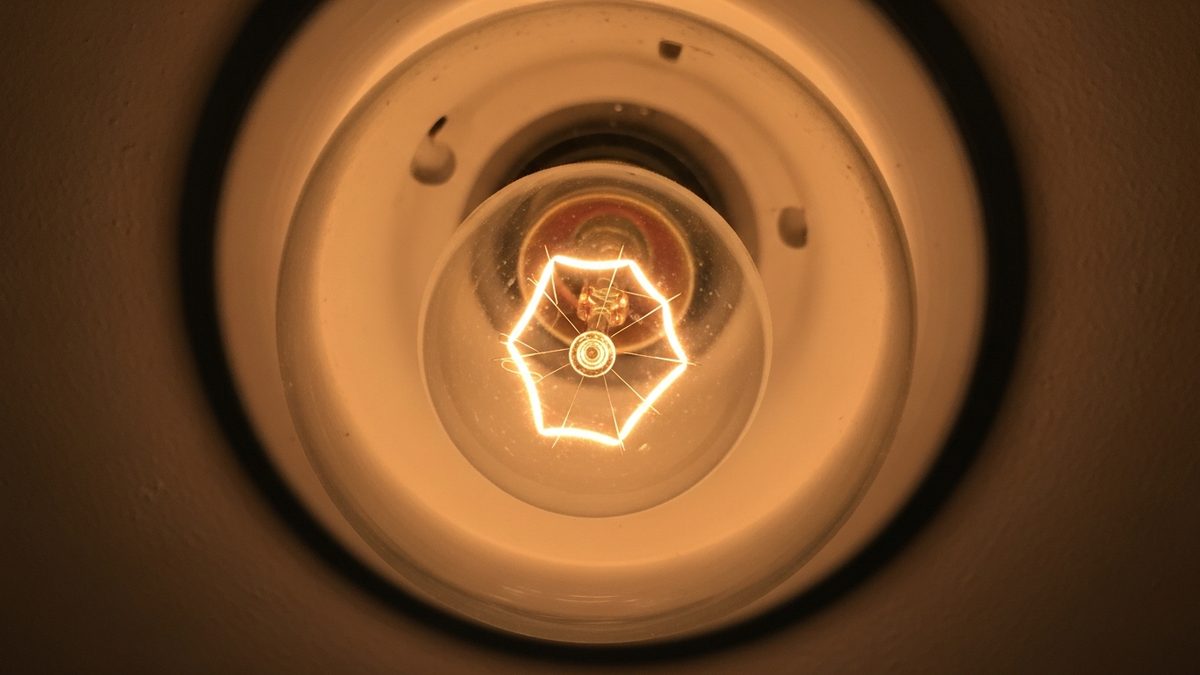
Lights flickering in one spot usually means a loose bulb or a tired fixture. Lights flickering throughout the entire house is a different problem — one that can mean a dangerous fault at the service connection, a failing electrical panel, or a lost neutral wire. Here's how to figure out which category you're in and what to do about it.
First, how widespread is it?
The scope of the flickering is the most useful clue you have. Before you call anyone, take two minutes to walk the house and answer this question: is it one light, one room, or every light in the building?
One fixture only. If a single bulb or fixture is flickering — and everything else is steady — the cause is almost always at that fixture or the bulb itself. A loose bulb, a worn-out socket, a mismatched dimmer, or a bulb that is simply failing will all produce this pattern. This is the least serious category.
One room or one circuit. If the flickering is limited to a single room or a group of lights that all go off together on the same circuit, the most likely cause is a loose wire at a switch, outlet, or junction box somewhere on that circuit, or an overloaded circuit that is being stressed by a large appliance. Still worth fixing, but not a panic situation.
Whole house, all at once. If lights throughout the entire home flicker or dim together — especially when nothing obvious is running — this points to a problem at the main service entrance, the main panel, or the neutral connection between the utility and your home. This is the most serious category. In rare but real cases, it can be an active fire hazard. Do not ignore it.
Most likely causes
Loose bulb or bad dimmer-to-LED match
The most common, least dangerous cause. LED bulbs can flicker on dimmers that were designed for incandescent bulbs because the electronics do not play well together. A bulb that is not fully screwed in will also flicker as the connection intermittently breaks.
Large appliance startup briefly dimming lights
When a motor-driven appliance — a central air conditioner, a refrigerator compressor, a well pump, or a washing machine — starts up, it draws a large burst of current for a second or two. Lights on the same circuit may briefly dim during this surge. Occasional brief dimming when the AC kicks on is generally normal. If the dimming is severe, lasts more than a couple of seconds, or happens on circuits far from the appliance, have an electrician take a look.
Loose wiring at a switch, outlet, or junction box
Wires can loosen over time at connections inside outlet boxes, switch boxes, and junction boxes. A loose connection creates resistance, resistance creates heat, and heat can cause arcing. According to the Electrical Safety Foundation International (ESFI), arcing faults start more than 30,000 home fires in the United States every year. A light that flickers only when someone moves a switch or a nearby outlet buzzes when something is plugged in can both point to a loose connection.
Loose or lost neutral connection
This is the most dangerous single cause of whole-house flickering. Your home receives power over two "hot" legs from the utility. A shared neutral wire completes the circuit and keeps voltage balanced across both legs. If that neutral comes loose — at the main panel, at the meter base, or on the utility's side of the connection — voltage on the two legs becomes unbalanced.
When a neutral is lost or severely degraded, some circuits in the house will see dangerously high voltage (well above 120 volts), while others see very low voltage. Lights may flicker wildly, get very bright, then dim. Appliances can be damaged or destroyed. The heat generated at the loose connection can ignite surrounding material. ESFI warns that a floating or open neutral poses a real risk of fire and electric shock. If the lights throughout your home are flickering, especially if they alternate between too-bright and too-dim, this is a medical-emergency-level electrical problem. Stop and call.
For more on what a lost neutral can do to your home's circuits, see our post on half the house losing power when no breaker is tripped — they share the same root cause.
Overloaded or failing electrical panel
An electrical panel that is aging, undersized for the home's current load, or has failing breakers can produce voltage fluctuations that show up as flickering throughout the house. The CPSC reports that more than 40,000 fires per year are caused by home electrical wiring problems, and panel components wear out over time. If your home has a panel that is 40 or more years old and has never been inspected, the CPSC recommends getting it evaluated.
If you notice that a breaker keeps tripping at the same time as you see widespread flickering, that is a stronger signal that the panel itself may be overloaded or failing.
Utility-side service issue
The power lines, transformer, and service drop running to your house are maintained by the utility company. A loose or corroded connection at the utility's meter base, at the service entrance cable, or on the utility transformer can cause the same whole-house flickering pattern. After a storm, high winds, or significant temperature swings, these connections can degrade. Call your utility company to report the issue — they will usually check the lines coming into your home at no cost, and they are responsible for everything up to and including the meter.
What you can safely check
You do not need to open anything or touch any wiring to gather useful information. Here is what is safe to observe:
Tighten and swap the bulb. If it is one fixture, try screwing the bulb in a bit more firmly and switching to a known-good replacement. If the new bulb holds steady, you are done.
Try a different fixture on the same circuit. Plug a lamp into a different outlet on the same circuit. If it flickers the same way, the problem is in the wiring or the breaker, not the fixture.
Note whether the pattern is one spot or everywhere. Walk the house during an episode. Do lights on the far side of the house flicker? Lights in the garage? If the answer is yes and they all flicker together, that is whole-house, and you should stop troubleshooting and call a professional.
Watch for lights getting brighter before dimming. This is the signature of a lost or failing neutral. If some lights get noticeably bright — brighter than normal — while others dim, especially at the same moment, that is not a minor issue.
Check with neighbors. If the flickering is constant and your neighbors are also seeing it, the problem is likely on the utility's side of the line. Call your utility company and report it.
When flickering is dangerous
Any of these patterns should stop your troubleshooting immediately:
- Flickering throughout the entire house — not just one fixture or one circuit
- Lights alternating between too-bright and too-dim — the classic sign of a lost or severely compromised neutral
- Flickering paired with a burning smell anywhere in the house — especially near the panel, a switch, or an outlet
- A switch plate, outlet cover, or panel cover that is warm or hot to the touch
- Flickering that started right after a storm, high winds, or a power event
- Crackling or buzzing sounds from the panel or walls when the lights flicker
The CPSC identifies dim or flickering lights as a specific warning sign of electrical failure. ESFI explicitly names whole-house flickering as a sign of a loose neutral — an open neutral that can send dangerously high voltage to your appliances and create a fire risk inside the walls.
If you notice more than one of the above, do not wait. Turn off large appliances to reduce the load, leave high-draw devices unplugged, and call a licensed electrician today. If you smell burning or see any scorch marks, call 911.
When to call an electrician vs the utility
Call your utility company first if:
- All lights in the house flicker together
- The problem started right after a storm or power event
- Neighbors report the same issue
- The flickering is constant and not linked to anything you are doing inside the house
The utility is responsible for the lines and connections from the street up to and including the meter. They will usually come out quickly for a reported voltage problem and check their equipment at no cost.
Call a licensed electrician if:
- The utility finds nothing wrong on their side
- Flickering is limited to certain rooms or circuits
- You smell burning or have a warm panel
- Lights alternate between bright and dim (possible lost neutral inside the home)
- A breaker is tripping alongside the flickering
- Your home is older and the panel has not been inspected recently
If both the utility and an electrician are needed — which happens when the neutral is loose at the meter base, a connection shared by both — the utility usually handles their side first and the electrician addresses anything inside.
What it typically costs
Based on 2025-2026 pricing from HomeGuide and Angi:
- Basic electrical inspection: $100 to $200 for a safety check of the panel, circuits, and wiring
- Electrician hourly rate: $75 to $150 per hour for most licensed electricians; $120 to $200 per hour for master electricians in high-cost markets
- Loose connection at a switch or outlet: typically $140 to $300 for diagnosis and repair of a single problem connection
- Circuit breaker replacement: $100 to $260 per breaker, parts and labor
- Electrical panel upgrade or replacement: $850 to $2,500 depending on the panel size and local labor costs; older panels or complete replacements can run higher
A utility-side repair — such as a loose neutral at the meter base — is usually handled by the utility at no direct cost to the homeowner, though work on the weatherhead or service entrance on your side of the meter is the homeowner's responsibility and runs $200 to $600 or more depending on the scope.
Common mistakes
Ignoring whole-house flickering because it is brief. A loose neutral can produce only occasional flickering for weeks before it fails completely or causes a fire. Brief does not mean safe.
Blaming the power company and waiting. If the utility confirms their side is fine, the problem is inside your home and needs an electrician. Do not keep waiting after a utility checkup clears them.
Replacing bulbs over and over without addressing the circuit. If multiple bulbs in the same fixture keep burning out early, the cause is often voltage fluctuations from a wiring problem, not bad bulbs.
Resetting breakers without understanding why they tripped. A breaker tripping alongside flickering is a warning. Resetting it without finding the cause masks the symptom and can allow a dangerous condition to continue.
Trying to tighten wiring at the panel yourself. The CPSC is clear: even with the main breaker off, the lines coming into the top of the panel from the utility are still energized. Opening a panel yourself is dangerous and should be done only by a licensed electrician.
How to prevent it
- Have your electrical panel inspected every 10 years, or whenever you add a major appliance, finish a renovation, or buy a home. Annual inspections are recommended for homes 40 or more years old.
- Ask your electrician about arc-fault circuit interrupters (AFCIs). ESFI recommends AFCI protection because standard breakers do not detect the low-level arcing that loose connections create — but AFCIs can.
- Do not daisy-chain extension cords or power strips to handle more devices than your outlets support. Chronic overloading stresses both wiring and breakers.
- Make sure your panel's circuits are clearly labeled. In an emergency, knowing which breaker controls which circuit saves time and reduces risk.
- After any major storm or power event, listen and look for new flickering. Service entrance connections can loosen or corrode after weather stress.
- Test your AFCI and GFCI breakers monthly using the test button on the device. A protection device that has silently failed offers no protection at all.
- Keep working smoke detectors on every level. ESFI reports that 65 percent of home fire deaths occur in homes without working smoke detectors. Early warning is critical if a wiring fault does start a fire.
FAQ
Q: One bulb in my kitchen flickers on and off. Is that dangerous?
A: Usually not. Try tightening the bulb and swapping it for a new one. If it flickers on a dimmer, make sure the dimmer is rated for LED bulbs — many older dimmers are not. If a new bulb on the right dimmer still flickers, have the switch and outlet connection checked by an electrician.
Q: My lights dim for a second when the AC kicks on. Is something wrong?
A: A brief, momentary dip when a large motor starts is normal. The startup current draw briefly lowers voltage. If the dimming is severe, lasts more than a couple of seconds, or happens on circuits in a different part of the house from the AC, it is worth having an electrician evaluate the service capacity and the panel load.
Q: All my lights flickered together during a thunderstorm. The utility found nothing on their side. What now?
A: Call a licensed electrician. The utility's lines may be fine, but the service entrance cable, the meter base, or the main neutral connection inside your home may have been affected by a voltage event. An electrician can test and inspect the parts of the service connection that are on the homeowner's side of the meter.
Q: Can a loose neutral really destroy appliances?
A: Yes. When the neutral is lost or severely degraded, the voltage on the two hot legs in your home becomes unbalanced. One leg may rise well above 120 volts. Appliances and electronics on that leg can be overpowered, overheat, and fail permanently. This is one reason a lost neutral is taken so seriously by electrical professionals.
Q: How urgent is a whole-house flickering problem — can I wait until next week?
A: No. Whole-house flickering, especially with bright-then-dim cycles or any burning smell, is a same-day call. The underlying fault — a loose neutral, a degraded service connection, or a failing panel — can progress quickly to a fire or complete loss of power. Do not delay.
Get a free quote from a licensed electrician near you
Whole-house flickering, burning smells, or lights that cycle between bright and dim are not problems to wait out. Electrical faults that start behind walls or at the service entrance can cause house fires before there is any other visible sign.
Local Service Group connects homeowners with licensed, vetted electricians. There is no fee to request a quote. Describe what you are seeing and get a free estimate from a qualified local pro today.
Sources
-
Electrical Safety Foundation International. Home Electrical Fires. https://www.esfi.org/home-electrical-fires/
-
Electrical Safety Foundation International. Home Safety. https://www.esfi.org/home-safety/
-
U.S. Consumer Product Safety Commission. CPSC Guide to Home Wiring Hazards. https://www.cpsc.gov/s3fs-public/518.pdf
-
U.S. Consumer Product Safety Commission. CPSC Launches Program to Prevent Home Electrical Wiring System Fires. https://www.cpsc.gov/Newsroom/News-Releases/1996/CPSC-Launches-Program-to-Prevent-Home-Electrical-Wiring-System-Fires
-
National Fire Protection Association. Home Fires Caused by Electrical Failure or Malfunction. https://www.nfpa.org/education-and-research/research/nfpa-research/fire-statistical-reports/home-fires-caused-by-electrical-distribution-and-lighting-equipment
-
HomeGuide. How Much Does an Electrical Inspection Cost? (2026). https://homeguide.com/costs/electrical-inspection-cost
Disclaimer
The information on this page is provided for general educational purposes only and is offered "as is" and "as available," without warranties of any kind, whether express or implied — including, without limitation, any warranties of accuracy, completeness, reliability, merchantability, or fitness for a particular purpose. It is not professional advice and is not a substitute for inspection, diagnosis, or repair by a licensed, qualified professional.
Home systems involving gas, electricity, water, refrigerant, fire, or structural components can be hazardous, and requirements vary by local code and jurisdiction. Any inspection, diagnosis, repair, installation, or other action referenced on this page should be performed by a licensed professional. You should not rely on this content to perform such work yourself. To the fullest extent permitted by law, [Company Name] and its owners, employees, and contributors assume no responsibility or liability for any injury, death, property damage, or other loss arising out of or in connection with the use of, or reliance on, this information.
If you smell gas or suspect a carbon monoxide leak, leave the area immediately and call 911 or your gas utility from a safe location.