Half the House Lost Power but the Breaker Isn't Tripped — What's Going On?
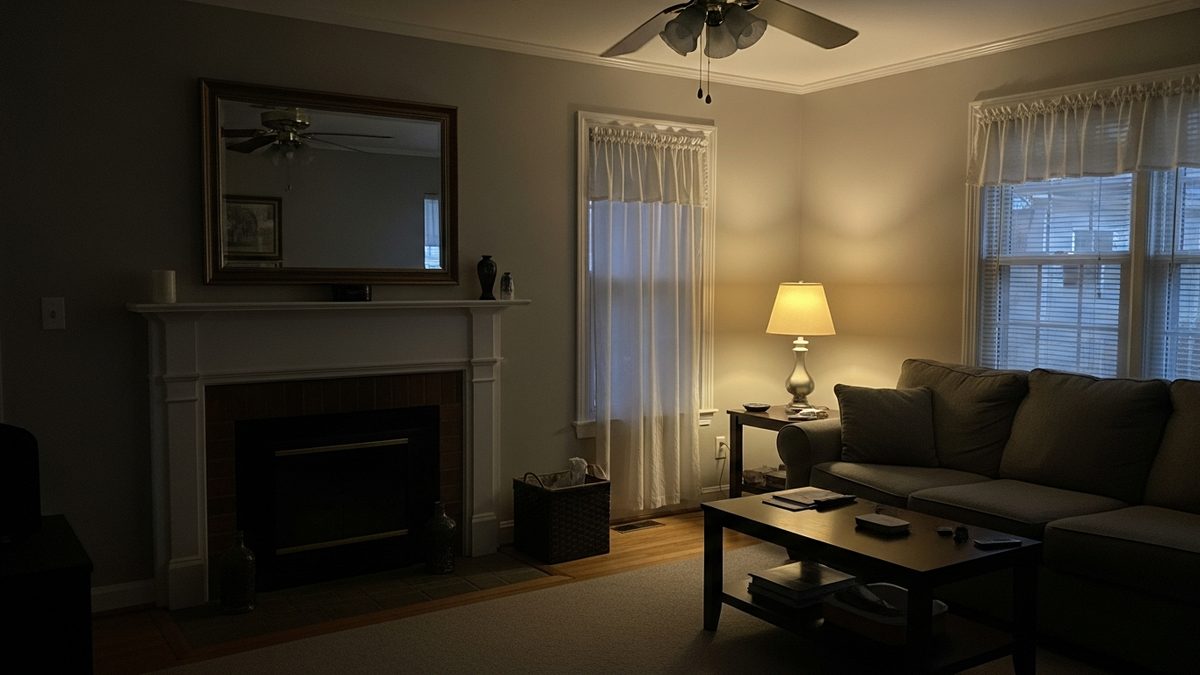
You walk through the house and half the lights are off. The microwave is dead. A couple of outlets have nothing. But you head to the breaker panel, scan every single breaker — and they all look fine. Not one is flipped to the middle or the off position.
This is one of the more confusing electrical situations a homeowner can run into, and the frustrating part is that the reasons range from completely harmless to genuinely dangerous. One cause in particular — a lost or loose neutral connection — can damage expensive electronics, start a fire, or put family members at risk of shock. This guide explains each possible cause, what you can safely check yourself, and when to stop and call for help.
Most likely causes
Here are the most common reasons half your house loses power, ranked from most to least likely.
1. A breaker that tripped but doesn't look tripped
This is the first thing to check. A tripped breaker does not always snap all the way to the off position. Many breakers stop in a middle position that looks nearly identical to on — the handle may be only slightly off-center, and it can be easy to miss, especially in dim light or a crowded panel.
The correct way to reset a breaker is to push the handle firmly all the way to the off position first, then flip it back to on. Pushing it from the middle directly to on without that full off step often does nothing. If you skip the full off position, the breaker may appear to be on but will not have actually reset.
This is also related to the issue covered in our post on a breaker that keeps tripping — a breaker that fails internally (from age, heat damage, or water exposure) may refuse to hold even after a proper reset.
2. A tripped GFCI outlet or AFCI breaker feeding those circuits
This surprises a lot of homeowners: one GFCI (ground fault circuit interrupter) outlet can cut power to several other outlets and lights that are wired downstream from it. The GFCI itself is usually in a bathroom, kitchen, garage, or outdoor location — but the outlets it protects can be in completely different rooms.
If half your house went dark and the affected outlets include any rooms near water, look for a GFCI outlet with a small test and reset button on its face. Press the reset button firmly. The same situation applies to AFCI breakers, which are designed to detect dangerous arcing in wiring. These breakers sometimes have a separate test button and can trip without the handle moving to a fully obvious position.
3. A lost or loose neutral — the dangerous one
Your home's electrical service comes in from the utility with two hot legs (each carrying roughly 120 volts) and one neutral wire. These three conductors meet at the meter and at your main panel. Many circuits run on a single hot leg plus the neutral. When that neutral connection breaks, loosens, or corrodes — anywhere from the utility transformer to your main panel — you lose the voltage reference that all your 120-volt circuits depend on.
The result is unpredictable. Some circuits may go completely dead while others get too much voltage. You might see some lights that are dim and others that are unusually bright. Appliances may behave strangely. Some bulbs may burn out for no clear reason. This imbalance across the two legs of your service is a serious electrical problem.
A lost neutral is a dangerous condition. The overvoltage on the higher-voltage leg can fry electronics — televisions, computers, refrigerators, anything plugged in. It also creates shock and fire risk. If you notice any combination of flickering, dimming in some areas while others are oddly bright, or bulbs burning out faster than normal, take those signs seriously. See the section below on why this condition is so hazardous.
4. A failing main lug or service entrance connection
The service entrance is where the utility's wires connect to your meter and then to your panel. The main lugs are the large connectors inside the panel where the service wires terminate. Over many years, heat cycling can cause these connections to loosen. Corrosion, damage from lightning, or a poor original installation can all contribute.
A failing main lug connection can cause voltage problems across the whole panel, not just one leg. The symptoms often overlap with a lost neutral — flickering lights, partial outages, circuits behaving inconsistently. This is panel-level work and requires a licensed electrician.
5. A utility outage on one of two service legs
Electric utility service to most US homes arrives as a split-phase 240-volt supply. Think of it as two 120-volt legs. If there is a problem at the transformer on your street — or if a storm takes down a line serving one leg — half your home can lose power while the other half still works fine. Large 240-volt appliances like your air conditioner, dryer, or range may behave strangely or not work at all even though some lights elsewhere in the house are on.
This is a utility-side problem. The circuits that lost power are the ones connected to the affected leg. Your breaker panel is fine; the problem is upstream at the utility's equipment. Call your utility company to report it, and check their outage map first.
6. A backstabbed or loose connection inside an outlet or switch
Older homes sometimes have outlets wired using a practice called backstabbing — the wire is pushed into a small spring-loaded hole in the back of the outlet rather than being wrapped around a screw terminal. These connections can fail over time, cutting power to everything downstream from that outlet on the circuit. You would not see any issue at the panel because the breaker itself is fine.
A failed backstab connection, or any other loose wire inside an outlet or switch box, can also arc and generate heat before it completely gives out. Arcing at loose connections is a recognized cause of house fires.
Safe things you can check yourself
Before calling anyone, work through this short list. Stay outside the panel interior entirely — do not remove the cover.
Check for a half-tripped breaker. Open the panel door and look at every breaker carefully. Use a flashlight. Look for any handle that is sitting slightly off-center rather than clearly in the on position. If you find one, push it firmly all the way to off, then back to on. If it trips again immediately, leave it off and call an electrician.
Look for and reset any GFCI outlets. Check the bathrooms, kitchen, garage, laundry room, and any outdoor outlets. Look for the small black or red reset button. Press it until you feel or hear it click. Then check if the affected outlets or lights in the dead area came back on.
Check your utility's outage map. Every major utility has an outage map online or a phone number to report outages. Check whether your neighborhood or street shows a partial outage. If it does, this may be the utility's problem to fix, not yours.
Make a note of how the lights are behaving. Are some lights dimmer than normal? Others unusually bright? That uneven behavior across the house is an important clue that points toward a neutral or service issue rather than a simple tripped breaker. Write down exactly what you see before you call anyone.
Notice if anything is flickering or burning out. Lights that flicker and bulbs that fail faster than usual are signs that the voltage on that circuit is not stable. This matters — it changes the urgency of the situation. More on this below.
Why a lost neutral is dangerous
Most electrical faults are localized — a tripped breaker or a dead outlet is inconvenient, but it is not an active hazard while it sits. A lost or loose neutral is different. It is an active, ongoing condition that can cause damage and danger as long as it is present.
Here is what happens in plain terms. Your 120-volt circuits share the neutral to complete their path back to the panel. When the neutral connection is broken or highly resistive, the two hot legs of your service are no longer balanced against a solid reference point. The voltage can shift — one leg dropping while the other climbs. Appliances and devices on the higher-voltage leg can receive well above 120 volts. That extra voltage can overheat motors and power supplies, destroy sensitive electronics, and in the worst cases cause wiring or devices to get hot enough to ignite nearby materials.
At the same time, a loose or arcing neutral connection is itself a heat source. The Electrical Safety Foundation International (ESFI) notes that loose electrical connections are a leading cause of electrical fires in homes. A neutral that is partially connected and arcing can start a fire inside your wall, inside your panel, or at the meter without tripping any breaker — because breakers respond to overcurrent, not to the specific failure mode of a floating neutral.
What to do: if you suspect a lost neutral — especially if you see lights that are dim in one area and bright in another, or appliances acting erratically — unplug as many devices as you can, particularly expensive electronics, and call your utility and a licensed electrician. Do not continue using the circuits. Do not keep resetting breakers hoping the situation will improve. This is not a problem you can fix from the panel door.
When to call the utility vs an electrician
These two situations call for different responses, and knowing which one you have saves time.
Call your utility company when:
- Your outage map shows a problem in your area
- Your neighbors on the same transformer also lost partial power
- The symptoms started after a storm, high wind, or obvious tree or line contact nearby
- Your meter is showing no reading, or the utility's power appears to have stopped at the meter itself
The utility owns the wires from the street to your meter and is responsible for restoring that service at no charge to you. In a partial outage caused by one service leg going down at the transformer, you may still have lights on in part of the house and not realize the utility is the source of the problem.
Call a licensed electrician when:
- Breakers look normal but resetting them does not restore power
- You suspect a lost neutral based on uneven lighting, flickering, or electronics behaving strangely
- The utility confirms their service is fine but the outage persists
- You see signs of heat, smell burning, hear buzzing or crackling from the panel area or from outlets
- You have an older home and the panel, meter socket, or service entrance wiring has never been inspected
- Any outlets or switches feel warm, show scorch marks, or make noise
Some situations require both — your utility may need to disconnect service at the meter before an electrician can safely work on the service entrance wiring. It is okay to call both at once if you are not sure which side of the meter the problem is on.
What it typically costs
These are rough 2025–2026 ranges for the US and are not bids. Your actual cost depends on location, scope, and local permit requirements.
| Work | Approximate range |
|---|---|
| Electrician diagnostic visit | $125–$500 |
| GFCI outlet replacement (pro) | $125–$250 per outlet |
| Replace a failed branch circuit breaker (pro) | $100–$260 |
| Tighten or repair a main lug / service entrance connection (pro) | $200–$600+ |
| Replace a main breaker (pro) | $200–$600+ |
| Replace or upgrade the panel (pro) | $500–$4,000+ |
| Utility repair on their side of the meter | No charge to homeowner |
Work on the service entrance — the wires from the meter to the panel — may require pulling a permit and coordinating with your utility for a temporary power shutdown. Costs vary more in this category than for routine panel work.
Common mistakes
Resetting breakers over and over. If a breaker is not actually tripped, resetting it does nothing. If it is tripped and something is wrong on the circuit, repeated resets mask the problem rather than fix it. The U.S. Consumer Product Safety Commission (CPSC) advises homeowners to find the cause of a tripped breaker rather than simply resetting it.
Ignoring flickering or unusually bright lights. These are not cosmetic issues. Lights that flicker or vary in brightness are telling you that the voltage on those circuits is not stable. Stable voltage is fundamental to safe electrical operation. See lights flickering throughout the house for more on what different flickering patterns mean.
Assuming the breakers are fine because they look fine. A breaker can be partially tripped, internally failed, or feeding a circuit with a serious upstream problem — and still look fine on the panel. The panel view is a starting point, not a complete diagnosis.
Continuing to use appliances during a suspected lost neutral. Electronics, motors, and appliances connected to the overloaded leg can be damaged or destroyed quickly. Unplug what you can while you wait for service.
Opening the panel and touching wiring. The interior of your main panel contains live voltage even when the main breaker is switched off. The CPSC has noted this directly. The service entrance conductors inside the panel are always energized as long as the utility supply is connected. This is not a DIY repair location.
Ignoring the problem because some lights still work. A partial outage is not a stable situation to just live with. The underlying cause may be getting worse, and in the case of a loose connection, heat buildup can accelerate while the circuit still appears to function.
How to prevent it
Schedule a periodic electrical inspection. ESFI recommends a professional inspection for homes 40 years old or older, homes that have had major renovations, or any home that has added significant new loads. A licensed electrician can identify loose main connections, corroded service entrance wiring, and breakers that are failing before they cause an outage or a hazard.
Know your GFCI locations. Walk through your home and locate every GFCI outlet. Test each one monthly with its built-in test and reset buttons. A GFCI that does not respond to its test button should be replaced promptly.
Label your panel. A clearly labeled panel makes it much faster to identify which breaker serves which part of the house — and makes it easier to spot when something is wrong with a specific circuit.
Address flickering lights promptly. Flickering is a symptom, not a random quirk. It points to loose connections, overloaded circuits, or voltage instability — all of which deserve attention before they get worse.
Do not ignore signs of heat near the panel or outlets. Warm outlets, warm panel covers, scorch marks, or a burning smell near the electrical system are warning signs. ESFI and the NFPA both identify loose connections and overheating as a leading cause of residential electrical fires.
FAQ
Q: Half my house lost power but the breaker looks fine. Could it just be a GFCI?
A: Yes, this is one of the most common explanations. A single GFCI outlet — often in a bathroom or garage — can cut power to many other outlets and even some lights in other rooms. Find every GFCI outlet in the house and press the reset button. If the power comes back, you found your answer.
Q: Some lights are dim and others are too bright. Is that a lost neutral?
A: That uneven pattern — dim in some areas, over-bright in others — is a classic sign of a lost or floating neutral. It means voltage is not distributed evenly across your two service legs. This is a dangerous condition. Unplug electronics in the over-bright areas and call your utility and a licensed electrician as soon as possible. Do not continue using the circuits.
Q: The breaker panel looks totally normal. Could the problem still be in the panel?
A: Yes. A breaker can fail internally and still appear to be in the on position. The main lugs — the large service connections at the top of the panel — can loosen without any visual indicator on the breaker handles. If external checks (GFCI reset, utility outage check) do not explain the outage, the problem may be inside the panel or at the service entrance.
Q: My utility says there is no outage. What should I do next?
A: Call a licensed electrician. If the utility has confirmed their service is normal and you still have a partial outage, the problem is on your side of the meter. A licensed electrician can test voltage at the panel, check the main lugs and neutral connections, and identify what is wrong safely.
Q: Should I be worried about my appliances and electronics during this outage?
A: If you suspect a lost neutral — particularly if you are seeing over-bright lights or unusual appliance behavior — yes. Overvoltage from an unbalanced neutral can damage motors, power supplies, and sensitive electronics quickly. Unplug computers, televisions, and any appliances you can while you wait for the problem to be diagnosed and fixed.
Get a free quote from a licensed electrician
If you've worked through the checks above and still don't have power in part of your home — or if anything you've seen suggests a lost neutral, a failing connection, or unusual voltage — it's time to bring in a professional.
Local Service Group connects homeowners with licensed, vetted electricians. Don't guess with a partial outage. Get a free quote from a qualified local electrician and have the problem diagnosed safely.
Sources
-
U.S. Consumer Product Safety Commission. Electrical Safety. https://www.cpsc.gov/Safety-Education/Safety-Education-Centers/Electrical-Safety
-
Electrical Safety Foundation International. Your Home Electrical System. https://www.esfi.org/home-safety/your-home-electrical-system/
-
Electrical Safety Foundation International. Ground Fault Circuit Interrupters (GFCI). https://www.esfi.org/ground-fault-circuit-interrupters-gfci/
-
Electrical Safety Foundation International. Understanding Your Home Electrical System. https://www.esfi.org/understanding-your-home-electrical-system/
-
National Fire Protection Association. NFPA 70, National Electrical Code. https://www.nfpa.org/codes-and-standards/nfpa-70-standard-for-electrical-installations/about-the-national-electrical-code
-
Occupational Safety and Health Administration. Electrical Hazards — Grounding. https://www.osha.gov/etools/construction/electrical-incidents/ground-fault-circuit-interrupters
-
Schneider Electric. How do you determine why a thermal-magnetic breaker nuisance trips? https://www.se.com/us/en/faqs/FA232232/
-
HomeGuide. How Much Does It Cost To Replace or Install a Circuit Breaker? (2026). https://homeguide.com/costs/cost-to-replace-a-circuit-breaker-switch
-
HomeGuide. Cost To Replace Electrical Panel | Upgrade Breaker Box Amps (2026). https://homeguide.com/costs/cost-to-replace-electrical-panel
-
This Old House. How Much Does an Electrician Cost? https://www.thisoldhouse.com/electrical/electrician-cost
Disclaimer
The information on this page is provided for general educational purposes only and is offered "as is" and "as available," without warranties of any kind, whether express or implied — including, without limitation, any warranties of accuracy, completeness, reliability, merchantability, or fitness for a particular purpose. It is not professional advice and is not a substitute for inspection, diagnosis, or repair by a licensed, qualified professional.
Home systems involving gas, electricity, water, refrigerant, fire, or structural components can be hazardous, and requirements vary by local code and jurisdiction. Any inspection, diagnosis, repair, installation, or other action referenced on this page should be performed by a licensed professional. You should not rely on this content to perform such work yourself. To the fullest extent permitted by law, [Company Name] and its owners, employees, and contributors assume no responsibility or liability for any injury, death, property damage, or other loss arising out of or in connection with the use of, or reliance on, this information.
If you smell gas or suspect a carbon monoxide leak, leave the area immediately and call 911 or your gas utility from a safe location.