AC Leaking Water Inside the House: Causes and Fixes
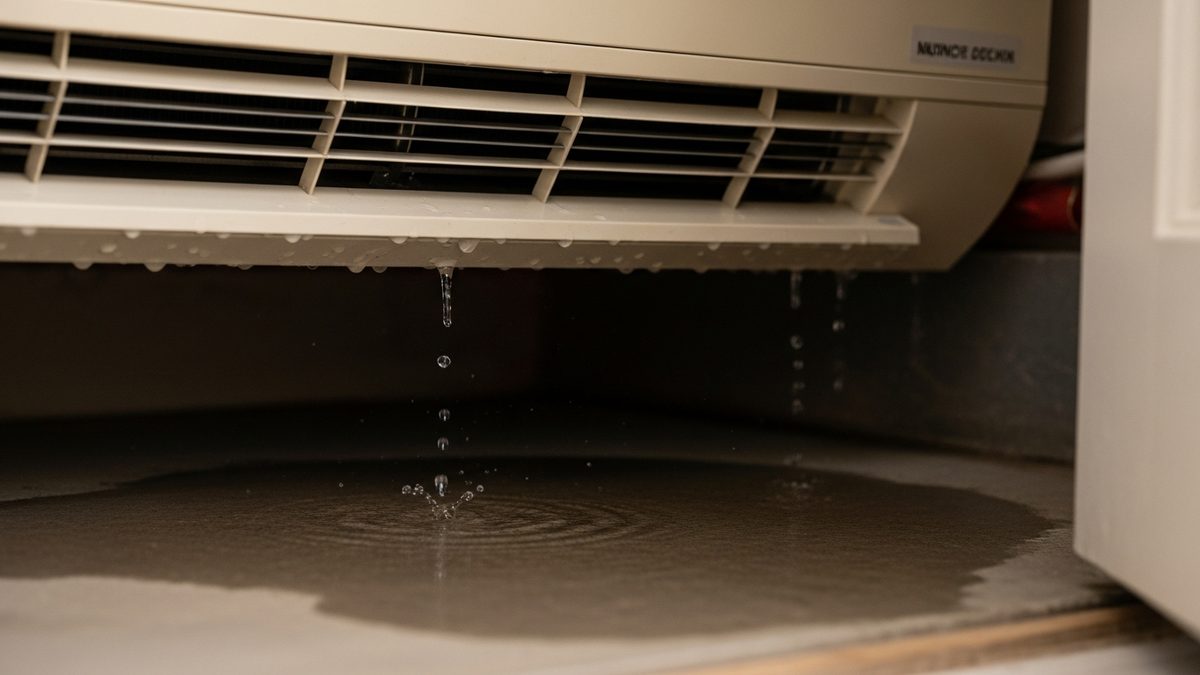
Finding water pooling on your floor, dripping from the ceiling, or soaking the wall near your air handler is alarming — and it should be. Left alone, AC water leaks cause mold, rot, and structural damage that can cost far more to fix than the AC problem itself.
The good news is that most indoor AC water leaks come from one of four straightforward problems, and some of them you can address yourself in under an hour.
For more detail on the drain line specifically, see our guide on a clogged AC drain line. If you see ice on your indoor unit, read about a frozen evaporator coil first — the ice melting is likely what's causing the water.
Most likely causes
1. Clogged condensate drain line (most common) As your AC cools the air, moisture condenses on the evaporator coil and drips into a drain pan below it. A PVC pipe carries that water out of your home. Algae, mold, and debris accumulate inside the pipe over time and eventually form a clog. Water backs up into the pan and eventually overflows. According to Carrier and the U.S. Department of Energy, this is the leading cause of indoor water leaks from central AC systems.
2. Frozen evaporator coil thawing When airflow across the indoor coil is restricted (dirty air filter, closed vents, or low refrigerant), the coil gets too cold and ice forms on it. When the system cycles off, or when you turn it off to investigate, that ice melts rapidly and can overwhelm the drain pan. You may see ice on the refrigerant lines going into the air handler. If so, turn the system off and let it thaw completely before restarting.
3. Cracked or rusted drain pan The primary drain pan sits directly beneath the evaporator coil. On older systems, metal pans rust through. Plastic pans can crack or warp over time. If the pan itself is compromised, water drains straight to the floor even if the drain line is perfectly clear.
4. Failed or clogged condensate pump Systems installed in attics, closets, or basement spaces where the drain can't exit by gravity often use a small electric pump to push condensate water uphill to a suitable drain. If the pump motor fails or the pump reservoir fills with algae, water overflows into your living space. You'll usually hear the pump stop cycling before water appears.
5. Loose or disconnected drain line Drain lines can vibrate loose from fittings over time. Check that the pipe is firmly connected at both the drain pan and at any joints along its run.
6. Improper installation A system that was installed without proper drain pan slope, with a drain line pitched upward, or without a secondary safety pan won't drain properly. The water has to fight gravity and eventually backs up.
Troubleshoot it yourself (safely)
Step 1 — Turn off the system immediately. Water and electricity don't mix. Shut the thermostat off and flip the air handler's breaker to reduce the risk of electrical damage or shock while you investigate.
Step 2 — Soak up standing water. Use old towels or a wet/dry vacuum to remove water from the floor, pan, or cabinet. The longer water sits on wood, drywall, or insulation, the more damage it causes.
Step 3 — Check and change the air filter. A filter so clogged it blocks airflow is a very common trigger for frozen coils and subsequent leaks. Pull the filter — if it's grey, clogged, or collapsed, replace it before restarting the system.
Step 4 — Look for ice on the coil or refrigerant lines. Open the air handler panel or look at the insulated copper lines running into the unit. Visible frost or ice means the coil was frozen. Do not restart the system until all ice has melted — this can take 2–24 hours depending on how much accumulated. Restarting with ice present just re-freezes the coil and repeats the cycle.
Step 5 — Try to clear the drain line. Locate the PVC drain access port (a T-shaped cap) on the line near the air handler. Pour one cup of white vinegar or diluted bleach into the opening, wait 30 minutes, and follow with a cup of water. Alternatively, use a wet/dry vacuum on the outdoor end of the drain pipe. See our full drain line clearing guide for detailed steps.
Step 6 — Check the drain pan. Once you've removed standing water, shine a flashlight into the primary pan. Look for cracks, rust holes, or corrosion. If you see daylight through a rust hole, the pan needs replacement.
Step 7 — Check the condensate pump. If you have a pump (a small white or gray plastic box with a reservoir), look inside the reservoir. If it's full of water and not draining, the pump may have failed. Unplug it and plug it back in — some models reset this way. If it still doesn't pump, it needs replacement.
Safety first
- Never leave a water-leaking AC running. The float switch is there to shut the system down automatically when the pan fills, protecting your home. If you've disabled or bypassed that switch, re-enable it immediately.
- Water near electrical components is a serious shock hazard. Turn off both the thermostat and the air handler breaker before touching any wiring, the pump, or the electrical panel of the air handler.
- Mold can begin forming in 24–48 hours on wet drywall and insulation. If water has been leaking for more than a day, check for discoloration, soft spots, or musty odor around the leak area.
- Refrigerant issues require a pro. If you suspect low refrigerant as the cause of a frozen coil (the system is low on cooling even with a clean filter and clear drain), call a certified technician. Refrigerant handling is regulated under EPA Section 608.
When to call a licensed pro
Call a technician if:
- The drain line won't clear after a vinegar flush and wet/dry vacuum
- You see evidence of a frozen coil but the filter was just changed (this points to low refrigerant)
- The drain pan is cracked or rusted through
- The condensate pump doesn't respond after a reset
- There is water staining on drywall or ceilings suggesting a longer-running leak
- The float switch stays tripped even after the pan is empty (the switch itself may be defective)
- You're not comfortable working near the electrical components of the air handler
What it typically costs
| Repair | Typical 2025–2026 Range |
|---|---|
| Drain line flush/clearing (pro) | $75–$200 |
| Primary drain pan replacement | $200–$600 |
| Condensate pump replacement | $150–$400 (parts + labor) |
| Evaporator coil cleaning | $200–$400 |
| Refrigerant leak repair + recharge | $500–$1,500+ |
| Water damage remediation (if delayed) | $500–$5,000+ depending on extent |
Common mistakes
- Restarting a frozen coil without letting it thaw fully. The ice will just come back and the leak will repeat.
- Using the AC while the pan is overflowing. Even one hour of operation while the pan is full can send gallons of water into walls and ceilings.
- Bypassing the float switch to "fix" the shut-off. The shut-off is the protection. Without it, a clog or pump failure can leak for hours undetected.
- Waiting to call about musty smells. Mold that starts in the drain pan or coil area can spread through your duct system and into living spaces if ignored.
How to prevent it
- Replace your air filter every 1–3 months. This single habit prevents the vast majority of frozen-coil water leaks.
- Flush the drain line monthly during cooling season with a quarter cup of distilled white vinegar. This inhibits algae growth before it becomes a clog.
- Schedule an annual AC tune-up each spring. A technician will inspect the drain pan, clear the condensate line, test the float switch, check refrigerant levels, and clean the coil.
- If your air handler is in an attic above finished living space, ask about installing a secondary drain pan with a separate float switch and an alarm. The extra layer of protection is inexpensive and can save thousands in water damage costs.
FAQ
How much water should my AC drain per day? A properly running central AC system can remove 5–20 gallons of water per day in humid conditions. All of that should exit cleanly through the drain line. If you're seeing water where it shouldn't be, something in the drainage path has failed.
Why is there water on the floor under my indoor unit but no visible leak from the pan? Check for a disconnected drain line fitting. Vibration over many cooling seasons can loosen the joint where the PVC pipe meets the pan or a coupling downstream. The water is draining, just not to the right place.
My AC is cooling fine but there's still water on the floor. What's happening? If the drain pan isn't overflowing and the coil isn't frozen, look for condensation on cold supply ducts in a humid basement — it can drip and look like an AC leak. Also check that the secondary safety pan (if present) hasn't been collecting water from a slow pinhole leak in the primary pan.
Can a dirty filter really cause water to leak? Yes, indirectly. A dirty filter restricts airflow over the evaporator coil. The coil gets so cold that ice forms on it. When the system turns off, the ice melts rapidly — often faster than the drain can handle — and overflows the pan.
How long does a drain pan last? Metal pans can rust within 10–15 years, especially in humid climates. Plastic pans can last 20+ years but may crack if they experience temperature extremes or physical impact. Your technician can inspect the pan during a tune-up.
A water leak isn't something to wait on. Use the form below to connect with a vetted HVAC professional near you for a free quote — and stop the damage before it spreads.
Sources
- Bryant — Why Is My AC Leaking Water? https://www.bryant.com/en/us/products/air-conditioners/why-is-my-ac-leaking-water/
- U.S. Department of Energy — Common Air Conditioner Problems https://www.energy.gov/energysaver/common-air-conditioner-problems
- PICKHVAC — Air Conditioner Leaking Water: Causes and Fixes 2025 https://www.pickhvac.com/central-air-conditioner/troubleshoot/leaking-water/
- EPA — Section 608 Technician Certification Requirements https://www.epa.gov/section608/section-608-technician-certification-requirements
Disclaimer
The information on this page is provided for general educational purposes only and is offered "as is" and "as available," without warranties of any kind, whether express or implied — including, without limitation, any warranties of accuracy, completeness, reliability, merchantability, or fitness for a particular purpose. It is not professional advice and is not a substitute for inspection, diagnosis, or repair by a licensed, qualified professional.
Home systems involving gas, electricity, water, refrigerant, fire, or structural components can be hazardous, and requirements vary by local code and jurisdiction. Any inspection, diagnosis, repair, installation, or other action referenced on this page should be performed by a licensed professional. You should not rely on this content to perform such work yourself. To the fullest extent permitted by law, [Company Name] and its owners, employees, and contributors assume no responsibility or liability for any injury, death, property damage, or other loss arising out of or in connection with the use of, or reliance on, this information.
If you smell gas or suspect a carbon monoxide leak, leave the area immediately and call 911 or your gas utility from a safe location.