AC Drain Line Clogged? How to Clear It and Stop the Shut-Off
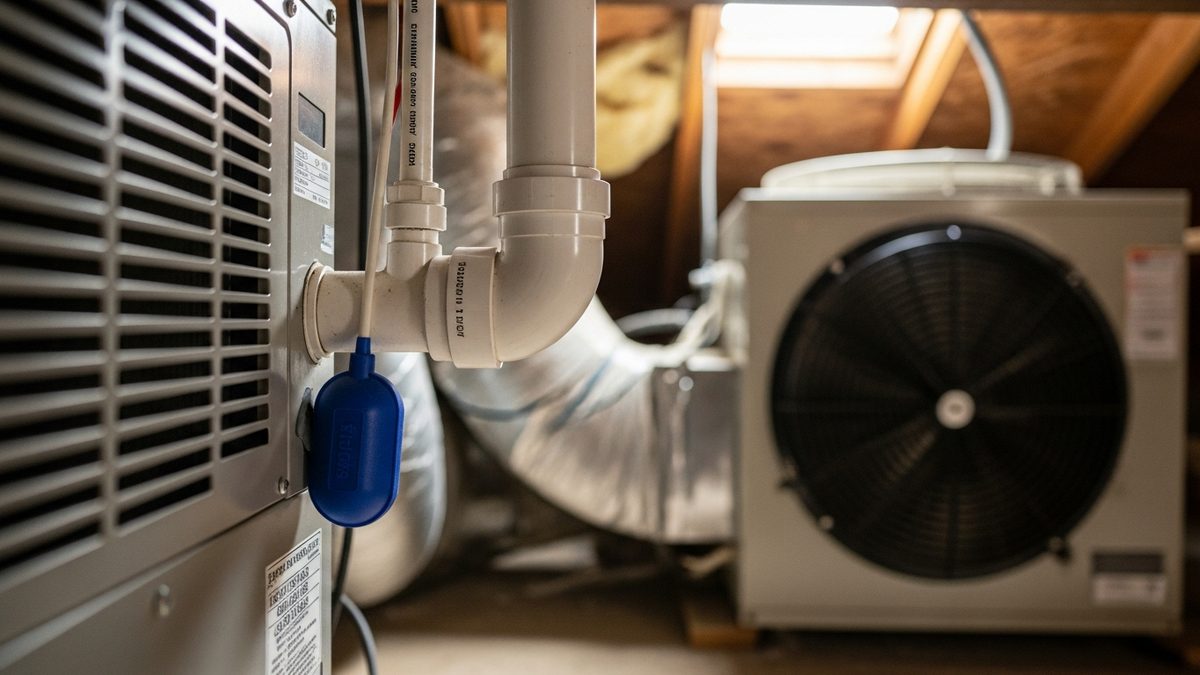
Your air conditioner pulls moisture out of the air as it cools your home. That moisture drips off the evaporator coil, collects in a drain pan, and flows out through a condensate drain line — usually a white PVC pipe that exits through a wall or drips near your outdoor unit.
When that line clogs, water has nowhere to go. The pan fills up, a safety float switch trips, and your AC shuts itself off to prevent a water damage disaster. If your AC stopped working and you also notice water pooling near the indoor unit, a clogged drain line is the most likely explanation.
The good news: this is one of the few AC problems you can often fix yourself in under 30 minutes.
If you're also seeing water dripping inside, read our full guide on if your AC is leaking water inside.
Most likely causes
1. Algae and mold buildup (most common) The condensate line is dark, warm, and moist — perfect for algae and mold. Over time, a slimy buildup coats the inside of the pipe and eventually blocks it. This is by far the most common cause, especially in humid climates.
2. Debris and sediment Dust, dirt, and insulation fibers that get past the coil can wash into the drain pan and gradually form a plug inside the line.
3. Disconnected or improper slope If the drain line isn't sloped consistently downward, water sits and stagnates instead of draining. This accelerates biological growth and can also cause the pan to overflow even without a true clog.
4. Full or cracked secondary drain pan Many systems have a backup (secondary) pan under the primary one. If the primary pan cracks or the primary drain fully clogs, the backup fills. A float switch in either pan can trip and shut the system down.
5. Failed or clogged condensate pump Attic and basement systems often use a condensate pump to push water uphill to a drain. If the pump motor fails or its reservoir clogs, the water backs up and the float switch trips.
Troubleshoot it yourself (safely)
What you'll need: a wet/dry shop vacuum, duct tape or a rag, distilled white vinegar (or diluted bleach), a funnel, and a flashlight.
Step 1 — Turn the AC off at the thermostat. You don't want the system trying to run while you're clearing the line.
Step 2 — Find the drain line access port. Look for a white PVC pipe coming out of your air handler or furnace. There is usually a T-shaped vent cap or access plug near the indoor unit. Pull it off.
Step 3 — Vacuum from the outdoor end. Go outside and find where the drain line exits — it's typically a white or gray PVC pipe dripping near the foundation or outdoor unit. Press the hose of your wet/dry vacuum firmly against the end of the pipe. Wrap a rag or duct tape around the connection to create a seal. Run the vacuum for 60–90 seconds. Check the vacuum canister — if you see dark, slimy water, you've pulled the clog out.
Step 4 — Flush from the indoor end. Pour about one cup of distilled white vinegar (or a diluted mix of one part bleach to 16 parts water) into the access port. Let it sit for 30 minutes to break down any remaining algae. Follow with a cup of plain water to flush.
Step 5 — Reset the float switch. On many systems, the float switch resets itself once the water level in the pan drops. Restore power at the thermostat and wait to see if the AC restarts. If it doesn't restart, check that the drain pan is empty and the float is in the down (normal) position.
Step 6 — Confirm drainage. Pour a small amount of water into the drain pan access. It should flow freely out the exterior pipe within a minute or two. If it doesn't, the clog is still there and you may need a professional with a pressurized flush or auger.
Safety first
- Turn off power before working near the air handler. Standing water near electrical components is a shock hazard. Shut the system off at the thermostat and consider flipping the air handler breaker while you clean.
- Bleach fumes. If you use a bleach solution, work in a ventilated area and avoid mixing bleach with any ammonia-based cleaners.
- Don't ignore a full drain pan. Standing water can damage drywall, ceilings, and subfloors quickly. If the pan is overflowing, use a wet/dry vac or towels to remove the standing water before doing anything else.
When to call a licensed pro
Call an HVAC technician if:
- The clog doesn't clear after two vacuum attempts and a vinegar flush
- The drain pan itself is cracked or rusted through
- The condensate pump motor hums but doesn't move water
- You notice water stains on ceilings or walls, suggesting the pan overflowed before you noticed
- The float switch stays tripped even after the pan is empty (the switch itself may be faulty)
- You see ice on the indoor coil — that points to a separate issue like low refrigerant or a dirty filter, not just a drain clog
What it typically costs
| Service | Typical 2025–2026 Range |
|---|---|
| Drain line flush/clearing (pro) | $75–$200 |
| Condensate pump replacement | $150–$400 (parts + labor) |
| Drain pan replacement | $200–$600 depending on accessibility |
| Emergency/after-hours service call | Add $50–$150 to any of the above |
Most basic drain line clears are completed in under an hour if there's no secondary damage.
Common mistakes
- Pouring bleach directly into a pan with a plastic fitting. Undiluted bleach can degrade certain plastics and rubber gaskets over time. Dilute it.
- Skipping the flush after vacuuming. Removing the clog without treating the algae means it will reform within weeks.
- Ignoring the float switch. Some homeowners bypass the float switch to "keep the AC running." This removes the only thing protecting your home from serious water damage. Don't do it.
- Not finding the actual exit point of the drain. If you vacuum the wrong pipe, you'll waste time and still have a clogged line.
How to prevent it
- Pour a quarter cup of distilled white vinegar into the access port every month during cooling season. The mild acid inhibits algae growth without damaging the pipe or pan.
- Replace your air filter every 1–3 months. A dirty filter allows more particulate to wash into the drain, speeding up buildup.
- Have your HVAC technician clear and inspect the drain line during your annual spring tune-up.
- If you live in a humid climate, ask your technician about installing an algae prevention tablet in the drain pan. These slow-dissolve tablets reduce biological growth between service visits.
- Consider a drain line float switch with an alarm or a secondary shutoff if your system is in the attic above finished living space. The alert gives you time to act before water damage occurs.
FAQ
Why does my AC keep shutting off, but I don't see any water? The safety float switch may have tripped from a brief water backup that then drained partially. Check the drain line access port — if it's damp or has residue, a slow clog is developing even if the pan looks dry now.
Can I use bleach instead of vinegar? Yes. The U.S. Department of Energy recommends flushing the drain line with a diluted bleach-and-water mixture to prevent mold growth. Use roughly one part bleach to 16 parts water. Don't pour straight bleach.
How often does a drain line typically clog? In humid climates with high cooling demand, clogs can form within a single season without preventive treatment. In drier regions with monthly vinegar flushes, many homeowners go years without an issue.
My AC restarted after I cleared the clog. How do I know the float switch is working? Pour a small cup of water slowly into the drain pan. The AC should shut off within 30–60 seconds as the water level rises and floats the switch. If it doesn't shut off, the switch may be stuck or faulty — call a technician.
Is the drain line the same as the refrigerant line? No. The drain line carries condensate water. The refrigerant lines are insulated copper tubes running between the indoor and outdoor units. They are completely separate systems.
If clearing the line yourself doesn't solve the problem, let a vetted HVAC pro take a look. Use the form below for a free quote — no pressure, no obligation.
Sources
- Carrier — How to Clean AC Drain Line https://www.carrier.com/residential/en/us/products/air-conditioners/air-conditioner-maintenance/how-to-clean-ac-drain-line/
- U.S. Department of Energy — Common Air Conditioner Problems https://www.energy.gov/energysaver/common-air-conditioner-problems
- Cool Today — What to Do When Your AC Drain Line is Clogged https://www.cooltoday.com/blog/what-to-do-when-your-ac-drain-line-is-clogged-a-sarasota-tech-explains
- Ellington AC — How to Clean Your AC Drain Line (7-Step DIY Guide) https://ellingtonac.com/blog/how-to-clean-ac-drain-line/
- Wagner Mechanical — Understanding Your AC Condensate Drain Line https://www.wagnermechanical.com/blog/ac-condensate-drain-line
Disclaimer
The information on this page is provided for general educational purposes only and is offered "as is" and "as available," without warranties of any kind, whether express or implied — including, without limitation, any warranties of accuracy, completeness, reliability, merchantability, or fitness for a particular purpose. It is not professional advice and is not a substitute for inspection, diagnosis, or repair by a licensed, qualified professional.
Home systems involving gas, electricity, water, refrigerant, fire, or structural components can be hazardous, and requirements vary by local code and jurisdiction. Any inspection, diagnosis, repair, installation, or other action referenced on this page should be performed by a licensed professional. You should not rely on this content to perform such work yourself. To the fullest extent permitted by law, [Company Name] and its owners, employees, and contributors assume no responsibility or liability for any injury, death, property damage, or other loss arising out of or in connection with the use of, or reliance on, this information.
If you smell gas or suspect a carbon monoxide leak, leave the area immediately and call 911 or your gas utility from a safe location.