Yellow vs. Blue Furnace Flame: What the Color Means (and When It's Dangerous)
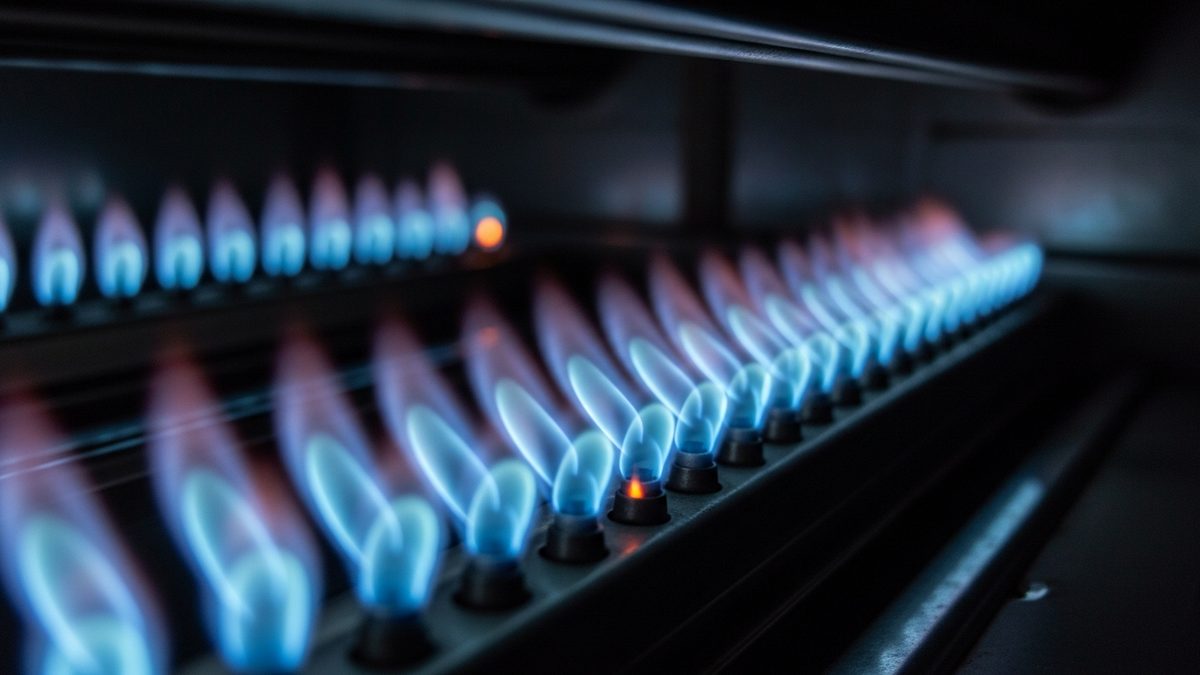
If you peek through the sight window on your gas furnace and see a yellow or orange flame, that is a warning sign — not a normal quirk. A healthy furnace burns crisp blue. Yellow or flickering flames point to incomplete combustion, which can produce carbon monoxide (CO). Here is what each color means, why it matters, and exactly what to do.
What furnace flame color tells you
Blue flame — normal and healthy. A properly tuned gas furnace burns with a steady blue flame, often with a small, brighter blue cone at the center. Blue combustion means the gas-to-air ratio is close to correct, fuel is burning efficiently, and CO production is minimal.
Yellow, orange, or flickering flame — incomplete combustion. When there is not enough oxygen mixing with the gas, the flame turns yellow or orange and may flicker or roll. The gas utility Jackson Energy Authority describes this as "an improper ratio of oxygen for combustion." Incomplete combustion releases far more carbon monoxide than a properly tuned burner does. A persistent yellow flame is not something to wait on.
Small yellow tip on an otherwise blue flame. A tiny yellow tip on the outer edge of a blue flame is generally not a concern, but if yellow dominates the flame or the flame is unsteady, treat it as a problem.
Why a yellow flame can be dangerous
Carbon monoxide is the core risk. CO is a colorless, odorless gas produced whenever fossil fuels burn. When combustion is incomplete — which is exactly what a yellow flame signals — CO output rises sharply.
According to the CDC, more than 400 Americans die each year from unintentional CO poisoning unrelated to fires, and more than 100,000 visit emergency departments annually. The gas is especially dangerous because you cannot see, smell, or taste it. The U.S. Department of Energy notes that "when there is insufficient air, combustion is inefficient and dangerous."
A yellow flame does not guarantee CO is filling your home right now, but it means your furnace is not burning cleanly and the risk is real — especially in a closed-up house in winter.
Carbon monoxide warning signs
Physical symptoms. The CDC lists the most common symptoms of CO poisoning as headache, dizziness, weakness, upset stomach, vomiting, chest pain, and confusion. CO symptoms are often described as flu-like, but without a fever. Other warning signs: more than one person in the home feels sick at the same time, or symptoms go away after you leave the house and return when you come back.
Infants, elderly people, and anyone with heart disease, anemia, or breathing problems face higher risk from the same CO concentration that a healthy adult might initially tolerate.
CO alarm activation. If a CO detector sounds, treat it as a real emergency every time — even if you feel fine. The U.S. Consumer Product Safety Commission warns that a CO alarm must never be ignored. Detectors can sound before you notice symptoms.
If anyone in the home feels dizzy, nauseated, or has a severe headache along with a sounding CO alarm, that combination is a medical emergency.
What to do right now
If your CO alarm is going off OR you have symptoms AND a yellow flame:
- Get everyone — including pets — out of the house immediately.
- Leave the door open as you exit to help ventilate.
- Call 911 from outside or from a neighbor's home.
- Call your gas company's emergency line.
- Do not go back inside until emergency responders say it is safe.
If you see a yellow flame but no alarm and no symptoms:
- Turn the furnace off at the thermostat.
- Do not attempt to adjust burners, disassemble anything, or light pilots yourself.
- Call a licensed HVAC technician before running the furnace again.
- Open a window for ventilation while you wait.
If you also notice a burning odor or a rotten-egg smell, read our guide on a burning or gas smell coming from your furnace — those symptoms call for a different response.
What causes a yellow flame
A yellow furnace flame almost always traces back to one of three root causes:
Dirty burners. Dust, lint, and combustion residue build up on burner ports over time and disrupt the gas-air mix. Even a partial blockage can shift combustion from blue to yellow. The Department of Energy notes that dirt and rust on burners "prevents an even flame" and causes CO to be produced.
Poor air-to-fuel ratio. Natural gas needs the right amount of air to burn completely. Obstructions in the return-air pathway — a clogged filter, a blocked fresh-air inlet, a sealed furnace room — reduce available oxygen. The DOE states that insufficient combustion air makes combustion "inefficient and dangerous."
Soot buildup or heat exchanger problems. A cracked heat exchanger can allow combustion gases to mix with supply air and interfere with the burn. Soot accumulation inside the combustion chamber has a similar effect. Both are serious issues that require professional diagnosis.
When to call a pro
Call a licensed HVAC technician any time you see:
- A yellow or orange flame that persists across multiple heating cycles
- A flame that flickers, rolls, or lifts off the burner
- Soot or black marks around the furnace cabinet or burner area
- A CO alarm that has gone off, even if it has reset itself
Do not try to clean burners, adjust air shutters, or tinker with gas components unless you are a trained technician. Gas appliance repairs require proper tools, calibration equipment, and knowledge of local codes.
How to prevent it
Annual HVAC tune-up. The CDC recommends having your heating system serviced by a qualified technician every year. A tune-up includes cleaning burners, checking the heat exchanger, verifying the air-to-fuel ratio, and testing CO output — the steps that catch a developing yellow-flame problem before it becomes a crisis.
Replace your air filter regularly. A clogged filter restricts combustion air. Most 1-inch filters should be replaced every 1–3 months during heating season. Check your furnace manual for the manufacturer's recommendation.
Install CO detectors near sleeping areas. The CDC recommends battery-operated or battery-backup CO detectors near every sleeping area. Test them when you change the clocks in spring and fall, and replace the detector every five years or per the manufacturer's instructions. The DOE recommends a detector that meets UL-2034 or equivalent standards.
Keep the area around the furnace clear. Furnaces in tight utility closets need adequate combustion air. Do not store boxes, laundry, or other items that block air flow around the unit.
FAQ
Is a small yellow tip on the flame okay? A very small yellow tip at the outer edge of a predominantly blue flame is usually not a concern. If the flame is mostly yellow, flickering, or orange, that is a problem that needs professional attention.
Can I run my furnace with a yellow flame? No. Turn it off and call a technician. Running it risks elevated CO levels in your home.
How long does it take for CO to build up to dangerous levels? It depends on the CO concentration and the size of your home. High concentrations can cause incapacitation within minutes. Even low concentrations sustained over several hours are dangerous — this is why the DOE recommends CO detectors that detect both low-level and high-level exposure.
My CO alarm went off but reset itself — do I still need to act? Yes. A self-reset does not mean the problem is gone. Have the furnace inspected before using it again.
What does a healthy furnace flame look like on a propane system? Propane also burns blue when combustion is correct. A yellow or orange propane flame carries the same incomplete-combustion risk as natural gas.
If your furnace is showing a yellow flame or you have not had it serviced recently, get a licensed HVAC pro to take a look before the problem gets worse. Get a free quote from a vetted HVAC technician near you — no city required, no commitment.
Sources
- CDC — Carbon Monoxide Poisoning Basics: https://www.cdc.gov/carbon-monoxide/about/index.html
- U.S. Department of Energy — Combustion Appliance Safety and Efficiency Testing (Tech Brief): https://www.energy.gov/sites/prod/files/2016/06/f32/CombustionAppliance%20Safety_Tech%20Brief.pdf
- U.S. EPA — Sources of Combustion Products: https://www.epa.gov/indoor-air-quality-iaq/sources-combustion-products-introduction-indoor-air-quality
- CPSC — Furnace CO Emissions Under Normal and Compromised Vent Conditions: https://www.cpsc.gov/s3fs-public/pdfs/CO_emissions_furnace2.pdf
- Jackson Energy Authority (municipal gas utility) — Proper Flame: https://www.jaxenergy.com/learning-center-articles/proper-flame
Disclaimer
The information on this page is provided for general educational purposes only and is offered "as is" and "as available," without warranties of any kind, whether express or implied — including, without limitation, any warranties of accuracy, completeness, reliability, merchantability, or fitness for a particular purpose. It is not professional advice and is not a substitute for inspection, diagnosis, or repair by a licensed, qualified professional.
Home systems involving gas, electricity, water, refrigerant, fire, or structural components can be hazardous, and requirements vary by local code and jurisdiction. Any inspection, diagnosis, repair, installation, or other action referenced on this page should be performed by a licensed professional. You should not rely on this content to perform such work yourself. To the fullest extent permitted by law, [Company Name] and its owners, employees, and contributors assume no responsibility or liability for any injury, death, property damage, or other loss arising out of or in connection with the use of, or reliance on, this information.
If you smell gas or suspect a carbon monoxide leak, leave the area immediately and call 911 or your gas utility from a safe location.