Is a Furnace Burning Smell or Gas Smell Dangerous — and When Should You Leave the House?
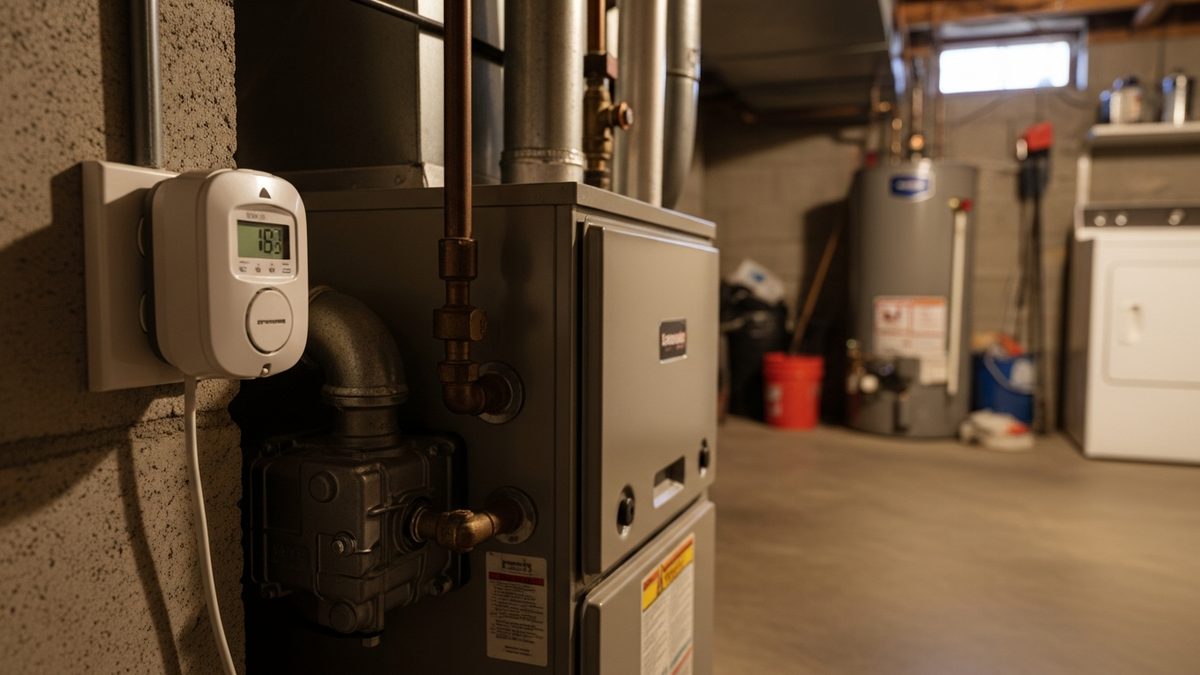
That strange odor coming from your furnace can mean anything from "perfectly normal" to "get out of the house right now." The hard part is knowing which situation you're in. This guide walks you through every common furnace smell, ranks them by how urgent they are, and tells you exactly what to do.
SAFETY ALERT — READ THIS FIRST
If you smell a strong rotten-egg or sulfur odor (like a struck match or "sewer gas"), that is the smell of natural gas. Leave the house immediately.
- Do NOT flip any light switches, use your phone, or turn anything on or off before you leave.
- Get everyone — including pets — outside and away from the building.
- Once you are safely outside and away from the structure, call 911 and your gas utility's emergency line.
- Do NOT go back inside until the gas company or fire department says it is safe.
If your carbon monoxide (CO) alarm sounds, treat it the same way: leave immediately, get fresh air, and call 911 from outside.
What the Smell Is Telling You
Not all furnace odors are created equal. Here is a quick breakdown, from most urgent to least:
1. Rotten Egg or Sulfur Smell — Most Urgent: Possible Gas Leak
Natural gas has no odor on its own. Utility companies add a chemical called mercaptan to give it that unmistakable rotten-egg smell so you can detect a leak. The American Gas Association (AGA) explains it this way: "Utilities odorize natural gas with Mercaptan — which smells similar to rotten eggs — so that it's easy to smell if there is a gas leak."
If you smell it, assume gas is leaking until proven otherwise. Even a small leak near ignition sources can cause an explosion or fire.
One important caveat: "odor fade" is real. Under certain conditions — old pipes, rust, moisture — the odorant can be absorbed before the gas reaches your nose. SoCalGas warns customers not to rely on smell alone. Install a natural gas/propane detector for a second layer of protection.
What to do: See the safety alert at the top of this page. Evacuate immediately and call 911 and your gas utility.
2. Burning Electrical Smell, Burning Plastic, or Acrid Smoke — Urgent: Shut It Off and Call a Pro
A sharp electrical burning smell — like melting wire insulation or hot plastic — means something inside the furnace is overheating. Common causes include:
- A failing blower motor or capacitor
- Cracked or melting wire insulation
- Overheated circuit board
- A foreign object (like a toy or plastic bag) caught in the blower
This is not immediately life-threatening the way a gas leak is, but it can start a fire. Turn the furnace off at the thermostat and at the breaker or power switch, and call a licensed HVAC technician before you run it again. Do not try to inspect wiring yourself.
3. Burning Dust at the First Start of the Season — Usually Normal
That musty, faintly acrid smell when you fire up the furnace for the first time in fall? It usually means dust and debris that settled on the heat exchanger and burners over the summer are burning off. This is very common and typically clears within 20–30 minutes once the furnace runs.
If the smell persists beyond the first heating cycle, or if you see smoke, that is not normal. Change the filter first — a clogged filter can cause overheating — then call a technician if it continues.
4. Musty or Moldy Smell
A musty odor suggests mold or mildew in the ductwork or on the furnace filter. This is not immediately dangerous, but mold exposure can affect respiratory health over time. Replace the filter and consider having your ducts inspected and cleaned.
5. Oil or Chemical Smell
An oily smell on an oil-burning furnace may mean a small fuel leak or a cracked heat exchanger. Have a technician inspect it promptly. A chemical smell on a gas furnace can signal a cracked heat exchanger — a serious problem because a crack can allow combustion gases, including carbon monoxide, to enter your living space.
Evacuate Now vs. Turn It Off and Call a Pro vs. Monitor
| Situation | What to Do |
|---|---|
| Rotten egg / sulfur / gas smell | Evacuate immediately. Call 911 and gas utility from outside. |
| CO alarm sounding | Evacuate immediately. Get fresh air. Call 911 from outside. |
| CO poisoning symptoms (no alarm) | Get outside to fresh air. Call 911. |
| Burning electrical / melting plastic smell | Turn off furnace at thermostat and breaker. Call HVAC pro. Do not use until repaired. |
| Smoke visible from vents | Turn off furnace. Call HVAC pro. If flames visible, call 911. |
| Oil smell (oil furnace) | Turn off furnace. Call HVAC pro same day. |
| Burning dust — first start of season | Monitor. If gone after 30 min and no smoke, usually fine. |
| Musty smell | Replace filter. Schedule duct inspection if it persists. |
Carbon Monoxide: The Invisible Danger
Carbon monoxide deserves its own section because it is the most dangerous thing your furnace can produce — and you cannot see, smell, or taste it.
The CDC describes it plainly: "Carbon monoxide (CO) is an odorless, colorless gas that kills without warning. It claims the lives of hundreds of people every year and makes thousands more ill." According to CDC data, more than 400 Americans die each year from unintentional CO poisoning not linked to fires, and more than 100,000 visit emergency rooms.
Gas- and oil-burning furnaces produce CO as a byproduct of combustion. Normally, your flue system vents it safely outside. But if your heat exchanger cracks, your flue pipe becomes blocked, or your furnace malfunctions, CO can spill into your home.
Symptoms of CO Poisoning
The CPSC lists these warning signs:
Mild to moderate exposure:
- Headache
- Fatigue
- Shortness of breath
- Nausea
- Dizziness
High-level exposure:
- Mental confusion
- Vomiting
- Loss of muscle coordination
- Loss of consciousness
- Death
These symptoms are often mistaken for the flu. One key difference: CO symptoms tend to improve when you go outside and get fresh air. If multiple people in the household feel sick at the same time, or if your pets seem lethargic, take it seriously.
What to Do When Your CO Alarm Sounds
According to the CPSC, never ignore an alarming CO detector. The steps are:
- Move outside to fresh air immediately. Do not stop to gather belongings.
- Call 911 from outside.
- Do a head count — make sure everyone is out.
- Do NOT go back inside until emergency responders give the all-clear.
- If allowed back in and the alarm re-activates within 24 hours, call 911 again and have a qualified technician inspect all fuel-burning appliances.
Step by Step: What to Do for Each Smell
Strong Rotten-Egg / Gas Smell
- Stay calm. Move quickly but do not run or panic in a way that causes someone to flip a switch.
- Tell everyone in the house to leave immediately. Do not stop for pets, phones, or belongings if the smell is strong.
- Do not operate any electrical device — no light switches, no phones, no garage door openers.
- Leave the door open as you exit to help ventilate, but do not go back in.
- Once outside and away from the building, call 911 and your gas utility's emergency line.
- Wait for the all-clear from first responders before re-entering.
Burning Electrical / Plastic Smell
- Turn off the furnace at the thermostat.
- Go to your breaker panel and flip the furnace breaker off.
- Do not use the furnace again until a licensed technician has inspected it.
- Call an HVAC pro — explain the smell so they know to check the blower motor, wiring, and circuit board.
CO Alarm Sounding (No Visible Smoke)
- Leave immediately with all people and pets.
- Call 911 from outside.
- Do not re-enter.
- After responders clear the home, have a certified HVAC technician inspect the furnace, heat exchanger, flue, and all gas appliances.
Burning Dust (Season Startup)
- Let the furnace run for 20–30 minutes.
- If the smell fades and there is no smoke, you are likely fine.
- If it persists, turn off the furnace, check and replace the filter, and call a technician if the smell continues after a clean filter is in place.
What You Can Do Yourself vs. What Needs a Licensed Pro or the Gas Utility
DIY is fine for:
- Replacing furnace filters — Do this every 1–3 months depending on filter type and household conditions. A clogged filter is one of the most common causes of furnace overheating and odors.
- Checking that vents and registers are not blocked by furniture, rugs, or debris.
- Testing your CO alarms and smoke detectors — press the test button monthly and replace the batteries at least once a year. Replace the alarm unit every 5 years, or sooner if the manufacturer's instructions specify (per CDC guidance).
- Visually inspecting the area around the furnace for stored flammable materials (paint cans, rags, cardboard) that should not be near a heat source.
Call a licensed HVAC technician for:
- Any persistent burning smell beyond the first heat cycle of the season
- Suspected cracked heat exchanger
- Blower motor or electrical issues
- Oil furnace odors
- Annual inspection and tune-up (see Prevention below)
Call your gas utility or 911 for:
- Any suspected gas leak
- Any time your CO alarm activates
- Any time you feel CO symptoms at home
Do not call a plumber, handyman, or general contractor for gas-line work. Gas supply lines and appliance connections require a licensed plumber or gas fitter in most states. For any furnace-related CO issue, the gas utility should be your first call — they have emergency crews available 24/7 at no charge for leak response.
What Repairs Typically Cost
These are rough ballpark figures for US homeowners in 2025–2026, based on aggregated contractor data from HomeAdvisor. Actual costs vary by region, furnace age, and part availability.
| Repair | Typical Cost Range |
|---|---|
| Annual inspection / tune-up | $80 – $200 |
| Filter replacement (by tech) | $1 – $35 for the filter; included in tune-up |
| Flame sensor replacement | $150 – $250 |
| Gas valve replacement | $200 – $600 |
| Blower motor replacement | $150 – $2,000 |
| Heat exchanger replacement | $1,250 – $3,000 (often better to replace the furnace) |
| Control/circuit board | $200 – $600 |
| Flue pipe repair or replacement | $400 – $800 |
| Full furnace replacement | $2,500 – $7,500+ depending on efficiency and size |
Rule of thumb: If a repair quote is more than half the cost of a new furnace and the unit is over 10–15 years old, replacement is often the smarter financial and safety choice. A cracked heat exchanger in an older furnace almost always warrants replacement.
How to Prevent Furnace Smell and CO Problems
A small amount of annual attention prevents most serious furnace problems.
1. Schedule an annual professional inspection. The CDC recommends having your heating system, water heater, and all gas or oil-burning appliances serviced by a qualified technician every year. The CPSC echoes this: the yearly inspection should include checking the heat exchanger, flue, vents, burners, electrical components, and all connections. Aim to book it in late summer or early fall before the heating season begins — you'll get better scheduling availability and often lower prices.
2. Change your filter regularly. A clogged filter forces the furnace to work harder, raises operating temperatures, and can cause components to overheat. For most homes with standard 1-inch filters, every 1–3 months is the right interval. Homes with pets or allergy sufferers may need monthly changes.
3. Install CO alarms and keep them working. Install battery-operated or battery-backup CO alarms on every level of your home and outside each sleeping area. The CDC recommends replacing the unit every 5 years or per manufacturer instructions. Consider a detector with a digital readout that shows the peak CO concentration, not just whether it crosses an alarm threshold.
4. Do not store flammables near the furnace. Paint, gasoline, cleaning solvents, and cardboard boxes near an ignition source are a fire risk. Keep the area around the furnace clear.
5. Make sure your flue and vents are clear. Bird nests, debris, and ice can block flue pipes. If you had construction or renovation work done near the furnace, confirm vents were not accidentally covered or disconnected.
6. Never use your furnace as it was not designed to be used. Do not use a gas oven or range to heat a room, and never run a portable generator indoors or in an attached garage. The CDC notes that generators should be operated more than 20 feet away from any window, door, or vent.
Common Mistakes Homeowners Make
Ignoring a burning smell and hoping it goes away. Many serious furnace problems — cracked heat exchangers, failing motors — announce themselves with a smell first. Ignoring it can turn a $300 repair into a $3,000 one, or worse.
Going back inside after smelling gas to "check." Once you have evacuated for a suspected gas leak, do not go back in for any reason until the gas company or fire department clears the building.
Assuming a CO alarm is a false alarm and resetting it. CO alarms that go off are almost always detecting something. Even a brief chirp or short-duration alarm should be investigated by a technician.
Skipping the annual furnace inspection because "it runs fine." A furnace can have a cracked heat exchanger — leaking CO into the house — without any obvious performance problems. The only way to catch it reliably is a professional inspection.
Only putting CO alarms in the basement near the furnace. CO spreads through a home. The CPSC recommends CO alarms on every level and outside every sleeping area. If a detector is only in the basement, it may never wake a sleeping family on the second floor.
Buying cheap CO alarms and forgetting them. CO alarm sensors degrade over time. A 10-year-old CO detector may not respond to actual CO. Check the manufacture date on yours and replace on schedule.
FAQ
Q: The smell only lasted a few seconds when the furnace kicked on. Is that a gas leak? A: A very brief, faint odor when a gas furnace first ignites — sometimes called a puff — can happen if a tiny amount of unburned gas passes before ignition. If it is brief and rare and the furnace lights normally, it may be a minor ignition delay. However, if it happens every cycle, is strong, or lingers, call your gas utility. When in doubt, always err on the side of caution and call for a professional evaluation.
Q: My CO alarm beeped a few times and stopped. Do I need to worry? A: Yes. A CO detector that activates — even briefly — is detecting elevated CO. Get everyone outside to fresh air, call 911, and do not re-enter until the home has been checked by emergency responders and then a certified HVAC technician.
Q: Can a gas leak happen even if I don't smell anything? A: Yes. "Odor fade" is a documented phenomenon in which the odorant can be absorbed by rust, moisture, or pipe conditions before the gas reaches you. SoCalGas and other utilities warn customers not to rely on smell alone. A natural gas detector provides a reliable backup.
Q: How often should I replace my CO alarm? A: The CDC recommends following the manufacturer's instructions or replacing the unit every 5 years. Check the label on the back of your alarm for the manufacture date. Some newer alarms have an end-of-life signal that chirps when it is time to replace.
Q: Is it safe to leave the furnace running if there's only a dust smell? A: A burning dust smell at the very first startup of the season is usually harmless and clears within 30 minutes. If the smell persists beyond that, or if you see smoke or smell burning electrical components rather than dust, shut the furnace off and call a technician.
Q: What's the difference between a gas leak and a CO problem? A: A gas leak involves natural gas escaping from a pipe or connection before it is burned. You can smell it (rotten egg odor). CO is produced when fuel is burned incompletely — it is odorless and produced inside the furnace. Both are serious, but they call for slightly different responses. A gas leak requires immediate evacuation, no sparks, and calling the utility. A CO problem requires evacuation, fresh air, and 911 — followed by an HVAC inspection.
Get a Free Quote from a Vetted HVAC Pro Near You
If your furnace is producing unusual smells, it's worth getting a professional set of eyes on it before the heating season gets into full swing. Local Service Group connects homeowners with vetted, licensed HVAC professionals in their area.
Get a free, no-obligation quote from a local HVAC pro today. Tell us what you're dealing with and we'll match you with a qualified technician who can diagnose the problem and give you a straight answer — no upsell pressure, no guesswork.
Sources
- U.S. Consumer Product Safety Commission — Carbon Monoxide Fact Sheet: https://www.cpsc.gov/safety-education/safety-guides/carbon-monoxide/carbon-monoxide-fact-sheet
- U.S. Consumer Product Safety Commission — CO Alarms: https://www.cpsc.gov/Safety-Education/Safety-Education-Centers/Carbon-Monoxide-Information-Center/CO-Alarms
- Centers for Disease Control and Prevention — Carbon Monoxide Poisoning Basics: https://www.cdc.gov/carbon-monoxide/about/index.html
- Centers for Disease Control and Prevention — Furnace Safety Fact Sheet: https://www.cdc.gov/carbon-monoxide/factsheets/furnace-safety-fact-sheet.html
- SoCalGas — Natural Gas Leaks (emergency instructions): https://www.socalgas.com/safety/safety-and-prevention/natural-gas-leak
- American Gas Association — Using Natural Gas Safely: https://www.aga.org/natural-gas/safety/using-natural-gas-safely/
- HomeAdvisor — How Much Does Furnace Repair Cost? (2025 data): https://www.homeadvisor.com/cost/heating-and-cooling/repair-a-furnace/
- NFPA — Staying Safer from Natural Gas and Propane Leaks and Explosions (NFPA 715 blog, 2025): https://www.nfpa.org/news-blogs-and-articles/blogs/2025/02/13/residential-fuel-gas-alarms-and-nfpa-715
Disclaimer
The information on this page is provided for general educational purposes only and is offered "as is" and "as available," without warranties of any kind, whether express or implied — including, without limitation, any warranties of accuracy, completeness, reliability, merchantability, or fitness for a particular purpose. It is not professional advice and is not a substitute for inspection, diagnosis, or repair by a licensed, qualified professional.
Home systems involving gas, electricity, water, refrigerant, fire, or structural components can be hazardous, and requirements vary by local code and jurisdiction. Any inspection, diagnosis, repair, installation, or other action referenced on this page should be performed by a licensed professional. You should not rely on this content to perform such work yourself. To the fullest extent permitted by law, [Company Name] and its owners, employees, and contributors assume no responsibility or liability for any injury, death, property damage, or other loss arising out of or in connection with the use of, or reliance on, this information.
If you smell gas or suspect a carbon monoxide leak, leave the area immediately and call 911 or your gas utility from a safe location.