Why DIY Bed Bug Treatment Usually Fails (and What Works Instead)
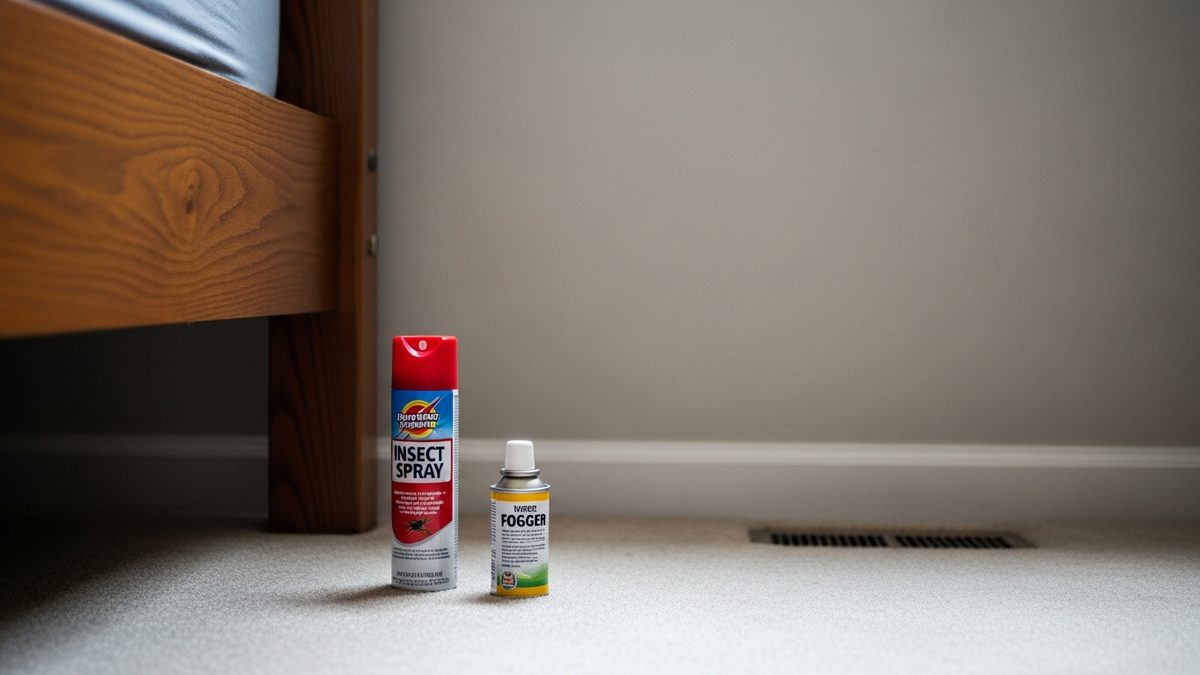
You've confirmed bed bugs are in your home. Now what? Most people head to the hardware store, grab a few cans of spray, and start treating every surface they can reach. It feels like taking control of the situation. Unfortunately, the research is clear: that approach almost never works — and sometimes it makes things worse.
This post explains exactly why store-bought sprays and foggers fall short, what professional treatment actually involves, and how to find a trustworthy pest control company. If you're still not sure whether you have bed bugs, start with how to confirm you actually have bed bugs first.
Why DIY bed bug treatment usually fails
Bed bugs are genuinely hard to kill. They are not like ants or cockroaches that wander in the open and pick up insecticide as they travel. Several overlapping problems make DIY treatment a steep uphill climb.
They hide in places sprays can't reach.
Bed bugs spend roughly 90 percent of their time tucked into cracks, crevices, and seams — inside mattress folds, behind baseboards, inside electrical outlets, beneath loose wallpaper, inside furniture joints. According to UC IPM, bed bugs can hide in a gap as narrow as the width of a credit card. Consumer sprays only work when they make direct contact with a bug. If the bug is not there when you spray, it is not affected.
Their eggs survive most products.
Many common pesticides — including over-the-counter sprays — do not kill bed bug eggs. The eggs have a hard outer coating that is resistant to many insecticides. This means even a treatment that kills every adult and nymph in the room today will face a new hatch of bugs in 10 to 15 days. The EPA explicitly notes that treatments must be repeated after eggs hatch, or the infestation will not be controlled. Most homeowners spray once, see fewer bugs, assume success, and stop — right before the next generation hatches.
Widespread pesticide resistance.
Bed bugs have developed significant resistance to the most common class of pesticides used in consumer products: pyrethroids (synthetic versions of pyrethrin). UC IPM researchers note that "some bed bug populations have developed resistance to pyrethroid insecticides and no longer can be effectively controlled by them." The EPA explains the mechanism: as bugs are exposed to a pesticide over time, the most susceptible ones die first, leaving the resistant ones to breed. Repeat the same product and you're selecting for bugs that don't respond to it. Applying a low dose — as many DIYers do — speeds up that process rather than slowing it.
The infestation is almost always larger than you think.
UC IPM research puts approximately 85 percent of bed bugs in or near the bed, but the remaining 15 percent can be in upholstered furniture, along baseboards, under carpeting, inside closets, and in adjoining rooms. If you miss any of these harborage sites — which is easy to do without training and specialized inspection tools — surviving bugs will repopulate the treated areas within weeks.
Timing and follow-up have to be exact.
Controlling bed bugs requires multiple treatments, spaced to catch bugs as they hatch. Miss the timing window and you're back to square one. The EPA notes that most infestations require more than one treatment visit, and that keeping records of where bugs are found — and checking for new activity for at least a year — is essential. Few homeowners have the time, training, or persistence to execute this correctly.
Why bug bombs and foggers make it worse
This one deserves its own section because foggers are aggressively marketed as a bed bug solution, and the research is unambiguous: they don't work, and they create new problems.
Researchers at Ohio State University published a study in the Journal of Economic Entomology that tested three common over-the-counter foggers against bed bugs. The result? The bed bugs showed "little, if any, adverse effects" — even with direct, two-hour exposure to the aerosolized insecticide. In real homes, where bugs are hidden in crevices, exposure would be far less.
University of Kentucky Extension entomologist Michael Potter explains why foggers fail on a basic level: the aerosol mist rises into the air and settles onto open surfaces — floors, countertops, bedding. It almost never penetrates into the cracks and voids where bed bugs actually live.
Worse, the active ingredients in most foggers — pyrethrins and pyrethroids — are repellent to bed bugs. Instead of killing them, the mist drives them deeper into wall voids, behind molding, and into adjacent rooms. Rutgers Cooperative Extension is direct: "Insect foggers are not effective for controlling bed bugs." The UC IPM pest notes add that using total-release aerosol foggers "has been shown to be ineffective for bed bug control and potentially harmful to residents."
Beyond the ineffectiveness, foggers carry real safety risks: residue settling on food preparation surfaces and bedding, respiratory irritation from pyrethrin vapors, and — if the instructions are not followed carefully — fire from the aerosol near a pilot light.
The bottom line: foggers waste money, expose your family to chemicals, and scatter the infestation. Skip them entirely.
What actually works (professional treatment)
Professional pest management for bed bugs relies on a combination of methods that address the infestation's full scope: inspection, heat, targeted insecticides, and follow-up monitoring.
Thorough inspection first.
Before any treatment begins, a trained pest management professional (PMP) will systematically inspect the mattress, box spring, bed frame, headboard, nearby furniture, baseboards, and less obvious spots like picture frames, electrical outlets, and interior wall voids. This step determines the actual scope of the infestation and prevents bugs from being disturbed and scattered before treatment starts.
Professional heat treatment.
Whole-room heat treatment is the most comprehensive single-visit option. Professionals use commercial heating equipment to raise the temperature of every room being treated to a minimum of 130°F to 140°F and hold it there for two to three hours. At those temperatures, all life stages of bed bugs — including eggs — are killed. UC IPM's recommendation is at least 140°F for two hours, or 130°F for three hours, as the minimum lethal temperature threshold is 113°F. Consumer attempts to replicate this with space heaters or turning up the thermostat do not work and can be dangerous — the temperature has to be consistent throughout the room, including inside furniture, wall voids, and bedding, which requires professional equipment.
Heat treatment's main advantage is speed: it typically eliminates an infestation in a single visit without the need for chemical residue in the home. The main drawback is cost, which runs higher than chemical treatment (more on that below).
Targeted chemical treatment.
Professional-grade insecticides are in a different category from store products. PMPs have access to formulations not sold to the public, including growth regulators, pyrrole insecticides, and products that combine pyrethroids with neonicotinoids to overcome resistance. Crucially, professionals apply insecticides precisely — into cracks, crevices, bed frame joints, and baseboards — rather than broadcasting them over surfaces. Desiccant dusts like diatomaceous earth (pesticide-grade, not pool-grade) and silica gel can be placed in wall voids and along baseboards; because they kill by drying out the bug's outer coating rather than poisoning it chemically, bed bugs cannot develop resistance to them.
Chemical treatment typically requires two to three follow-up visits spaced two to four weeks apart to address hatching eggs. The EPA confirms that very few infestations are controlled with a single chemical treatment.
Integrated pest management (IPM).
Both the EPA and UC IPM recommend that any professional treatment use an IPM approach — combining inspection, non-chemical controls (vacuuming, steam, mattress encasements, clutter reduction), targeted pesticide application, and ongoing monitoring. A company that only sprays without inspecting or following up is not using IPM and is less likely to succeed.
What you can do to help (prep and containment)
Preparation is not optional. The EPA states plainly that properly preparing your home before treatment is "an essential first step" that speeds the process and reduces costs.
Here is what to do before a professional treatment visit:
- Launder everything washable — clothes, bedding, curtains, stuffed animals — on the highest heat setting the fabric allows, then dry on high heat for at least 30 minutes. Store clean items in sealed plastic bags.
- De-clutter aggressively. Bed bugs hide in clutter. Remove cardboard boxes, piles of clothing, and anything stored under the bed. Do not move items from the infested room to other rooms — that spreads bugs.
- Vacuum thoroughly, including mattress seams, baseboards, carpet edges, and upholstered furniture. Immediately seal and dispose of the vacuum bag or canister contents in a sealed bag outside the home.
- Move furniture away from walls to give the technician access.
- Seal cracks in baseboards and around electrical outlets with caulk.
- Install mattress encasements on the mattress and box spring. Any bugs trapped inside cannot feed and will eventually die; new bugs cannot establish harborage inside the mattress.
- Make the bed an island: move it at least six inches from the wall, tuck all bedding so it doesn't touch the floor, and use interceptor traps under each bed leg.
Michigan State University Extension also recommends placing items that cannot be laundered — books, electronics, hard toys — into sealed airtight containers until they can be inspected or enough time has passed that any bugs are dead (at least one year without a host).
When to call a pro
The EPA advises getting a professional involved as soon as possible. Waiting and attempting DIY treatment first gives the infestation time to spread — to other rooms, to neighbors in multi-unit buildings, and to furniture you might otherwise have been able to save.
Call a pro immediately if:
- You have confirmed live bugs, eggs, or shed skins anywhere in your home
- You've already tried store-bought products without success
- You live in an apartment or multi-unit building (your neighbors may also be affected)
- Anyone in the home has asthma, chemical sensitivities, or a compromised immune system
- The infestation appears to have spread beyond the bedroom
The longer you wait, the larger the infestation grows, and the more expensive and difficult treatment becomes.
What professional treatment typically costs
Costs vary significantly based on the size of your home, the severity of the infestation, your location, and the treatment method. These are 2025–2026 US averages — use them as a planning guide, not a firm quote.
Chemical treatment (insecticides): Roughly $150 to $400 per room, with most multi-room infestations running $500 to $1,500 total across two to three visits. Mild single-room infestations can come in at $225 to $800.
Whole-home heat treatment: Higher upfront cost, typically $1,000 to $4,000 for most homes, with pricing commonly calculated at $2.00 to $6.50 per square foot and a $1,000 minimum at most providers. The advantage is that it is usually resolved in one visit rather than two or three.
Severe infestations or fumigation: Severe cases requiring whole-home fumigation can reach $3,500 to $5,000 or more.
Getting at least three quotes from licensed, experienced companies is a smart move before committing. Some companies offer a combination approach — heat for the main infestation, follow-up chemical application for stragglers — which can be effective and reasonably priced.
Common mistakes to avoid
Using the same pesticide product repeatedly. Rotating to products with different modes of action reduces the chance of resistance developing. Your pest professional should understand this and plan accordingly.
Treating only the bedroom. Bed bugs follow their hosts. If you sleep on the couch sometimes, bugs will be there too. A thorough treatment covers every room where people sleep or regularly rest.
Moving infested furniture out of the home carelessly. Dragging a bug-infested mattress through the house without sealing it first — or leaving it on the curb without marking it — spreads the infestation to other parts of your home or to other people. Mark it clearly and have it picked up promptly.
Stopping treatment too soon. Seeing fewer bugs after the first visit does not mean it's over. Hatching eggs will repopulate in two to three weeks. Follow the professional's entire treatment plan.
Using rubbing alcohol. It kills bugs on contact but evaporates quickly, leaves no residual protection, and is a serious fire hazard. The EPA specifically cautions against it.
How to choose a bed bug pro
The EPA recommends hiring a pest management professional with specific bed bug experience and a commitment to IPM. Here's what to look for:
Verify licensing and credentials. Pest control companies must be licensed in your state. Ask for the license number and verify it with your state's pesticide regulatory agency. Technicians handling pesticides should also be certified.
Ask about their bed bug experience specifically. Bed bug treatment is more technical than general pest control. Ask how many bed bug jobs they handle per year and what methods they use. A company that only offers foggers or one-time spray visits is a red flag.
Request an IPM approach. The company should offer a thorough inspection before quoting, use a combination of methods (not just one product), and include follow-up monitoring visits in their plan.
Get the treatment plan in writing. Before any work begins, you should have a written document outlining the methods to be used, the number of visits included, what prep you are expected to do, and what happens if bugs persist after the initial treatment.
Check references and reviews. Look for reviews that mention long-term outcomes — not just whether the technician was polite, but whether the bugs were actually gone after treatment was complete.
Ask about guarantees. Many reputable companies offer a guarantee: if bugs are still present after the treatment plan is complete, they will return at no additional charge. Understand exactly what the guarantee covers and for how long.
Avoid any company that promises to eliminate the infestation in a single visit with a spray-only approach, pressures you to decide immediately, or refuses to provide a written treatment plan.
FAQ
Can I get rid of bed bugs myself? In theory, yes — for very small, early-stage infestations. In practice, DIY treatment fails most of the time because of pesticide resistance, hidden harborage, and egg survival. The EPA notes that bed bug treatment is complex and can take weeks to months. Your odds of success improve significantly with professional help.
Does heat treatment kill bed bug eggs? Yes. This is one of heat treatment's biggest advantages over chemical-only approaches. At sustained temperatures of 130°F to 140°F, all life stages — including eggs — are killed. Many common insecticides do not penetrate the egg casing.
How many treatment visits will I need? Chemical treatments typically require two to three visits spaced about two to four weeks apart. Heat treatment can often resolve an infestation in a single visit. The severity of the infestation and whether prep steps were completed properly affect this number.
Do I have to throw away my mattress? Usually not. A licensed pest professional can treat a mattress in place. Sealing it in a mattress encasement after treatment is strongly recommended — any surviving bugs inside will eventually starve, and new bugs cannot establish harborage there.
Will bed bugs come back after treatment? If treatment is thorough and follow-up monitoring is in place, recurrence is uncommon. However, if the source of the infestation — travel, a neighbor's unit, second-hand furniture — is not addressed, reintroduction is possible. Post-treatment interceptor traps under bed legs are an inexpensive way to catch any new activity early.
How do I know treatment worked? The EPA recommends checking for bed bug evidence every few days after treatment and continuing to monitor with interceptor traps for at least a year. Your pest management professional should schedule follow-up inspection visits as part of the treatment plan.
If you've confirmed bed bugs in your home, the fastest path to a genuinely bug-free home is a vetted pest professional using an IPM approach. Get a free inspection and quote from a licensed bed bug specialist near you — and skip the spray-and-pray approach entirely.
Sources
- U.S. Environmental Protection Agency — When Treatments Don't Work: https://www.epa.gov/bedbugs/when-treatments-dont-work
- U.S. Environmental Protection Agency — Do-It-Yourself Bed Bug Control: https://www.epa.gov/bedbugs/do-it-yourself-bed-bug-control
- U.S. Environmental Protection Agency — Preparing for Treatment Against Bed Bugs: https://www.epa.gov/bedbugs/preparing-treatment-against-bed-bugs
- U.S. Environmental Protection Agency — Hiring a Pest Management Professional for Bed Bugs: https://www.epa.gov/bedbugs/hiring-pest-management-professional-bed-bugs
- UC Statewide IPM Program (UC IPM) — Pest Notes: Bed Bugs (Publication 7454): https://ipm.ucanr.edu/home-and-landscape/bed-bugs/
- University of Kentucky Entomology Extension — Limitations of Home Insect Foggers (ENTFACT-643), Michael F. Potter: https://entomology.ca.uky.edu/ef643
- Rutgers Cooperative Extension — Bed Bug Information for Residents and Building Managers: https://extension.rutgers.edu/bed-bug/information-for-residents-and-building-managers
- Michigan State University Extension — Preparing Your Home for Bed Bug Treatment: https://www.canr.msu.edu/news/preparing_your_home_for_bed_bug_treatment
- Jones SC, Bryant JL (2012). Ineffectiveness of over-the-counter total-release foggers against the bed bug. Journal of Economic Entomology 105(3):957–963: https://pubmed.ncbi.nlm.nih.gov/22812136/
Disclaimer
The information on this page is provided for general educational purposes only and is offered "as is" and "as available," without warranties of any kind, whether express or implied — including, without limitation, any warranties of accuracy, completeness, reliability, merchantability, or fitness for a particular purpose. It is not professional advice and is not a substitute for inspection, diagnosis, or repair by a licensed, qualified professional.
Home systems involving gas, electricity, water, refrigerant, fire, or structural components can be hazardous, and requirements vary by local code and jurisdiction. Any inspection, diagnosis, repair, installation, or other action referenced on this page should be performed by a licensed professional. You should not rely on this content to perform such work yourself. To the fullest extent permitted by law, [Company Name] and its owners, employees, and contributors assume no responsibility or liability for any injury, death, property damage, or other loss arising out of or in connection with the use of, or reliance on, this information.
If you smell gas or suspect a carbon monoxide leak, leave the area immediately and call 911 or your gas utility from a safe location.