Pilot Light Won't Stay Lit on a Water Heater? Here's Why
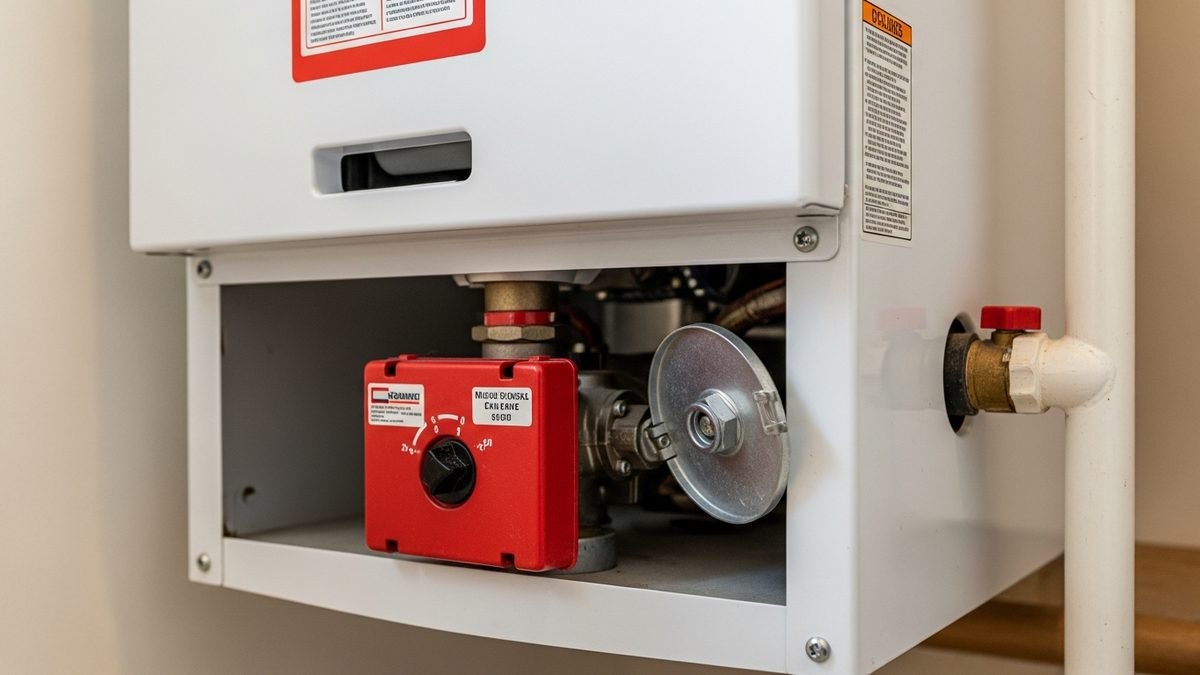
You go through the relight procedure — hold the pilot button, click the igniter, see the flame — and the moment you release the button the flame goes right out. Or it stays lit a few hours and then quits. Either way: no hot water, and a frustrating cycle of relighting.
The most common cause is a failing thermocouple. Several other issues can mimic it. This guide walks through each one.
Stop first if you smell gas. If there is any smell of gas near your water heater, do not try to relight it. Do not touch switches. Leave the house immediately, leave a door open, and call your gas company's emergency line and 911 from outside. Do not go back in until the gas company clears the building. [1]
How the pilot system works
On a standing-pilot gas water heater, a small flame burns continuously. When the tank cools down, the main gas valve opens and the pilot ignites the burner.
The thermocouple — a thin metal rod in the pilot flame — generates a small electrical current that signals the gas valve it is safe to stay open. When the flame goes out, the thermocouple cools, current stops, and the valve closes automatically as a safety measure. [2]
A dirty, bent, or worn-out thermocouple can't generate enough current — so the pilot dies the moment you release the button.
Most likely causes, ranked
1. Dirty or failing thermocouple (most common)
Oxidation, carbon buildup, or wear prevents the thermocouple from generating adequate millivoltage. Classic symptom: the pilot stays lit only while you hold the button, then goes out 30–60 seconds after release.
Fix: cleaning sometimes helps; replacement is usually the right call. Thermocouples cost $15–$30 for the part; a plumber will charge $150–$250 all in.
2. Thermocouple positioned incorrectly
Even a good thermocouple won't work if it's not fully in the pilot flame. The tip should sit at least 3/8 to 1/2 inch into the hottest part of the flame. If it has been bumped away, it won't heat adequately.
Fix: with the pilot off, gently bend it back into the flame path. Refer to the lighting instructions on the front of the unit.
3. Dirty pilot orifice
A clogged pilot orifice produces a weak, yellow flame instead of a steady blue one. A weak flame can't properly heat the thermocouple even if it is in the right position.
Fix: a plumber can clean or replace the orifice. This requires partial disassembly of the burner and is not a DIY job.
4. Draft blowing out the flame
Water heaters in garages or near exterior doors can have pilot outages on windy days or when nearby exhaust fans are running indoors. If the pilot goes out in predictable conditions, a draft is the likely cause.
Fix: identify and reduce the draft source. Never block the combustion air supply to the water heater — the unit needs that air to burn safely.
5. Gas supply interruption
A partially closed shutoff valve or low gas pressure from the utility will starve the pilot. If other gas appliances are also struggling, call your gas utility — it may be a supply issue on their end.
Fix: confirm the gas shutoff on the line to the water heater is fully open (handle parallel to the pipe, not across it).
6. Failing gas control valve
The gas control valve contains the thermostat, the main valve, and the pilot valve in one unit. On an older water heater, the valve itself can wear out and fail to hold open even with a good thermocouple.
Signs: new thermocouple installed, problem still persists; or the main burner never fires even though the pilot holds.
Fix: gas control valve replacement typically runs $300–$600 in parts and labor. On a unit over 8–10 years old, weigh this against a replacement. See also our guide on no hot water troubleshooting for broader gas water heater issues.
Troubleshoot it yourself (safely)
- Check the gas supply. Confirm other gas appliances work. Verify the shutoff valve to the water heater is fully open.
- Relight it correctly. The most common reason relighting fails is releasing the button too soon. Follow the label on the heater exactly: turn to Pilot, hold down the button while clicking the igniter, and keep holding for a full 30–60 seconds after the flame appears before slowly releasing. If it goes out immediately, the thermocouple is the likely culprit.
- Check the thermocouple position. With the pilot off, confirm the rod tip is fully in the flame path.
- Look at the pilot flame color. Steady blue is healthy. Weak or yellow suggests a dirty orifice or a draft.
Do not attempt to open or adjust the gas valve, clean the pilot orifice, or work on any gas supply lines yourself.
Safety first
If you smell gas, leave. Gas is a fire and explosion hazard. Leave immediately, leave a door open, call your gas company and 911 from outside. [1]
Carbon monoxide: A malfunctioning burner can produce carbon monoxide — colorless and odorless. Install CO detectors on every level of the home. If one goes off, treat it the same as a gas smell: leave, call 911. [3]
Ventilation: Gas water heaters need adequate combustion air. Never block air openings to fix a draft problem.
T&P valve: Never cap, plug, or bypass the temperature and pressure relief valve. It prevents catastrophic tank failure. If it drips, have a plumber inspect it. [1]
When to call a licensed plumber
- Pilot won't stay lit after two or three careful relight attempts
- You suspect the gas control valve has failed
- The pilot flame is consistently weak or yellow
- Any smell of gas near the unit
- Unit is more than 8–10 years old — a repair may not be worth the cost
What it typically costs
| Repair | Typical Range (2025–2026) |
|---|---|
| Thermocouple replacement | $150 – $250 |
| Gas control valve replacement | $300 – $600 |
| Pilot orifice cleaning / replacement | $150 – $300 |
| New gas tank heater (40–50 gal., installed) | $900 – $1,800 |
Common mistakes
Not holding the button long enough. The thermocouple needs 30–60 full seconds of flame to heat up and generate current. Most failed relight attempts are just technique.
Relighting after smelling gas. If you smelled gas and didn't get the all-clear from your gas company first, do not attempt a relight. An electrical spark near accumulated gas can ignite it.
Replacing the thermocouple on a very old unit. On a 12-year-old heater with recurring pilot issues, a $250 repair buys maybe one or two more years. A replacement conversation makes sense at that point.
How to prevent pilot problems
- Service the water heater every 2–3 years — a technician will clean the burner and orifice and verify combustion.
- Install a CO detector within 10 feet of the unit and test it monthly.
- Know where the gas shutoff valve is at the unit and at the main.
- If the unit is over 10 years old, start budgeting for replacement before a failure catches you off guard.
FAQ
How many relight attempts before I call a plumber? Two or three careful tries — holding the button for a full 60 seconds each time. If it still won't stay lit, stop and call a pro.
My unit is newer but the pilot won't hold. Is it defective? Possibly. Most gas water heaters carry at least a 6-year parts warranty. Call the manufacturer with the model and serial number before paying out of pocket.
Pilot holds but the main burner never fires. Is that the thermocouple? Probably not. If the pilot holds on its own but the burner won't come on, the issue is likely a failed gas control valve or thermostat. Call a plumber.
Is a pilot outage an emergency? Usually not. A standard outage simply closes the gas valve — no gas flows. It becomes a concern if the valve is stuck open (rare), which you'd detect by smelling gas.
Can I convert my old standing-pilot unit to electronic ignition? Generally no. Electronic ignition requires a new unit. Modern heaters use intermittent ignition devices that are more reliable and don't waste gas on a standing pilot. [4]
Get a free quote
A pilot that won't stay lit is usually a quick fix for a licensed plumber. Contact Local Service Group for a free, no-obligation quote and get your hot water back fast.
Sources
- https://www.energy.gov/energysaver/storage-water-heaters
- https://www.cpsc.gov/Safety-Education/Safety-Education-Centers/Carbon-Monoxide-Information-Center
- https://www.energy.gov/energysaver/tankless-or-demand-type-water-heaters
Disclaimer
The information on this page is provided for general educational purposes only and is offered "as is" and "as available," without warranties of any kind, whether express or implied — including, without limitation, any warranties of accuracy, completeness, reliability, merchantability, or fitness for a particular purpose. It is not professional advice and is not a substitute for inspection, diagnosis, or repair by a licensed, qualified professional.
Home systems involving gas, electricity, water, refrigerant, fire, or structural components can be hazardous, and requirements vary by local code and jurisdiction. Any inspection, diagnosis, repair, installation, or other action referenced on this page should be performed by a licensed professional. You should not rely on this content to perform such work yourself. To the fullest extent permitted by law, [Company Name] and its owners, employees, and contributors assume no responsibility or liability for any injury, death, property damage, or other loss arising out of or in connection with the use of, or reliance on, this information.
If you smell gas or suspect a carbon monoxide leak, leave the area immediately and call 911 or your gas utility from a safe location.