No Hot Water at Home? Here's How to Find the Problem (and Fix It)
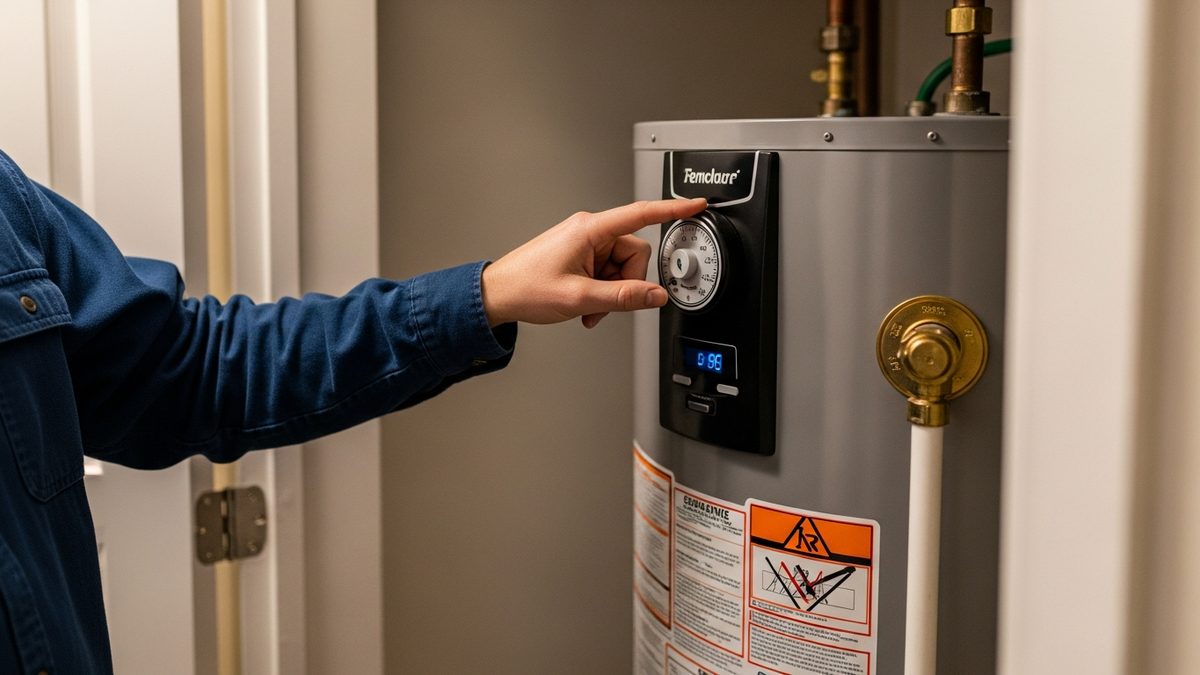
Turning on the tap and getting nothing but cold water is one of those household moments that quickly goes from annoying to urgent. Whether your home runs on an electric or gas tank water heater, the good news is that many causes are simple — and some you can sort out in minutes without picking up a phone. This guide walks you through the most likely culprits, what you can safely check yourself, and when it really is time to call in a pro.
Most likely causes
Electric water heaters
1. Tripped circuit breaker — This is the single most common reason an electric water heater stops working. A surge or a brief internal fault can knock the breaker off without any obvious sign. It takes about 30 seconds to check and reset.
2. Blown high-limit (ECO) switch — Electric heaters have a red reset button on the upper thermostat. If the water got too hot for any reason, this safety switch cuts power. Pressing it often restores heat, but if it trips again right away, something else is wrong.
3. Failed heating element — Most electric tanks have two elements (upper and lower). When one burns out you may get lukewarm water instead of none; when both go, nothing comes out warm at all. Elements wear out over time, especially where water is hard and mineral-rich.
4. Faulty thermostat — Each element is paired with its own thermostat. A bad thermostat can prevent an element from ever switching on, mimicking a dead element even when the element itself is fine.
5. Thermostat set too low — This one is easy to overlook. Someone may have turned the dial way down and forgotten about it. Make sure both thermostats are set to around 120°F.
Gas water heaters
1. Pilot light out or ignition failure — The pilot keeps the burner ready to fire. A draft, a brief gas interruption, or simply a very old pilot assembly can blow it out. Most units have relight instructions printed right on the label.
2. Bad thermocouple — The thermocouple is a small safety sensor that sits in the pilot flame. If it senses no flame, it shuts off gas to the burner as a safety measure. A worn thermocouple will let the pilot go out as soon as you release the pilot button. This is the most common reason a pilot won't stay lit.
3. Gas supply interrupted — Check that the shutoff valve on the gas line going to the heater is fully open (handle parallel to the pipe). A closed valve or a service interruption from the utility will leave the heater with nothing to burn.
4. Faulty gas valve or control — The gas valve regulates fuel flow to both the pilot and the burner. When it fails, neither will fire properly. This is less common but does happen on older units.
5. Sediment buildup (both types) — Years of mineral deposits on the bottom of the tank can insulate the water from the heat source, leaving you with reduced output or slow recovery. You'll often hear rumbling or banging sounds as a warning sign before hot water disappears entirely.
Troubleshoot it yourself (safely)
Work through these steps in order — cheapest and simplest first. Always read the safety section below before you begin.
-
Check the breaker (electric only). Head to your electrical panel and find the circuit labeled for the water heater. If it isn't fully in the ON position, flip it off, then firmly back on. If it holds, wait 30–60 minutes for the tank to reheat. If the breaker trips again immediately, stop — there is likely an internal electrical fault and you need a professional.
-
Check the gas supply and relight the pilot (gas only). Make sure the gas shutoff valve near the heater is open. If the pilot is out, follow the step-by-step lighting instructions on the heater label — typically: turn the gas valve knob to PILOT, press and hold it down, ignite the pilot with a long lighter or piezo igniter, hold the knob in for about 30 seconds, then slowly release. If the flame stays lit, switch the knob to ON and give the tank 30 minutes to heat up. If the pilot goes out as soon as you release the knob, the thermocouple is likely the problem.
-
Press the high-limit reset button (electric only). Turn off power at the breaker first. Remove the upper access panel and press the red button firmly until you feel or hear a click. Replace the panel, restore power, and wait an hour. If the button trips again within minutes, a heating element or thermostat needs attention.
-
Check and adjust the thermostat setting (both types). With the power or gas off, locate the thermostat dial(s). Set them to 120°F. On electric heaters there are usually two panels to check — upper and lower. On gas heaters, the dial is typically on the gas valve control box.
-
Test an electric heating element with a multimeter. With power fully off at the breaker, remove the lower access panel and disconnect the two wires from the element. Set a multimeter to the resistance (ohms) setting and touch one probe to each terminal screw. A good element will show some resistance (typically 10–20 ohms for a 240V element). A reading of zero or infinite resistance means the element has failed and needs replacing.
-
Flush a few gallons from the tank. If you're getting some warm water but it runs out quickly or sounds like a kettle boiling, sediment may be the issue. Turn off power or gas and the cold-water supply. Connect a garden hose to the drain valve near the bottom of the tank and run a few gallons into a bucket or floor drain until the water comes out clear. Let the tank cool before doing this — hot water can cause burns.
-
Inspect the T&P valve visually. Look at the temperature-pressure relief valve on the side of the tank. It should be dry. If water is dripping from the discharge pipe, stop and call a plumber — do not try to cap or tape it.
Safety first
Electrical shock — Before opening any access panel on an electric water heater, turn off the dedicated circuit breaker. Confirm power is off with a non-contact voltage tester if you have one. Use insulated tools.
Natural gas and carbon monoxide — If you smell anything like rotten eggs near the water heater, do not touch any switches, do not use your phone inside, and do not try to light the pilot. Leave the house immediately, leaving the door open behind you, and call your gas utility or 911 from outside. Carbon monoxide (CO) from a blocked flue is odorless — install at least one CO detector on each floor if you have gas appliances. Never block or obstruct the vent pipe above a gas heater.
Scalding — Water at 140°F causes a severe burn in about six seconds. The U.S. Consumer Product Safety Commission (CPSC) recommends setting residential water heaters to no higher than 120°F to prevent scalding, especially with children and older adults in the home. After any thermostat adjustment, check the temperature at the tap with a candy or meat thermometer before assuming it is safe.
Tank pressure and the T&P valve — The temperature-pressure relief valve is your last line of defense against a dangerous pressure buildup inside the tank. Never cap it, plug it, or remove it without an immediate replacement. Any discharge from this valve — even a small drip — is a signal to call a licensed plumber right away.
When to call a licensed pro
You can safely handle these yourself: checking and resetting the breaker, relighting the pilot, adjusting the thermostat, pressing the reset button, and flushing the tank.
Call a licensed plumber or gas technician when:
- The breaker trips again right after you reset it
- The pilot refuses to stay lit after two or three tries
- You smell gas at any point
- Water is leaking from the tank body (not just a fitting)
- The T&P valve is discharging water
- The high-limit reset trips repeatedly
- You need to replace gas components (thermocouple, gas valve, burner assembly) — most jurisdictions require a licensed gas technician for this work
- You're installing a new water heater — this almost always requires a permit and must meet local plumbing and electrical codes
- Any work involves new wiring, new gas piping, or changes to the venting system
A good rule of thumb: if the fix involves gas lines, high-voltage wiring, or a safety device like the T&P valve, hire a pro.
What it typically costs
DIY parts (2025–2026 estimates):
- Replacement heating element (electric): $10–$30
- Thermostat (electric): $10–$20
- Thermocouple (gas): $5–$15
- Anode rod: $20–$50
- T&P relief valve: $20–$30
- Dip tube: $25
Professional repair:
- Service call / pilot relight: $50–$150
- Thermocouple replacement (parts + labor): around $150
- Electric element replacement (parts + labor): $200–$300
- Thermostat replacement (parts + labor): $150–$200
- Gas valve or control replacement: around $350
- Tank flush and cleaning: $150–$200
Full tank replacement (50-gallon, installed): $900–$1,800 depending on unit, labor rates, and local permit fees. If your heater is already 10–12 years old and needs a major repair, replacement often makes more financial sense — most tank water heaters last 10 to 15 years.
Common mistakes to avoid
- Skipping the power or gas shutoff. This is the most dangerous shortcut. Always cut power at the breaker (electric) or turn off the gas valve before touching anything.
- Not draining before removing an element. If you pull an element without cutting the water supply and draining first, you will have a very wet, very hot mess on your hands.
- Setting the thermostat too high. Pushing past 125°F wastes energy and creates a real burn risk. Stick to 120°F as a baseline.
- Ignoring small leaks. A tiny drip at a fitting or around the tank is easy to dismiss, but slow leaks mean corrosion is already at work. Left alone, they become major ones.
- Capping the T&P valve. Homeowners sometimes do this to stop a drip from the discharge pipe. This is genuinely dangerous — the valve needs to be free to open under overpressure.
- Attempting DIY gas line work. Reconfiguring gas lines without training, permits, or the right tools is illegal in most jurisdictions and very hazardous.
- Rushing the flush. Opening the drain valve too fast stirs sediment back up rather than clearing it. Let water flow slowly and steadily until it runs clear.
How to prevent it
- Flush the tank once a year — twice a year if you live in an area with hard water. Draining just a few gallons clears mineral buildup before it causes problems.
- Inspect the anode rod every two to three years. This sacrificial rod inside the tank attracts corrosive minerals so the steel tank walls don't have to. Replace it once it's more than half corroded.
- Keep the area around the heater clear. The vent or flue on a gas heater needs free airflow. Never store flammable items near a gas water heater.
- Listen and watch for warning signs. Popping or rumbling from the tank, water that comes out rusty or discolored, and shorter periods of hot water are all early warnings worth acting on.
- Install a CO detector and a water leak sensor. A CO detector is essential in any home with gas appliances. A small leak sensor placed on the floor near the tank gives you early warning of a developing leak before it becomes a flood.
- Know your heater's age. Check the serial number — most manufacturers encode the year in the first few characters. Once a tank passes the 10-year mark, start planning for replacement rather than waiting for a crisis.
FAQ
My pilot light keeps going out. What's causing it?
The most common reason is a worn thermocouple. This small rod sits in the pilot flame and tells the gas valve it's safe to stay open. When the thermocouple wears out, the gas valve shuts down as a safety measure the moment you let go of the pilot knob. A replacement thermocouple is inexpensive, but installing it involves working near the gas valve — most homeowners prefer to have a technician handle it.
Why does my electric water heater keep tripping the breaker?
A breaker trips when it detects more current than the circuit is designed to carry. On a water heater, a grounded (shorted) heating element is the most common cause. A failed or sticky thermostat can also keep an element on too long and trip the overload. If a fresh reset trips again within minutes, cut power and have the elements and thermostats tested.
What does the red reset button on my electric heater do?
It's the high-limit or ECO (Energy Cut-Off) switch. It monitors water temperature and cuts power to the entire heating circuit if the water gets dangerously hot — usually above 170°F. Pressing it once is normal if the limit was triggered. If it trips repeatedly, the thermostat is failing to shut off an element at the set temperature, or an element has shorted. Don't bypass it or tape it down — it's there to prevent a serious overheat situation.
How long should a tank water heater last?
Most conventional tank heaters are designed for 10 to 15 years of service. Lifespan varies depending on water quality, how well the unit is maintained, and the quality of the original installation. Regular anode rod inspections and annual flushing can push a unit toward the longer end of that range.
My heater is 12 years old and needs a new element. Should I repair it or replace it?
At that age, it's worth doing the math. A repair might cost $200–$300, but the tank could need another repair in a year or two — or spring a leak that requires emergency replacement anyway. A new tank installed runs $900–$1,800 but comes with a warranty, better efficiency, and several more years of reliable service. If the tank itself shows any corrosion or if this is the second repair in a few years, replacement is usually the smarter choice.
Why am I only getting lukewarm water instead of hot?
Partial hot water almost always points to one failed component rather than total system failure. On an electric heater, if the upper element is out, only the lower element heats — giving you a smaller supply of warm water that runs out quickly. On a gas heater, an obstructed burner or a dip tube that's broken (allowing cold water to mix at the top of the tank) can produce the same lukewarm result. Start by checking the breaker and thermostat settings, then have the elements or burner inspected.
Get a free quote from a vetted pro near you
If you've run through the checks above and still have no hot water — or if you've found a problem that calls for a licensed hand — don't spend another day with cold showers. Local Service Group connects homeowners with vetted, local water heater pros who can come out, diagnose the problem, and give you a straight answer on repair vs. replacement. Get your free quote today and have hot water back on your schedule, not the heater's.
Sources
- U.S. Consumer Product Safety Commission — Avoiding Tap Water Scalds (Publication 5098): https://www.cpsc.gov/s3fs-public/5098.pdf
- U.S. Department of Energy, Energy Saver — Storage Water Heaters: https://www.energy.gov/energysaver/storage-water-heaters
- U.S. Department of Energy, Energy Saver — Water Heating overview: https://www.energy.gov/energysaver/water-heating
Disclaimer
The information on this page is provided for general educational purposes only and is offered "as is" and "as available," without warranties of any kind, whether express or implied — including, without limitation, any warranties of accuracy, completeness, reliability, merchantability, or fitness for a particular purpose. It is not professional advice and is not a substitute for inspection, diagnosis, or repair by a licensed, qualified professional.
Home systems involving gas, electricity, water, refrigerant, fire, or structural components can be hazardous, and requirements vary by local code and jurisdiction. Any inspection, diagnosis, repair, installation, or other action referenced on this page should be performed by a licensed professional. You should not rely on this content to perform such work yourself. To the fullest extent permitted by law, [Company Name] and its owners, employees, and contributors assume no responsibility or liability for any injury, death, property damage, or other loss arising out of or in connection with the use of, or reliance on, this information.
If you smell gas or suspect a carbon monoxide leak, leave the area immediately and call 911 or your gas utility from a safe location.