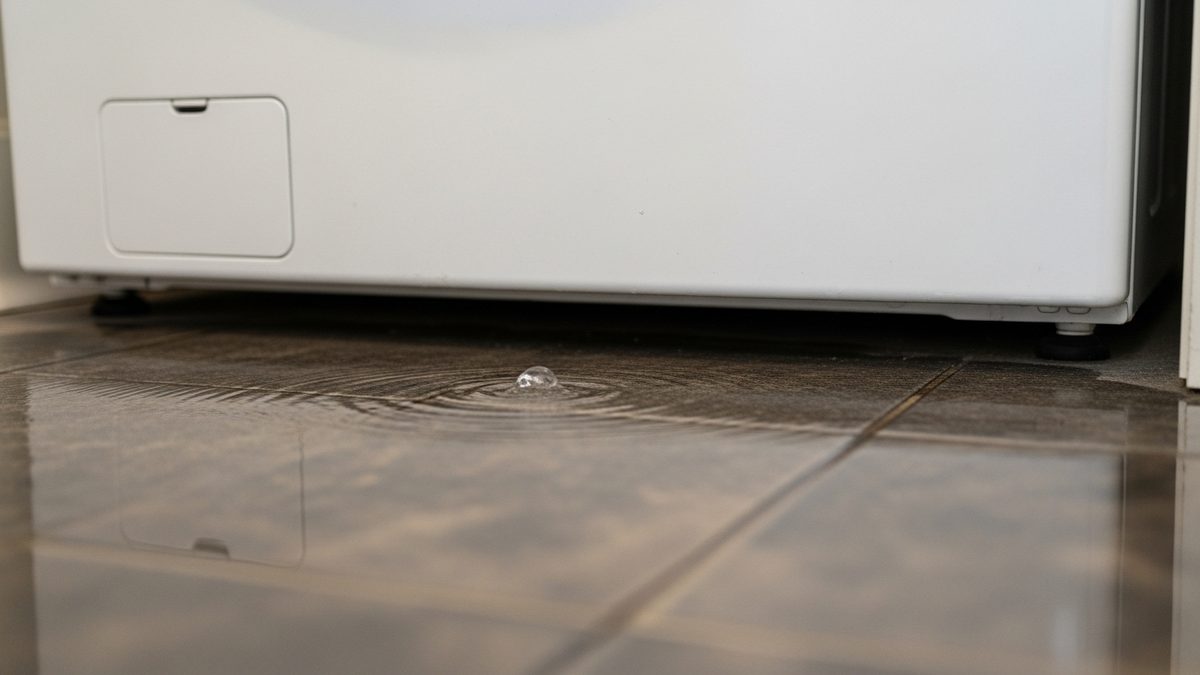
A puddle on the laundry room floor always seems to appear at the worst possible time. Washing machine leaks range from a slow drip that shows up only during the spin cycle to a full-on flood that soaks through to the subfloor. The good news is that most leaks come from a handful of common sources, and several of them are things you can find and fix yourself in less than an hour.
This guide walks you through every likely cause, how to track down where the water is actually coming from, and what repairs typically cost.
Most likely causes
1. Loose or cracked inlet hoses Two rubber or braided steel supply hoses connect the back of the washer to your home's hot and cold water valves. These hoses age, crack, and harden over time, and the fittings can loosen from vibration. A dripping connection at either end of those hoses is one of the most common and easiest leaks to find. Water typically appears behind or directly under the machine.
2. Door seal (front-load washers) The large rubber gasket around the door opening on a front-loading washer keeps the drum watertight during the wash cycle. This seal develops tears, small holes, and mold-weakened spots over time — especially if lint, debris, or foreign objects get trapped against it. When the seal fails, water leaks from the front of the machine during the wash or rinse portion of the cycle. You can often see the damage by opening the door and inspecting the gasket carefully.
3. Overloading or oversudsing Stuffing too many clothes into the drum or using too much detergent (or the wrong type) can force water out through the door seal or overflow the drum entirely. Front-load and HE top-load washers are designed for low-suds HE detergent. Regular detergent creates far too many suds, which can overwhelm the machine's sensors and cause water to push out around the door or through the dispenser drawer. This is more common than most people expect and leaves no permanent damage if corrected promptly.
4. Clogged or failing drain pump If the drain pump is partially blocked or starting to fail, water may back up and leak from the pump housing itself, the drain hose connection, or the pump filter housing at the front of the machine. The leak often appears during the drain phase of the cycle, not the wash. See also: washer won't drain or spin for more on drain pump problems.
5. Tub seal failure The tub seal sits between the outer tub and the transmission or rear drum bearing assembly. When it fails, water leaks out from under the machine — often appearing as a steady drip directly below the center of the washer. Tub seal replacement is a labor-intensive repair that usually requires significant disassembly, which is why it's one of the more expensive washer repairs.
6. Loose internal hoses or cracked inlet valve Inside the machine, a series of smaller hoses route water from the valve to the drum and from the drum to the pump. Any of these connections can loosen from vibration or develop cracks with age. The water inlet valve itself — the component that opens and closes to let water in — can crack or develop a defective solenoid that allows slow overflows.
7. Drain hose connection leak Where the drain hose connects to the back of the machine or to the standpipe in the wall, the connection can work loose or the hose end can crack. This produces a leak that typically appears only when the machine is actively draining.
Find the source step by step
Tracking down a washer leak is mostly about timing and location. Work through these steps before calling anyone.
-
Unplug the washer and turn off the water supply valves (the two valves on the wall behind the machine). Safety first — water and electricity do not mix.
-
Dry the floor completely. Use towels to wipe up all standing water so you start with a dry surface.
-
Inspect the supply hoses. Look at both ends of each hose — where it connects to the machine and where it connects to the wall valve. Feel for moisture or dried mineral deposits (a sign of past slow dripping). Flex the hose gently and look for cracks in the rubber.
-
Turn the water supply valves back on and look for drips at the connections without running a cycle. If water drips from a hose fitting just from line pressure, that's your leak.
-
Run a short wash cycle and watch where water appears. Stand next to the machine for the first few minutes. Water appearing at the front during the wash points to the door seal or detergent dispenser. Water from underneath during the wash suggests a tub seal. Water during the drain suggests the pump or drain hose.
-
Inspect the door gasket (front-loaders). Pull back the folds of the gasket and look for tears, punctures, embedded debris, or areas of visible mold deterioration. Even a small cut allows a leak.
-
Check the detergent dispenser drawer. Remove it fully and look for soap or mineral buildup that may be blocking the drawer's water passages, causing overflow.
Safety first
- Always unplug the machine before reaching inside or moving it. Water on the floor near an energized appliance is an electric shock hazard.
- Turn off both water supply valves before disconnecting any hoses.
- A front-load washer can hold 1 to 3 gallons of water in the drum at any point in the cycle — be ready for a spill when you open a leaking machine.
- If water has reached the wall, flooring, or subfloor, check for signs of water damage or mold before closing the area back up.
When to call a licensed pro
Call a technician when:
- The leak is coming from under the machine and you can't identify a hose or external connection as the source (suggests tub seal or bearing failure).
- The door gasket is torn — replacing it on most front-loaders involves removing the door panel, which is doable but easy to do wrong and risks tearing the new seal during installation.
- The drain pump is leaking from its housing, not just a loose hose connection.
- Water is pooling inside the machine's cabinet (visible by removing the front or back panel) from internal hose connections.
- The inlet valve is cracked or not shutting off properly.
What it typically costs
These are national averages for 2025–2026:
- Supply hose replacement: $80–$150 parts and labor (or $10–$30 DIY)
- Detergent dispenser cleaning or replacement: $75–$150
- Door gasket/seal replacement: $150–$350 parts and labor for most standard brands; up to $500 for some front-loaders with complex panel access
- Drain pump replacement: $150–$300 parts and labor
- Tub seal replacement: $200–$450 parts and labor — this is labor-intensive and sometimes costs nearly as much as a replacement machine on older units
- Water inlet valve replacement: $120–$220 parts and labor
Common mistakes to avoid
- Using non-HE detergent in an HE washer. This is a surprisingly common cause of apparent leaks — the excess suds push water right out around the door.
- Ignoring a slow drip from the supply hoses. A minor seep under line pressure will eventually fail completely, often when the machine is running unattended. Replace both supply hoses every 5 years as a precaution; braided stainless hoses last longer than plain rubber.
- Running the machine while it continues to leak. Even a slow leak can warp flooring, rot the subfloor, and promote mold growth in a matter of weeks.
- Pulling the machine away from the wall by the hoses. Always move the machine by gripping the body — yanking on supply hoses stresses the connections and can cause the very leak you're trying to find.
How to prevent leaks
- Inspect supply hoses at least once a year and replace them every 5 years regardless of appearance. The Washing Machine Hose Council and appliance manufacturers recommend braided stainless steel over rubber.
- After each cycle, wipe down the door gasket on front-loaders and leave the door slightly open to allow it to dry out completely.
- Don't overfill — most machines should be loaded no more than three-quarters full.
- Use only HE detergent in HE machines, and follow the recommended dosage. More soap does not mean cleaner clothes.
- Clean the detergent dispenser drawer monthly to prevent the buildup that blocks water flow and causes overflow leaks.
Frequently asked questions
My front-loader leaks only when it's on the spin cycle. What causes that? Spin-cycle leaks on a front-loader usually come from a damaged door seal or a loose door latch that isn't holding the door tightly enough under pressure. It can also be a pump or drain hose issue if the leak appears at the back or bottom.
Water is pooling right in the center under my top-load washer. What's leaking? A center-bottom drip on a top-loader typically points to the tub seal or the tub-to-pump hose. Both require disassembly to access — this is a pro repair.
Can overloading actually cause a leak? Yes. Overloading pushes the drum off-balance and can force water past the door seal on front-loaders. It also increases vibration that stresses hose connections over time.
My washer leaks only occasionally. Is that normal? No. An intermittent leak usually means a component is right on the edge of failure — a hose that's nearly cracked through, or a seal that leaks only when the load is heavy. Find it now before it becomes a full leak.
How long do washing machine door gaskets last? Typically 8 to 10 years with proper care — regular cleaning and keeping the door open between cycles. Gaskets fail faster when debris gets trapped against them or when the door is repeatedly slammed shut.
Ready to stop the leak?
If you can't identify the source or the repair is beyond a hose swap, a trained appliance technician can usually diagnose and fix the problem in a single visit. Contact Local Service Group for a free quote from a qualified appliance repair pro in your area.
Sources
- Whirlpool — Cleaning the Pump Filter: https://producthelp.whirlpool.com/Laundry/Washers/Product_Info/Washer_Cleaning_and_Care/Cleaning_the_Pump_Filter_-_Front_Load_Washer
- HomeAdvisor — Washing Machine Repair Cost: https://www.homeadvisor.com/cost/kitchens/washing-machine-repair/
- Angi — Washing Machine Repair Costs: https://www.angi.com/articles/how-much-washing-machine-repair-costs.htm
- HomeGuide — Washing Machine Repair Cost 2026: https://homeguide.com/costs/washing-machine-repair-cost
- ConsumerAffairs — Cost to Repair a Washing Machine: https://www.consumeraffairs.com/homeowners/cost-to-repair-washing-machine.html
Disclaimer
The information on this page is provided for general educational purposes only and is offered "as is" and "as available," without warranties of any kind, whether express or implied — including, without limitation, any warranties of accuracy, completeness, reliability, merchantability, or fitness for a particular purpose. It is not professional advice and is not a substitute for inspection, diagnosis, or repair by a licensed, qualified professional.
Home systems involving gas, electricity, water, refrigerant, fire, or structural components can be hazardous, and requirements vary by local code and jurisdiction. Any inspection, diagnosis, repair, installation, or other action referenced on this page should be performed by a licensed professional. You should not rely on this content to perform such work yourself. To the fullest extent permitted by law, [Company Name] and its owners, employees, and contributors assume no responsibility or liability for any injury, death, property damage, or other loss arising out of or in connection with the use of, or reliance on, this information.
If you smell gas or suspect a carbon monoxide leak, leave the area immediately and call 911 or your gas utility from a safe location.