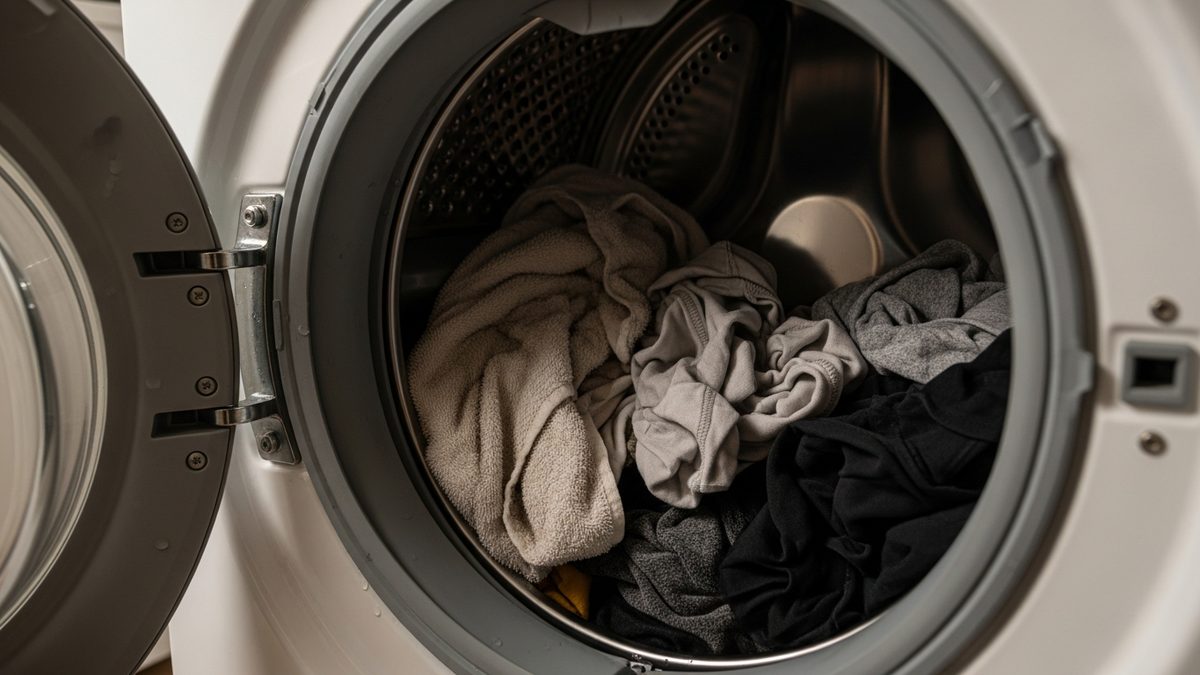
You pull open the lid and find your clothes sitting in a pool of water, soaking wet and completely unspun. Or the cycle just stops and the machine goes silent. Either way, a washer that won't drain or spin is one of the most common appliance headaches homeowners deal with — and in many cases, it's something you can diagnose yourself without calling anyone.
This guide walks you through every likely cause, what you can check safely at home, when the problem is over your head, and what a repair typically costs.
Most likely causes
Here are the causes ranked from most to least common.
1. Clogged drain pump filter Front-load washers have a small filter near the bottom of the machine, usually behind a small panel at floor level. This filter catches lint, coins, hair ties, and other debris before they reach the drain pump. When it clogs, the pump can't move water out, and the machine stalls. Many homeowners don't know the filter exists — this is the single most overlooked cause of drainage problems.
2. Kinked or blocked drain hose The drain hose runs from the back of the washer to a standpipe or utility sink. If it gets kinked, pinched behind the machine, or pushed too far down into the standpipe (creating a siphon), water won't move. This is quick to check and free to fix.
3. Clogged drain pump Even past the filter, the pump itself can jam on a sock, a small garment, or a handful of change. When something lodges in the pump impeller, the motor may hum or buzz but the drum stays full. On some models you can access the pump directly; on others it requires pulling the machine apart.
4. Lid switch or door lock failure On top-load washers, a lid switch tells the machine the lid is closed and it's safe to spin. If the switch breaks or the lid doesn't close fully, the machine simply won't enter the spin cycle — it's a built-in safety interlock. Front-load washers use a door lock mechanism (sometimes called a door latch). When it fails, the machine may wash but refuse to spin or unlock. You can often hear the door lock click (or not click) when the cycle starts.
5. Unbalanced load Washing machines have sensors or mechanical switches that stop the spin cycle when the drum load is lopsided. A single heavy item — one soaking wet blanket, a few jeans bunched together — can trigger this protection repeatedly. The machine may try to spin, sense the imbalance, add more water, drain, and then stop without completing the spin. It's annoying, but it's the machine working correctly.
6. Broken or worn drive belt On belt-driven washers, the motor spins the drum through a rubber belt, much like a car engine drives accessories. When the belt breaks or slips off, the motor runs but the drum doesn't move. You may hear the motor humming with no drum rotation.
7. Failed control board or timer Less common than the items above, but a malfunctioning electronic control board or mechanical timer can freeze the machine mid-cycle or skip the drain/spin steps entirely. This is usually a diagnosis of exclusion — if everything else checks out, the board or timer is the next suspect.
Troubleshoot it yourself (safely)
These steps are safe for any homeowner to try. Always unplug the washer from the wall outlet before reaching inside the machine or removing any panels.
-
Check for an error code. Most modern washers display an error code on the screen when something is wrong. Look up your model number plus the error code online — the manufacturer's support page (Whirlpool, GE, LG, Samsung, Maytag) will tell you exactly what it means.
-
Redistribute the load. Open the lid or door and manually move the laundry around so it's balanced evenly around the drum. Close it back up and try the spin-only cycle. If it completes, an unbalanced load was the issue.
-
Inspect the drain hose. Pull the machine away from the wall and trace the drain hose from the back of the washer to where it enters the standpipe or utility sink. Look for obvious kinks or pinches. Make sure the hose isn't inserted more than 4 to 6 inches into the standpipe — pushing it in too far causes a siphon effect that constantly drains and refills the machine.
-
Clean the drain pump filter (front-loaders). Put down towels and have a shallow pan ready. Open the small access panel at the bottom front of the machine. Unscrew the filter cap slowly, letting the water drain into the pan. Remove the filter entirely and rinse it under warm water. Remove any debris from the filter housing. Reinstall, run a short cycle, and check for drainage. Whirlpool recommends doing this every few months as routine maintenance.
-
Test the lid switch or door lock. On a top-loader, with the machine unplugged, press the lid switch plunger (the little tab the lid presses down) with your finger while the lid is open. You should feel or hear a click. If you don't, the switch may be broken. On a front-loader, visually inspect the door latch for cracks or visible damage.
-
Listen for the pump. Plug the machine back in and start a drain cycle. Stand close and listen. A grinding, humming, or buzzing sound with no water movement suggests something is jammed in the pump impeller.
Safety first
- Unplug before you touch anything inside the machine. Water and electricity are a dangerous combination. Never work on a washer with standing water inside while it is plugged in.
- Turn off the water supply valves behind the machine before disconnecting hoses to avoid a flood.
- If the machine has standing water and you need to remove it manually, use a wet/dry vacuum or bail it out with a cup before starting repairs.
Also see our guide on washing machine leaking — a drain problem and a leak often point to the same underlying issue.
When to call a licensed pro
Call a repair technician if:
- You cleaned the filter and drain hose checks out, but the machine still won't drain.
- You hear a loud grinding noise when trying to drain — this suggests a pump impeller problem that requires disassembly.
- The drum doesn't rotate at all during the spin cycle (possible motor or belt issue).
- Error codes point to the motor, control board, or main PCB.
- The machine is a front-loader and the door lock needs replacement — getting the door panel off on many models is tricky and carries a risk of damaging the door seal.
What it typically costs
Repair costs vary by brand and region, but these ranges reflect national averages for 2025–2026:
- Drain filter cleaning (service call): $75–$130 — often done as part of a diagnostic visit
- Drain hose replacement: $100–$175 parts and labor
- Drain pump replacement: $150–$300 parts and labor
- Lid switch or door lock replacement: $120–$250 parts and labor
- Drive belt replacement: $130–$200 parts and labor
- Control board replacement: $200–$450 parts and labor
As a general rule, if repairs will cost more than half the price of a new comparable washer, it's worth getting a replacement quote first. Most standard washers have a 10- to 13-year life span.
Common mistakes to avoid
- Forcing the spin cycle by pressing start over and over. If the machine has stopped for a safety reason (unbalanced load, lid switch, error code), hammering the start button doesn't help and can stress the motor.
- Ignoring a clogged filter for years. A mildly restricted filter strains the drain pump over time and eventually burns it out. Clean it every three to four months.
- Pushing the drain hose too deep into the standpipe. More than 6 inches creates a siphon that confuses the machine.
- Running the machine with the door seal visibly torn. A damaged seal on a front-loader will eventually allow water into the door latch assembly and cause lock failures.
How to prevent drainage problems
- Clean the drain pump filter every three months or whenever you notice slower drainage.
- Always check pockets before washing — coins, keys, and small items are the main culprits behind pump jams.
- Don't overstuff the washer. Most manufacturers recommend filling the drum no more than three-quarters full.
- Use only HE (high-efficiency) detergent in HE washers. Regular detergent produces too many suds, which can trick the machine's water sensors and cause incomplete cycles.
- Leave the door or lid open between cycles to keep the gasket area dry and prevent mold buildup that can interfere with the door seal.
Frequently asked questions
Can a washer drain if the pump is completely dead? No. If the drain pump fails entirely, water will sit in the drum until the pump is replaced. The machine may display an error code or simply stop without completing the cycle.
My washer drains slowly but doesn't stop — is the filter partially clogged? Probably, yes. A filter that's partially blocked will let water through slowly, causing the cycle to take much longer than normal. Clean the filter and re-test.
Why does my top-loader spin, then fill with water again, then try to spin again? This is usually the machine detecting an unbalanced load. It adds water to try to redistribute the load, drains, and attempts the spin again. Redistribute the clothes manually and try again.
My washer stops mid-cycle and displays an error code. Should I keep resetting it? Look up the code first. Repeated resetting without fixing the root cause can damage the motor or pump. The code is the machine telling you what's wrong.
How long do washing machine drain pumps last? Typically 8 to 12 years with normal use and regular filter cleaning. A pump that has been running against a restricted filter for years will fail sooner.
Ready to get it fixed?
If you've worked through these steps and the machine still won't drain or spin, a trained appliance technician can usually diagnose the problem in one visit. Contact Local Service Group for a free quote from a qualified appliance repair pro in your area.
Sources
- Whirlpool — Cleaning the Drain Pump Filter: https://producthelp.whirlpool.com/Laundry/Washers/Front_Load_Washers/Wash_Performance_or_Clothing_Results/Cleaning_and_Maintenance/Cleaning_the_Drain_Pump_Filter
- HomeGuide — Washing Machine Repair Costs 2026: https://homeguide.com/costs/washing-machine-repair-cost
- HomeAdvisor — Washing Machine Repair Cost: https://www.homeadvisor.com/cost/kitchens/washing-machine-repair/
- Angi — How Much Does Washing Machine Repair Cost: https://www.angi.com/articles/how-much-washing-machine-repair-costs.htm
Disclaimer
The information on this page is provided for general educational purposes only and is offered "as is" and "as available," without warranties of any kind, whether express or implied — including, without limitation, any warranties of accuracy, completeness, reliability, merchantability, or fitness for a particular purpose. It is not professional advice and is not a substitute for inspection, diagnosis, or repair by a licensed, qualified professional.
Home systems involving gas, electricity, water, refrigerant, fire, or structural components can be hazardous, and requirements vary by local code and jurisdiction. Any inspection, diagnosis, repair, installation, or other action referenced on this page should be performed by a licensed professional. You should not rely on this content to perform such work yourself. To the fullest extent permitted by law, [Company Name] and its owners, employees, and contributors assume no responsibility or liability for any injury, death, property damage, or other loss arising out of or in connection with the use of, or reliance on, this information.
If you smell gas or suspect a carbon monoxide leak, leave the area immediately and call 911 or your gas utility from a safe location.