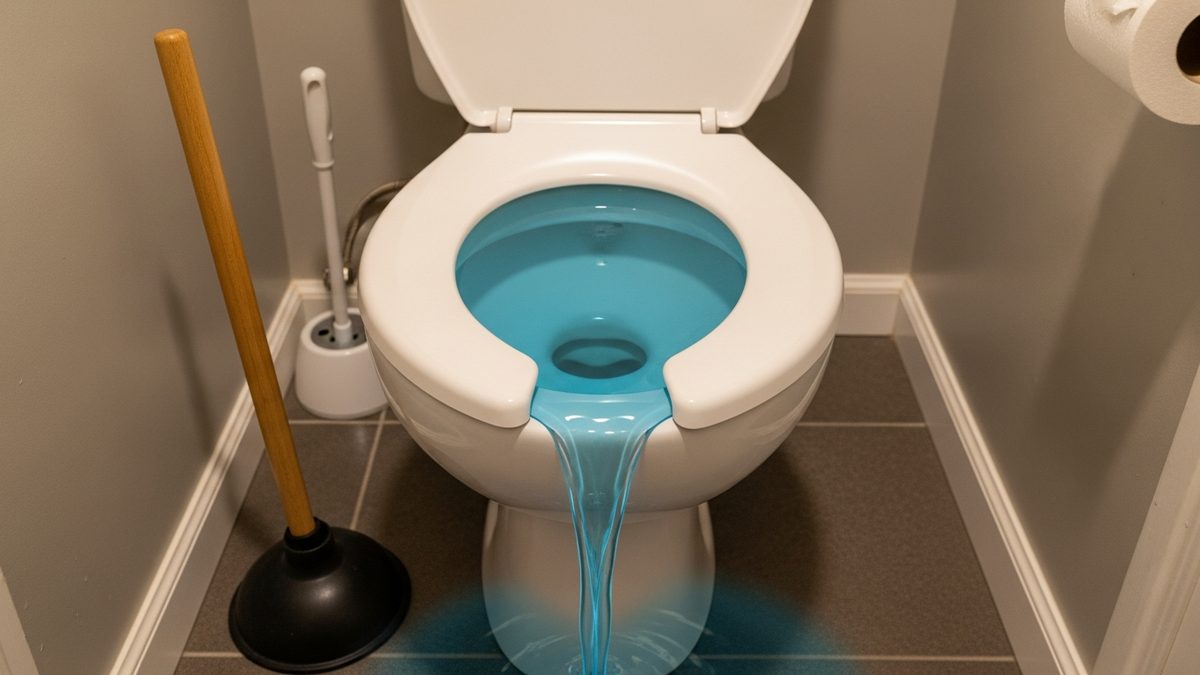
A toilet that clogs once is usually a flushing-too-much moment. A toilet that clogs repeatedly — every few days, or every week, reliably — is telling you something is wrong. The fix for each cause is different, and reaching for the plunger every time just delays solving the actual problem.
Here are the real reasons a toilet keeps clogging, in order of how often they come up, along with what to do about each.
Most likely causes, ranked
1. An older low-flow toilet with a weak flush
This is the most common cause in homes built in the early-to-mid 1990s. The Energy Policy Act of 1992 mandated that new toilets use no more than 1.6 gallons per flush (gpf), down from the 3.5–5 gpf models common before then. First-generation 1.6 gpf toilets — made between roughly 1994 and 2005 — often had bowl and trap designs that did not perform well with the reduced water volume. They clog far more easily than the original high-flow toilets they replaced, and far more often than modern high-efficiency toilets.
The EPA's WaterSense program certifies toilets that use 1.28 gpf or less and meet rigorous performance standards, including the ability to clear waste in a single flush. According to the EPA, WaterSense-labeled toilets now far outperform the 1990s-era low-flow models in actual waste removal. If your toilet is original to a mid-1990s house, upgrading to a modern high-efficiency model is often the cheapest long-term solution.
2. Flushing wipes, paper towels, or other "flushable" items
"Flushable" wipes make it past the toilet — usually — but they do not break down in the sewer line. Toilet paper is designed to disintegrate rapidly in water. Wipes, even those marketed as flushable, hold together much longer. They catch on partial blockages in the line, build up over time, and cause recurring clogs. The Federal Trade Commission has issued warnings to wipe manufacturers about misleading flushability claims.
Paper towels, facial tissue, cotton balls, dental floss, and feminine hygiene products are equally problematic. None of them should go into a toilet. If any of these have been going down the drain in your home, stop immediately and expect that the current clog is compounded material inside the line.
3. Partial blockage in the main sewer line or a branch drain
When one toilet clogs repeatedly but others in the house seem fine, the blockage is often sitting in the drain line serving that toilet rather than in the toilet itself. If all the toilets and drains in the house are sluggish, the main sewer line is the more likely location.
A partial blockage — meaning the pipe is not fully stopped but is narrowed — lets small flushes pass but catches anything larger. This type of clog will not clear with a plunger because the restriction is farther downstream than the plunger can reach. A hand auger (also called a drain snake) or professional power auger is needed. For more on clearing different types of clogs, see our guide on how to unclog a drain.
4. Mineral buildup inside the trap or rim jets
In areas with hard water, mineral scale — primarily calcium carbonate — slowly builds up on every interior surface that water touches. Inside a toilet, it accumulates in the S-shaped trap passage, narrowing the opening through which waste must pass. It also clogs the small rim jets (the angled holes under the toilet rim that direct water into the bowl during a flush), reducing flush power even when the water pressure at the fill valve is fine.
You can check the rim jets by holding a small mirror under the rim and looking at the holes. They should be round and open. Clogged, mineral-coated jets are a sign that the trap passage may have similar buildup. A pumice stone is safe for scrubbing calcium buildup from the inside of the bowl. For the trap passage, a plumber may use a descaling tool or recommend replacement if buildup is severe.
5. Slow tank fill reducing flush power
A toilet needs a full tank to generate adequate flush force. If the fill valve is partially clogged with sediment or debris — common in areas with hard water or older supply lines — the tank never completely fills before the next flush. The result is a weaker-than-normal flush that does not fully clear waste, leading to soft clogs at the bottom of the trap.
Check the water level in the tank after a full fill cycle. The water surface should sit about an inch below the top of the overflow tube. If it is low, the fill valve may need cleaning or replacement. Fill valves are inexpensive (usually $10–$25) and are one of the more straightforward homeowner-friendly repairs in plumbing.
6. A clogged or blocked vent stack
Every drain in your home — including toilets — connects to a vent stack, typically a vertical pipe that exits through the roof. The vent lets air into the drain system so water can flow freely. When the vent is blocked (by leaves, a bird nest, a dead animal, or ice in cold climates), the toilet drain loses the air supply it needs. The result is sluggish flushing and frequent incomplete flushes that lead to repeated clogging.
Vent blockages are particularly likely after storms. The fix is clearing the vent from the roof — a job that should be done by someone comfortable working at roof height, or by a plumber.
Troubleshoot it yourself — safely
Work through these steps in order before calling a plumber.
Step 1: Stop using the toilet temporarily. If it is completely stopped, do not flush again until you have cleared it. Additional flushing on a fully blocked toilet will cause an overflow.
Step 2: Plunge properly. Use a flange plunger — the type with an extended rubber flap that fits into the toilet drain opening. A flat cup plunger designed for sinks does not create an effective seal in a toilet. Apply firm, even pressure. Start with a gentle push to expel air, then pump vigorously 10–15 times. Flush. Repeat if needed.
Step 3: Try a toilet auger. A toilet auger (also called a closet auger) has a protective rubber sleeve to avoid scratching the porcelain and reaches 3–6 feet into the drain. Feed it in until you feel resistance, then crank the handle to break up or retrieve the blockage. This reaches past the trap where plungers cannot.
Step 4: Check the tank water level. Lift the tank lid after a full fill cycle. If the water sits more than an inch below the overflow tube, the fill valve may be the issue.
Step 5: Look under the rim. Hold a hand mirror under the rim and check whether the jet holes are open and round. Mineral-blocked jets reduce flush force significantly.
If none of these steps resolves the problem or the toilet clogs again within a week, the issue is deeper in the drain system.
Safety first
Toilet drain work does not involve the same biohazard risk as a sewer overflow, but basic hygiene applies. Wear rubber gloves when plunging or augering. Wash hands with soap and water thoroughly afterward. If the toilet has overflowed onto the floor, treat that water as contaminated — it contains bacteria — and disinfect the floor with a diluted bleach solution before the area dries.
If you suspect a sewer gas smell (a sulfur or rotten-egg odor) while working near drains, ventilate immediately. Sewer gas contains hydrogen sulfide and methane, both of which are hazardous. Do not work in an enclosed space with that odor present.
When to call a plumber
Call a licensed plumber when:
- The toilet has been snaked and still clogs within a week or two.
- More than one toilet or drain in the house is slow or backing up at the same time.
- Water comes up in a shower or tub when you flush the toilet — a reliable sign of a main-line issue.
- The toilet is more than 25–30 years old and has no obvious single cause of clogging. Upgrading is almost certainly the better economic decision.
- You see or smell evidence of a venting issue (gurgling sounds during a flush, slow drainage in multiple fixtures).
What it typically costs (2025–2026 estimates)
Toilet auger: $20–$50 to buy, or $10–$25 per day to rent. A solid investment if your toilet clogs more than once a year.
Fill valve replacement (DIY): $10–$25 in parts. About a 20-minute job for a handy homeowner.
Professional toilet snaking / auger: $100–$200 for a service call to clear a toilet blockage.
Main-line snaking: $150–$450 if the clog is in the main sewer line.
Toilet replacement (new unit + installation): $300–$900 for a mid-range toilet installed by a plumber. A WaterSense-certified model will perform better than an early-generation 1.6 gpf toilet and may save enough in water costs to offset some of the expense over time.
Hard-water descaling service: $150–$400 depending on severity. Often done as part of a broader drain cleaning visit.
Common mistakes
Flushing twice to "make it go down." Double-flushing is a sign the toilet cannot do its job in one flush, not a solution. It wastes water and masks the problem.
Using chemical drain cleaner in the toilet. This can damage porcelain and the wax ring seal and rarely reaches a toilet trap blockage effectively. Use a plunger or auger instead.
Assuming one successful plunge means the problem is solved. If the cause is a partial main-line clog or mineral buildup, the blockage will return.
Waiting years to replace a first-generation low-flow toilet. The ongoing aggravation, water waste from double-flushing, and eventual service calls cost more than a replacement toilet over time.
How to prevent recurring clogs
- Flush only human waste and toilet paper. That is the complete list.
- Post a small sign near the toilet if guests or family members have been flushing wipes.
- Use single-ply toilet paper if clogging is frequent — it dissolves significantly faster than thicker options.
- Address hard water with a water softener or descaling treatment if mineral buildup is the confirmed cause.
- Schedule a main-line camera inspection if the home has never had one. Catching a developing blockage before it fully closes is far cheaper than an emergency service call.
FAQ
How do I know if my toilet is a first-generation low-flow model? Check the underside of the tank lid. Many manufacturers stamp the manufacture date on the ceramic. A date between 1994 and roughly 2004, combined with frequent clogging, is a strong signal. You can also look up the toilet model online to confirm its flush volume and generation.
My toilet gurgles after flushing but does not overflow — is that a clog? Gurgling after a flush is often a venting issue rather than a drain blockage. It can also signal a partial main-line clog with enough flow to prevent backup for now. Get it inspected before it develops into a full backup.
Can hard water really clog a toilet? Yes. Over years, calcium scale can narrow the trap passage enough to restrict flow. Combined with a weaker-flushing toilet, even moderate buildup can cause frequent clogging. Homes with very hard water (above 180 mg/L) are most at risk.
Is it worth repairing an old toilet or should I just replace it? If the toilet is pre-2005 and clogs frequently, replacement is almost always the better value. A new high-efficiency toilet (1.28 gpf or less) can reduce water use by 20–60 percent compared to an old 1.6 gpf model, according to the EPA. Savings on your water bill partially offset the cost of the new fixture.
Could the clog be in the toilet itself and not the drain? Yes. Objects can lodge in the internal trapway — the curved passage inside the toilet base — and resist plunging. A toilet auger will reach into this passage. If the auger does not clear it, the toilet may need to be removed and inspected or replaced.
Get a free quote
If your toilet keeps clogging despite your best efforts, a licensed plumber can diagnose whether the issue is in the toilet, the drain line, the vent, or the main sewer line. Get a free, no-obligation quote from a local professional today.
Sources
- https://www.epa.gov/watersense/residential-toilets
- https://www.epa.gov/watersense/residential-toilets#performance
- https://www.ftc.gov/news-events/news/press-releases/2015/05/ftc-issues-warning-letters-companies-marketing-flushable-wipes
- https://www.phccweb.org/tools-resources/technical-solutions/
- https://www.epa.gov/watersense/how-we-use-water
- https://www.nachi.org/plumbing-inspection.htm
- https://www.cdc.gov/healthywater/drinking/private/wells/disease/e_coli.html
- https://www.energy.gov/energysaver/water-heating
Disclaimer
The information on this page is provided for general educational purposes only and is offered "as is" and "as available," without warranties of any kind, whether express or implied — including, without limitation, any warranties of accuracy, completeness, reliability, merchantability, or fitness for a particular purpose. It is not professional advice and is not a substitute for inspection, diagnosis, or repair by a licensed, qualified professional.
Home systems involving gas, electricity, water, refrigerant, fire, or structural components can be hazardous, and requirements vary by local code and jurisdiction. Any inspection, diagnosis, repair, installation, or other action referenced on this page should be performed by a licensed professional. You should not rely on this content to perform such work yourself. To the fullest extent permitted by law, [Company Name] and its owners, employees, and contributors assume no responsibility or liability for any injury, death, property damage, or other loss arising out of or in connection with the use of, or reliance on, this information.
If you smell gas or suspect a carbon monoxide leak, leave the area immediately and call 911 or your gas utility from a safe location.