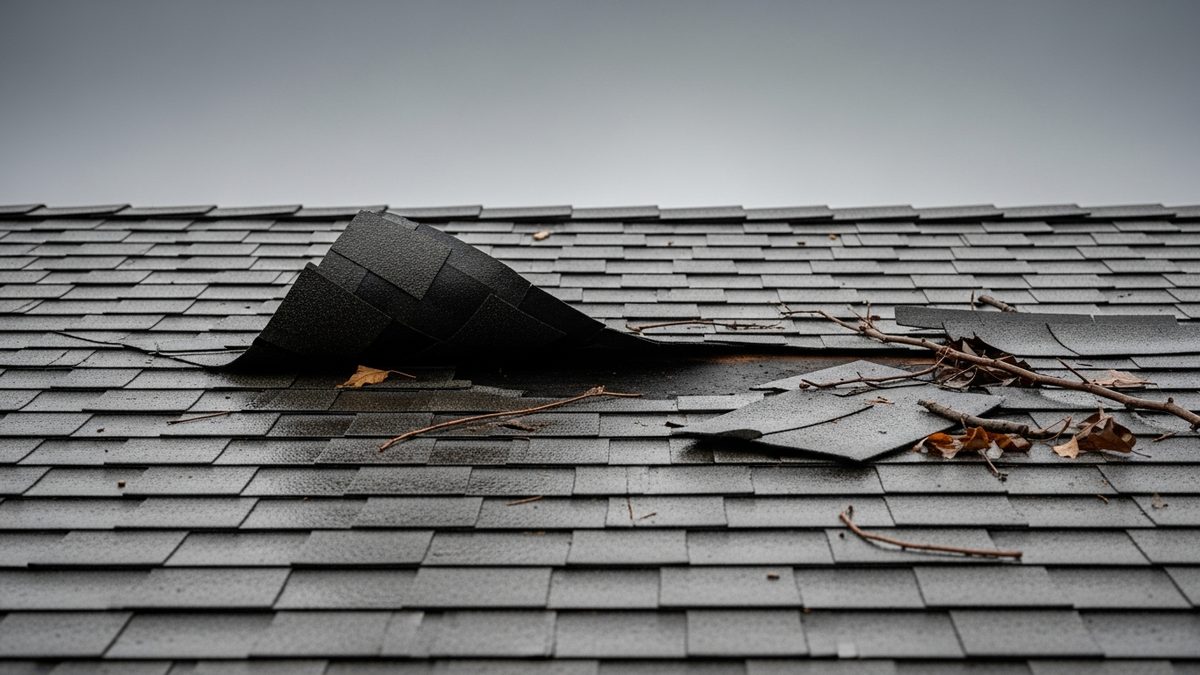
A storm rolls through and now you are staring at shingles in the yard. Acting fast matters: water can reach framing and insulation within hours once the roof covering is breached. But act safely — roof falls are among the most common serious home-repair injuries. This guide covers what storm damage looks like, what to do right now, how to document it for insurance, and when to call a roofer.
What storm damage looks like
Missing shingles are the most obvious sign. Wind gets under a lifted edge and peels shingles off — you may see bare underlayment or exposed decking from the street.
Lifted or creased shingles may look intact but have broken the self-sealing strip underneath. The IBHS notes that once that seal breaks, the shingle can no longer keep out wind-driven rain.
Hail bruises and granule loss. Hail dents the asphalt mat and knocks loose the mineral granules that protect it from UV damage. Look for a spike of gritty dark material in your gutters right after a hailstorm.
Exposed underlayment. The felt or synthetic layer under shingles is a temporary backup, not a permanent barrier. If you can see it from the ground, the next rain will test it.
Damaged flashing. The metal strips around chimneys, skylights, and roof valleys are a common failure point. FEMA's wind damage guidance notes that flashing failures account for a large share of post-storm interior water damage.
Storm debris. Branches and airborne objects can puncture shingles or crack decking — even a glancing blow can knock granules loose or crack brittle asphalt.
What to do right now
Stay on the ground and photograph everything. Take wide shots of the full roofline and close-ups of obvious damage. Phone cameras automatically embed date and time metadata — useful for insurance.
Check the attic. Grab a flashlight and look for daylight through deck boards, dripping water, damp insulation, or fresh stains on rafters. If water is coming in, place buckets and move valuables clear.
Save every receipt. Money spent preventing further damage — tarps, buckets, emergency calls — is typically reimbursable under homeowners insurance as a mitigation expense. The NRCA recommends hiring a contractor for tarping rather than attempting it yourself.
Safety first
Do not climb a wet, icy, or damaged roof. The CPSC consistently ranks roof and ladder falls among the top causes of home-related fatalities.
If the storm downed power lines near your home, treat them as live. Stay back, keep others away, and call your utility company and 911 before approaching.
If a tree or heavy debris struck the roof, stay out of the attic until a contractor confirms it is structurally safe.
How to assess without getting on the roof
Binoculars from the street. Step back to see each full slope. Look for color breaks, lifted edges, and areas where granules are gone, leaving a shinier, darker surface.
Attic check. Water stains show a rust-colored ring on rafters and sheathing. Any stain that was not there before the storm is worth photographing.
Gutters. Run your hand inside a gutter. A buildup of dark gritty granules after hail is a reliable sign of shingle impact above.
Other surfaces. Hail also dents window screens, fascia boards, and AC condenser fins. Photos of these support an insurance claim.
Insurance and documentation
Record the storm. Note the date and time. Pull weather data from Weather.gov to confirm severe weather in your zip code — adjusters often request this.
Build a photo file before repairs start. Document every damaged area visible from the ground and any interior water damage. A written inspection report from a licensed contractor strengthens the claim.
File promptly. Most policies require you to report damage "as soon as reasonably possible." Waiting risks complications if another storm adds damage before the first is on record.
Understand your coverage. Policies differ between ACV (actual cash value) and RCV (replacement cost value). Some carry a separate wind or hail deductible higher than the standard deductible. Check your declarations page before assuming what you owe.
For help deciding between repair and replacement, see our guide on how to tell if you need a new roof.
When to call a roofer (and beware storm-chasers)
Call a licensed, local roofing contractor as soon as possible — both to document damage and to get on the schedule before demand peaks after the storm.
What to look for: state licensing, liability and workers' comp insurance, a local address, and solid reviews on Google or the BBB.
Storm-chaser warning. After major storms, out-of-area contractors flood neighborhoods with quick-deal offers. The National Insurance Crime Bureau warns that storm-chaser fraud spikes after weather events. Red flags: pressure to sign on the spot, offers to waive your deductible (fraud in most states), no local address, or full payment demanded upfront. Find a contractor independently rather than accepting whoever knocks at your door.
What it typically costs
National rough ranges for 2025–2026:
- Minor repair (1–5 shingles): $150–$500
- Moderate repair (larger section or flashing): $500–$3,500
- Full replacement (1,500–2,500 sq ft asphalt roof): $8,500–$18,000+
With insurance, your out-of-pocket cost is typically your deductible. Confirm whether a separate wind/hail deductible applies before you file.
How to prevent future damage
Impact-resistant shingles. Class 4 (UL 2218) shingles resist hail far better than standard shingles, and many insurers discount premiums for them.
Proper fastening. The IBHS recommends six nails per shingle in high-wind zones instead of the standard four. Ask your contractor about fastening patterns.
Self-adhering underlayment at eaves, valleys, and penetrations provides a backup barrier if shingles are lost.
Trim trees. Branches within striking distance of the roof are one of the most controllable risks.
Regular inspections. Check your roof twice a year and after significant storms. Catching a lifted shingle early is far less expensive than repairing water-damaged framing.
If you already have a wet spot inside, see our guide on how to find the source of a roof leak for a step-by-step walkthrough.
FAQ
Q: How do I document roof storm damage for an insurance claim?
A: Act quickly and build a record before any repairs. Photograph the damage from the ground and any safe vantage point, including wide shots and close-ups of missing or bruised shingles, dented gutters, and damaged vents or flashing. Note the date and time of the storm and save any local weather or hail reports. Make only temporary repairs to prevent further damage, such as tarping a leak, and keep the receipts. Then call your insurer to start a claim and have a licensed roofer do an inspection and written estimate. Be cautious about signing over your claim to a contractor who shows up uninvited right after a storm.
How long do I have to file a claim after storm damage? Most policies allow one to two years, but your insurer may require notice much sooner. File as soon as you have documented the damage.
Can I patch a few shingles myself? Replacing one or two shingles on a dry, low-slope roof with proper fall protection is doable. But DIY repairs done before a professional inspection make it harder to document the original damage for insurance.
What if my adjuster and contractor disagree? Request a re-inspection, provide additional contractor documentation, or hire a licensed public adjuster to negotiate on your behalf.
Will filing a claim raise my premiums? Possibly, depending on your insurer and claims history. Ask your agent to estimate the premium impact before filing — especially if the repair is only slightly above your deductible.
How do adjusters tell weathered from fresh damage? They look at the wood: weathered exposure suggests older damage; bright bare wood or a fresh tear in underlayment points to recent impact. Dated photos and a storm weather record are your best evidence.
The most important next step is getting a qualified pro's eyes on your roof — not waiting for the next rain to confirm the damage. Use the button below to connect with a vetted, licensed roofing contractor near you for a storm damage inspection.
Sources
- IBHS (Insurance Institute for Business and Home Safety). Fortified Roof Standards and Wind Performance Research. ibhs.org
- FEMA. Wind Retrofit Guide for Residential Buildings (FEMA P-804). fema.gov
- NRCA (National Roofing Contractors Association). Storm Response and Roofing Fundamentals. nrca.net
- National Insurance Crime Bureau. Storm Chaser Fraud Advisory. nicb.org
- U.S. Consumer Product Safety Commission. Ladder and Fall Safety Data. cpsc.gov
- NOAA / Weather.gov. Local Storm Event Verification. weather.gov
Disclaimer
The information on this page is provided for general educational purposes only and is offered "as is" and "as available," without warranties of any kind, whether express or implied — including, without limitation, any warranties of accuracy, completeness, reliability, merchantability, or fitness for a particular purpose. It is not professional advice and is not a substitute for inspection, diagnosis, or repair by a licensed, qualified professional.
Home systems involving gas, electricity, water, refrigerant, fire, or structural components can be hazardous, and requirements vary by local code and jurisdiction. Any inspection, diagnosis, repair, installation, or other action referenced on this page should be performed by a licensed professional. You should not rely on this content to perform such work yourself. To the fullest extent permitted by law, [Company Name] and its owners, employees, and contributors assume no responsibility or liability for any injury, death, property damage, or other loss arising out of or in connection with the use of, or reliance on, this information.
If you smell gas or suspect a carbon monoxide leak, leave the area immediately and call 911 or your gas utility from a safe location.