Rotten Egg or Sewer Smell in the House? Here's What It Means
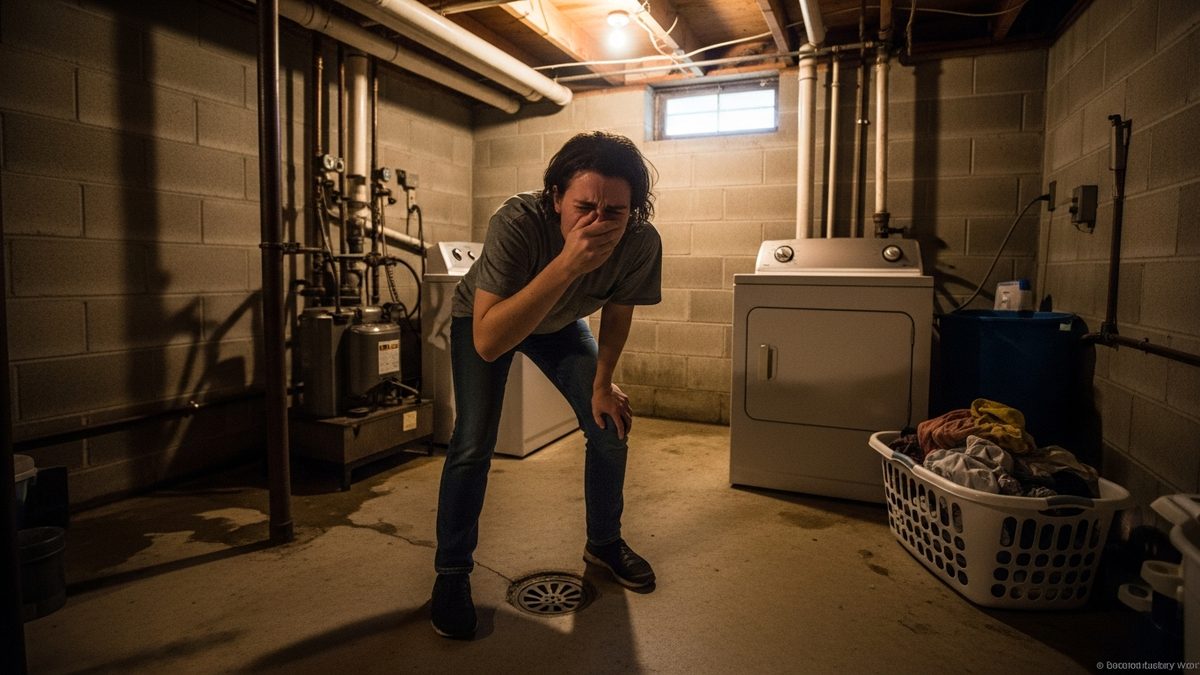
That rotten-egg smell hanging in the air is one of those things you can't ignore. Your nose tells you something is wrong before your brain figures out what. The tricky part is that two very different problems can produce nearly the same odor — one is a plumbing nuisance you can sometimes fix yourself in five minutes, and the other is a genuine emergency that could kill you.
Before you do anything else, you need to rule out the dangerous one.
First, rule out a natural gas leak
Natural gas has no natural odor. Gas utilities add a chemical called mercaptan — a type of sulfur compound — so you can detect a leak before it builds to dangerous levels. That chemical smells exactly like rotten eggs or a struck match. This is the same smell that sewer gas can produce, which is why homeowners sometimes mix them up.
If there is any chance you are smelling a gas leak, treat it as a gas leak until proven otherwise.
Here is what to do:
- Stop what you are doing right now.
- Do not flip any light switch, plug in any device, use your cell phone inside, or turn any appliance on or off. Even a tiny spark can ignite accumulated gas.
- Alert everyone in the home and get outside immediately, leaving the door open behind you.
- Once you are safely outside and well away from the building, call 911. Then call your gas utility's 24-hour emergency line.
- Do not go back inside until the fire department or gas company gives you the all-clear.
You can tell a gas leak from sewer gas by paying attention to where and when the smell hits you. A gas smell tends to be strongest near a gas appliance — your stove, water heater, furnace, or dryer — or near a gas meter or line. It often comes on suddenly. Sewer gas, by contrast, tends to linger near specific drains, toilets, or in basements, and it may get worse when the weather is warm or humid. But if you have any doubt, get out first and investigate later.
One more important note: your nose can lie to you. The ATSDR (the CDC's toxic-substances division) notes that at concentrations around 100 ppm, hydrogen sulfide — the gas that makes sewers smell — actually deadens your sense of smell within minutes. If the odor seems to fade on its own, that is not necessarily reassuring. It may mean your nose has adjusted, not that the gas is gone.
Common causes of a sewer smell
Once you have ruled out natural gas, the culprit is almost certainly hydrogen sulfide leaking out of your drain system. Here are the five most common sources.
1. Dry P-trap in an unused drain
This is the most common cause, and it is usually the easiest fix. Look under any sink, behind any toilet, or in any floor drain and you will find a curved section of pipe called a P-trap. That curve holds a small amount of standing water at all times — about a cup or two — and that water acts as a plug. It physically blocks sewer gas from traveling back up through the drain and into your living space.
When a drain goes unused for a few weeks, that water evaporates. The plug disappears, and sewer gas flows freely up through the pipe. Guest bathrooms, vacation homes, basement floor drains, and utility sink drains are the most common culprits.
The fix is exactly as simple as it sounds: run water down the drain for 30 seconds, or pour a quart of water in. To slow future evaporation in a drain you rarely use, add a tablespoon of mineral oil on top of the water. The oil forms a film that dramatically reduces evaporation.
2. Failed wax ring on a toilet
Every toilet in your home sits on top of a thick, donut-shaped wax ring that seals the base of the toilet to the floor flange. That seal does two jobs: it keeps wastewater from leaking onto your floor, and it blocks sewer gas from escaping around the base of the toilet.
Wax rings typically last 20 to 30 years, but they can fail earlier if the toilet rocks back and forth (which gradually breaks down the seal), if the floor shifts, or if the original installation was off. You might notice a faint sewer odor in the bathroom even when drains are clean, sometimes paired with soft flooring near the toilet base or faint water staining. Occasionally, a failing wax ring will leak odor before it leaks water.
Replacing a wax ring means pulling the toilet, swapping the ring, and resetting the fixture — a project that takes a plumber an hour or two.
3. Blocked plumbing vent stack
Your drain system is not a closed loop. Every drain in your home connects to a vent pipe — usually a single large pipe that runs up through the walls and exits through your roof. This vent serves a critical purpose: it lets fresh air into the drain system so water flows smoothly, and it lets sewer gases escape safely outside instead of backing up into your home.
When the vent gets blocked — by leaves, a bird's nest, ice in winter, or a small animal that found its way in — the pressure balance in your drain system gets thrown off. Sewer gases that would normally vent upward start backing up into the drains instead. Signs of a blocked vent include gurgling sounds from multiple drains at once, slow drainage throughout the house, and a sewer smell that seems to come from everywhere rather than one specific spot.
Clearing a blocked vent usually means getting on the roof to remove whatever is blocking the pipe opening, or running a plumber's snake down through the roof. This is typically not a DIY job unless you are comfortable working on a roof.
4. Broken or cracked drain line
Your home's drain pipes run through walls, floors, and underground to connect with the main sewer line. If a pipe cracks — from age, shifting soil, root intrusion, or physical damage — it can leak sewer gas into wall cavities, crawl spaces, or basements even without producing obvious sewage pooling on the floor.
You might notice an odor that seems to come from inside a wall, or a musty sewer smell in the basement that you cannot trace to any visible drain. A wet spot on the ceiling below an upstairs bathroom, or soft flooring in a bathroom, can also point to a leaking drain line. A plumber can confirm the diagnosis with a camera inspection.
5. Full or failing ejector pump or sump pit
If your home has a basement bathroom, a laundry room below grade, or a sump pit, you likely have an ejector pump — a sealed basin that collects wastewater and pumps it up to the main sewer line. These sealed systems are designed to be airtight, but the seals on the pit lid can dry out and crack over time. A pit that has run dry also loses its water barrier, just like a P-trap.
When the seal fails, sewer gas escapes directly into your basement. You may also notice a sewer smell if the ejector pit is overdue for cleaning — decomposing debris at the bottom of the pit releases hydrogen sulfide as it breaks down.
How to track down the source (step by step)
Start with the simplest possible explanation and work your way up.
Step 1. Walk through every room and identify where the smell is strongest. Is it one bathroom? The basement? A hallway near an unused laundry room?
Step 2. Find every drain in that area — floor drains, sinks, showers, tubs — and run water down each one for 30 seconds. If the smell fades within a few hours, a dry P-trap was the problem.
Step 3. If the smell persists, check the toilet nearest the odor. Kneel down and press gently on the base on all sides. Does it rock? A wobbling toilet is a strong sign the wax ring seal has been compromised.
Step 4. Listen to your drains when you flush or run water. Do you hear gurgling from a drain that is not being used? That points toward a vent blockage.
Step 5. If none of the above turns up anything obvious, head to the basement or crawl space and look for any visible moisture, dark staining on pipes, or soft spots in the floor. These signs can indicate a cracked drain line.
Step 6. If you have a basement ejector pit or sump, inspect the lid for cracks, gaps, or a broken gasket.
Safety first
Sewer gas is primarily hydrogen sulfide, a naturally occurring compound that forms when organic matter breaks down without oxygen. At the trace concentrations you would typically smell from a dry P-trap, it is mostly a nuisance. But at higher concentrations, it becomes a serious health hazard.
According to the ATSDR's Toxicological Profile for hydrogen sulfide, short-term exposure at concentrations above 150 ppm can affect the respiratory, cardiovascular, and nervous systems. Very high levels above 500 ppm can cause rapid unconsciousness and death. NIOSH (the National Institute for Occupational Safety and Health) considers 100 ppm immediately dangerous to life or health.
What makes hydrogen sulfide especially treacherous is that it dulls your sense of smell at around 100 ppm, often within minutes of exposure. This means the odor is not a reliable guide to concentration level once levels get high. If the smell is overwhelming rather than faint, leave and ventilate before spending extended time investigating.
For natural gas: methane itself is not toxic at the concentrations you would encounter in a leak, but it is highly flammable and can explode when mixed with air in the right proportions. That is why any potential gas smell demands immediate evacuation — not investigation.
If sewage is also backing up alongside the smell, that adds a different set of problems to the mix. Read our guide on if sewage is also backing up for steps specific to that situation.
When to call a pro
You can safely try the P-trap water fix yourself. Everything else on this list benefits from a licensed plumber.
Call a plumber if:
- Running water in the drain did not make the smell go away within a day or two.
- You hear gurgling from multiple drains — this is rarely a DIY fix.
- The toilet wobbles or you see any water staining near the base.
- The smell seems to originate from a wall or crawl space.
- Your basement sump or ejector pit smells or has a cracked lid.
- You are not certain you have ruled out a gas leak.
If you smell gas and are not 100 percent sure the source is plumbing, call 911 and your utility first. Always.
What it typically costs
Costs vary by region and by what is actually wrong. These are rough national ranges for 2025–2026 based on published industry data.
Refilling a dry P-trap: Free if you do it yourself. A plumber service call to diagnose and confirm runs $75–$150 for the visit alone.
Replacing a P-trap: $150–$250 including labor, if the trap itself needs replacement rather than just water.
Wax ring replacement: $150–$350 for most residential toilets. The wax ring itself costs about $10–$15; the rest is labor.
Clearing a blocked vent stack: $100–$300 for simple debris blockages. If the pipe is damaged or needs rerouting, costs can reach $500 or more.
Drain line camera inspection: $125–$350. Often the first step before committing to bigger repairs.
Drain line repair: $400–$1,500 for a localized crack or break. Full sewer line replacement runs $3,000–$8,000 depending on length, depth, and method (trenchless vs. open-cut).
Ejector pit lid seal or gasket replacement: $100–$300. Full ejector pump replacement runs $800–$1,500 or more.
Common mistakes to avoid
Pouring bleach or drain cleaner into the drain. This does not fix a dry P-trap — it might temporarily mask the odor, but it damages pipes and kills the beneficial bacteria in your septic system if you have one.
Assuming the smell is "just the drain" without checking. A persistent smell after you've run water in all drains deserves more investigation. Do not let it go for weeks.
Ignoring a rocking toilet. A toilet that moves even slightly is slowly breaking down the wax ring seal. The longer you wait, the more likely the problem spreads to the subfloor.
Covering vents to "stop cold drafts." Blocking a plumbing vent cap does not save energy — it pressurizes your drain system and forces sewer gas back into the house.
Skipping the professional if the smell returns. A smell that keeps coming back after you've refilled drains is telling you something structural needs attention.
How to prevent sewer smells
A few simple habits keep most of these problems from starting.
- Run water for 30 seconds in every drain in your home at least once a month, especially in guest baths, basement sinks, and floor drains.
- For drains you almost never use, add a tablespoon of mineral or cooking oil after running water. This slows evaporation significantly.
- Have your toilets checked for wobble during routine plumbing inspections. A secure toilet is a sealed toilet.
- Make sure roof vent openings are covered with proper screens or caps rated for your climate. Inspect them every fall before debris season.
- Schedule a plumbing inspection every few years if your home is more than 20 years old. A camera inspection of main drain lines is inexpensive compared to the cost of discovering a cracked pipe after water damage has already occurred.
- Have your ejector pit and sump pit inspected and cleaned every two to three years.
FAQ
Can a rotten-egg smell in my house always mean a gas leak? No — but you should always rule out a gas leak first. The same odor is produced by hydrogen sulfide from your sewer system. Natural gas itself has no smell, but utilities add mercaptan (a sulfur compound) that also smells like rotten eggs. If the odor is near a gas appliance or line, evacuate and call 911. If it is near a drain, the cause is almost certainly plumbing.
Is sewer gas dangerous? At the low levels typical of a dry P-trap, it is mostly an unpleasant nuisance. At higher concentrations — say, a cracked sewer line in a poorly ventilated crawl space — hydrogen sulfide can cause headaches, nausea, dizziness, and at very high levels, loss of consciousness. Good ventilation and addressing the source promptly are the right responses.
My smell comes and goes. What does that mean? Intermittent odors often point to a partial dry P-trap (it evaporates in dry weather, refills when someone uses a nearby drain), a vent stack that is partially blocked, or a wax ring that seals under pressure but leaks when the toilet rocks slightly. These clues help narrow down the cause.
My house has a septic system instead of city sewer. Does that change anything? The plumbing causes are the same — P-traps, wax rings, vents, and drain lines all work identically. However, a septic system that is full, failing, or improperly vented can produce much stronger sewer smells both indoors and outside. If you notice odors coming from outside near the drain field or septic tank, that is a separate issue requiring a septic specialist.
Can I fix a blocked vent stack myself? Possibly, if you are comfortable and safe on a roof and the blockage is at the pipe opening — leaves or a bird's nest you can remove by hand or with a garden hose. If the blockage is lower in the pipe or you are not sure where it is, call a plumber. Working on a pitched roof is dangerous and the risk is not worth it.
How long does it take for a P-trap to dry out? In a typical heated home, an unused P-trap can dry out in as little as three to four weeks. In a dry climate or near a heating vent, it can happen faster. In a vacation home that is sealed up for months, every drain trap may be dry by the time you return.
Ready to get this sorted? Connect with a vetted local plumber through Local Service Group and get a free, no-obligation quote. We match homeowners with licensed, background-checked professionals in their area — no searching, no guesswork.
Get a free quote from a vetted plumber near you.
Sources
- ATSDR (Agency for Toxic Substances and Disease Registry). "ToxFAQs for Hydrogen Sulfide." Last reviewed October 2024. https://wwwn.cdc.gov/TSP/ToxFAQs/ToxFAQsDetails.aspx?faqid=388&toxid=67
- NIOSH (National Institute for Occupational Safety and Health). "Hydrogen Sulfide." CDC. https://archive.cdc.gov/www_cdc_gov/niosh/topics/hydrogensulfide/default.html
- OSHA. "Hydrogen Sulfide — Hazards." U.S. Department of Labor. https://www.osha.gov/hydrogen-sulfide/hazards
- PG&E (Pacific Gas and Electric). "Keep Yourself Safe from a Gas Leak." https://www.pge.com/en/newsroom/safety-action-center/safety-resources/keep-yourself-safe-from-a-gas-leak.html
- SoCalGas. "Natural Gas Leaks — Safety and Prevention." https://www.socalgas.com/safety/safety-and-prevention/natural-gas-leak
- South Davis Sewer District. "What's That Smell? Understanding Sewer Odors and P-Traps." https://www.sdsdut.gov/what-s-that-smell-understanding-sewer-odors-and-p-traps
- Angi. "How Much Does Sewer Line Replacement or Repair Cost?" 2026. https://www.angi.com/articles/how-much-does-sewer-line-replacement-or-repair-cost.htm
- HomeGuide. "Average Plumbing Estimates." 2026. https://homeguide.com/costs/average-plumbing-estimates
Disclaimer
The information on this page is provided for general educational purposes only and is offered "as is" and "as available," without warranties of any kind, whether express or implied — including, without limitation, any warranties of accuracy, completeness, reliability, merchantability, or fitness for a particular purpose. It is not professional advice and is not a substitute for inspection, diagnosis, or repair by a licensed, qualified professional.
Home systems involving gas, electricity, water, refrigerant, fire, or structural components can be hazardous, and requirements vary by local code and jurisdiction. Any inspection, diagnosis, repair, installation, or other action referenced on this page should be performed by a licensed professional. You should not rely on this content to perform such work yourself. To the fullest extent permitted by law, [Company Name] and its owners, employees, and contributors assume no responsibility or liability for any injury, death, property damage, or other loss arising out of or in connection with the use of, or reliance on, this information.
If you smell gas or suspect a carbon monoxide leak, leave the area immediately and call 911 or your gas utility from a safe location.