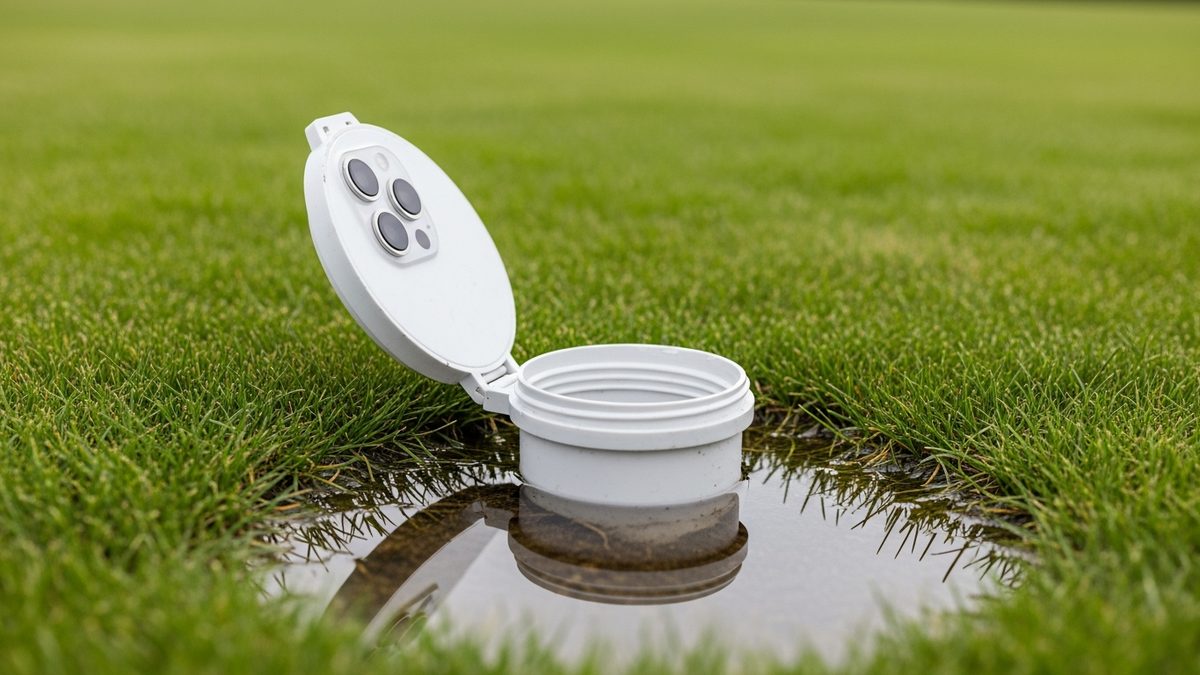
Stepping outside to find wastewater bubbling up through a white or black pipe cap in your yard is alarming — and it should be. That pipe is your sewer cleanout, and when it overflows, it almost always means the main sewer line carrying all your household waste to the street is blocked. Every toilet flush, shower, and faucet run is now sending water somewhere it cannot go.
This article explains what is happening, what you should stop doing right now, how to stay safe around raw sewage, what a plumber will actually do, and what repairs typically cost.
What the cleanout is and why it matters
A sewer cleanout is a capped pipe — usually four inches in diameter and made of white PVC, black ABS plastic, or cast iron — that gives plumbers direct access to your main sewer line. Most single-family homes have one or two cleanouts: one near the house foundation and sometimes another near the property line. They are typically flush with the ground or just a few inches above it.
When the main sewer line gets blocked and you keep using water indoors, pressure builds in the system. The cleanout is the first weak point. The cap is designed to open before sewage backs up into your house — so a cleanout overflow is actually the system protecting your floors, but it still means you have a serious problem.
Most likely causes, ranked
1. Grease, wipes, and debris buildup (most common) Over months and years, cooking grease sticks to pipe walls, catches toilet paper and debris, and slowly narrows the line until almost nothing passes. Flushing items labeled "flushable" makes it significantly worse. The Federal Trade Commission has warned repeatedly that so-called flushable wipes do not break down the way toilet paper does and are a leading cause of sewer blockages.
2. Tree roots Roots seek moisture. Small cracks in older clay or cast-iron pipes let root tendrils in, and they grow quickly in the constant moisture of a sewer line. Once established, roots trap every piece of solid waste that goes by. Tree roots are among the most common causes of main-line blockages in homes built before the 1990s.
3. Collapsed or offset pipe Older clay tile sewer lines corrode and can collapse under soil pressure or tree root force. Even newer PVC lines can shift if the soil beneath them settles. A sagging or fully collapsed section creates a low spot where solids accumulate and build up over time.
4. City sewer backup Sometimes the problem is not on your property at all. Municipal sewer systems can become overwhelmed during heavy rain or can develop their own blockages. When city pressure backs up into your lateral, the cleanout overflows even though your own pipes are clear. Your local public works department should have an emergency line for exactly this situation.
5. Fats, oils, and grease on the service lateral The lateral is the pipe that connects your home to the city main. Depending on your municipality, you own and are responsible for everything from your house to the street connection point. Grease buildup on this stretch is your repair to pay for.
Stop doing this right now
The single most important action: stop running water inside the house. Every toilet flush, dishwasher cycle, and shower sends more wastewater into an already full system. It can force sewage back up through floor drains, toilets, or the lowest tub in the house. If sewage is already backing up indoors, the situation is more urgent and you need a plumber immediately.
Avoid the washing machine, kitchen sink, and all toilets until a plumber has cleared the line.
Troubleshoot it yourself — safely
There are a few steps a homeowner can take before the plumber arrives, but safety comes first (see the section below).
Locate your cleanout. Walk the perimeter of your foundation. The cap may be hidden by grass or a shrub. Knowing where it is will save the plumber time.
Check whether it is your problem or the city's. Call your municipal public works department and ask whether there are reports of sewer backups in your area. If other homes on your street are affected, the blockage is likely in the city main — not yours.
Do not try to open the cleanout cap yourself unless you have specific plumbing experience. Removing the cap under pressure releases raw sewage onto the ground. Leave it to the professional.
Hand-snake the cleanout only if experienced. A 50-foot hand snake inserted into an accessible cleanout can sometimes break up a soft grease clog close to the opening. This is not a fix for roots or a collapsed pipe, and the work is messy. Most homeowners are better served waiting for a plumber with a power auger or hydro-jetter.
Safety first: sewage is a biohazard
Raw sewage contains bacteria — including E. coli and Salmonella — as well as viruses, parasites, and fungi. The CDC classifies untreated sewage as a serious health hazard and recommends treating any contact area as contaminated. Keep children and pets completely away from the overflow area. Do not let anyone walk through it or touch it with bare hands.
If you must be near the area:
- Wear waterproof rubber boots and heavy rubber or nitrile gloves.
- Wear safety glasses or goggles to protect against splashes.
- Do not eat, drink, or touch your face.
- Wash hands thoroughly with soap and water after any contact.
- Bag and discard clothing that has had direct sewage contact.
- Disinfect hard surfaces with a diluted bleach solution — the CDC recommends approximately 1 cup of bleach per gallon of water for surface disinfection after sewage contact.
Contact your local health department if the overflow is large or has reached a garden, drinking-water well, or storm drain. Many jurisdictions require reporting sewage overflows above a certain volume.
When to call a plumber
Call a licensed plumber the same day — do not wait — when:
- The cleanout is actively overflowing or has recently overflowed.
- Multiple drains inside the house are slow or backing up at the same time.
- Sewage has entered the living space.
- You have already tried snaking and water is still not draining.
- The home is more than 40 years old and has never had a sewer scope inspection.
Ask the plumber to run a camera through the line after clearing the clog. A camera will show whether the pipe has root intrusion, cracks, or a collapsed section — information you need before the blockage returns.
What it typically costs (2025–2026 estimates)
These are national average ranges. Prices vary by region, access difficulty, and time of service (emergency and after-hours calls cost more).
Main-line snake / auger: $150–$450. Clears soft clogs and minor root intrusion but does not remove embedded roots.
Hydro-jetting: $350–$900. High-pressure water (typically 3,000–4,000 psi) blasts grease and minor roots out completely. Better long-term outcome than snaking alone when grease buildup is the cause.
Sewer camera inspection: $150–$350. Often included or discounted when done at the same time as clearing. Worth doing every time once the line is open.
Root cutting (mechanical): $400–$700. A root-cutting head on a power auger clears roots but does not prevent regrowth — most plumbers recommend jetting afterward.
Pipe relining (CIPP — cured-in-place pipe): $80–$200 per linear foot, or $4,000–$20,000 or more for a typical residential lateral. A resin-saturated liner is pulled through the existing pipe and cured in place — no digging in most cases. Good for cracked or root-damaged pipe that is not fully collapsed.
Pipe replacement: $3,000–$25,000 or more depending on length, depth, and material. Required for collapsed or severely offset sections.
If the overflow was caused by the city's main, repairs to city infrastructure are the municipality's responsibility at no cost to you. Document the overflow with photos and timestamps before cleanup begins.
Common mistakes
Flushing more water to push the clog through. This does not work once the system is backed up and risks sending sewage into the home.
Pouring chemical drain cleaner into the cleanout. Cleaners are not effective against main-line blockages and are dangerous to handle in large volumes near an open pipe. They can also damage plastic pipe walls over time.
Ignoring the overflow and hoping it clears on its own. A main-line blockage severe enough to back up the cleanout will not self-resolve. Waiting risks sewage reaching the interior.
Not checking the city first. You may spend several hundred dollars on a service call before learning the city is responsible.
Skipping the camera inspection after clearing. Without knowing why the line clogged, it will clog again.
How to prevent it
- Flush only toilet paper and human waste. Nothing else — including items labeled "flushable."
- Pour grease into a sealed container and throw it in the trash, never down the drain.
- Have the main sewer line cleaned and camera-inspected every 18–24 months if large trees sit near your sewer lateral.
- Consider installing a backwater prevention valve at the cleanout or where the lateral enters the house. This valve lets wastewater flow out but closes automatically if the city system backs up toward your home. Some municipalities offer rebates for installation.
- Keep the cleanout accessible. Landscaping that buries the cap delays emergency service.
FAQ
How long does it take to clear a main-line blockage? A standard snaking job takes 30 to 90 minutes. Hydro-jetting typically runs one to two hours. If roots are involved or a camera inspection is added, budget two to four hours on-site.
Can I clear the cleanout myself? If you own a 50-foot or longer power snake and have experience using one, a DIY attempt is reasonable for a soft grease clog. Roots, a collapsed section, or heavy buildup almost always require professional equipment. Attempting it without the right tools risks pushing the blockage further in or damaging older pipe.
Will homeowners insurance cover this? Standard homeowners policies typically exclude gradual drain problems and tree-root damage. Sudden sewage backup caused by a covered event may be covered under a sewer backup endorsement rider. Check your policy and document the overflow thoroughly before any cleanup.
How do I know if it is my lateral or the city's main? A licensed plumber can run a camera to the connection point with the city main. If the blockage is past that point, it is the city's responsibility. Your municipal public works department also tracks overflow reports and can often confirm over the phone whether there is a known issue in your area.
Why does my cleanout overflow after heavy rain? Heavy rain can overwhelm a municipal combined sewer system, pushing water backward through service laterals. It can also saturate soil around cracked clay pipes, allowing groundwater to infiltrate the line. Either situation warrants a professional inspection.
Get a free quote
If your sewer cleanout has overflowed or multiple drains in your home are backing up, a licensed plumber needs to assess the situation promptly. Get a free, no-obligation quote from a local professional today.
Sources
- https://www.epa.gov/watersense/how-we-use-water
- https://www.cdc.gov/healthywater/hygiene/disease/sewage.html
- https://www.ftc.gov/news-events/news/press-releases/2015/05/ftc-issues-warning-letters-companies-marketing-flushable-wipes
- https://www.osha.gov/sewage
- https://www.phccweb.org/tools-resources/technical-solutions/
- https://www.nachi.org/sewer-scope-inspection.htm
- https://www.epa.gov/npdes/sanitary-sewer-overflows-ssos
- https://www.cdc.gov/disasters/floods/sanitation.html
Disclaimer
The information on this page is provided for general educational purposes only and is offered "as is" and "as available," without warranties of any kind, whether express or implied — including, without limitation, any warranties of accuracy, completeness, reliability, merchantability, or fitness for a particular purpose. It is not professional advice and is not a substitute for inspection, diagnosis, or repair by a licensed, qualified professional.
Home systems involving gas, electricity, water, refrigerant, fire, or structural components can be hazardous, and requirements vary by local code and jurisdiction. Any inspection, diagnosis, repair, installation, or other action referenced on this page should be performed by a licensed professional. You should not rely on this content to perform such work yourself. To the fullest extent permitted by law, [Company Name] and its owners, employees, and contributors assume no responsibility or liability for any injury, death, property damage, or other loss arising out of or in connection with the use of, or reliance on, this information.
If you smell gas or suspect a carbon monoxide leak, leave the area immediately and call 911 or your gas utility from a safe location.