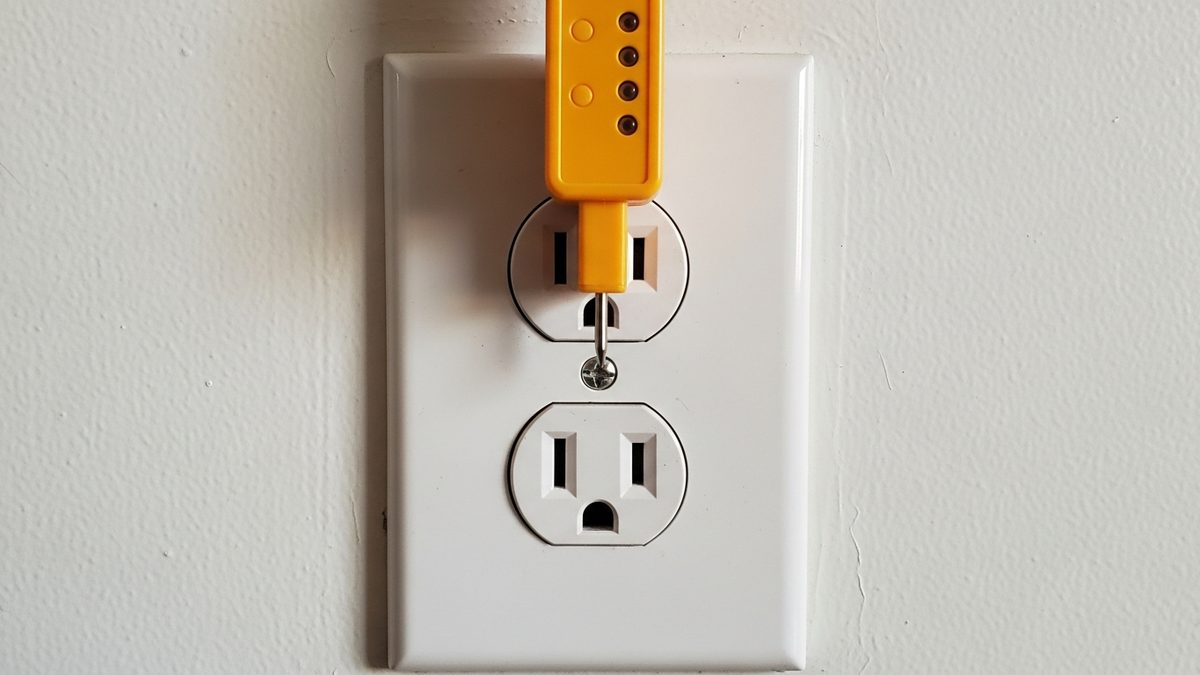
You plug something in and nothing happens. The lamp stays dark, the phone won't charge, the hair dryer won't start. The outlet is dead. Before you assume you have a wiring problem, there are a handful of quick checks that solve the problem the large majority of the time — most of them take under two minutes each.
This guide walks you through the most common causes in order from easiest fix to most serious, plus the signs that tell you it is time to stop troubleshooting and call a licensed electrician.
Most likely causes, ranked
1. A tripped GFCI somewhere else on the circuit (most common)
This is the number-one reason a working outlet suddenly goes dead with no other obvious cause. A GFCI (Ground Fault Circuit Interrupter) outlet is the type with the TEST and RESET buttons — you usually find them in bathrooms, kitchens, garages, and outdoors. What most homeowners do not realize is that a single GFCI outlet often protects several regular outlets "downstream" on the same circuit. If that GFCI trips, every outlet it protects loses power.
The GFCI can be in a completely different room from the dead outlet. A bathroom GFCI, for example, might protect an outlet in a hallway or an adjacent bedroom. There is no quick way to know which outlets are downstream of which GFCI without testing them, but a good starting point is to check every GFCI in the kitchen, bathrooms, garage, and any outdoor areas.
If the GFCI button is popped out even slightly, that is your culprit. See our full guide on how to reset a GFCI that won't reset for step-by-step instructions and what to do if the reset does not hold.
2. A tripped circuit breaker
Check your electrical panel (usually in a basement, utility room, hallway, or garage). A tripped breaker will be in the middle position rather than fully ON or fully OFF. Flip it all the way to OFF and then firmly back to ON. If the breaker trips again right away, there is an overload or short somewhere on that circuit — do not keep resetting it.
3. A worn-out or failed outlet
Standard outlets have a lifespan of about 15 to 25 years. The internal contacts wear down over time and eventually stop making reliable contact with a plug. An outlet that looks fine from the outside can have failed contacts inside. If the outlet is the original in an older home and nothing else checks out, the outlet itself may simply be dead.
4. Loose or backstabbed wiring
Outlets installed using a shortcut called "backstabbing" — where the wire is pushed into a spring-loaded hole rather than wrapped around a screw terminal — are prone to losing their connection over time. A loose backstabbed wire can cause an outlet to go dead intermittently or permanently. The connection can also generate heat and arcing before it fails completely. If you notice the outlet worked sometimes and then stopped, backstabbed wiring is a real possibility.
5. A half-hot outlet controlled by a wall switch
Some outlets — especially in living rooms and bedrooms without overhead lights — are wired so that one of the two receptacles is controlled by a nearby wall switch. The switch may have been accidentally flipped off. Try flipping every light switch in the room to see if that restores power to the outlet.
Troubleshoot it yourself (safely)
Work through these steps in order before calling anyone.
Step 1: Check for a tripped GFCI Walk through every bathroom, kitchen, garage, basement, and outdoor area in your home. Look for any GFCI outlet with a button that is popped out. Press the RESET button firmly until you feel or hear a click. Go back and test the dead outlet.
Step 2: Check the circuit breaker panel Open the panel door and look for any breaker that is not fully in the ON position. If you find one, switch it off completely, then back on. Test the outlet again.
Step 3: Try a different device Plug a lamp or a phone charger directly into the outlet. This rules out a problem with the original device or cord.
Step 4: Try the wall switch Flip every switch in the room and see if power comes back to the outlet.
Step 5: Test adjacent outlets If other outlets on the same wall or in the same room are also dead, the problem is almost certainly a tripped breaker or a upstream GFCI. If only that one outlet is dead, the outlet itself may have failed.
Stop here. If none of those steps restore power, the issue involves wiring inside the wall or inside the outlet box. That is where you hand it off to a licensed electrician.
Safety first — when to STOP and call a pro
Outlets deal with live electrical current. There are a few situations where you should stop immediately and get a professional involved:
- You smell burning or see discoloration. A burning smell from an outlet or dark scorch marks around the faceplate are warning signs of a potential fire hazard. Stop using the outlet and the circuit. Read our guide on a hot or burning-smelling outlet for what to do.
- The outlet feels warm or hot to the touch. Even without a burning smell, heat at an outlet indicates a problem that creates a fire risk.
- The breaker trips again immediately after you reset it. This means there is a short circuit or serious overload somewhere. Do not keep resetting it.
- You see sparks when you plug something in. A brief tiny spark at the exact moment of plug insertion can be normal. A large spark, repeated sparks, or a spark with a popping sound is not.
- There is visible damage — melting, cracks, or scorch marks on the outlet, faceplate, or nearby wall.
- Your home has aluminum wiring (common in homes built between roughly 1965 and 1973). Aluminum wiring requires special handling and connections, and a dead outlet in an aluminum-wired home should always be diagnosed by a pro.
Any of those situations means the outlet is off limits until an electrician has looked at it.
When to call a licensed electrician
Call a licensed electrician if:
- All the self-checks above came up empty and the outlet is still dead
- The breaker trips again after you reset it
- You notice any heat, burning smell, scorch marks, or sparks
- The outlet works sometimes but not others (intermittent faults are harder to find and often indicate loose or damaged wiring)
- You open the outlet box and see loose wires, wires that appear burned or melted, or wires pushed into the back holes rather than wrapped around screws — then put the cover back on without touching anything and call a pro
What it typically costs (2025–2026)
- Service call / diagnostic visit: $100–$200 for most electricians, which typically includes the first hour of labor
- Outlet replacement: $130–$300 per outlet all-in for professional installation, with a national average around $210 according to HomeAdvisor's 2025 cost data
- GFCI outlet replacement: Same range — $130 to $300, average $210 (HomeAdvisor, 2025)
- Electrician hourly rate: $50–$100 per hour; most straightforward outlet swaps take 10 to 30 minutes
If you have multiple outlets that need attention, most electricians will give you a better per-outlet rate if they can address them all in one visit.
Common mistakes
Resetting the breaker over and over. If a breaker trips more than once after you reset it, stop. Repeated resets on a faulty circuit can cause wiring to overheat.
Skipping the GFCI check. This is the most commonly missed step. A tripped GFCI in another room looks exactly like a dead outlet from the user's end — but it takes 30 seconds to fix once you find it.
Testing with only one device. The device you are using might be the problem. Always try a second plug or lamp before concluding the outlet is dead.
Opening the outlet box without turning off the breaker first. If you do remove the cover plate to look inside, always turn off power at the panel first. Confirm the power is off with a non-contact voltage tester before touching any wires.
Assuming a new outlet fixes backstabbed wiring. If the old outlet was backstabbed, replacing it the same way puts you right back in the same situation. An electrician will use screw terminals or spring-less clamp terminals that make a secure connection.
How to prevent it
- Test GFCI outlets monthly. Press TEST, confirm the outlet loses power, then press RESET. A GFCI that trips for no reason, or that trips and will not reset, needs to be replaced.
- Do not overload circuits. A standard 15-amp circuit handles roughly 1,500 watts. Space heaters, air conditioners, and similar high-draw appliances should be on dedicated circuits.
- Replace outlets that are more than 15–20 years old or that grip plugs loosely. Worn-out outlets are a reliability and safety concern.
- Have your wiring inspected if your home is more than 30 to 40 years old and has never had an electrical inspection. The CPSC and ESFI both recommend periodic inspections of older electrical systems.
FAQ
Q: Why did my outlet stop working overnight with nothing plugged in?
A: The most common reason is a GFCI somewhere else on the circuit tripped — possibly triggered by a brief moisture event or appliance fault. Check all GFCIs in bathrooms, the kitchen, and the garage. A breaker could also have tripped from a brief overload. If neither of those explains it, the outlet itself may have failed or have a loose wire.
Q: Can a dead outlet be dangerous even if nothing is plugged in?
A: Yes, if the cause is a loose or arcing wire inside the box. Loose connections generate heat even when no device is drawing current. An outlet that went dead suddenly, especially in an older home with backstabbed wiring, should be inspected — not just left alone.
Q: My GFCI reset but the outlet is still dead — why?
A: The GFCI may be wired incorrectly (line and load terminals swapped), the outlet downstream of it may have its own fault, or the GFCI itself may have worn out and needs replacement. See our dedicated guide on how to reset a GFCI that won't reset.
Q: Is it safe to use an extension cord on the same circuit as the dead outlet's circuit?
A: Only if the extension cord is plugging into a different outlet on a different circuit. Extension cords are not a permanent fix for a dead outlet, and running a high-draw appliance through a long extension cord adds resistance and heat.
Q: How do I know which outlets are on the same circuit?
A: The easiest way is to turn off breakers one at a time while testing outlets with a lamp or plug-in tester. The outlets that lose power when a specific breaker trips are all on that circuit.
Get a free quote
If you have worked through the checks above and the outlet is still dead — or if you spotted any of the warning signs described here — a licensed electrician can find the problem quickly and fix it right. Get a free, no-obligation quote from a vetted pro in your area today.
Sources
- Electrical Safety Foundation International — Home Electrical Fires: https://www.esfi.org/home-electrical-fires/
- U.S. Consumer Product Safety Commission — Electrical Receptacle Fires (ESFI citing CPSC data, 5,300 fires per year): https://www.esfi.org/home-electrical-fires/
- Electrical Safety Foundation International — Ground Fault Circuit Interrupters: https://www.esfi.org/program/ground-fault-circuit-interrupters/
- HomeAdvisor — How Much Does a GFCI Outlet Cost to Install? [2025 Data]: https://www.homeadvisor.com/cost/electrical/gfci-outlet-cost/
- National Fire Protection Association — Electrical Home Fire Safety: https://www.nfpa.org/education-and-research/home-fire-safety/electrical-safety-in-the-home
Disclaimer
The information on this page is provided for general educational purposes only and is offered "as is" and "as available," without warranties of any kind, whether express or implied — including, without limitation, any warranties of accuracy, completeness, reliability, merchantability, or fitness for a particular purpose. It is not professional advice and is not a substitute for inspection, diagnosis, or repair by a licensed, qualified professional.
Home systems involving gas, electricity, water, refrigerant, fire, or structural components can be hazardous, and requirements vary by local code and jurisdiction. Any inspection, diagnosis, repair, installation, or other action referenced on this page should be performed by a licensed professional. You should not rely on this content to perform such work yourself. To the fullest extent permitted by law, [Company Name] and its owners, employees, and contributors assume no responsibility or liability for any injury, death, property damage, or other loss arising out of or in connection with the use of, or reliance on, this information.
If you smell gas or suspect a carbon monoxide leak, leave the area immediately and call 911 or your gas utility from a safe location.