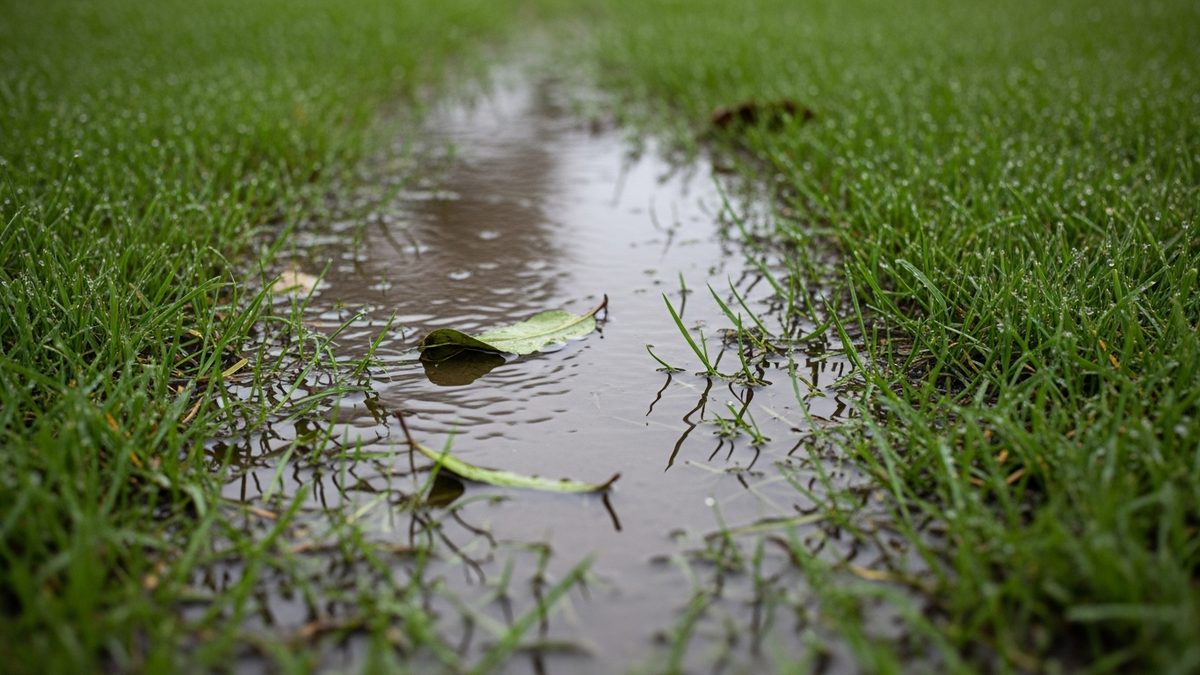
A soggy strip of lawn that never quite dries out. A water bill that jumped $50 or $80 for no obvious reason. The distinct hissing of water moving underground when you stand near your meter. Any one of these can mean your main water service line — the buried pipe that carries water from the utility's main in the street to your house — has developed a leak.
This kind of leak is invisible until it is not. The water soaks into the soil slowly, and by the time you see the damage above ground the line may have been losing water for weeks. According to the EPA's WaterSense program, the average American household wastes more than 10,000 gallons a year from household leaks — and a significant underground leak can far exceed that figure on its own.
The good news is that the signs are recognizable, the homeowner's job is fairly straightforward (shut the water off, call a plumber), and knowing what to expect in terms of repair method and cost means you will not be caught off guard.
Signs you may have a main water line leak in your yard
These clues often appear in clusters. If you spot two or more, take them seriously.
A persistently wet or soggy patch of grass. The most visible sign. If one area of your lawn stays damp for days after rain has moved on, or if it is wet when the rest of the yard is dry, water may be rising from the pipe below. The wet zone often appears roughly over the path of the service line between the meter box and the house foundation.
Grass that is noticeably greener or growing faster in one strip. Leaking water feeds the turf above it. A perfectly straight strip of lush, fast-growing grass across your yard — especially when the rest of the lawn is not as green — is a classic sign. Homeowners sometimes assume this is just good soil or a lucky patch; it is worth checking.
A sudden drop in water pressure. If the shower or kitchen tap no longer has the pressure it used to, but nothing inside the house has changed, water may be escaping before it gets to you. A leak in the supply line reduces the volume available for your fixtures.
A water bill that spikes without explanation. Pull your last two or three bills and compare. If your usage jumped significantly with no obvious cause — you did not fill a pool, water the lawn heavily, or have guests — water is going somewhere. The EPA recommends checking your usage in January or February; a family of four using more than 12,000 gallons per month is a red flag that warrants a leak investigation.
Hissing, gurgling, or rushing sounds near the meter or foundation. When the house is quiet and no fixtures are running, lean close to the meter box or press your ear near the foundation where the line enters. Running or hissing water that continues when no taps are open is direct evidence of movement in the pipe.
Discolored or gritty water. A break in the line can allow soil and sediment to enter the water supply. If your tap water is running brownish, cloudy, or has a sandy feel, this is a sign the pipe integrity has been compromised.
Sinkholes, soft spots, or small depressions in the yard. As water saturates the soil and washes it away over time, the ground above a leak can settle, sag, or develop soft spots. Walk the line between your meter and the house and see if anything has shifted.
Who is responsible — you or the utility company?
This is the question most homeowners ask immediately, and the answer is clear: the dividing line is the water meter.
The utility company owns and maintains everything from the city main in the street up to and including the meter. That stretch of pipe is their problem to fix. Everything from the meter to your house — including the full service line that runs across your yard — is the homeowner's responsibility. That means the leak, the excavation, the repair, and the permit are typically all on you.
A few nuances worth knowing:
- Some municipalities have "curb stop" valves partway between the main and the meter. The utility controls the curb stop; you control the shutoff inside the meter box (called the "customer-side valve" or "street-side shutoff").
- Some water utilities offer optional service line protection plans for a small monthly fee. If your utility offers this and you opted in, a repair may be covered in part.
- Always call your utility company's customer service line before assuming. They can tell you exactly where your property line begins and can sometimes send a technician out to help locate the line.
If you are not sure where the line runs, your water utility can often provide a rough map, and a plumber can locate it precisely with electronic equipment before digging.
Shut the water off first
The moment you have reasonable evidence of an underground leak, the first practical step is to shut off the water to stop ongoing loss and damage.
Find the main shutoff valve. In most homes it is inside the house near where the line enters — commonly in the basement, crawlspace, utility room, or in a closet along the front wall. Turn it clockwise until it stops. This is the valve you control; do not try to operate the meter box itself without your utility's instruction, as the customer-side valve in the box can be corroded and difficult to turn safely.
Confirm the flow has stopped. After shutting off the interior valve, check your water meter's leak indicator (a small dial or triangle, often red or blue, that spins when water is moving through the meter). If it stops spinning after you shut off the interior valve, the leak is inside — on the house side of the meter. If it keeps spinning, the leak is outside or the valve did not fully close.
Once the water is off, call a licensed plumber. Do not attempt to excavate yourself unless you are certain you know where all utility lines are buried. Gas lines, communication cables, and electric conduit are often in the same area.
Troubleshoot it yourself (safely)
Short of digging, there are a few DIY steps that help you confirm and locate the problem before the plumber arrives.
Step 1 — Run the water meter test. Turn off everything that uses water inside the house: faucets, dishwasher, washing machine, ice maker. Do not flush. Then look at the meter's leak indicator. If it is spinning when no water is running, you have an active leak. To estimate the size, write down the full meter reading, wait exactly one hour, and read it again. The difference tells you roughly how many gallons per hour are escaping.
Step 2 — Walk the line. The service line typically runs in a fairly straight path from the meter box to where it enters the house foundation. Walk slowly across that strip. Feel for soft ground, wet soil, or unusual temperature differences. In cool or cold weather, the ground over a leak may be slightly warmer and may thaw faster than the surrounding yard in winter.
Step 3 — Check for settling. Look for any changes in ground elevation over the line's path. Small depressions, cracks in concrete or asphalt above the line, or areas where the turf seems to float on wet soil are clues.
Step 4 — Note the water color. Turn on an interior tap briefly (with the main valve back open) and let it run for 30 seconds. Discolored, cloudy, or gritty water suggests the pipe breach is significant.
These observations are useful information for the plumber and can speed up diagnosis.
Safety first
Underground leaks are less immediately dangerous than some plumbing emergencies, but there are real hazards:
Call 811 before any digging. In the United States, dialing 811 (or visiting call811.com) connects you to the free "Call Before You Dig" service. Utilities will mark buried gas, electric, water, and communication lines at no charge within a few business days. Hitting a gas line with a shovel or a backhoe is a life-threatening event. Never dig without doing this first.
Water near electrical equipment is dangerous. If the leak is close to where the line enters the foundation near an electric meter or panel, or if water is pooling anywhere near electrical equipment, stay back and contact an electrician before investigating further.
Do not drink the water if the pipe is breached. A break or joint failure in an underground line can allow soil, debris, or contaminants to enter your water supply. Until the repair is complete and the system has been flushed, use bottled water or boil tap water per any advisory from your utility.
When to call a pro
Call a licensed plumber immediately if:
- The water meter confirms an active leak
- You have a soggy patch of yard along the line's path that has not dried up
- Your water pressure has dropped noticeably over a short period
- Your bill spiked without explanation
- You see discolored water
Underground water line repair always requires a licensed plumber. In most jurisdictions a permit is required as well. The plumber will use electronic locating equipment and acoustic detection tools to pinpoint the leak before any excavation begins, which saves time and minimizes damage to your yard.
What it typically costs (2025–2026)
Main water line repair costs depend on where the break is, how deep the pipe is buried, the material, and whether it runs under hardscape like a driveway or walkway.
Repair (patching or section replacement): $400 to $1,500 for most accessible breaks, with the national average around $950 per Angi's 2026 data. Breaks under concrete, deep burial, or involvement of multiple joints can push costs to $5,000 or more.
Full line replacement — traditional open trench: $50 to $200 per linear foot for the pipe and labor, not including landscape restoration. A 60-foot run from meter to foundation can cost $6,000 to $12,000 total once excavation, backfill, and yard repair are included.
Full line replacement — trenchless methods: Trenchless pipe bursting or pipe lining costs $70 to $250 per linear foot but avoids most of the landscape damage associated with open-trench work. When restoration costs are factored in, trenchless methods often end up 20 to 40 percent cheaper than traditional digging for most residential jobs, according to industry cost data.
Permit fees: $25 to $500 depending on municipality.
Landscaping restoration: $1,200 to $6,300 to restore grass, sod, or plantings after open excavation.
Homeowners insurance generally does not cover gradual underground leaks. Sudden, accidental damage may be covered depending on your policy language — call your insurer as soon as you confirm a leak.
(Sources: Angi main water line repair cost data, 2026; HomeGuide main water line repair cost, 2026.)
Common mistakes
Delaying the call. A slow leak soaks the soil, can undermine a foundation, and wastes thousands of gallons before the bill even signals something is wrong. Act when you see the signs.
Trying to find and fix it alone. Homeowners without locating equipment often dig trial trenches in the wrong place, wasting time and money, and risk hitting other buried utilities.
Ignoring the meter test. The leak indicator on your water meter is the fastest, most reliable way to confirm you have an active underground leak. If you skip it, you may spend money diagnosing a problem that does not exist — or miss one that does.
Not calling 811. Digging without marking utilities is illegal in most states and can be fatal.
Assuming it is the utility's problem. Confirm the meter boundary before assuming the utility will fix it. In almost every case, the service line crossing your yard is the homeowner's responsibility.
How to prevent a main water line leak
You cannot prevent every pipe failure, but you can reduce the risk and catch problems early.
Watch your monthly water usage. Set up alerts through your utility's app or website if they offer it. An unusual spike in a quiet month is one of the earliest detectable signs.
Keep trees away from the line. Tree roots are a leading cause of underground pipe damage. If you are planting trees or large shrubs, find out where the line runs and keep them at least 10 feet away.
Know your pipe material. Galvanized steel and cast iron pipes common in pre-1970s homes corrode from the inside and outside. If your home has older original piping, proactive replacement with copper or PEX before it fails is worth considering.
Avoid driving over the line. Parking heavy vehicles or equipment over a buried water line compresses and stresses the pipe over time.
Get a plumbing inspection every few years. A licensed plumber can inspect accessible sections of the line and flag early signs of corrosion or joint wear before they become a full break.
FAQ
How do I know if the leak is my responsibility or the utility's? The dividing point is typically the water meter. Your utility owns everything from the main in the street to the meter. You own everything from the meter to the house. Call your utility to confirm — some areas use slightly different boundaries.
Will the city shut off my water for free so I can do repairs? In most cases, yes. Call your water utility and explain you have a confirmed service line leak. They can turn off the curb stop at no charge so the repair can be made safely. Give them as much notice as possible.
Can I repair a main water line myself? Technically, a homeowner can make repairs on property they own. Practically, underground line repair requires pipe locating equipment, knowledge of local code, and in most cases a permit and inspection. Hiring a licensed plumber is strongly recommended.
How long does main water line repair take? A straightforward repair typically takes four to eight hours. A full trenchless replacement of a longer run can take one to two days. Open-trench full replacement involving hardscape can take longer.
Does the leak affect water quality? Yes, potentially. A breach in the line can introduce soil, sediment, or contaminants. Run the tap for several minutes after the repair is complete, and follow any boil-water advisory your utility issues until the system is verified clean.
If your water bill is up, your pressure is down, or there is a wet spot in the yard that does not belong there, do not wait. The longer an underground leak runs, the more it costs.
Get a free quote from a licensed plumber near you. Local Service Group connects homeowners with vetted plumbing pros who handle water line leak detection and repair.
Also see: How to find a hidden water leak in your home for a step-by-step guide to tracking down leaks inside and outside your home.
Sources
- U.S. Environmental Protection Agency, WaterSense — "Fix a Leak Week": https://www.epa.gov/watersense/fix-leak-week
- U.S. Environmental Protection Agency, WaterSense — "Know Your Flow and Curb Water Waste: A Guide to Leak Detection and Flow Monitoring Devices" (2026): https://www.epa.gov/system/files/documents/2026-02/ws-products-leak-flow-guide.pdf
- Angi — "How Much Does It Cost to Repair a Main Water Line? [2026 Data]": https://www.angi.com/articles/how-much-does-water-main-repair-cost.htm
- HomeGuide — "How Much Does a Main Water Line Repair Cost?": https://homeguide.com/costs/main-water-line-repair-cost
- HomeAdvisor — "How Much Does It Cost to Repair a Main Water Line? [2025 Data]": https://www.homeadvisor.com/cost/plumbing/repair-a-water-main/
- Western Rooter and Plumbing — "Sewer Line Repair Costs in 2026: Trenchless vs. Traditional Methods": https://westernrooter.com/sewer-line-repair-costs-in-2026-trenchless-vs-traditional-methods/
- Common Ground Alliance — Call 811 Before You Dig: https://www.call811.com
Disclaimer
The information on this page is provided for general educational purposes only and is offered "as is" and "as available," without warranties of any kind, whether express or implied — including, without limitation, any warranties of accuracy, completeness, reliability, merchantability, or fitness for a particular purpose. It is not professional advice and is not a substitute for inspection, diagnosis, or repair by a licensed, qualified professional.
Home systems involving gas, electricity, water, refrigerant, fire, or structural components can be hazardous, and requirements vary by local code and jurisdiction. Any inspection, diagnosis, repair, installation, or other action referenced on this page should be performed by a licensed professional. You should not rely on this content to perform such work yourself. To the fullest extent permitted by law, [Company Name] and its owners, employees, and contributors assume no responsibility or liability for any injury, death, property damage, or other loss arising out of or in connection with the use of, or reliance on, this information.
If you smell gas or suspect a carbon monoxide leak, leave the area immediately and call 911 or your gas utility from a safe location.