The average American home wastes more than 10,000 gallons of water every year from leaks, and nine percent of homes have leaks losing 50 gallons or more per day, according to the EPA's WaterSense program. That is real money on your utility bill — and that is before counting the water damage, mold, and structural problems that go along with a hidden leak that sits undetected for weeks or months.
The tricky part is that the leaks causing the most damage are often the ones you cannot see: a slow drip inside a wall cavity, a pinhole in a slab pipe, a toilet flapper that lets water trickle silently into the bowl all night long. They announce themselves indirectly — through a bill that does not make sense, a floor that feels different underfoot, or a smell that does not go away.
This guide walks through every reliable method for finding a hidden leak, starting with the fastest confirmation test available — the water meter — and working through the most common leak locations in a home. If you have already spotted a wet wall, see our guide on a pipe leaking behind a wall. If you suspect the problem is outside, see main water line leak in the yard.
Start here: the water meter test
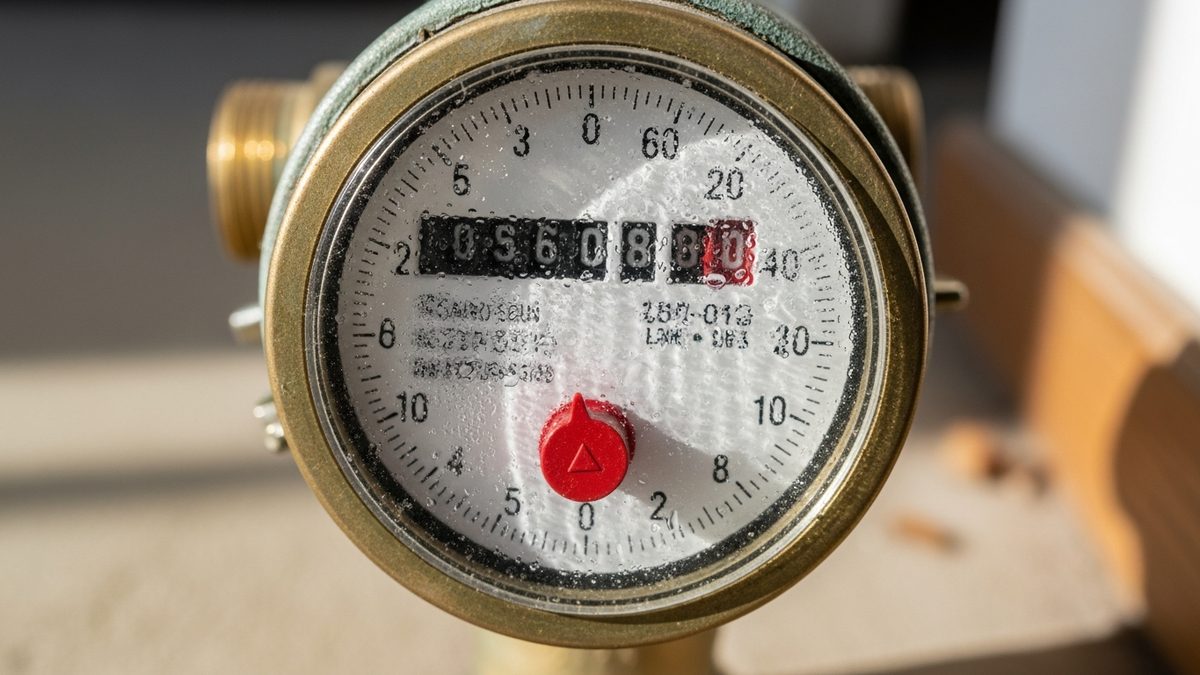
Before you inspect a single fixture, the water meter can tell you in minutes whether your home has an active leak. This is the single most important step, and it captures what many people search for: water meter spinning with everything off.
How to run the test:
- Locate your water meter. It is usually in a utility box near the curb, in front of the house, though in colder climates it may be in the basement or a utility room.
- Look at the meter face. Most meters have a small leak indicator — a small dial, triangle, or star-shaped wheel, often red or blue — that rotates whenever water flows through the meter.
- Turn off every water-using appliance and fixture in the house: all faucets, the dishwasher, the washing machine, the icemaker, and any irrigation systems. Do not flush the toilet.
- Look at the leak indicator. If it is spinning, or if you can see the low-flow indicator moving at all, water is actively flowing through your meter — which means it is going somewhere inside your home or yard.
If the indicator is spinning with everything off, you have a hidden leak. The question now is where.
Extended version of the test: If your meter does not have a clearly visible flow indicator, write down the exact meter reading (all digits). Do not use any water for two hours, then check the reading again. The EPA's WaterSense program recommends exactly this two-hour test as a reliable DIY leak check. If the numbers moved, you have a leak.
Narrowing it down inside vs. outside: Close the main shutoff valve inside your house — usually in the basement, utility room, or along the front wall. Go back to the meter and check the indicator again. If it stops spinning after you close the inside valve, the leak is inside your home. If it keeps spinning with the inside valve closed, the leak is in the line between the meter and the house, which is your buried service line. See main water line leak in the yard for that scenario.
Check your water bill
Your bill is often the first clue. Pull the last three or four statements and look at the usage numbers, not just the dollar amount.
A family of four using more than 12,000 gallons per month likely has a significant leak somewhere, according to EPA WaterSense guidance. If your usage crept up from one month to the next with no change in habits — no lawn watering season starting, no houseguests — take that seriously.
Some water utilities now offer apps or online portals that show daily usage. An unusually high day that does not correspond to laundry or pool filling can point to a slow-running leak that active day-to-day use masks.
Dye test your toilets
Toilets are the most common source of hidden water waste in the home. A worn or warped flapper — the rubber seal at the bottom of the tank — can let water trickle continuously from the tank into the bowl without making any sound you would notice.
The dye test is simple:
- Remove the tank lid and set it aside.
- Drop a dye tablet, or about 10 drops of dark food coloring, into the tank water.
- Do not flush. Wait 10 minutes.
- Check the bowl. If any color has appeared in the bowl water, the flapper is leaking.
Flush immediately after the test to avoid staining the porcelain. The EPA recommends running this test on every toilet in the house at least once a year. A leaking flapper can waste 200 gallons or more per day without making a sound. Replacing a flapper costs $5 to $15 and takes about 10 minutes — one of the best returns on time and money in home maintenance.
Look for warm spots on the floor (slab leak)
A slab leak is a leak in a water line embedded in or beneath the concrete foundation of the house. These are harder to detect and more expensive to repair, but they have a distinctive sign: warm or hot spots on the floor.
When a hot-water supply line develops a leak below the slab, the escaping hot water warms the concrete above it. Walk slowly across your floors — especially kitchen floors, hallway floors, and bathroom floors — in bare feet or socks. A section of floor that is noticeably warmer than the surrounding area, with no obvious explanation like a heating vent nearby, is a strong indicator of a hot-water slab leak.
Other signs of a slab leak include:
- The sound of running water when all fixtures are off and no appliances are running
- Floors that feel unusually warm in a localized spot
- Cracks in the floor or baseboard trim that appear without a clear cause
- A hot water heater that runs constantly or a water heater that cannot keep up with normal demand (because hot water is escaping before it reaches fixtures)
- Damp or warm carpet over a concrete slab
- Warm water coming from cold-water taps, which can happen when a slab leak creates cross-flow
Slab leaks are not a DIY repair. Acoustic leak detection equipment and thermal imaging cameras are used by professionals to pinpoint the exact location before any concrete is touched.
Check inside walls and ceilings
Hidden leaks inside walls and ceilings announce themselves through several detectable signs. Walk through each room and look for:
Water stains or discoloration. A yellowish or brownish ring or blotch on a ceiling or wall, especially one that appears below an upstairs bathroom, is one of the most reliable early signs of a leaking supply or drain line.
Bubbling or peeling paint or wallpaper. Moisture behind a wall surface breaks the bond between the paint or paper and the substrate underneath.
Soft, spongy, or slightly sunken drywall. Press gently on any discolored section. Drywall that has absorbed significant water will feel soft or slightly crumbly. In severe cases it will give way under light pressure.
A persistent musty smell. A damp, earthy odor that does not go away after cleaning or airing out the room is one of the most reliable signs of hidden moisture. Mold growing inside a wall cavity produces this smell even when you cannot see it. The EPA notes that mold can begin to grow on wet building materials in as little as 24 to 48 hours.
Mold spots near baseboards or in corners. Small dark spots at the junction of the floor and wall can mean moisture is wicking out from inside the wall cavity.
An inexpensive moisture meter — available at hardware stores for $15 to $30 — can confirm elevated moisture content in a wall without cutting it open. A reading significantly above normal (most meters flag anything above 16 to 20 percent moisture content as elevated) suggests water is present.
For a complete guide to wall leaks, see a pipe leaking behind a wall.
Listen for running water
Turn off all appliances and go through the house quietly. Press your ear against walls near bathrooms, kitchens, the laundry room, and the water heater. Listen for:
- A faint dripping or trickling sound
- A steady, low rushing sound
- A hissing noise in a wall or under the floor
This works best late at night when the house is completely quiet. Any running water sound that continues for more than a few seconds when no fixtures are running is worth investigating.
Inspect visible plumbing and under-sink cabinets
Many hidden leaks are not truly hidden — they are just in places people rarely look. Open every cabinet under a sink and check the floor of the cabinet for:
- Water stains or discoloration at the base of the cabinet
- Soft or swollen wood at the cabinet floor
- A water ring from a drip that has since dried
- Mildew smell inside the cabinet
Check the connections under the sink: the supply lines going to the faucet, the P-trap drain, and the shutoff valves. Look for white mineral deposits (efflorescence) around joints — this is dried mineral residue left by dripping water and is a reliable sign of a slow, intermittent drip.
Do the same inspection at the base of the toilet, around the washing machine connections, and at the water heater supply and pressure relief valve.
Check outdoor faucets and irrigation
Outdoor hose bibs (spigots) and irrigation systems are common sources of leak waste that often go undetected because homeowners are not watching them closely.
Hose bibs: Turn the spigot fully off and check if the fitting at the wall continues to drip. Replace a worn washer or the full valve if it drips.
Irrigation systems: The EPA's WaterSense program notes that an irrigation system with a leak just 1/32 of an inch in diameter can waste about 6,300 gallons per month. Walk the irrigation lines in spring and check for unusually wet areas, sunken turf, or heads that appear to be leaking around the base between cycles.
Troubleshoot it yourself (safely)
Here is the fast, logical sequence to follow when you suspect a hidden leak but do not know where it is:
- Run the water meter test. Confirm there is an active leak before spending time searching.
- Determine inside vs. outside using the main shutoff valve method described above.
- Dye-test every toilet. Flappers are the most common culprit and the easiest fix.
- Walk all floors in bare feet, paying attention to warm spots.
- Open every under-sink cabinet and inspect visually.
- Walk the perimeter of the house and check hose bibs.
- Walk through each room and look for stains, soft spots, peeling paint, and mold.
- Use a moisture meter on any suspect wall area.
If all of that turns up nothing and the meter is still moving, the leak is concealed in a wall, under a slab, or in the buried service line — all of which require professional tools to locate.
Safety first
- Do not turn off the main shutoff valve more than once or twice quickly. Some older ball valves are corroded and can crack if forced.
- If you see any sign of water near your breaker panel, electrical outlets, or wiring, do not touch those areas. Shut off power to the affected circuits from a dry location and call an electrician.
- If mold is visible and covers more than about 10 square feet, the EPA recommends consulting a mold remediation professional rather than attempting cleanup yourself.
- When in doubt about what is behind a wall, do not cut into it near electrical panels or in areas where wiring is likely to run.
When to call a pro
Call a licensed plumber if:
- The water meter confirms an active leak and you cannot find the source after a systematic check
- You suspect a slab leak (warm floor, running water sounds under the floor, high water heater usage)
- The leak appears to be behind a finished wall and is not accessible without significant demolition
- You see active mold in combination with a water sign
- The leak appears to be in the buried service line outside
Professionals use acoustic listening equipment, thermal imaging cameras, and borescope cameras to locate leaks precisely without unnecessary demolition.
What it typically costs (2025–2026)
Leak detection service: $100 to $500 for a visual plumbing inspection; $300 to $1,100 for an electronic or camera inspection designed specifically to locate a hidden leak.
Pipe repair — accessible location: $150 to $500. A pipe under a sink, in a crawlspace, or in an open basement is the least expensive scenario.
Pipe repair — behind drywall: $500 to $5,000 depending on where the leak is, what the pipe is made of, and how much wall and floor needs to be opened.
Slab leak repair: $500 to $4,000 or more for the plumbing work alone; additional costs apply for cutting and patching concrete, plus flooring restoration.
Water damage restoration: $1,400 to $6,400 on average, with significant damage running higher. Mold remediation adds $1,200 to $3,750 or more if mold has established inside the wall cavity.
(Sources: HomeGuide, 2026; Angi, 2026.)
Common mistakes
Not running the meter test first. This is the fastest way to confirm any leak exists. Skipping it means spending time searching when there may be nothing to find — or, worse, having a confirmed active leak and searching in the wrong places.
Only checking the obvious places. Faucets and visible pipe joints get attention; toilet tanks, slab pipes, and irrigation lines often do not.
Ignoring a water bill spike. A one-time anomaly can happen, but a second month with elevated usage after no change in habits is a signal worth acting on.
Waiting to see if it resolves. Leaks do not seal themselves. A slow drip in a wall cavity will continue until the pipe is repaired and will cause mold in as little as 24 to 48 hours of continuous moisture.
Over-tightening under-sink connections. If you try to stop a dripping fitting by cranking it tighter, you can crack a fitting or damage threads, turning a small drip into a larger problem.
How to prevent hidden leaks
Install water leak detectors. Small sensor pads placed under sinks, near the water heater, behind toilets, and near the washing machine alert you immediately when they detect moisture on the floor. Basic models cost $15 to $30. Whole-home flow monitors that attach to the main water line can detect anomalies automatically and shut off the water if needed.
Monitor your water bill monthly. Most utilities offer online usage dashboards. A jump in usage with no change in habits is almost always worth a quick meter check.
Maintain water pressure between 40 and 80 psi. High pressure stresses joints, supply hoses, and fittings throughout the system. A plumber can install a pressure-reducing valve for $300 to $650 if your pressure is running high.
Replace supply hoses on a schedule. Braided stainless supply lines on toilets, sinks, and appliances have a finite life span — typically 10 years. Rubber hoses are shorter-lived. Replace them before they fail rather than after.
Run the water meter test once a year. Pick a date — the start of spring or the start of the new year — and run the two-hour test every year. It costs nothing and catches a surprising number of slow leaks before they grow.
FAQ
My water meter is spinning with everything off. What does that mean? It means water is actively flowing through the meter even though no fixture is running. That is the definition of a hidden leak. Use the main shutoff valve test described above to determine if it is inside the house or in the buried line outside.
How do I find a slab leak without breaking up the floor? You cannot definitively locate a slab leak without professional detection equipment. A plumber with an acoustic listening device and a thermal imaging camera can pinpoint the location to within inches before any concrete is touched. Trying to find it by guessing and chipping concrete is significantly more expensive and destructive.
Can a running toilet cause my water meter to spin? Yes, absolutely. A toilet with a worn flapper can lose 200 gallons or more per day, which is enough to spin the meter indicator visibly. Always dye-test your toilets before assuming the leak is elsewhere.
How much water does a small hidden leak waste? A drip at one drip per second wastes more than 3,000 gallons per year, according to the EPA. A pinhole leak in a pressurized supply line can lose much more. Fixing a hidden leak often cuts a household water bill by 10 percent or more.
Is a hidden leak covered by homeowners insurance? Sudden and accidental pipe failures are usually covered. Gradual leaks — a slow drip that has been running for weeks — are typically classified as a maintenance issue and excluded. Document the date you discovered the problem and call your insurer promptly.
A hidden water leak is one of those home problems where catching it early matters enormously. The damage it causes in the first week is a fraction of what it causes in the first month.
Get a free quote from a local plumber for leak detection near you. Local Service Group connects homeowners with licensed plumbing professionals who have the tools to find hidden leaks fast — without tearing your home apart unnecessarily.
Sources
- U.S. Environmental Protection Agency, WaterSense — "Fix a Leak Week": https://www.epa.gov/watersense/fix-leak-week
- U.S. Environmental Protection Agency, WaterSense — "Know Your Flow and Curb Water Waste: A Guide to Leak Detection and Flow Monitoring Devices" (2026): https://www.epa.gov/system/files/documents/2026-02/ws-products-leak-flow-guide.pdf
- U.S. Environmental Protection Agency — "A Brief Guide to Mold, Moisture and Your Home": https://www.epa.gov/mold/brief-guide-mold-moisture-and-your-home
- City of Vancouver, WA Public Works — "Detecting Water Leaks": https://www.cityofvancouver.us/government/department/public-works/water-sewer-and-stormwater/detecting-water-leaks/
- Miami-Dade County Water and Sewer — "Leak Detection Tips": https://www.miamidade.gov/global/water/leak-detection.page
- HomeGuide — "How Much Does a Pipe Leak Repair Cost?": https://homeguide.com/costs/pipe-leak-repair-cost
- Angi — "How Much Does Water Damage Restoration Cost? (2026 Data)": https://www.angi.com/articles/how-much-does-it-cost-repair-water-damage.htm
- U.S. Environmental Protection Agency, WaterSense — "Outdoor Leaks": https://www.epa.gov/watersense/outdoors
Disclaimer
The information on this page is provided for general educational purposes only and is offered "as is" and "as available," without warranties of any kind, whether express or implied — including, without limitation, any warranties of accuracy, completeness, reliability, merchantability, or fitness for a particular purpose. It is not professional advice and is not a substitute for inspection, diagnosis, or repair by a licensed, qualified professional.
Home systems involving gas, electricity, water, refrigerant, fire, or structural components can be hazardous, and requirements vary by local code and jurisdiction. Any inspection, diagnosis, repair, installation, or other action referenced on this page should be performed by a licensed professional. You should not rely on this content to perform such work yourself. To the fullest extent permitted by law, [Company Name] and its owners, employees, and contributors assume no responsibility or liability for any injury, death, property damage, or other loss arising out of or in connection with the use of, or reliance on, this information.
If you smell gas or suspect a carbon monoxide leak, leave the area immediately and call 911 or your gas utility from a safe location.