How to Safely Thaw Frozen Pipes (and Keep Them From Bursting)
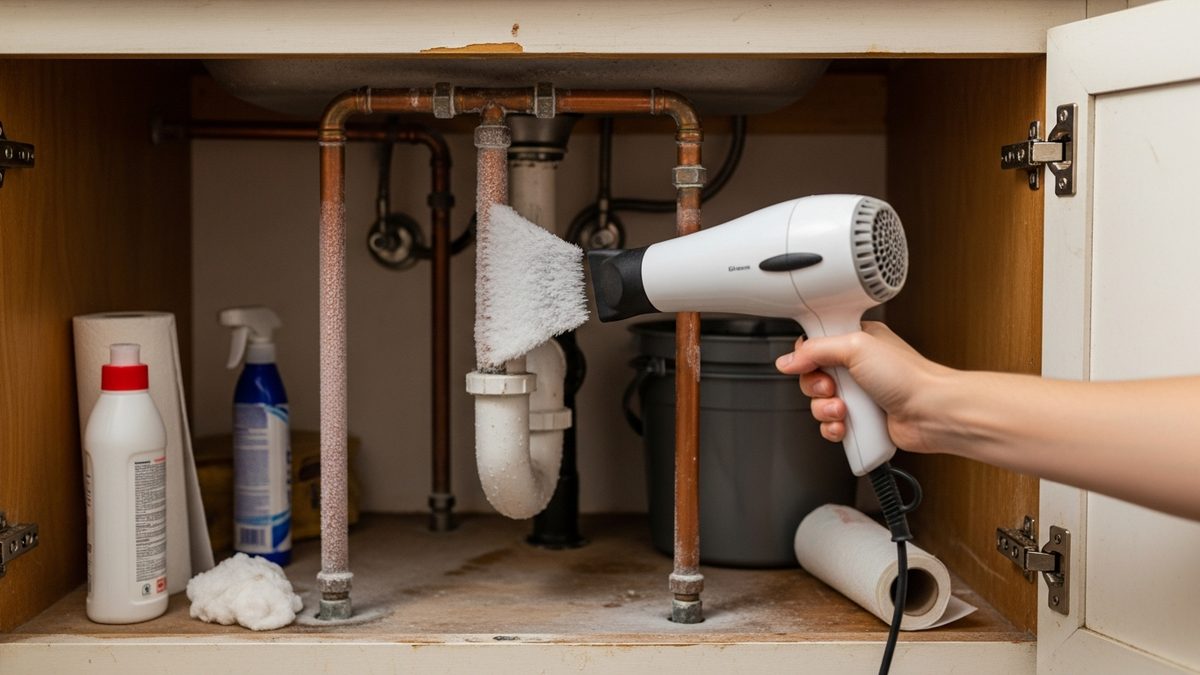
You turn on the faucet and — nothing. Or maybe just a thin trickle that wouldn't fill a coffee cup. When the temperature outside has been below freezing, that silence from your tap is a warning sign: you may have a frozen pipe.
A frozen pipe isn't just an inconvenience. When water freezes, it expands. That expansion puts enormous pressure on the inside of your pipes — enough to crack or burst them completely. A burst pipe can dump hundreds of gallons of water into your walls, floors, and ceilings before you even notice. If a pipe has already burst, that's a different emergency with its own urgent steps.
But if the pipe is still frozen and hasn't burst yet, you have a window of time to fix the problem yourself — carefully. Here's exactly how to do it.
How to tell a pipe is frozen
The most obvious sign is a faucet that won't flow normally when temperatures have been at or below freezing. Other clues include:
- Frost or condensation on an exposed pipe
- A pipe that feels unusually cold or has visible ice on it
- A banging or gurgling sound when you try to run water
- No water at all from a specific faucet while others work fine
Pipes most likely to freeze are those that run along exterior walls, any plumbing in unheated spaces like garages, crawl spaces, or attics, and outdoor hose bibs. The American Red Cross notes that pipes in these locations are the most vulnerable because they're closest to the cold air outside and farthest from your home's heat source.
How to thaw a frozen pipe (step by step)
Work methodically and stay patient — thawing takes time.
Step 1: Open the faucet first. Before you apply any heat, open the faucet that the frozen pipe feeds. Keep it open throughout the entire process. As the ice melts, water needs somewhere to go, and the flow of water (even just a trickle) actually helps speed up the thawing from the inside.
Step 2: Locate the frozen section. Trace the pipe from the faucet back toward the exterior wall or unheated area. Look for a section that feels much colder than the rest, has visible frost, or appears bulged or discolored. That's your target.
Step 3: Apply gentle heat, starting at the faucet end. This is the most important part of the technique: begin heating the pipe closest to the faucet and work your way back toward the frozen blockage. Starting at the far end traps steam behind the ice plug and can build dangerous pressure. The Red Cross recommends any of these heat sources:
- Electric hair dryer — hold it a few inches from the pipe and move it back and forth
- Electric heating pad — wrap it directly around the pipe
- Towels soaked in hot water — wrap them around the pipe and rewet them as they cool
- Portable space heater — position it to warm the area around the pipe, keeping it well away from anything flammable
Step 4: Keep applying heat until full water pressure returns. Don't stop when the water starts to trickle. Continue until the flow from the faucet is back to normal. A partial thaw can refreeze quickly.
Step 5: Check your other faucets. If one pipe froze, others in the same area may be frozen too. Test every cold-water and hot-water tap in your home. The Red Cross specifically advises this step because a freeze in one spot often signals a broader cold-exposure problem in that area of your plumbing.
What never to do
This is just as important as knowing the right steps.
Never use an open flame. A propane or butane torch, a kerosene heater, a charcoal grill, or any open-flame device has no place near your pipes. The risk of starting a fire — inside a wall, under a floor, or in a crawl space — is very real. The American Red Cross explicitly warns against all open-flame methods.
Never use a heat gun at close range. A standard heat gun reaches temperatures that can quickly damage plastic (PVC or PEX) pipes and solder joints on copper pipes.
Never pour boiling water directly on a pipe. The sudden temperature shock can crack or warp both the pipe itself and any fittings.
Never ignore the faucet. Trying to thaw a pipe without opening the faucet first can allow steam pressure to build up behind the ice, which is exactly how pipes burst during the thawing process.
Safety first
A few precautions before you start:
- Know where your main water shut-off valve is located before you begin. If a pipe cracks during thawing, you need to be able to cut the water immediately.
- If you smell a burning or electrical odor while using a hair dryer or heating pad, stop and unplug it.
- If the frozen section is inside a wall, above the ceiling, or otherwise inaccessible, do not attempt to open up the structure yourself. Call a plumber.
- If you turn on the faucet and no water comes out at all — not even a drip — the blockage may be complete and the pipe could already be cracked. Proceed very cautiously and consider calling a pro.
When to call a plumber
Some frozen pipe situations call for a licensed plumber right away:
- You cannot find the frozen section
- The frozen section is inside a wall, ceiling, or underground
- You thaw the pipe and water sprays out (the pipe has already cracked)
- Multiple pipes are frozen at once
- Your home has no water at all and the main line may be frozen
- You've tried for 30 minutes and the pipe won't thaw
Don't feel obligated to DIY this one if anything feels uncertain. A plumber has specialized thawing equipment, leak detection tools, and the experience to handle the situation without causing more damage.
What it typically costs
Plumber rates for frozen pipe calls in 2025–2026 vary by location, time of day, and what they find when they arrive:
- Thawing a single accessible pipe: roughly $100–$300 flat fee, or $150–$250 per hour
- In-wall or crawl-space pipes: $150–$500+, depending on access
- Cracked or burst pipe repair: $200–$1,000+ for the pipe itself, plus any drywall or flooring restoration
- Emergency after-hours call-out fee: an additional $100–$300 on top of labor
- Extensive water damage: restoration costs can climb into the thousands
Getting quotes from two or three local plumbers before agreeing to work is always a good idea, especially during a cold snap when demand is high.
Common mistakes to avoid
- Leaving heat on a single spot. Moving the heat source back and forth thaws the pipe more evenly and reduces the risk of cracking a cold section with a hot point.
- Stopping too soon. A pipe that's only partially thawed can refreeze within minutes once you remove the heat source.
- Forgetting the shut-off valve location. Every homeowner should know where their main shut-off is. If you don't, find it now — before an emergency.
- Turning the heat source up to speed things along. Higher heat doesn't mean faster and safer thawing; it means a greater chance of pipe damage.
- Skipping a post-thaw inspection. After the water is flowing again, watch the area for 20–30 minutes and check for any drips, wet spots, or wall discoloration that might signal a small crack.
How to prevent frozen pipes
The U.S. Department of Energy and IBHS (the Insurance Institute for Business and Home Safety) both emphasize that prevention is far cheaper than repairs.
Insulate exposed pipes. Foam pipe sleeves are inexpensive and available at any hardware store. Focus on pipes in unheated spaces: the garage, crawl space, attic, and any pipes running along exterior walls.
Keep cabinet doors open during a cold snap. Kitchen and bathroom cabinets that sit against exterior walls trap cold air around the plumbing inside. Opening those doors lets the warmer room air circulate around the pipes.
Let a faucet drip. Running even a small amount of water through a vulnerable pipe keeps it from reaching the freezing point. It doesn't need to be a strong flow — a slow, steady drip is enough.
Hold the thermostat steady. The Red Cross recommends keeping your thermostat set to at least 55°F, even at night and even when you're away. A lower nighttime setpoint saves a few dollars on your heating bill but can cost thousands if a pipe lets go.
Seal drafts near pipes. IBHS recommends caulking and weatherstripping gaps around windows, doors, and anywhere air can sneak into a space where pipes run. Cold air intrusion is often the direct cause of freezing.
Disconnect garden hoses before winter. An attached hose traps water in the hose bib and the pipe behind it. Disconnect the hose, close the indoor shut-off valve for that bib, and open the outside faucet to let any remaining water drain out.
Consider a pipe-monitoring device. Smart water sensors and temperature monitors can alert you (or a neighbor) if the temperature inside drops dangerously low — a real help when you're traveling.
FAQ
At what temperature do pipes freeze? Water freezes at 32°F, but pipes in well-insulated homes typically don't freeze until outdoor temperatures drop to around 20°F. Pipes along exterior walls, in crawl spaces, or in garages are at risk at higher temperatures because they're exposed to colder ambient air than the rest of the house.
How long does it take to thaw a frozen pipe? With a hair dryer or heating pad, most accessible frozen sections thaw within 20–45 minutes. Larger blockages, pipes in enclosed spaces, or pipes with multiple frozen sections can take longer.
Can I use a space heater to thaw pipes under my sink? Yes, with caution. Open the cabinet doors, place a portable electric space heater nearby, and stay present while it runs. Never leave a space heater unattended, and keep it away from any cleaning products or flammable items stored under the sink.
Will homeowner's insurance cover a burst frozen pipe? Most standard homeowner's insurance policies cover sudden and accidental damage from a burst pipe, including the resulting water damage — but not the pipe repair itself. Coverage is typically denied if the damage resulted from neglect, such as leaving a home unheated in freezing weather. Read your policy carefully and call your insurer right after a loss.
Is it safe to turn the water back on immediately after thawing? Yes, but watch closely for the first 20–30 minutes. Look for drips, wet spots, or any sign of water where it shouldn't be. A pipe that froze hard enough to crack may not leak immediately — the crack can open up as the pipe warms and shifts.
What if I can't find the frozen section? If you've traced the pipe and can't locate where it's frozen — or if the pipe runs through a wall or floor — that's the right moment to call a licensed plumber. Professionals have thermal imaging equipment and pipe-thawing tools that can locate and solve the problem without tearing into your home unnecessarily.
Ready to get help from a pro? If your pipes are frozen, cracked, or you're not sure what you're dealing with, don't wait. Get a free quote from a vetted local plumber near you — just tell us what's going on and we'll match you with licensed pros in your area.
Sources
- American Red Cross — Preventing and Thawing Frozen Pipes: https://www.redcross.org/get-help/how-to-prepare-for-emergencies/types-of-emergencies/winter-storm/frozen-pipes.html
- U.S. Department of Energy, Energy Saver — Turn Down the Temperature, but Don't Let Your Pipes Freeze: https://www.energy.gov/energysaver/articles/turn-down-temperature-dont-let-your-pipes-freeze
- IBHS FORTIFIED Program — Defend Against Frozen Pipes: https://fortifiedhome.org/article/preventing-frozen-pipes/
- Homeyou — Frozen Pipes Cost Breakdown for 2026: https://www.homeyou.com/frozen-pipes-cost
- ConsumerAffairs — How Much Does It Cost to Repair Frozen Pipes: https://www.consumeraffairs.com/homeowners/cost-to-repair-frozen-pipes.html
Disclaimer
The information on this page is provided for general educational purposes only and is offered "as is" and "as available," without warranties of any kind, whether express or implied — including, without limitation, any warranties of accuracy, completeness, reliability, merchantability, or fitness for a particular purpose. It is not professional advice and is not a substitute for inspection, diagnosis, or repair by a licensed, qualified professional.
Home systems involving gas, electricity, water, refrigerant, fire, or structural components can be hazardous, and requirements vary by local code and jurisdiction. Any inspection, diagnosis, repair, installation, or other action referenced on this page should be performed by a licensed professional. You should not rely on this content to perform such work yourself. To the fullest extent permitted by law, [Company Name] and its owners, employees, and contributors assume no responsibility or liability for any injury, death, property damage, or other loss arising out of or in connection with the use of, or reliance on, this information.
If you smell gas or suspect a carbon monoxide leak, leave the area immediately and call 911 or your gas utility from a safe location.