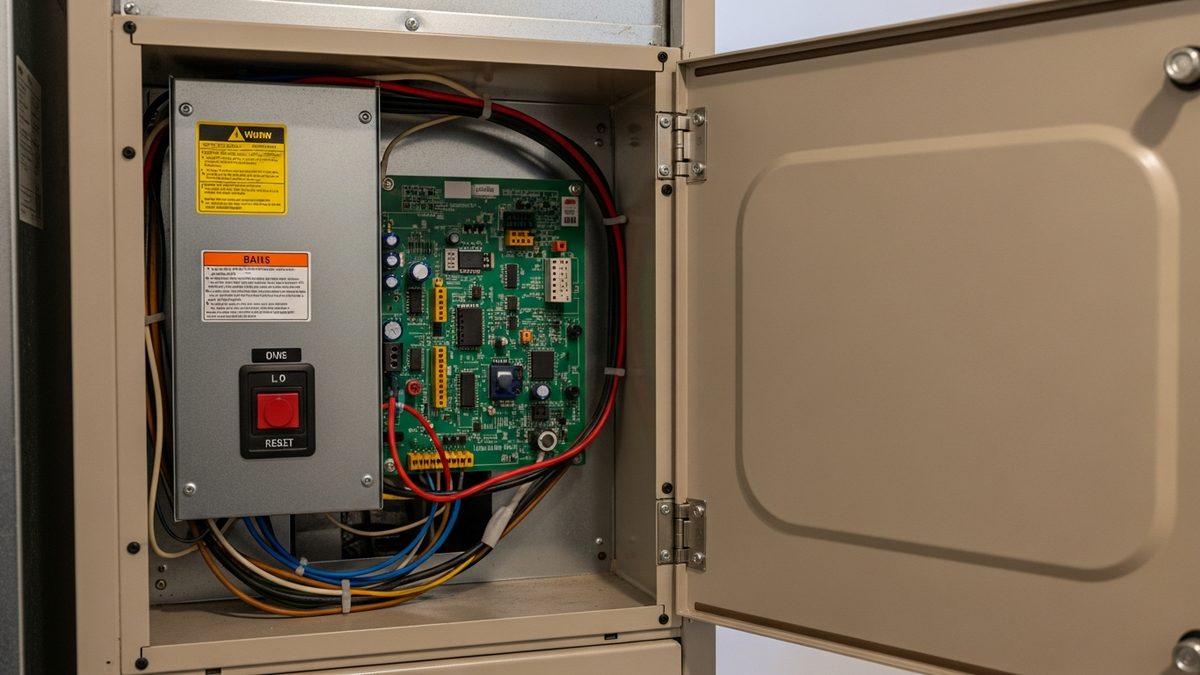
Your furnace stopped mid-cycle, or it tried to start and nothing happened. Someone told you to "just hit the reset button." But where is it, exactly? And is it safe? And will it actually fix anything? This guide walks you through the full reset process — power switch, circuit breaker, the physical reset button, and the ignition lockout sequence — so you know exactly what you are doing and when to stop.
Most Likely Causes of a Furnace That Won't Ignite
Before reaching for any reset, it helps to know what is actually preventing ignition. Here are the most common culprits, in rough order of how often they occur.
1. Clogged air filter A severely dirty filter restricts airflow so much that the furnace overheats and trips its own high-limit safety switch. The furnace shuts down as a protective measure. If you have not changed the filter in the past three months (or ever), start here.
2. Ignition lockout Modern furnaces try to ignite two or three times in a row. If the burners do not light after those attempts, the control board goes into "lockout" — a safety state where it stops trying. The furnace will sit there doing nothing until you reset it. Lockout is not a fix; it is a pause. The underlying cause still needs to be found.
3. Dirty flame sensor The flame sensor is a metal rod that dips into the burner flame. Its surface gets coated with oxidation over time. When it cannot "feel" the flame, the control board cuts the gas supply within a few seconds of ignition and eventually locks out. This is one of the most common reasons a furnace lights briefly and then shuts off.
4. Tripped high-limit switch The high-limit switch is a safety device that shuts the furnace off if it detects overheating. A clogged filter, a blocked vent, or a failing blower motor can all cause it to trip. Some high-limit switches self-reset when the furnace cools; others require a manual reset.
5. Blocked or frozen condensate drain (high-efficiency furnaces) High-efficiency (90%+ AFUE) furnaces produce condensation as a byproduct of combustion. That water drains through a plastic condensate line. If the line freezes (common in cold garage installations) or gets clogged, a float switch shuts the furnace down. The furnace will not reset until the drain is cleared.
6. Power interruption A brief power flicker can confuse the control board and put it in a fault state. The fix is simply to restore normal power and reset.
How to Reset a Furnace: Step by Step
Work through these steps in order. Do not skip ahead.
Step 1 — Check the thermostat
Make sure the thermostat is set to HEAT, the fan is on AUTO, and the set temperature is at least 3–5 degrees above the current room temperature. Replace batteries if the display is dim or blank. A surprising number of "no heat" calls are thermostat settings.
Step 2 — Check the furnace power switch
Most furnaces have a dedicated power switch mounted on the wall near the unit or at the top of the basement stairs. It looks exactly like a standard light switch. Confirm it is in the ON position. If it was accidentally switched off, flip it on and wait 60 seconds for the furnace to attempt a start.
Step 3 — Check the circuit breaker
Go to your electrical panel and look for a breaker labeled "furnace," "air handler," or "HVAC." If it is tripped (the handle will be in the middle position, not fully on or off), push it firmly to OFF, then back to ON. If the breaker trips again immediately or within minutes, stop. A repeatedly tripping breaker signals an electrical fault — call a licensed electrician or HVAC technician before proceeding.
Step 4 — Check the furnace door
Many furnaces have a safety door switch — a small plunger button on the cabinet frame. If the blower door or access panel is not firmly closed, the switch cuts power to the ignition system. Make sure all panels are fully seated and latched.
Step 5 — Press the reset button
The reset button is a red or yellow button, typically about the size of a pencil eraser, located on or near the burner assembly inside the furnace. On some models it is directly visible when you open the front panel; on others it is on the side of the draft inducer housing or the limit switch.
To use it:
- Turn the thermostat down so the furnace will not try to run while you work.
- Turn the power switch off.
- Wait 30 seconds.
- Press the reset button firmly until you feel it click in.
- Turn the power switch back on.
- Turn the thermostat back up and listen for the startup sequence: draft inducer spins up, then a click or spark, then the burners light within 15–30 seconds.
Important: Press the reset button only once. If the furnace attempts ignition, fails, and locks out again, press it a second time only after waiting at least 30 minutes and investigating why it locked out. Pressing the reset button repeatedly without fixing the cause can flood the heat exchanger with unburned gas, creating a real hazard.
Step 6 — Clear the ignition lockout (wait and retry)
If the furnace entered lockout during a normal call for heat, you can clear it without using the physical reset button on many models. Simply turn the thermostat completely down (or to OFF) and wait 30 minutes, then turn it back up. The control board's lockout timer will have cleared and it will try again. If it locks out a second time, that is your signal that the underlying problem needs to be fixed — not reset again.
When Resetting Will Not Help
Resetting buys you another ignition attempt. It does not fix the root cause. If your furnace keeps locking out after resets, one of these likely needs attention from a licensed technician:
- Dirty flame sensor — needs cleaning with fine steel wool or replacement
- Weak or cracked ignitor — needs replacement
- Dirty or obstructed burners — needs professional cleaning
- Failing gas valve — do not attempt to service yourself
- Clogged condensate drain — line needs to be cleared or heat-taped
- Failing control board — needs professional diagnosis
If your furnace will not respond at all after these steps, read our post on furnace won't turn on at all for the next level of checks.
Safety First
Gas furnaces require careful handling around two hazards: gas and carbon monoxide.
- If you smell gas (a rotten-egg or sulfur odor) at any point, stop immediately. Leave the home, leave the door open, do not operate any switches, and call your gas utility from outside.
- Never press the reset button more than twice without a 30-minute wait and investigation. Repeated resets without addressing the cause can result in unburned gas accumulation.
- A CO detector on every level of your home is essential. The CDC reports that gas furnaces are a known CO source when the heat exchanger is cracked or venting fails. More than 400 Americans die from unintentional CO poisoning each year. The CPSC recommends CO alarms outside every sleeping area.
- If a CO alarm sounds, evacuate immediately and call 911.
When to Call a Licensed Pro
Stop DIY troubleshooting and call a licensed HVAC technician when:
- The furnace locks out more than twice in one day
- You smell gas at any point
- A CO alarm has activated
- The breaker for the furnace is tripping repeatedly
- The furnace makes a bang or boom when it tries to ignite (possible delayed ignition)
- You see error codes flashing on the control board that indicate a gas, pressure, or heat exchanger fault
What It Typically Costs
| Service | Typical Cost (2025–2026) |
|---|---|
| Flame sensor cleaning | $75–$125 |
| Flame sensor replacement | $80–$200 |
| Ignitor replacement | $100–$250 |
| High-limit switch replacement | $100–$250 |
| Condensate drain clearing | $75–$175 |
| Control board replacement | $200–$700 |
| Diagnostic service call | $75–$150 |
Common Mistakes
- Pressing the reset button over and over. More than two resets without a 30-minute pause and investigation can push unburned gas into the heat exchanger. One press, then wait.
- Forgetting to check the filter first. A clogged filter is the most common reason furnaces overheat and trip safety switches.
- Closing the furnace door incompletely. The door safety switch will prevent the furnace from running if the panel is not fully latched.
- Treating lockout as a random glitch. Lockout is the furnace telling you ignition failed. Find out why.
How to Prevent Ignition Failures
- Change the filter every 1–3 months. Most overheating and lockout events start with airflow restriction.
- Schedule annual maintenance. A technician will clean the flame sensor, test the ignitor, check gas pressure, and verify burner operation — the tasks that prevent ignition failures.
- Keep the condensate drain clear if you have a high-efficiency furnace. A cup of diluted white vinegar poured into the drain port twice a year helps prevent algae buildup.
- Do not block return air vents with furniture or rugs. Restricted return airflow causes the same overheating problems as a dirty filter.
FAQ
How many times can I press the furnace reset button? Press it once. If the furnace fails again, wait 30 minutes, then press it once more. Do not press it more than twice before having a technician diagnose the cause.
Where exactly is the reset button on my furnace? It is usually a red or yellow button on the burner assembly housing or the draft inducer motor housing, visible when you open the front access panel. Check your furnace manual if you cannot locate it.
My furnace resets fine but shuts off again after 10–15 minutes — what is that? This is often a dirty flame sensor. The burners light, the flame sensor cannot confirm the flame through its oxide coating, and the control board shuts the gas off as a safety measure. A technician can clean or replace it in under an hour.
Can a clogged condensate line really stop my furnace? Yes. High-efficiency furnaces produce water vapor as a combustion byproduct. That water drains through a condensate line. A clogged or frozen line triggers a float switch that shuts the furnace off completely — and a reset will not help until the drain is clear.
My furnace blinks an error code — what should I do? Count the blinks and check your furnace manual (often taped inside the door panel). The code will tell you which safety switch or sensor triggered the shutdown, which narrows the diagnosis significantly before you call a technician.
Ready to Get a Free Quote?
If your furnace keeps locking out after resets, a licensed technician can diagnose the root cause in a single visit. Use our free quote tool to connect with pros near you.
Sources
- U.S. Department of Energy — Furnaces and Boilers: https://www.energy.gov/energysaver/furnaces-and-boilers
- CDC — Carbon Monoxide Poisoning Basics: https://www.cdc.gov/carbon-monoxide/about/index.html
- U.S. Consumer Product Safety Commission — Carbon Monoxide Information Center: https://www.cpsc.gov/Safety-Education/Safety-Education-Centers/Carbon-Monoxide-Information-Center
- U.S. Department of Energy — Gas-Fired Boilers and Furnaces: https://www.energy.gov/energysaver/gas-fired-boilers-and-furnaces
- ENERGY STAR — Certified Furnaces: https://www.energystar.gov/products/heating_cooling/furnaces
Disclaimer
The information on this page is provided for general educational purposes only and is offered "as is" and "as available," without warranties of any kind, whether express or implied — including, without limitation, any warranties of accuracy, completeness, reliability, merchantability, or fitness for a particular purpose. It is not professional advice and is not a substitute for inspection, diagnosis, or repair by a licensed, qualified professional.
Home systems involving gas, electricity, water, refrigerant, fire, or structural components can be hazardous, and requirements vary by local code and jurisdiction. Any inspection, diagnosis, repair, installation, or other action referenced on this page should be performed by a licensed professional. You should not rely on this content to perform such work yourself. To the fullest extent permitted by law, [Company Name] and its owners, employees, and contributors assume no responsibility or liability for any injury, death, property damage, or other loss arising out of or in connection with the use of, or reliance on, this information.
If you smell gas or suspect a carbon monoxide leak, leave the area immediately and call 911 or your gas utility from a safe location.