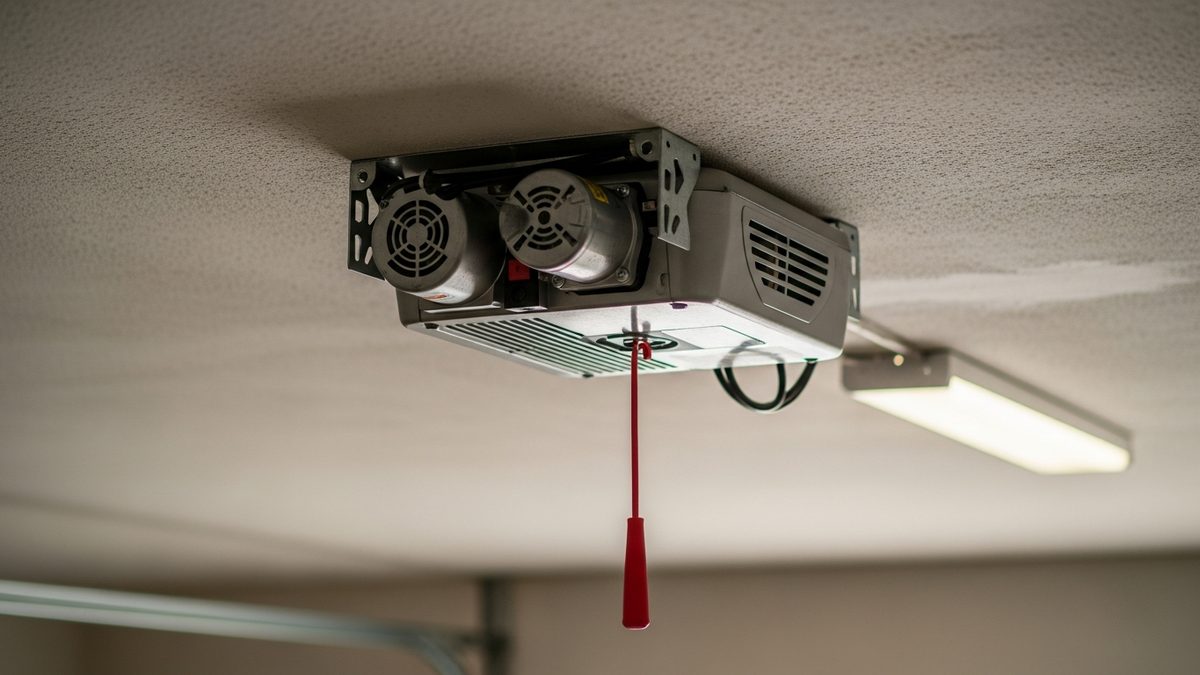
A garage door that refuses to move is one of those problems that can range from a two-minute fix to an all-day ordeal. The good news: most of the time, the cause is something simple — a dead battery, an accidentally triggered lock mode, or a sensor that got bumped out of position. This guide walks you through the most likely reasons your door won't open or close, what you can safely check on your own, and where you need to stop and call a professional.
Most likely causes
These are ranked from most common to least common.
-
Dead remote or keypad batteries. This is the most overlooked cause. A remote that worked fine yesterday may be sending too weak a signal to reach the opener today. Swap in fresh AA or AAA batteries before anything else.
-
Power supply issue. Check that the opener is plugged in and that the outlet has power. Garage circuits sometimes share a breaker with other equipment. Try plugging a lamp into the same outlet to confirm power is flowing.
-
Blocked or misaligned safety sensors. All openers made after January 1, 1993 must include an external entrapment protection device — typically a pair of photo-eye sensors mounted about six inches off the floor on each side of the door (CPSC, 1993). If one sensor is bumped out of alignment, covered in cobwebs, or sitting in a patch of direct sunlight, the opener reads it as a blocked beam and refuses to close. This is the single most common reason a door will open but not close. Look at the sensors — one LED should glow amber (the sending unit) and the other green (the receiving unit). If either is dim or blinking, you have a sensor problem.
-
Manual-release cord engaged. A red rope with a handle hangs from the trolley on most openers. If someone pulled that cord — perhaps during a power outage — the door is now disconnected from the drive system. You can open and close the door by hand, but the opener will not move it until you re-engage the carriage. Most manufacturers instruct you to pull the cord toward the door to re-engage, or simply operate the door from the remote after connecting power (Chamberlain Group support).
-
Lock mode activated. Many openers have a vacation lock or lock mode that disables the remote control while allowing the wall button to still work. If your wall button opens the door but the remote does nothing, check whether the lock button was accidentally pressed on the wall panel.
-
Travel or force limits set incorrectly. The opener's travel limits tell the motor how far to move the door in each direction. The force settings tell it how hard to push or pull. If either drifts out of range — often after a hard winter — the door may stop short, reverse unexpectedly, or refuse to move at all. Adjusting limits involves small screws or a programming sequence depending on the brand (Genie Company).
-
Broken torsion or extension spring. If you hear a loud bang and the door suddenly goes very heavy, a spring likely broke. A door with a broken spring is extremely difficult to lift by hand — a standard residential door weighs 130 to 400 pounds, and the spring system is what counterbalances that weight. This is a professional repair. Do not try to force the door open. For more on this specific issue, see our guide on a broken garage door spring.
-
Broken or frayed cable. Cables run from the bottom corners of the door up to the spring system. A snapped cable causes the door to hang unevenly or stop moving entirely.
Troubleshoot it yourself (safely)
Work through these steps in order. Stop if anything looks damaged, is under tension, or requires working near the springs.
-
Replace the remote batteries first. This takes 60 seconds and solves the problem more often than you'd expect.
-
Confirm the outlet has power. Unplug the opener, plug in a lamp or phone charger, and check. If there is no power, check the breaker panel.
-
Inspect the sensors. Crouch down and look at both sensor units. Both LED lights should be steady, not blinking. If either light is off or blinking, loosen the wing nut on the bracket, gently adjust the sensor until the light goes solid, then re-tighten. Wipe the lenses with a dry cloth if they look dirty (Chamberlain Group sensor alignment guide).
-
Check for obstructions. Look along the entire path of the door. A piece of debris, a trash can lid, or a garden tool leaning against the track can block movement.
-
Check the manual-release cord. If the trolley is disconnected, re-engage it per your owner's manual before testing the opener.
-
Look for the lock button. If the remote does nothing but the wall button works, press and hold the lock button on the wall panel until the indicator light changes.
-
Test the wall button. If neither the remote nor the wall button works and the outlet has power, the logic board or a wiring connection may have failed — time to call a pro.
Safety first
- Never put your fingers near a moving door or inside the track. The pinch points along the hinges and rollers can cause serious finger injuries.
- High-tension springs are a professional-only repair. The torsion spring above the door and the extension springs along the sides are under extreme mechanical tension. A spring that releases suddenly can cause broken bones, facial injuries, or worse. Do not attempt to adjust, repair, or replace springs yourself.
- Do not force a door that is stuck. If the door feels unusually heavy or moves unevenly, stop. There may be a broken cable or spring hiding the problem.
- Test the auto-reverse monthly. Place a 2x4 flat on the ground in the door's path and press close. The door should reverse within two seconds of contact. If it does not, stop using the door and have the opener serviced (CPSC safety standard).
When to call a pro
Call a licensed garage door technician if:
- You hear or suspect a broken spring.
- A cable is visibly frayed, loose, or off the drum.
- The door is crooked, sagging, or hanging unevenly.
- The opener sparks, smells like burning, or makes grinding noises from the motor.
- You have adjusted the sensors and limits and the door still misbehaves.
- The door is off track (see also our guide on a broken garage door spring for related spring-failure scenarios).
What it typically costs (2025–2026)
Costs vary by region, door type, and what needs to be fixed.
| Repair | Typical range |
|---|---|
| Sensor replacement or realignment (labor) | $75–$150 |
| Limit and force adjustment | $75–$125 |
| Opener remote or keypad replacement | $30–$80 (parts) |
| Spring replacement (torsion, single) | $250–$450 installed |
| Spring replacement (extension, pair) | $150–$350 installed |
| Cable replacement | $150–$250 installed |
| Full opener replacement | $300–$600 installed |
Sources: Angi, 2026; HomeAdvisor, 2025; Angi spring costs, 2026.
Common mistakes
- Assuming the remote is the problem without checking the sensors. In most "won't close" situations, the sensors are the real culprit.
- Pushing the door hard when it stops mid-travel. This can bend the track or strip the drive gear.
- Re-engaging the manual release while the door is open. If a spring is broken and you pull the cord while the door is up, the door can fall rapidly.
- Skipping the auto-reverse test. A door that doesn't reverse properly is a safety hazard to children and pets.
- Buying a cheap universal remote without confirming compatibility. Not all remotes work with all brands. Stick with remotes made for your opener brand.
How to prevent it
- Test the auto-reverse feature monthly by placing a 2x4 in the door's path.
- Lubricate moving parts twice a year — rollers, hinges, and the torsion spring with a silicone-based or white lithium grease spray. Avoid spraying the track itself (Clopay maintenance guide).
- Inspect sensor lenses every season. A quick wipe with a dry cloth keeps cobwebs and road dust from blocking the beam.
- Check the balance of the door once a year. Disconnect the opener, lift the door by hand to waist height, and let go. A balanced door stays put; one that falls or rockets up needs professional adjustment.
- Replace the remote battery once a year even if it still seems to work.
FAQ
Why does my garage door opener light flash but nothing moves? On most LiftMaster and Chamberlain openers, a rapidly blinking light (often 10 flashes) means the safety sensors are blocked or misaligned. Count the flashes and check your owner's manual — each flash count corresponds to a specific error (LiftMaster troubleshooting).
Can I open a garage door manually if the power is out? Yes. Pull the red emergency release cord to disconnect the trolley, then lift the door by hand. If a spring is broken, the door may be very heavy or impossible to lift safely on your own.
Why does my door open fine but refuse to close? Nine times out of ten: misaligned or blocked safety sensors. See step 3 in the troubleshoot section above.
How long do garage door openers last? Most quality openers last 10 to 15 years with regular maintenance. If your opener is older than that and showing problems, replacement often makes more sense than repeated repairs.
Is it safe to use the door if I think a spring is broken? No. Stop using the door immediately. An unbalanced door — especially a heavy steel one — can fall suddenly and cause serious injury or property damage. Call a technician the same day.
Get a free quote
Need a hand with your garage door? Local Service Group connects you with vetted home-service professionals in your area. Get a free, no-obligation quote today.
Sources
- https://www.cpsc.gov/Newsroom/News-Releases/1993/Safety-Commission-Publishes-Final-Rules-For-Automatic-Garage-Door-Openers
- https://support.chamberlaingroup.com/s/chamberlain-garage-door-opener
- https://support.chamberlaingroup.com/s/article/How-to-align-safety-reversing-sensors-1484145609323
- https://store.geniecompany.com/blogs/genie-blog/how-to-set-the-up-and-down-travel-limits-of-your-genie-garage-door-opener
- https://www.clopaydoor.com/residential/support/steel-garage-doors-care-and-maintenance
- https://www.angi.com/articles/most-common-garage-door-repair-costs.htm
- https://www.homeadvisor.com/cost/garages/repair-a-garage-door/
- https://www.angi.com/articles/how-much-should-garage-door-spring-replacement-cost.htm
- https://support.chamberlaingroup.com/s/liftmaster-garage-door-opener
Disclaimer
The information on this page is provided for general educational purposes only and is offered "as is" and "as available," without warranties of any kind, whether express or implied — including, without limitation, any warranties of accuracy, completeness, reliability, merchantability, or fitness for a particular purpose. It is not professional advice and is not a substitute for inspection, diagnosis, or repair by a licensed, qualified professional.
Home systems involving gas, electricity, water, refrigerant, fire, or structural components can be hazardous, and requirements vary by local code and jurisdiction. Any inspection, diagnosis, repair, installation, or other action referenced on this page should be performed by a licensed professional. You should not rely on this content to perform such work yourself. To the fullest extent permitted by law, [Company Name] and its owners, employees, and contributors assume no responsibility or liability for any injury, death, property damage, or other loss arising out of or in connection with the use of, or reliance on, this information.
If you smell gas or suspect a carbon monoxide leak, leave the area immediately and call 911 or your gas utility from a safe location.