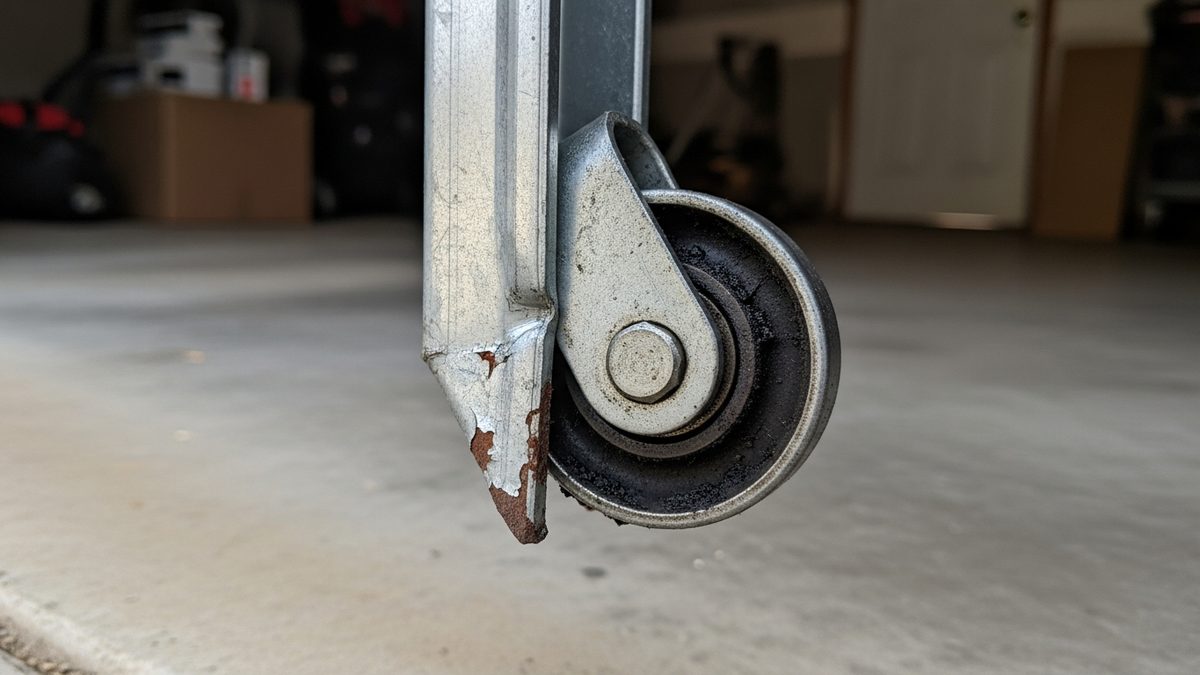
A garage door that has come off its tracks is not a "push it back and see what happens" situation. It is one of the most physically dangerous garage door problems a homeowner can face, and the wrong move can cause the door to fall, a cable to snap, or a torsion spring — wound under hundreds of pounds of force — to release suddenly. This guide explains what causes a door to go off track, what you can safely do right now, and why this repair almost always belongs to a professional.
What causes a garage door to go off track?
Doors don't usually slip their tracks for no reason. One of these is almost always behind it.
-
Hit by a vehicle. This is the most abrupt cause. If a car clips the door while pulling in or out, the impact can bend a track, knock a roller out of its channel, and throw the entire door out of alignment in a second.
-
Broken cable. Lift cables run from the bottom corners of the door up through a series of pulleys to the spring system. When a cable snaps or frays through, one side of the door loses its support and the door tilts. A tilted door will quickly bind against the track and pop rollers off their rails. This is especially dangerous if it happens with the door in the up position.
-
Worn or broken rollers. Rollers are the small wheels — steel or nylon — that ride inside the track on both sides of the door. A roller stem that cracks, a wheel that chips, or a bearing that seizes can all cause the roller to skip out of the track channel. Old steel rollers are the most common culprit on doors that have never been serviced.
-
Broken torsion or extension spring. When a spring breaks, the door goes from balanced to extremely heavy in an instant. If the opener is running when the spring goes, the unbalanced force can yank the door sideways and pull rollers off track. For a full explanation of spring failure, see our guide on a broken garage door spring.
-
Bent or misaligned track. Tracks can bend gradually from repeated impacts — a bicycle handlebar nudged against the track a hundred times, a ladder that got bumped, or even years of thermal expansion and contraction. A track that has drifted even a quarter inch out of plumb can cause rollers to bind and eventually jump the channel.
-
Obstruction caught between door and track. A pebble, a piece of wood trim, a broken hinge — any small object that gets caught in the track channel can lever a roller right out.
Stop using the door immediately
This is the most important thing you can read on this page: stop using the door. Do not press the remote. Do not try to push it by hand. Do not run it through the opener to see if it "works itself out."
Here's why. A standard residential garage door weighs between 130 and 400 pounds. When it is properly on track, the spring system counterbalances that weight so the door feels light. When the door is off track, that balance is gone — partially or completely. A door that is hanging off one side of the track, or resting at an angle, can fall forward or drop straight down with no warning. If you or anyone else is standing underneath or nearby, the result can be a crushing injury.
The torsion spring above the door — if present — is wound under extreme tension. It stores the mechanical energy needed to lift that heavy door. If the spring breaks or a cable snaps while you're trying to manually wrestle the door back into position, the sudden energy release can cause serious injuries.
Leave the door where it is. If it is partway open, that is fine for now. Do not try to force it up or down.
Temporary safety steps you can take right now
These steps do not fix the problem — they just reduce the risk until a technician arrives.
-
Unplug the opener. Pull the cord from the outlet or flip the circuit breaker for the garage. This prevents you or anyone else from accidentally pressing a remote and running the motor while the door is in an unsafe position.
-
Lock the manual release cord in place. If you haven't touched the red emergency cord, leave it alone. If it has already been pulled to disconnect the trolley, do not re-engage it — that can cause a freed door to suddenly move.
-
Put something visible in front of the door. If the door is stuck partially open, place a trash can, a cardboard sign, or anything that makes it obvious to family members that this door should not be used.
-
Keep people out of the garage. Until the door is repaired, treat the entire door area as off-limits, especially for children.
-
Call a technician. An off-track door is considered an urgent repair by most garage door companies. Many offer same-day or emergency service.
Safety first
- Do not put your hands on the rollers or track while the door is off track. If a cable or spring lets go while your fingers are nearby, the consequences can be severe.
- Torsion springs and lift cables are professional-only components. These parts store enormous energy. Touching them without the proper tools, training, and winding bars is how serious injuries happen. CPSC data has long documented injuries from improper DIY garage door repairs.
- An off-track door can fall. Especially if a cable is broken or partially supporting the weight, the door is not stable. Stay clear of the path beneath it.
- Do not force the opener motor to run. Running a motor against an off-track door can strip the drive gear, bend the door panels, and damage the opener — turning a $200 repair into a $600 one.
Why this is generally a pro repair
Putting a garage door back on track sounds simple on paper — slide the roller back into the channel, tighten some hardware, done. In practice, it involves:
- Relieving spring tension safely. Before a technician can work on the door, the spring tension usually needs to be released or carefully managed. This requires winding bars and training.
- Diagnosing the underlying cause. If worn rollers caused the problem, they need to be replaced — all of them, not just the one that popped out. If a cable broke, it needs to be replaced before the spring tension is restored.
- Realigning and adjusting the track. A bent track needs to be hammered back to plumb, measured, and secured. An eyeballed adjustment that is off by even a small amount will cause the same problem to come back within weeks.
- Testing the full travel and force. After the repair, the technician will run the door up and down multiple times and verify the opener's force and limit settings are correct.
For the limited cases where a door has simply slipped a roller with no broken parts involved — a light door, a single roller out on a level section of track, with the door still balanced and no spring issues — an experienced homeowner might be able to guide it back in. But even in that best-case scenario, you need to be certain no cable or spring damage is involved first, and that is difficult to assess without experience.
When in doubt — and with an off-track door, most homeowners should be in doubt — call a pro.
When to call a pro
Call immediately if:
- The door is visibly twisted, hanging at an angle, or one side is lower than the other.
- You can see a broken or loose cable.
- You heard a loud bang before the door went off track (broken spring).
- The door is stuck partially open and you cannot secure your garage.
- Any spring or cable component looks frayed, kinked, or snapped.
Honestly? Call for any off-track door. The cost of a service call is far less than the cost of an emergency room visit or a door that falls and damages your car.
What it typically costs (2025–2026)
| Repair | Typical range |
|---|---|
| Re-track a door (no broken parts) | $130–$200 |
| Re-track with bent track repair | $200–$350 |
| Roller replacement (full set, installed) | $150–$250 |
| Cable replacement (one cable, installed) | $150–$250 |
| Spring replacement (torsion, installed) | $250–$450 |
| Full door panel replacement | $150–$400 per panel |
Sources: Angi, 2026; This Old House, 2026; HomeAdvisor, 2025.
Be cautious of quotes that seem extremely low — a $50 or $75 "re-track" offer sometimes leads to a high-pressure upsell once the technician is in your garage. Get at least two quotes.
Common mistakes
- Trying to force the door back on track yourself. Without releasing spring tension properly, this is dangerous and often makes the damage worse.
- Running the opener to try to "reset" the door. The motor will push or pull against the off-track panel, bending it and potentially stripping the drive.
- Fixing only the visible symptom. If you re-track the door but don't replace the worn roller that caused it to slip, the door will go off track again.
- Ignoring a grinding noise for weeks before the failure. Most off-track events are preceded by warning signs: scraping sounds, slight binding, or a door that feels heavier on one side. Catching a worn roller before it fails is a $150–$250 fix; fixing a door that fell is much more.
- Using the door with a broken cable. A door with one good cable and one broken one puts all the load on the intact cable and on the hardware. It can fail at any time.
How to prevent it
- Have the door professionally inspected once a year. A technician can spot worn rollers, fraying cables, and loose hardware before they cause a failure. Many companies offer annual maintenance plans.
- Replace steel rollers with nylon rollers proactively. Nylon rollers last longer, run quieter, and cause less wear on the track. A full roller swap runs $150–$250 installed and can add years to the life of your door and track.
- Lubricate rollers and hinges every six months. A silicone spray or white lithium grease keeps components moving smoothly and reduces the wear that eventually causes failures (Clopay).
- Test the door balance annually. Disconnect the opener, lift the door by hand to about waist height, and release it. A well-balanced door should stay roughly in place. One that falls or shoots up needs spring adjustment from a pro.
- Be careful when pulling into a tight garage. Many off-track incidents start with a bumped door panel. Consider adding rubber bumpers or a parking stop to guide your car in.
FAQ
Can a garage door fall off its track and hit someone? Yes. A door that is off track and no longer balanced by the spring system can drop suddenly, especially if a cable is broken. This is why it's critical to stay clear of the door's path until a technician repairs it.
Can I sleep with my garage door off track? If the door is fully closed and not moving, you can leave it overnight while you wait for a technician. Unplug the opener so it can't be accidentally activated. If the door is stuck open, your garage is unsecured — call a 24-hour garage door service.
Is an off-track garage door covered by homeowners insurance? Sometimes. If the damage was caused by a covered event — such as a car backing into the door — your homeowners insurance or auto insurance may cover part of the repair. Damage from normal wear and tear is generally not covered. Check with your insurer.
How long does an off-track repair take? For a simple re-track with no broken parts, a technician usually finishes in 30 to 60 minutes. If rollers, cables, or springs need to be replaced too, plan for one to two hours.
My door went off track after a car hit it. Is the door ruined? Not necessarily. If the impact only bent a section of track and popped a roller, the repair may be straightforward. If a door panel itself is bent or cracked, that panel may need to be replaced. A technician will be able to tell you which panels — if any — are beyond repair.
Get a free quote
Got a door off track? Don't risk it. Local Service Group connects homeowners with vetted garage door professionals. Request a free, no-obligation quote today.
Sources
- https://www.cpsc.gov/Newsroom/News-Releases/1993/Safety-Commission-Publishes-Final-Rules-For-Automatic-Garage-Door-Openers
- https://www.clopaydoor.com/residential/support/steel-garage-doors-care-and-maintenance
- https://www.angi.com/articles/most-common-garage-door-repair-costs.htm
- https://www.thisoldhouse.com/garages/garage-door-repair-cost
- https://www.homeadvisor.com/cost/garages/repair-a-garage-door/
- https://www.angi.com/articles/how-much-should-garage-door-spring-replacement-cost.htm
- https://www.angi.com/articles/garage-door-roller-replacement-cost.htm
Disclaimer
The information on this page is provided for general educational purposes only and is offered "as is" and "as available," without warranties of any kind, whether express or implied — including, without limitation, any warranties of accuracy, completeness, reliability, merchantability, or fitness for a particular purpose. It is not professional advice and is not a substitute for inspection, diagnosis, or repair by a licensed, qualified professional.
Home systems involving gas, electricity, water, refrigerant, fire, or structural components can be hazardous, and requirements vary by local code and jurisdiction. Any inspection, diagnosis, repair, installation, or other action referenced on this page should be performed by a licensed professional. You should not rely on this content to perform such work yourself. To the fullest extent permitted by law, [Company Name] and its owners, employees, and contributors assume no responsibility or liability for any injury, death, property damage, or other loss arising out of or in connection with the use of, or reliance on, this information.
If you smell gas or suspect a carbon monoxide leak, leave the area immediately and call 911 or your gas utility from a safe location.