Furnace Repair Cost Guide: What You'll Actually Pay
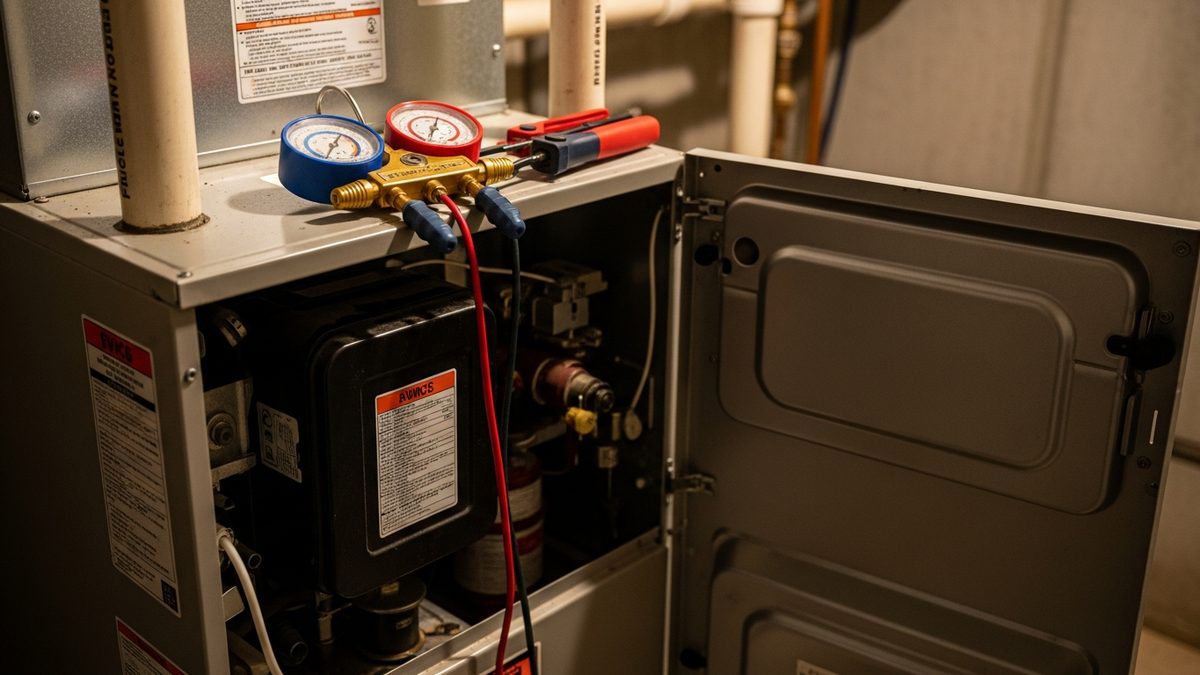
Your furnace quit in the middle of January. You want one answer: how much is this going to cost? The honest answer is "it depends," but that phrase does not pay your heating bill. This guide gives you real price ranges for the most common furnace repairs, a quick table you can scan, tips for getting a fair quote, and a straightforward way to think about repair versus replacement.
Most Likely Reasons You Need a Repair (and What Each Costs)
Before diving into dollars, it helps to know what tends to break and how often. Licensed HVAC technicians report that a handful of components account for the vast majority of service calls.
1. Ignitor (hot surface or spark ignitor) The ignitor is the part that lights the burners. It is made of silicon carbide or silicon nitride and cracks over time from repeated heating and cooling. It is one of the most common furnace failures — and one of the cheapest to fix.
- Parts: $15–$60
- Labor: $75–$150
- Typical total: $100–$250
2. Flame sensor The flame sensor is a small rod that confirms the burners are actually lit. When it gets coated in residue, the control board thinks there is no flame and shuts the furnace off after a few seconds. Cleaning the sensor is often a $75–$125 service call. Replacing it runs $80–$200.
3. Thermocouple or thermopile (older gas furnaces with pilot lights) These devices keep the pilot valve open when a flame is detected. A failed thermocouple is a frequent cause of a pilot that will not stay lit.
- Typical total: $75–$200
4. Draft inducer motor The inducer motor pulls combustion gases out of the heat exchanger before the burners ignite. When it fails, most furnaces refuse to start at all as a safety precaution. It is one of the pricier repairs.
- Parts: $75–$300
- Labor: $100–$200
- Typical total: $200–$600
5. Blower motor The blower circulates heated air through your ducts. A failed blower motor means the furnace may heat but no warm air reaches your rooms.
- Parts: $75–$250
- Labor: $100–$200
- Typical total: $200–$600
6. Control board (circuit board) The control board is the furnace's "brain." It coordinates ignition, the draft inducer, blower speed, and safety shutoffs. When it fails, the symptoms can look like almost any other problem, which is why diagnosis matters.
- Parts: $80–$400
- Labor: $100–$250
- Typical total: $200–$700
7. Heat exchanger A cracked heat exchanger is the most serious furnace problem. The heat exchanger separates combustion gases from the air you breathe. The U.S. Department of Energy notes that furnace heat exchangers can leak combustion gases — including carbon monoxide — into living spaces when cracked. Repair is rarely practical because replacing a heat exchanger typically costs as much as a new furnace.
- Replacement cost: $500–$2,000+ (often triggers full furnace replacement)
8. Gas valve A failed gas valve means no fuel reaches the burners. This is a job for a licensed professional only — never attempt gas valve work yourself.
- Typical total: $200–$600
9. Capacitor (on the blower motor) A capacitor helps the blower motor start. It is a relatively inexpensive component.
- Typical total: $75–$200
10. Air filter (DIY) A severely clogged filter is the most common cause of reduced heat and overheating shutdowns. Replacing a filter yourself costs $5–$30 and takes two minutes. Check this before calling anyone. See our post on if your furnace won't turn on for filter-check steps.
Quick Reference Price Table
| Repair | Typical Total (2025–2026) |
|---|---|
| Filter replacement (DIY) | $5–$30 |
| Flame sensor cleaning | $75–$125 |
| Thermocouple replacement | $75–$200 |
| Ignitor replacement | $100–$250 |
| Capacitor replacement | $75–$200 |
| Gas valve replacement | $200–$600 |
| Blower motor replacement | $200–$600 |
| Draft inducer motor | $200–$600 |
| Control board replacement | $200–$700 |
| Heat exchanger replacement | $500–$2,000+ |
| Full furnace replacement | $2,500–$7,500+ |
Troubleshoot It Yourself (Safely)
Before spending money on a technician, run through these free checks:
-
Check the air filter. A clogged filter causes overheating and auto-shutoff. Locate the filter slot (usually at the return air intake or inside the blower compartment), slide it out, and hold it up to light. If you cannot see light through it, replace it.
-
Check the thermostat. Make sure it is set to HEAT, the fan to AUTO, and the set temperature is above the current room temperature. Replace batteries if the display is dim.
-
Check the power switch. Most furnaces have a wall switch that looks like a light switch, usually near the unit or at the top of the basement stairs. Make sure it is on.
-
Check the breaker. A tripped breaker will cut power to the furnace entirely. Reset it once. If it trips again, call an electrician before restarting the furnace.
-
Check the furnace door. Many furnaces have a safety switch on the front panel door. If the door is slightly ajar, the furnace will not run.
Safety First
Carbon monoxide is the most serious risk associated with furnace problems. The CDC reports that more than 400 Americans die from unintentional CO poisoning each year, and more than 100,000 visit emergency rooms. A cracked heat exchanger, blocked flue, or failed draft inducer can all allow CO to enter your home.
Install CO detectors on every level of your home and outside sleeping areas, per CPSC guidelines. If your CO alarm sounds, leave the home immediately and call 911 from outside — do not stop to investigate.
Never attempt to repair gas valves, gas lines, flue pipes, or heat exchangers yourself.
When to Call a Licensed Pro
Call a licensed HVAC technician when:
- The furnace will not run after the basic checks above
- You smell gas — leave the home and call your gas utility first
- A CO alarm has activated
- The furnace is cycling on and off every few minutes (short-cycling)
- You hear loud banging, scraping, or rattling noises
- Any repair involves the gas valve, heat exchanger, flue, or refrigerant
A licensed technician should carry a state HVAC license and EPA Section 608 certification where refrigerant is involved.
Repair vs. Replace: The Basic Rule
HVAC industry guidance uses a simple formula: multiply the furnace's age in years by the repair cost. If that number exceeds $5,000, replacement is usually the smarter financial choice.
Example: A 14-year-old furnace needs a $400 repair. 14 x $400 = $5,600. Leaning toward replacement makes sense.
Also factor in efficiency. The U.S. Department of Energy notes that older furnaces may have AFUE ratings as low as 56–70%, while modern high-efficiency units reach 90–98.5% AFUE. Upgrading from a 60% to a 95% AFUE unit can cut your heating fuel bill nearly in half.
A full furnace replacement (gas, mid-efficiency) typically runs $2,500–$5,000 installed. High-efficiency systems and complex installs can reach $5,000–$7,500 or more.
Common Mistakes Homeowners Make
- Skipping the filter check. Dozens of service calls per year turn out to be nothing but a clogged filter.
- Resetting the furnace multiple times without finding the cause. Multiple resets without fixing the underlying problem can damage the control board.
- Getting only one quote. For any repair over $300, it is worth a second opinion.
- Repairing a furnace that is more than 18–20 years old. Parts availability shrinks and efficiency losses mount.
- Assuming a loud bang is harmless. A bang or boom at startup can signal delayed ignition — a real safety concern.
How to Prevent Costly Repairs
- Change the filter every 1–3 months (more often with pets or dusty conditions).
- Schedule annual tune-ups before heating season. The CDC recommends having gas and oil heating systems serviced by a qualified technician every year.
- Keep vents and registers clear of furniture, rugs, and drapes.
- Clear the area around the outdoor exhaust and intake pipes — snow, ice, and debris can block them and trigger safety shutdowns.
FAQ
How much does a furnace tune-up cost? Annual maintenance visits typically run $75–$150. Some HVAC companies offer service contracts that include a tune-up plus discounted repair rates, usually $150–$300 per year.
Will my home warranty cover furnace repairs? Many home warranty plans cover furnace components, but coverage varies. Read your contract carefully — some plans exclude pre-existing conditions or specific parts.
Is it cheaper to repair or replace a furnace? For furnaces under 10 years old with a repair under $500, repair usually wins. For furnaces over 15 years old or with major component failures (heat exchanger, control board), replacement is often the better long-term value.
Can I negotiate the repair price? Yes. Ask for an itemized estimate showing parts and labor separately. You can price parts independently at HVAC supply stores to verify markup. Some companies will match competitors' quotes for the same repair.
What should I do if the technician recommends replacing the furnace? Ask to see the specific failed part and understand why repair is not viable. A second opinion is always reasonable for any recommendation that costs over $1,000.
Ready to Get a Free Quote?
A qualified local HVAC technician can diagnose your furnace quickly and give you an accurate repair estimate. Use our free quote tool to connect with licensed pros in your area.
Sources
- U.S. Department of Energy — Furnaces and Boilers: https://www.energy.gov/energysaver/furnaces-and-boilers
- U.S. Department of Energy — Gas-Fired Boilers and Furnaces: https://www.energy.gov/energysaver/gas-fired-boilers-and-furnaces
- CDC — Carbon Monoxide Poisoning Basics: https://www.cdc.gov/carbon-monoxide/about/index.html
- U.S. Consumer Product Safety Commission — Carbon Monoxide Information Center: https://www.cpsc.gov/Safety-Education/Safety-Education-Centers/Carbon-Monoxide-Information-Center
- ENERGY STAR — Certified Furnaces: https://www.energystar.gov/products/heating_cooling/furnaces
Disclaimer
The information on this page is provided for general educational purposes only and is offered "as is" and "as available," without warranties of any kind, whether express or implied — including, without limitation, any warranties of accuracy, completeness, reliability, merchantability, or fitness for a particular purpose. It is not professional advice and is not a substitute for inspection, diagnosis, or repair by a licensed, qualified professional.
Home systems involving gas, electricity, water, refrigerant, fire, or structural components can be hazardous, and requirements vary by local code and jurisdiction. Any inspection, diagnosis, repair, installation, or other action referenced on this page should be performed by a licensed professional. You should not rely on this content to perform such work yourself. To the fullest extent permitted by law, [Company Name] and its owners, employees, and contributors assume no responsibility or liability for any injury, death, property damage, or other loss arising out of or in connection with the use of, or reliance on, this information.
If you smell gas or suspect a carbon monoxide leak, leave the area immediately and call 911 or your gas utility from a safe location.