Dryer Takes Forever to Dry? Clogged Vent Warning Signs (and Fire Risk)
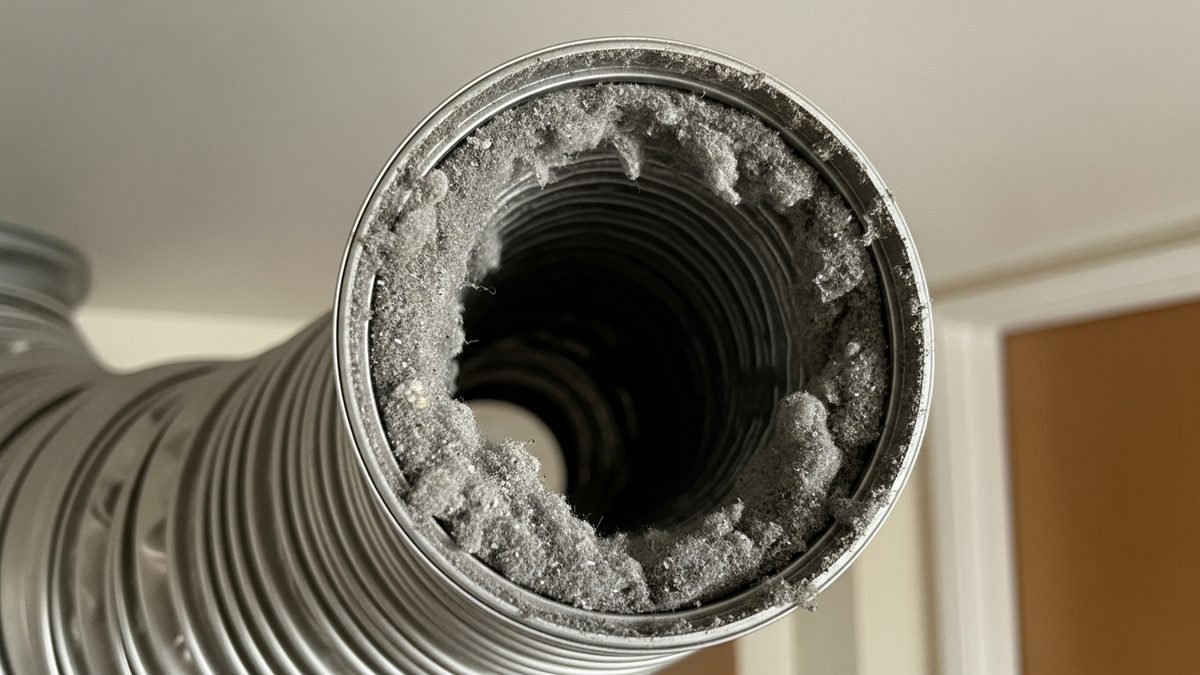
If your dryer used to finish a load in 40 to 45 minutes and now it takes 80 minutes — or two full cycles — something has changed. The most common cause is a clogged or restricted exhaust vent, and this is not just an inconvenience. It is a documented fire hazard that causes thousands of house fires in the United States every year.
This guide covers why a clogged vent makes your dryer slow, the warning signs you should know, how to clean the vent yourself, and when to call a professional.
The fire safety reality
The numbers from government and fire safety agencies are clear:
The U.S. Consumer Product Safety Commission (CPSC) reports that clothes dryers cause approximately 15,500 home fires per year in the United States, resulting in roughly 10 deaths, 310 injuries, and $84 million in property damage annually.
According to the National Fire Protection Association (NFPA), failure to clean the dryer is the leading cause of dryer fires, responsible for about 32 percent of all clothes dryer fires. Lint is highly flammable — a single spark in a vent packed with lint can start a fire inside the duct that spreads to the wall and the rest of the house.
The U.S. Department of Energy specifically warns: "Periodically inspect your dryer vent to ensure it is not blocked. This will save energy and may prevent a fire."
A slow dryer is not just a nuisance. It is often the first warning sign that the vent is restricted enough to create an overheating risk.
Most likely causes of slow drying
1. Clogged or lint-filled exhaust vent — by far the most common cause Every load of laundry sheds lint. Your lint screen catches most of it, but fine lint particles pass through and accumulate along the entire length of the exhaust duct — inside elbows, along horizontal runs, and at the exterior vent cap. Over one to three years of normal use, this buildup can restrict airflow significantly. The dryer runs hotter and longer trying to push moisture out, drying times stretch, and the thermal fuse may eventually blow. According to NFPA data, 34 percent of dryer fires stem specifically from lint buildup inside the vent.
2. Crushed, kinked, or too-long vent hose The flexible foil or vinyl duct that many installers use behind dryers gets crushed when the machine is pushed against the wall. Even a moderate kink cuts airflow dramatically. Additionally, vent runs longer than about 25 feet (or with multiple 90-degree elbows) reduce airflow below what the dryer needs to operate efficiently. The DOE recommends using rigid or semi-rigid sheet metal duct rather than flexible foil or vinyl.
3. Blocked exterior vent cap The vent hood on the exterior of your house has a flap that opens when air is flowing. Lint, bird nests, wasp nests, and debris can block this cap completely. When the cap won't open, exhaust air has nowhere to go and the dryer can't remove moisture from the drum.
4. Overloaded dryer A single large wet item — a down comforter, a sleeping bag, a pile of heavy jeans — creates too dense a load for air to circulate through. Even a clean, clear vent can't dry an overloaded drum efficiently.
5. Worn drum seals or felt gaskets The front and rear drum seals keep hot air inside the drum rather than leaking into the cabinet. When these seals wear out, heated air bypasses the load and the drum temperature drops. Clothes stay damp even after a full cycle.
6. Failing heating element or thermostat A partially failing heating element (in an electric dryer) may still produce some heat — just not enough to dry clothes efficiently. Similarly, a cycling thermostat that cuts out too early will run the dryer cool. See our related post: dryer not heating for more detail on heat-related failures.
Warning signs your vent is clogged
Watch for these signals:
- Drying times that have gradually gotten longer over the past few months
- Clothes that feel very hot to the touch at the end of a cycle but are still damp
- The dryer's exterior housing feels unusually hot
- The laundry room itself feels humid and steamy while the dryer runs
- A burning or musty smell when the dryer is running — lint burning in the duct
- The lint screen collects much less lint than it used to (because lint is backing up in the duct instead of making it to the screen)
- The exterior vent flap doesn't open during a cycle, or opens barely
Any one of these signs warrants cleaning the vent before running another load.
How to clean the dryer vent yourself
This is a safe and manageable DIY task for most homeowners with a dryer vent cleaning kit (available at hardware stores for $20–$40).
What you'll need: A dryer vent cleaning kit with flexible brush rods, a vacuum with a hose attachment, a screwdriver
- Unplug the dryer. For a gas dryer, also close the gas supply valve on the line behind the machine.
- Pull the dryer away from the wall. Disconnect the vent duct from the back of the dryer. On most machines this is held by a clamp or a collar you can unscrew or squeeze.
- Vacuum the duct connection on the dryer. Reach into the dryer's exhaust outlet with the vacuum hose and remove any lint you can reach.
- Run the cleaning brush through the duct. Attach the brush to the first rod, insert it into the duct, rotate it as you push forward, and add additional rods to extend your reach. Work from inside the house toward the exterior if possible.
- Go outside and clean the exterior vent cap. Remove any visible lint, debris, or nest material from the hood. Make sure the flap opens and closes freely.
- Vacuum out the loosened debris from both ends of the duct.
- Reconnect the duct, push the dryer back, and turn the gas and power back on. Run a short timed heat cycle and stand outside to confirm strong airflow from the exterior vent.
Clean the entire vent system at least once a year. Households with larger families or pets may need to do it every six months.
Safety first
- Never run the dryer with a damaged or disconnected vent hose — exhausting hot, moist air inside the home creates mold risk and carbon monoxide risk on gas dryers.
- Replace plastic or thin foil flex duct with rigid or semi-rigid sheet metal duct. Plastic and standard foil duct can trap lint in ripples and are more likely to sag and kink.
- Do not vent a dryer into an attic, wall cavity, or crawl space. All dryers must vent to the exterior. Indoor venting is a fire and mold hazard regardless of what lint trap you attach.
- According to NFPA data, 78 percent of dryer fires involve electric dryers. If you have an electric dryer, do not assume you're less at risk for vent-related fires.
When to call a professional vent-cleaning service
Some vent installations require a professional:
- Very long vent runs (over 25 feet) are difficult to clean thoroughly with a standard consumer kit.
- Vents that go through the roof require working at height and using longer rod sets — most homeowners should leave this to a pro.
- Multiple 90-degree elbows make it hard to push a brush all the way through without the rods buckling or disconnecting.
- If you find a disconnected duct section in the wall or attic — this means your dryer has been exhausting lint directly into your home's structure. This requires a professional assessment.
- If the dryer remains slow after a thorough cleaning — a technician can check the blower wheel, drum seals, and heating components.
What it typically costs
National averages for 2025–2026:
- Professional dryer vent cleaning: $80–$175 for a standard vent run; more for long or complex runs
- Replacing flexible duct with rigid duct: $100–$250 depending on the length of the run and wall access
- Consumer dryer vent cleaning kit (DIY): $20–$40 at hardware stores
- Dryer vent cap replacement: $15–$50 part; $75–$150 installed
Common mistakes to avoid
- Cleaning only the lint screen and assuming that's enough. The lint screen catches the visible stuff, but the duct accumulates fine lint with every load. The screen is a daily task; the full duct needs annual cleaning.
- Using plastic flex duct behind the dryer. It collapses, sags, and holds lint. Use semi-rigid aluminum.
- Assuming a short vent run can't clog. Even a 4-foot run with one elbow accumulates lint over time.
- Ignoring a slow dryer for months. Restricted airflow strains the heating element and motor, shortening the life of the machine and increasing fire risk.
How to prevent future clogs
- Clean the lint screen before every load. Never run a load with a screen so clogged air can barely pass through.
- Clean the lint trap housing (the slot the screen slides into) with a vacuum crevice tool every month or two — lint builds up in the slot below the screen.
- Have the full duct cleaned annually by a professional or do it yourself with a cleaning kit.
- Use only rigid or semi-rigid metal duct for your dryer exhaust, and keep the run as short and straight as possible.
- Once a month, go outside and observe the vent flap while the dryer runs. If you can't feel or see strong airflow, clean the vent.
Frequently asked questions
How often should I have my dryer vent professionally cleaned? Once a year is the standard recommendation for most households. If you do large amounts of laundry, have pets that shed, or have a very long vent run, twice a year is better.
How can I tell where my dryer vent exits the house? Start at the dryer, trace the duct as far as you can see it, and then check the exterior walls and roof for a dryer vent hood. The hood is usually a rectangular or round metal cap with a flap. It's most commonly on an exterior wall near the laundry room.
My dryer started beeping or showing an error code that says "check vent." What does that mean? Many newer dryers from brands like Samsung, LG, and Whirlpool have sensors that detect reduced airflow and display a vent-check alert. Take it seriously and clean the full duct before running another load.
Can a clogged vent damage the dryer? Yes. Running against restricted airflow causes the dryer to overheat repeatedly. This blows thermal fuses, burns out heating elements, and stresses the motor — all repairs that cost more than an annual vent cleaning.
Is it safe to run the dryer once more before I clean the vent? If you're seeing warning signs like heat-but-damp clothes, a burning smell, or a hot dryer exterior, the safest answer is no. Those signs indicate the dryer is already overheating. Clean the vent first.
Ready for a clean, fast-drying dryer?
If your vent is inaccessible or the dryer is still slow after cleaning, a trained technician can assess the full system. Contact Local Service Group for a free quote from a qualified appliance pro in your area.
Sources
- CPSC — Clothes Dryer Fire Safety (PDF): https://www.cpsc.gov/s3fs-public/5022.pdf
- NFPA — Home Fires Involving Clothes Dryers and Washing Machines: https://www.nfpa.org/education-and-research/research/nfpa-research/fire-statistical-reports/home-fires-involving-clothes-dryers-and-washing-machines
- U.S. Department of Energy — Laundry Energy Saver Tips: https://www.energy.gov/energysaver/laundry
- U.S. Department of Energy — Dryer Venting Guide (PDF): https://www.energy.gov/sites/prod/files/2016/06/f32/Dryer_Venting.pdf
- USFA/FEMA — Clothes Dryer Fires in Residential Buildings: https://www.usfa.fema.gov/downloads/pdf/statistics/v13i7.pdf
- Pure Air — Clogged Dryer Vents Contribute to 34% of All Dryer Fires: https://www.pureairllc.com/clogged-dryer-vents-contribute-to-34-of-all-dryer-fires
Disclaimer
The information on this page is provided for general educational purposes only and is offered "as is" and "as available," without warranties of any kind, whether express or implied — including, without limitation, any warranties of accuracy, completeness, reliability, merchantability, or fitness for a particular purpose. It is not professional advice and is not a substitute for inspection, diagnosis, or repair by a licensed, qualified professional.
Home systems involving gas, electricity, water, refrigerant, fire, or structural components can be hazardous, and requirements vary by local code and jurisdiction. Any inspection, diagnosis, repair, installation, or other action referenced on this page should be performed by a licensed professional. You should not rely on this content to perform such work yourself. To the fullest extent permitted by law, [Company Name] and its owners, employees, and contributors assume no responsibility or liability for any injury, death, property damage, or other loss arising out of or in connection with the use of, or reliance on, this information.
If you smell gas or suspect a carbon monoxide leak, leave the area immediately and call 911 or your gas utility from a safe location.