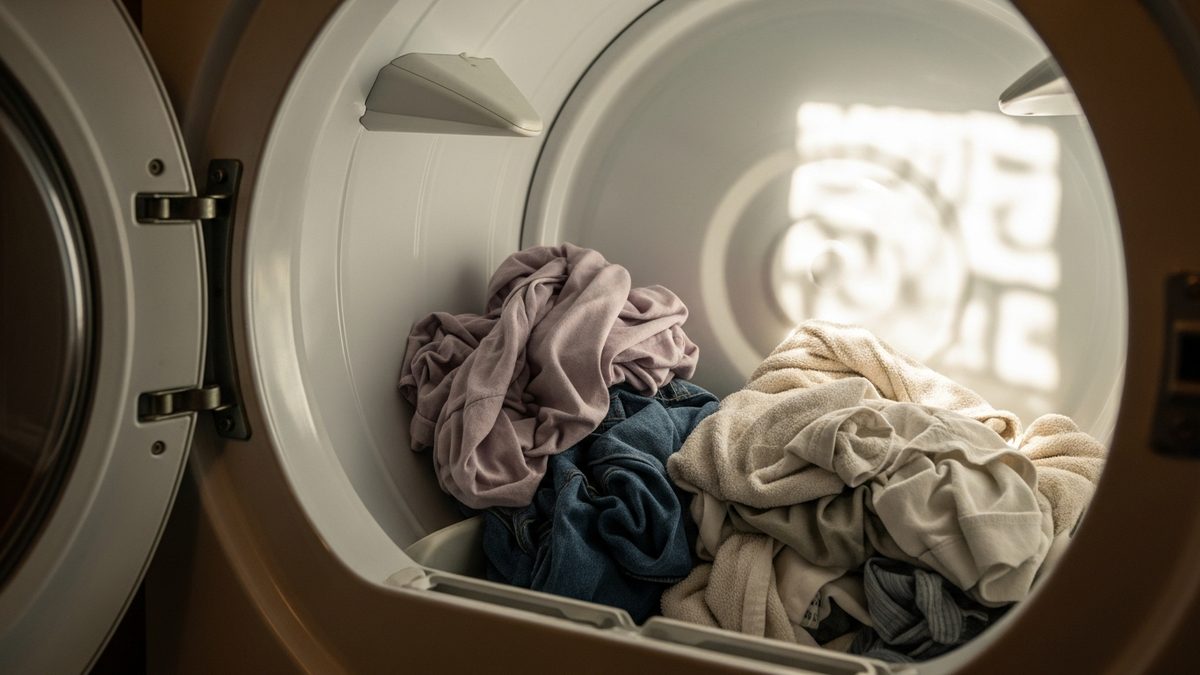
The drum is spinning, you can hear the motor running, the timer is counting down — but when you check mid-cycle, the clothes are still cold and damp. A dryer that runs without heating is one of the most frustrating appliance failures because everything seems to be working except the one thing that matters.
The good news: a no-heat dryer usually has a single specific part that's failed, and several of them are straightforward to diagnose. This guide covers every likely cause for both electric and gas dryers, what you can safely check yourself, and what repairs typically cost.
Most likely causes
1. Blown thermal fuse (both electric and gas) The thermal fuse is a one-time safety device — typically a small, inexpensive part mounted on the exhaust duct or blower housing — that permanently opens and cuts power to the heating circuit if the dryer overheats. Once it blows, it stays blown. The dryer motor and drum keep running, but no heat. A blown thermal fuse is the single most common reason a dryer stops heating. And here's the critical detail: the fuse almost always blows because something caused the dryer to overheat — usually a clogged exhaust vent. Replacing just the fuse without clearing the vent means the new fuse will fail too, often within weeks. See also: dryer takes forever to dry for more on vent blockages.
2. Burned-out heating element (electric dryers) Electric dryers use a coiled wire heating element — similar to a toaster element — to generate heat. These elements break over time, especially if the dryer has been running against restricted airflow. When the element burns out, the dryer blows room-temperature air. You can often test the element for continuity with an inexpensive multimeter. A burned-out element shows no continuity.
3. Gas igniter or flame sensor failure (gas dryers) Gas dryers heat air by igniting a gas burner inside the drum housing. The igniter — a thin ceramic or silicon carbide rod — glows red-hot to light the burner. The radiant flame sensor (sometimes called the igniter sensor) monitors whether the burner has actually lit; if it doesn't detect a flame within a set time, it shuts the gas off as a safety measure. When the igniter weakens and can no longer draw enough current to open the gas valve, or when the flame sensor fails, the burner never lights. The drum spins and air circulates, but it never gets warm.
4. Cycling thermostat or high-limit thermostat failure Dryers use two or more thermostats to regulate drum temperature. The cycling thermostat turns the heating element or burner on and off to maintain the set temperature. The high-limit thermostat cuts power to the heating circuit if things get too hot. Either one can fail in the open position — meaning the circuit stays permanently broken — and kill the heat without blowing a fuse.
5. Tripped or partially tripped circuit breaker (electric dryers only) This is unique to electric dryers and catches many people off guard. Electric dryers run on 240 volts, which is provided by two separate 120-volt legs wired together through a double-pole circuit breaker. The motor that turns the drum only needs one of those 120-volt legs to run. The heating element, however, needs the full 240 volts — both legs. If one leg of the double-pole breaker trips (which can happen quietly, without the breaker handle moving fully to the "off" position), the drum keeps spinning normally but the heating element gets zero power. The machine sounds completely normal but produces no heat. Always check the breaker first before replacing any parts.
6. Control board failure On modern electronic dryers, the main control board manages every function including the heating circuit. A failed relay or burned trace on the board can prevent the heat from ever turning on. This is a diagnosis-of-exclusion — if the fuse, thermostat, element (or igniter), and breaker all test fine, the control board is the next suspect.
Troubleshoot it yourself (safely)
Always unplug the dryer — or for gas dryers, turn off the gas supply valve — before removing any panels or touching any components.
-
Check the circuit breaker first (electric dryers). Go to your main electrical panel and find the double-pole breaker for the dryer. Push both halves firmly to the OFF position, then back to ON. Even if the breaker doesn't appear tripped, do this first — one leg can trip internally without the handle moving all the way. Run the dryer on a timed-dry heat cycle and check for warmth.
-
Clean the lint filter and inspect the vent. Remove and clean the lint screen. Go outside and find the dryer vent termination (usually on an exterior wall or roof). Confirm there's airflow when the dryer is running. A blocked vent causes overheating, which blows fuses and burns elements. If the exhaust hood flap doesn't open when the dryer runs, your vent is blocked.
-
Test the thermal fuse with a multimeter. Unplug the dryer. Remove the back panel or access panel (varies by model — check your model's service manual or a reliable appliance-repair forum for your specific brand). Locate the thermal fuse on the exhaust duct or blower housing. Disconnect one wire and test the fuse with a multimeter on continuity mode. No continuity means the fuse is blown and must be replaced.
-
Listen for the gas igniter (gas dryers). Plug the dryer back in with the drum panel off (or positioned to observe). Start a heated cycle. After about 30 to 90 seconds, you should see or hear the igniter glow orange-red before the burner lights. If the igniter glows but the burner never lights, the flame sensor or gas valve coils may be the issue. If the igniter never glows, the igniter itself has likely failed.
-
Test the heating element (electric dryers). With the dryer unplugged, disconnect the wires from the heating element terminals and test across the terminals with a multimeter. No continuity means the element is burned out.
Safety first
- Unplug the dryer before any internal inspection. For gas dryers, also close the shutoff valve on the gas supply line before removing panels.
- Never bypass the thermal fuse. Some tutorials suggest jumpering the fuse to test if it's the problem. Do not do this — the fuse exists to prevent a fire. Run the dryer without the protective fuse in place and you risk exactly the kind of overheating event the fuse is there to stop.
- Gas dryers: if you smell gas at any point during troubleshooting, stop immediately. Leave the area, don't use any switches or flames, and call your gas utility company or 911 from outside.
- A clogged dryer vent is a documented fire hazard. According to CPSC data, clothes dryers cause approximately 15,500 fires per year in the United States, and a failure to clean the dryer is the leading cause. If your thermal fuse blew, your vent likely needs professional cleaning before you restore heat.
When to call a licensed pro
Call a technician when:
- The breaker checks out, the thermal fuse is intact, and you still have no heat — component testing beyond that point requires a multimeter and some appliance experience.
- The gas igniter or gas valve coils need replacement — working near gas appliance components is best left to someone trained on gas appliances.
- The control board needs diagnosis or replacement.
- You replaced the thermal fuse but it blew again quickly — this means the vent needs professional cleaning before the dryer is safe to use.
What it typically costs
National averages for 2025–2026:
- Thermal fuse replacement: $100–$175 parts and labor; part alone is $10–$25 DIY
- Heating element replacement: $150–$300 parts and labor
- Gas igniter replacement: $150–$250 parts and labor
- Cycling or high-limit thermostat replacement: $100–$200 parts and labor
- Control board replacement: $200–$400 parts and labor
- Dryer vent cleaning (professional): $80–$175 depending on vent length and accessibility
Common mistakes to avoid
- Replacing the thermal fuse without cleaning the vent. The fuse blew because of overheating. If the vent is still clogged, you're setting up the new fuse — and possibly a fire — by turning the dryer back on.
- Assuming it's the expensive part first. Start with the breaker and the thermal fuse. These are the most common failures and the cheapest to fix.
- Forgetting to check both heating elements. Some dryer models have two heating elements. Testing only one and finding it good doesn't mean the other is fine.
- Running the dryer without the back panel in place. If you opened the dryer for diagnosis, make sure everything is reassembled before running a full cycle — exposed components and wiring are fire and shock hazards.
How to prevent no-heat failures
- Clean the lint screen before every single load — this is the most effective thing you can do.
- Clean the entire exhaust vent path once a year with a dryer vent cleaning kit or a professional service. According to the U.S. Department of Energy, a clean vent also reduces drying time and lowers energy use.
- Never run the dryer with a crushed or kinked flexible vent hose. Replace crushed flexible duct with rigid or semi-rigid sheet metal duct.
- Avoid using very long vent runs with multiple bends — each 90-degree elbow significantly reduces airflow.
Frequently asked questions
My dryer heats for a few minutes then stops. Is that the cycling thermostat? Possibly. A failing cycling thermostat can cut out too early, giving brief heat followed by cold air. It can also be a partial vent blockage that causes the high-limit thermostat to kick in after the dryer gets too warm.
I replaced the thermal fuse but the dryer still won't heat. What's next? If the fuse tested as blown and you replaced it but still no heat, check the high-limit thermostat and the heating element (or gas igniter). On some models, the high-limit thermostat fails at the same time as the thermal fuse.
Gas dryer: the igniter glows orange but the burner doesn't light. What's wrong? If the igniter gets to full orange glow but the gas valve doesn't open, the gas valve coils (also called valve solenoids) are usually the culprit. These are small electromagnets that open the valve; they can fail while the igniter still works fine.
Can I run my electric dryer on 120 volts temporarily? No. A 240-volt electric dryer on a 120-volt circuit won't heat and can damage the motor from running without proper voltage regulation. There's no safe way to run a 240-volt dryer on a standard 120-volt outlet.
How long does a dryer heating element last? Typically 8 to 12 years with normal use. Elements fail sooner when the dryer regularly runs against a restricted vent.
Ready to restore the heat?
If these steps don't identify the problem or the repair requires opening up gas components, a technician can diagnose and fix most no-heat dryers in a single visit. Contact Local Service Group for a free quote from a qualified appliance repair pro in your area.
Sources
- CPSC — Clothes Dryer Fire Safety: https://www.cpsc.gov/s3fs-public/5022.pdf
- U.S. Department of Energy — Laundry Tips: https://www.energy.gov/energysaver/laundry
- Parts Dr — How to Tell if Your Dryer's Thermal Fuse Is Blown: https://partsdr.com/blog/how-to-tell-if-your-dryers-thermal-fuse-is-blown
- Nika Appliance Repair — Dryer Thermal Fuse Guide: https://nikaappliancerepair.com/blog/troubleshooting/dryer-thermal-fuse-guide
- HomeGuide — Appliance Repair Costs 2026: https://homeguide.com/costs/appliance-repair-costs
- ExpressXpert — Dryer Not Heating: 10 Causes and Fixes: https://expressxpert.com/blog/dryer-not-heating
Disclaimer
The information on this page is provided for general educational purposes only and is offered "as is" and "as available," without warranties of any kind, whether express or implied — including, without limitation, any warranties of accuracy, completeness, reliability, merchantability, or fitness for a particular purpose. It is not professional advice and is not a substitute for inspection, diagnosis, or repair by a licensed, qualified professional.
Home systems involving gas, electricity, water, refrigerant, fire, or structural components can be hazardous, and requirements vary by local code and jurisdiction. Any inspection, diagnosis, repair, installation, or other action referenced on this page should be performed by a licensed professional. You should not rely on this content to perform such work yourself. To the fullest extent permitted by law, [Company Name] and its owners, employees, and contributors assume no responsibility or liability for any injury, death, property damage, or other loss arising out of or in connection with the use of, or reliance on, this information.
If you smell gas or suspect a carbon monoxide leak, leave the area immediately and call 911 or your gas utility from a safe location.