Black Mold vs. Mildew: How to Tell the Difference
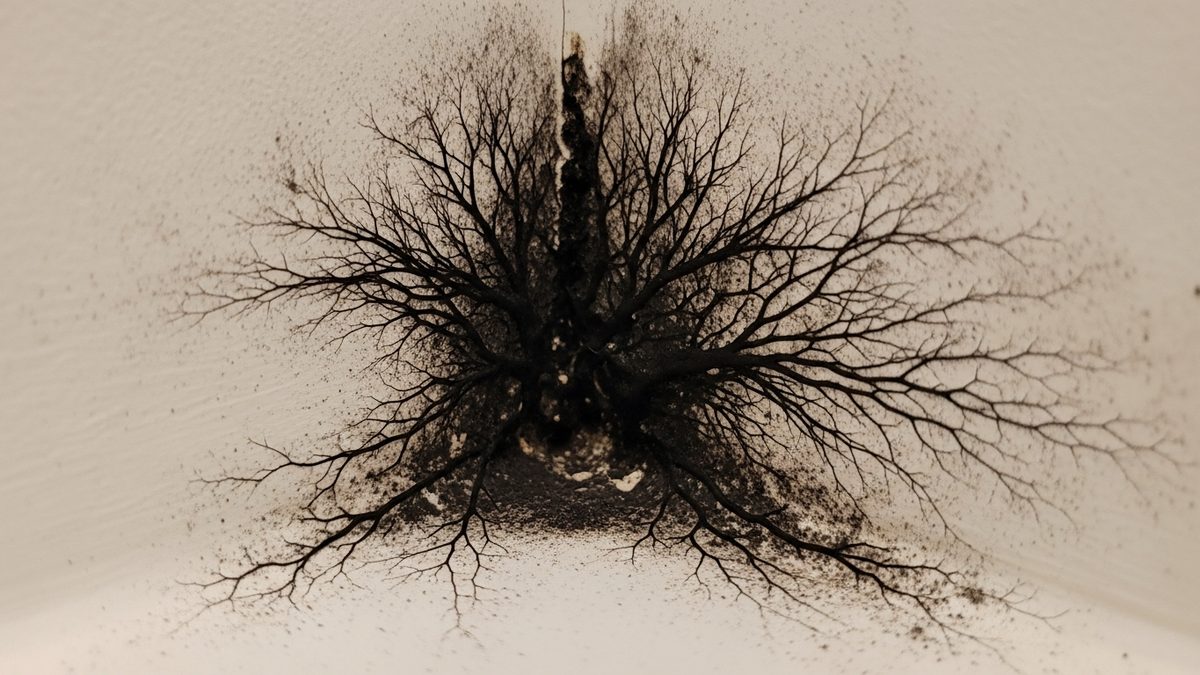
You spot something dark and fuzzy on your bathroom wall. Is it black mold? Mildew? Does it matter?
It does matter—a lot. Mildew is a surface-level nuisance you can usually clean up yourself in an afternoon. Some molds, including the ones loosely called "black mold," can cause serious health problems and require professional remediation. Knowing which one you're looking at helps you decide whether to grab a sponge or pick up the phone.
This guide walks through how each one looks, where each one grows, what the health risks really are, and exactly when the EPA says you should stop doing it yourself.
What Each One Actually Is
Mildew is a type of fungus, but the word is usually used to describe early-stage, flat, powdery growth that stays on the surface of materials. It shows up most often in damp, warm spots—shower grout, window sills, bathroom tile, and on fabrics left wet too long. Mildew is almost always white, gray, or light yellow at first, then may turn brown. It tends to look dusty or powdery rather than fuzzy.
Mold is a broader category of fungus that grows deeper into materials. It comes in many colors—green, white, orange, brown, and yes, black. The term "black mold" most often refers to Stachybotrys chartarum, a dark greenish-black mold that grows on materials with a high cellulose content, like drywall, wood, and ceiling tiles, after prolonged water damage. According to the EPA, "black mold" is not a scientific classification, and many other mold species also appear dark.1
How to Tell Them Apart
Here is a quick side-by-side of the most useful visual and physical clues:
Color. Mildew is white, gray, or light yellow. Mold is often green, black, or dark brown. A spot that is jet black with a slimy or fuzzy texture is more likely to be mold than mildew.
Texture. Mildew is powdery or flat. Mold tends to be fuzzy, raised, or slimy. If you gently press a tissue against it (do not touch with bare skin), mildew will often wipe off cleanly. Mold has deeper roots and may leave a stain behind.
Location. Mildew sticks to surfaces with regular moisture exposure—shower walls, tile grout, window frames, damp fabrics. Mold often appears after a leak, flooding, or long-term hidden moisture—behind drywall, under flooring, in crawl spaces, or inside wall cavities.
Smell. Both can smell musty, but mold typically produces a stronger, earthier odor. If a room smells persistently damp or "off" even after cleaning, mold may be hidden inside walls or under floors.
The bleach test. Apply a drop of household bleach to the spot. If it lightens within a minute or two, it is likely mold or mildew (both are bleachable). If it does not change, it may just be dirt. This test does not help you tell mold from mildew, but it rules out plain grime.
If you already suspect mold in your home, see our guide on is the mold in my house dangerous for a deeper look at health risks and testing options.
Health Risks
Mildew can irritate the nose, throat, and lungs, particularly in people with allergies or asthma. However, the health effects of mildew are generally mild compared to mold.
Mold is a more serious concern. The CDC reports that mold exposure can trigger allergic reactions, coughing, wheezing, skin rashes, and eye irritation in otherwise healthy people. People with asthma, compromised immune systems, or existing respiratory conditions face greater risk. Stachybotrys chartarum can produce mycotoxins, though the EPA notes that health risks depend on the amount of exposure, the type of mold, and the sensitivity of the individual.2
The bottom line: do not ignore either one, but treat visible mold—especially black or dark-colored mold following water damage—as a higher priority.
The EPA's 10-Square-Foot Rule
The EPA draws a clear line on when to call a professional. If the moldy area is smaller than about 10 square feet (roughly a 3-by-3-foot patch), you can usually handle cleanup yourself using proper protective gear and EPA-approved methods. For anything larger than 10 square feet, or any situation involving HVAC systems, the EPA recommends consulting a professional.3
Regardless of size, call a pro if:
- The mold grew back after you cleaned it once
- You smell mold but cannot find it (hidden growth behind walls)
- The mold is near your HVAC or ductwork
- Anyone in the household has respiratory conditions, allergies, or a weakened immune system
- The mold followed a sewage backup or flood (not just a minor leak)
What It Typically Costs
A professional mold inspection runs roughly $300 to $500. Remediation costs vary widely based on the size of the affected area and the location. Most homeowners pay between $1,500 and $9,000 for professional mold remediation, with a rough rate of $10 to $30 per square foot. Small surface jobs can start around $450. Large projects involving structural repairs can exceed $25,000.
For mildew removal, DIY is almost always sufficient. A spray bottle of diluted bleach (one cup per gallon of water) or a commercial mildew cleaner, a scrub brush, and good ventilation are typically all you need.
Common Mistakes
Painting over it. Paint does not kill mold or mildew. The growth continues underneath and will eventually push through the new coat.
Dry-wiping. Wiping a moldy surface dry sends spores into the air. Always dampen the area first with a cleaning solution.
Skipping protective gear. Even for small mold jobs, wear an N-95 or P-100 respirator, rubber gloves, and goggles. Mold spores are invisible and can irritate the lungs.
Ignoring the moisture source. Cleaning mold without fixing the underlying water problem means it will return within weeks. Find and fix the leak, improve ventilation, or address the humidity issue first.
Assuming color tells the whole story. Not all black mold is Stachybotrys, and not all mold that looks harmless is harmless. If you are unsure, test before you clean.
How to Prevent Both
- Keep indoor humidity between 30 and 50 percent. Use a dehumidifier in basements and crawl spaces.
- Fix leaks promptly—even a slow drip under a sink can feed mold growth within 24 to 48 hours.
- Run bathroom exhaust fans during and for 20 minutes after showers.
- Ventilate crawl spaces and attics properly.
- Clean and dry wet materials within 48 hours after any water event.
- Inspect window seals, roof flashing, and foundation walls seasonally.
Frequently Asked Questions
Can I test for mold myself? Yes. DIY mold test kits are available at most home improvement stores for $10 to $50. You expose a petri dish to air or swab a surface and mail it to a lab. The results tell you whether mold is present and what species. These kits are useful for confirming a suspicion, but they do not replace a professional inspection for large or hidden growth.
Does mildew turn into mold? Mildew and mold are both fungi but are different organisms. Mildew will not "become" black mold. However, ignoring a mildew problem means you are also ignoring the moisture that caused it—and that same moisture can support more dangerous mold growth nearby.
Is black mold always toxic? No. Many mold species appear black, and most are not Stachybotrys chartarum. Even Stachybotrys does not always produce mycotoxins at dangerous levels. However, any significant mold growth in a home is a health and structural concern that should be addressed.
How long does mold take to grow after a leak? Mold can begin to grow within 24 to 48 hours under the right conditions—warmth, moisture, and an organic material to feed on. That is why quick cleanup after any water event is so important.
Should I hire a mold inspector or a mold remediator? An inspector assesses and documents the problem. A remediator removes it. Some companies do both. For objectivity, it is generally better to use separate firms for inspection and remediation so the same company is not diagnosing and billing for the fix.
Get a Free Quote
If you have found mold in your home and are not sure whether it is a DIY job or a job for a professional, a free quote from a local home-services pro can help you understand your options. Request your free estimate today.
Sources
Disclaimer
The information on this page is provided for general educational purposes only and is offered "as is" and "as available," without warranties of any kind, whether express or implied — including, without limitation, any warranties of accuracy, completeness, reliability, merchantability, or fitness for a particular purpose. It is not professional advice and is not a substitute for inspection, diagnosis, or repair by a licensed, qualified professional.
Home systems involving gas, electricity, water, refrigerant, fire, or structural components can be hazardous, and requirements vary by local code and jurisdiction. Any inspection, diagnosis, repair, installation, or other action referenced on this page should be performed by a licensed professional. You should not rely on this content to perform such work yourself. To the fullest extent permitted by law, [Company Name] and its owners, employees, and contributors assume no responsibility or liability for any injury, death, property damage, or other loss arising out of or in connection with the use of, or reliance on, this information.
If you smell gas or suspect a carbon monoxide leak, leave the area immediately and call 911 or your gas utility from a safe location.
Footnotes
-
U.S. Environmental Protection Agency — What is the difference between mold and mildew? ↩
-
U.S. Environmental Protection Agency — Mold Cleanup in Your Home ↩