Aluminum Wiring: Is It a Fire Risk? What Homeowners Should Know
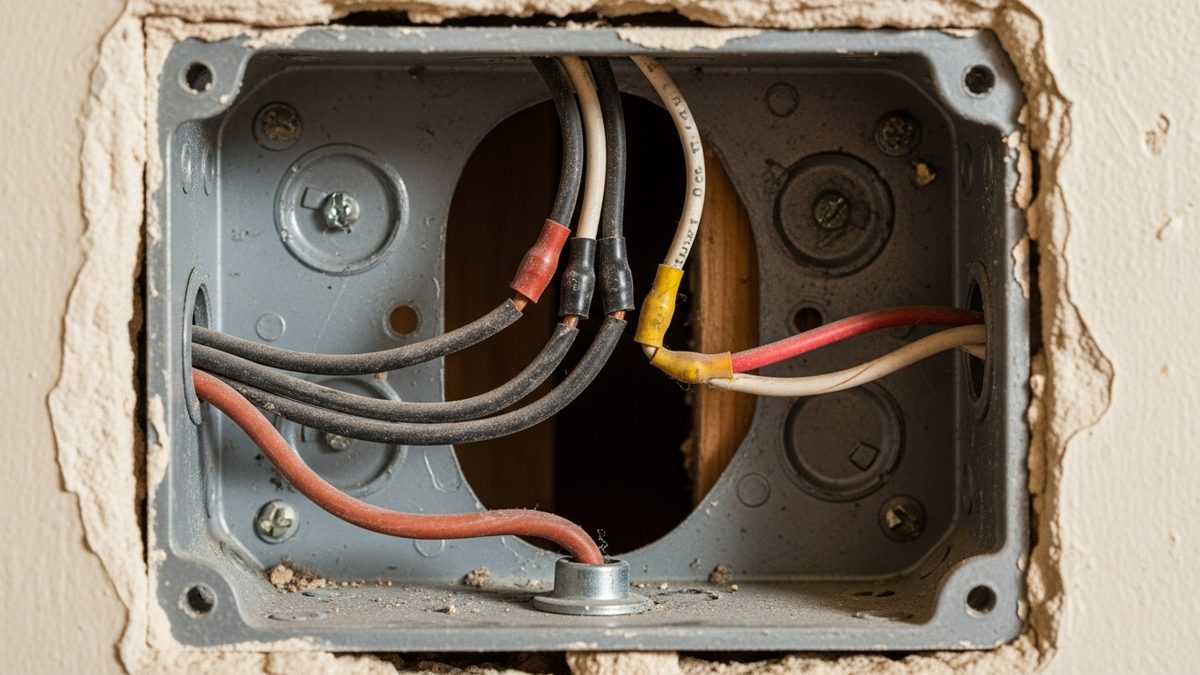
If your home was built between roughly 1965 and 1973, there's a real chance it has aluminum branch-circuit wiring — and that wiring can create a fire hazard at connection points. The short answer is yes, it's a genuine risk, and it's one that's been studied extensively by the U.S. Consumer Product Safety Commission. The good news is that proven repairs exist. The important caveat is that every one of them requires a licensed electrician.
Is aluminum wiring a fire risk?
Yes. The CPSC has investigated numerous fires and hazardous incidents across the country involving aluminum branch-circuit wiring. A national survey conducted by the Franklin Research Institute for CPSC found that homes built before 1972 and wired with aluminum are 55 times more likely to have one or more wire connections at outlets reach "Fire Hazard Conditions" than homes wired with copper.
The CPSC defined "Fire Hazard Conditions" as: receptacle cover plate screws reaching 149°C (300°F), sparks being emitted from a receptacle, or materials around the receptacle being charred.
The hazard shows up most often at connection points — receptacles, switches, junction boxes, and directly wired appliances like dishwashers and furnaces. The deterioration at those connections tends to build up gradually, and the resistance increase causes overheating that gets worse over time.
This isn't a theoretical concern. On April 28, 1974, two people died in a home fire in Hampton Bays, New York. Fire officials determined the cause was an overheating aluminum wire connection at a wall receptacle.
Warning signs of failing aluminum connections
The CPSC cautions that failing aluminum-wired connections often give little warning before a serious problem develops. Connections have been reported to overheat without any prior indication at all.
That said, watch for these signs:
- Warm or hot cover plates on outlets or switches — a cover plate that's noticeably warm to the touch is a red flag
- Flickering or dimming lights, especially if the flickering doesn't match a pattern (like a large appliance cycling on)
- A burning plastic smell at outlets or switches — if you notice this anywhere in your home, treat it as urgent (see also our guide on a hot or burning-smelling outlet)
- Dead outlets or switches that stopped working without a tripped breaker
- Circuits that randomly lose power and come back on their own
If you notice any of these signs, don't try to investigate the wiring yourself. Call a licensed electrician.
How to tell if you have aluminum wiring
Start with your home's age. Homes built before 1965 are unlikely to have aluminum branch-circuit wiring. The risk window is roughly 1965 through the mid-1970s, when a copper shortage pushed builders toward aluminum for general-purpose 15- and 20-amp circuits. An estimated two million homes across the US were wired this way during that period.
To check the wiring itself, look at exposed cable in unfinished areas — the basement, attic, or garage. Aluminum wiring looks like standard plastic-sheathed cable (often called Romex), but the outer jacket will have "AL" or "ALUMINUM" printed or embossed along its length, typically every few feet.
A few things to keep in mind:
- If the jacket reads "CU-clad" or "Copper-clad" alongside "AL" or "ALUMINUM," the wire uses copper-coated aluminum and is a different situation — the CPSC repair recommendations described below don't apply to it.
- Aluminum branch-circuit wire is sized slightly larger than copper: No. 12 AWG for 15-amp circuits and No. 10 AWG for 20-amp circuits (vs. No. 14 and No. 12 for copper). If you see thicker-than-expected wire, that can be another clue.
- If you're not sure what you're looking at, have a qualified electrician make the determination. The stakes are too high to guess.
Why it overheats
Aluminum behaves differently from copper at connection points, and several problems can occur at once:
Oxidation. When aluminum is exposed to air, it forms an oxide layer almost immediately. Unlike copper oxide, which still conducts electricity reasonably well, aluminum oxide is a poor conductor. This oxide film builds up at connection points, increasing electrical resistance and generating heat when current flows through.
Thermal expansion. Aluminum expands and contracts with temperature changes at a higher rate than copper. Over many heating and cooling cycles, connections loosen. A connection that was tight when installed can work itself loose over years of use.
Creep. Aluminum is softer than copper and will slowly deform under pressure — a property called creep. Where a wire wraps around a terminal screw, the metal gradually compresses and the connection loosens even without temperature changes.
Each of these problems raises resistance at the connection. Higher resistance means more heat when current flows. More heat accelerates oxidation and further loosening — a cycle that gets worse over time and can eventually reach temperatures that ignite surrounding materials.
Accepted repairs
The CPSC currently approves only three methods for a permanent repair of aluminum branch-circuit wiring. All three must be performed by a qualified electrician.
1. Complete rewiring with copper
Replacing the aluminum branch-circuit conductors with copper wire eliminates the underlying problem entirely. The existing aluminum wiring can be abandoned in the walls; new copper circuits are run throughout the home. The CPSC calls this the best method available, but for many homes it is impractical or too expensive.
2. COPALUM crimp connectors
The COPALUM method involves attaching a short copper "pigtail" to the end of each aluminum wire at every connection point — outlets, switches, fixtures, junction boxes, and directly wired appliances. The pigtail is joined to the aluminum wire using a specially designed metal sleeve that is crimped with a dedicated power tool applying upwards of 10,000 pounds of force. The result is essentially a cold weld that creates a permanent, low-resistance connection.
Only electricians trained and authorized by the manufacturer can install COPALUM connectors — the specialized tool is not available to the general public. Every connection in the home must be repaired for the method to provide full protection.
3. AlumiConn connectors
The AlumiConn is a setscrew-type connector that, like COPALUM, creates a copper pigtail at each aluminum connection point. The CPSC recognizes it as the next-best alternative when COPALUM is not available in a given area. It has performed well in testing, though it does not yet have the decades-long field history that COPALUM does. A licensed electrician is required for this repair as well; careful workmanship at every connection is essential.
A note on CO/ALR devices
You may come across CO/ALR-rated outlets and switches, which are designed for direct connection to aluminum wire. The CPSC notes that these devices perform better than standard devices when installed carefully, but CO/ALR devices have also failed in laboratory testing under conditions that simulate normal home use. They are not available for all parts of the wiring system — permanently wired appliances and ceiling fixtures, for example — so the CPSC considers CO/ALR devices, at best, an incomplete repair. They may serve as a temporary measure, but they are not a substitute for a full COPALUM or AlumiConn repair.
What not to do: Standard twist-on wire connectors (wire nuts) are not an acceptable repair for aluminum wiring. CPSC-sponsored lab testing found that a substantial number of such connectors overheated severely, and some pigtail "repairs" made with wire nuts may perform even worse than the original unrepaired connections.
What to do right now if you suspect a problem
- Don't ignore warm cover plates or burning smells. These are immediate warning signs. If you notice either, stop using the affected outlet or switch and call a licensed electrician the same day.
- Check your home's age. If it was built between 1965 and the mid-1970s, assume aluminum wiring is possible until you've confirmed otherwise.
- Look for "AL" or "ALUMINUM" on exposed cable in your basement, attic, or garage.
- Don't attempt any repairs yourself. Opening outlet boxes and touching aluminum wiring connections without the right training risks electrocution and can make the problem worse.
- Call your insurance company. Some homeowners' insurance carriers have specific requirements or exclusions related to unrepaired aluminum wiring — it's worth a call to understand your policy.
When to call a licensed electrician
Call a licensed electrician if any of the following apply:
- Your home was built between 1965 and 1973 and has never been evaluated for aluminum wiring
- You've noticed warm cover plates, flickering lights, dead outlets, or a burning smell
- You've found "AL" or "ALUMINUM" markings on wiring in your home
- You're buying or selling a home in this age range and want a clear picture of the electrical system
- You want a complete evaluation and cost estimate for COPALUM, AlumiConn, or full rewiring
This is not a DIY project at any stage. Aluminum wiring is a code-compliance and life-safety issue that requires a licensed electrician familiar with the specific repair methods CPSC recommends.
FAQ
My home was built in 1970. Does that mean I have aluminum wiring?
Not necessarily, but it's worth checking. Many homes from that era do have aluminum branch-circuit wiring, but not all. Look for "AL" or "ALUMINUM" markings on cable jackets in unfinished areas of your home, or have a licensed electrician check for you.
Is aluminum wiring illegal?
No. Aluminum branch-circuit wiring was installed legally and to the code standards of its time. It is not automatically a code violation today. The concern is the fire hazard that develops at aging connection points, not the wire itself.
Can I just replace the outlets myself?
No. Standard outlets are not rated for direct connection to aluminum wire, and standard wire nuts are not an acceptable repair method. Any work on aluminum wiring should be done only by a licensed electrician who can apply a CPSC-approved repair method to every connection in the system.
How much does aluminum wiring repair cost?
Costs vary widely depending on home size, the repair method used, and your location. A COPALUM or AlumiConn repair of an average-sized home typically runs several thousand dollars. Full rewiring is more expensive. A licensed electrician can give you a specific estimate after inspecting the system.
Does aluminum wiring affect my homeowners insurance?
It can. Some insurers charge higher premiums for homes with unrepaired aluminum wiring, and a few may decline coverage or require remediation before issuing a policy. Contact your insurance provider directly to understand how your specific situation is handled.
Get a licensed electrician to inspect your home
If you suspect your home has aluminum wiring — or you know it does and haven't had it addressed — the right move is to get a licensed electrician in to take a look. An inspection can tell you exactly what you're dealing with, which repair option makes the most sense for your home, and what it will cost. Don't wait for a warning sign to force the issue.
Get a free quote from a licensed electrician near you and find out where you stand.
Sources
- U.S. Consumer Product Safety Commission — Repairing Aluminum Wiring (Publication 516, June 2011): https://www.cpsc.gov/s3fs-public/AL_0.pdf
- U.S. Consumer Product Safety Commission — Repairing Aluminum Wiring (safety guide landing page): https://www.cpsc.gov/safety-education/safety-guides/electronics-and-electrical-home/repairing-aluminum-wiring
- U.S. Consumer Product Safety Commission — CPSC Safety Recommendations For Aluminum Wiring In Homes (1974 news release): https://www.cpsc.gov/Newsroom/News-Releases/1974/CPSC-Safety-Recommendations-For-Aluminum-Wiring-In-Homes
- U.S. Consumer Product Safety Commission — May Is National Electrical Safety Month: Good News for Homeowners — Aluminum Wiring Fix Still Available (2003 news release): https://www.cpsc.gov/Newsroom/News-Releases/2003/May-Is-National-Electrical-Safety-Month-Good-News-for-Homeowners-Aluminum-Wiring-Fix-Still-Available
Disclaimer
The information on this page is provided for general educational purposes only and is offered "as is" and "as available," without warranties of any kind, whether express or implied — including, without limitation, any warranties of accuracy, completeness, reliability, merchantability, or fitness for a particular purpose. It is not professional advice and is not a substitute for inspection, diagnosis, or repair by a licensed, qualified professional.
Home systems involving gas, electricity, water, refrigerant, fire, or structural components can be hazardous, and requirements vary by local code and jurisdiction. Any inspection, diagnosis, repair, installation, or other action referenced on this page should be performed by a licensed professional. You should not rely on this content to perform such work yourself. To the fullest extent permitted by law, [Company Name] and its owners, employees, and contributors assume no responsibility or liability for any injury, death, property damage, or other loss arising out of or in connection with the use of, or reliance on, this information.
If you smell gas or suspect a carbon monoxide leak, leave the area immediately and call 911 or your gas utility from a safe location.