AC Running but Not Cooling? Why Your Air Conditioner Is Blowing Warm Air (and How to Fix It)
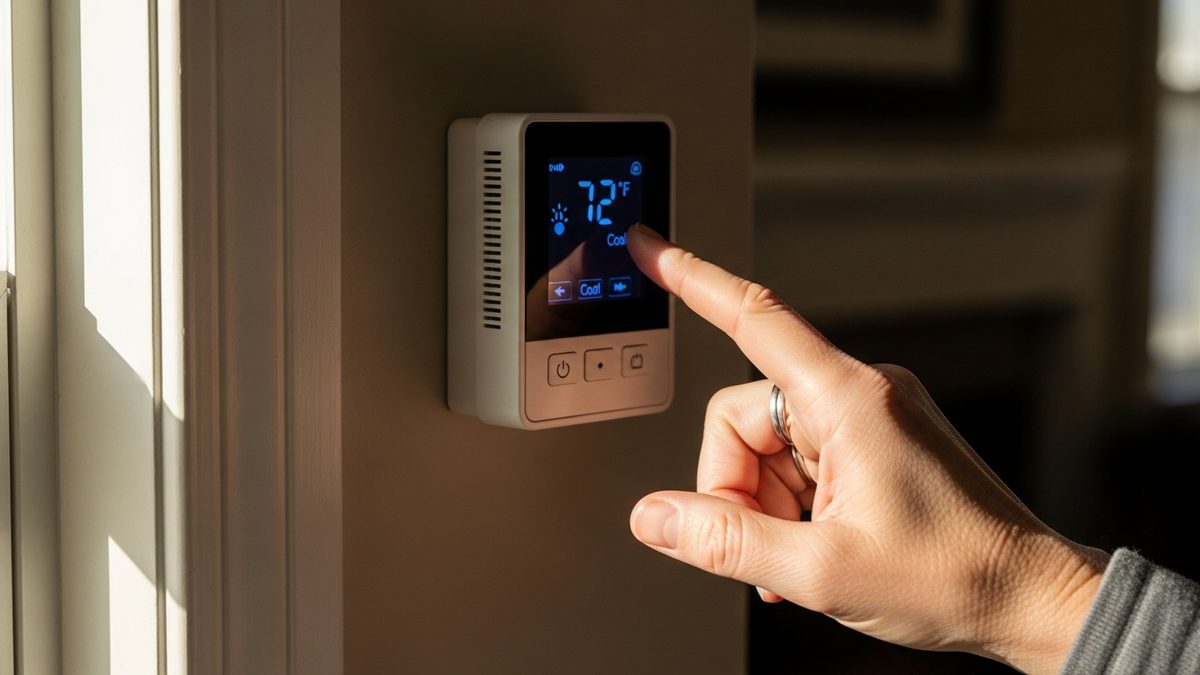
Your air conditioner is running — the blower is humming, air is moving through the vents — but the house won't cool down. Whether you searched "AC running but not cooling," "AC blowing warm air," "AC blowing hot air," or "AC not blowing cold air," you're in the right place. These phrases all describe the same problem, and this guide covers every common cause and fix.
Several causes are easy and free to check yourself; a few need a licensed pro. Let's walk through both.
(If your system isn't responding at all, that's a different problem — see if your AC won't turn on at all for that situation.)
Most likely causes
Below are the nine reasons an air conditioner is not cooling your house, ranked from most to least common based on U.S. Department of Energy guidance, major manufacturer resources, and EPA requirements.
-
Thermostat set wrong or fan left on "On." If the mode isn't set to Cool, or the setpoint isn't below room temperature, nothing happens. The sneakier version: fan set to On instead of Auto keeps air moving between cycles, so you feel airflow but no cooling is occurring.
-
Dirty or clogged air filter. A matted filter chokes the airflow the system needs to transfer heat, reduces performance, and can eventually freeze the indoor coil. Check monthly, replace every one to three months.
-
Outdoor unit not running. The classic "AC not blowing cold air" scenario. If the condenser is silent — no fan, no compressor hum — no cooling is happening regardless of what the indoor fan is doing. Common culprits: tripped breaker, open disconnect, or a failed electrical component.
-
Frozen evaporator coil. When the indoor coil ices over, heat transfer stops and airflow drops. Freeze-ups are caused by a dirty filter, low airflow, or low refrigerant — the ice is a symptom, not the root cause.
-
Low refrigerant from a leak. Refrigerant doesn't get used up under normal operation. If it's low, there's a leak. Low refrigerant causes weak cooling, longer run times, and often leads to the frozen-coil scenario. Federal law restricts refrigerant sales and service to EPA-certified contractors.
-
Failed capacitor, contactor, or condenser fan motor. These outdoor-unit components are among the most commonly replaced HVAC parts. Any one of them can fail while leaving the indoor fan running — so the house stays warm and nothing cools.
-
Leaky ducts. ENERGY STAR estimates a typical home loses 20–30% of conditioned air through duct leaks. Ducts running through a hot attic or crawlspace can make even a healthy system feel unable to cool the house.
-
Clogged condensate drain or tripped float switch. If the drain line clogs, many systems trip a safety float switch that shuts off cooling to prevent water damage — so air still blows, but cooling has stopped.
-
System too small or poorly installed. An undersized unit or badly routed ducts can cause the system to run constantly without ever reaching the setpoint. Consider this when the problem has always been there, not something that came on suddenly.
Troubleshoot it yourself (safely)
Work through these steps in order — simplest and cheapest first. Stop the moment you hit anything that requires opening electrical panels or touching refrigerant lines.
Step 1 — Check the thermostat. Confirm it is set to Cool, the setpoint is below room temperature, and the fan is set to Auto — not On. Replace batteries if the screen is dim or blank. This five-minute check saves many service calls.
Step 2 — Inspect and change the air filter (~$5–$24). Pull the filter and hold it up to a light. If you can barely see through it, replace it. Make sure the arrow on the frame points toward the air handler. Give the system an hour after a fresh filter to see if cooling improves.
Step 3 — Look for ice. Check the large insulated refrigerant line at the outdoor unit and the coil area near the air handler. If you see frost or ice, turn Cool off, set the fan to On to thaw it — two to four hours. Replace the filter while you wait. Once thawed, restart cooling. If it ices up again, call a pro.
Step 4 — Confirm the outdoor unit is running. With the thermostat calling for cooling, watch the outdoor unit: fan spinning, warm exhaust from the top, compressor humming. Do not open panels. Silent outdoor unit with indoor fan running = electrical problem, call a pro.
Step 5 — Check the breaker once. Look in your panel for a tripped HVAC breaker — middle position or off, sometimes with a red indicator. Reset it once. If it trips again, stop. Repeated trips mean a real electrical fault.
Step 6 — Clear debris and rinse the outdoor unit. Power the unit off at the disconnect box. Remove leaves and debris, trim plants to two feet of clearance, and gently rinse the coil fins with a garden hose (no pressure washer).
Step 7 — Check for a condensate drain clog. Look for standing water in the drain pan, puddles on the floor, or wet drywall near an attic unit. A wet/dry vacuum on the exterior drain end can sometimes clear a partial clog. If the drain path is hidden or near electrical components, call a technician.
Safety first
Read these before you start — a few can cause serious injury.
- Never open the outdoor unit's electrical compartment. HVAC systems run on 240-volt circuits, and capacitors hold a dangerous charge even after the power is cut. Carrier specifically warns capacitors must be handled by a qualified professional only.
- Refrigerant is a federal matter. The EPA prohibits intentional venting and restricts refrigerant sales to EPA-certified technicians. You cannot legally or safely top off your own system. Some newer systems use low-GWP refrigerants (such as R-32 or R-454B) that are mildly flammable, which is another reason refrigerant work is for licensed, EPA-certified pros only.
- Unusual sounds or repeated breaker trips are stop signs. Popping, hissing, buzzing, or sizzling from the outdoor unit means turn the system off and step away.
- Never run a frozen coil or bypass a safety device. Operating an iced-over coil damages the compressor. Never tape down a float switch or jumper an interlock.
When to call a licensed pro
Call a licensed HVAC technician when:
- The outdoor unit isn't running and the thermostat, breaker, and filter all check out
- The coil freezes again after a full thaw and clean filter
- A breaker trips a second time
- You smell burning, see oily residue near refrigerant lines, or hear hissing from the outdoor unit
- Any repair involves the capacitor, contactor, fan motor, compressor, or refrigerant circuit
- Cooling has gradually worsened over months (possible duct or sizing issue)
Legal requirements and permits: EPA certification is required for any refrigerant service. Replacing equipment or modifying electrical circuits may also require a local permit — check with your building department before work starts. If the system is over 10 years old or needs a major component, ask for a repair-vs-replace comparison before authorizing work.
What it typically costs
All figures are approximate US ranges for 2025–2026. Actual prices vary by region, labor rates, refrigerant type, emergency timing, and what's included in the quote.
| Service | Typical Range |
|---|---|
| Diagnostic / service call | $75–$200 |
| Annual tune-up / maintenance | $65–$200 |
| Thermostat replacement | $140–$350 |
| Capacitor replacement | $100–$400 |
| Contactor replacement | $200–$450 |
| Coil cleaning (professional) | $100–$400 |
| Condensate drain service | $100–$195 |
| Fan motor replacement | $200–$700 |
| Refrigerant leak repair + recharge | $200–$1,500+ |
| Evaporator coil replacement | $600–$5,000+ |
| Compressor replacement | $600–$2,900 |
| Outdoor condenser replacement | $1,300–$6,100 |
| Full central AC system replacement | $3,000–$15,000+ installed |
The real savings come from catching problems early. Thermostat corrections and a fresh filter cost almost nothing. Once the issue reaches capacitor, refrigerant, or compressor territory, labor typically dominates the bill.
Common mistakes to avoid
- Assuming airflow means cooling. The indoor blower can run while the outdoor unit is completely off. Go outside and confirm the condenser is actually running.
- Leaving the fan on "On." It keeps circulating room-temperature air between cycles, making the problem look like "AC blowing warm air" when cooling may be intermittently fine. Always set to Auto before troubleshooting.
- Running a frozen coil or resetting the breaker repeatedly. Both make underlying problems worse — the first damages the compressor, the second risks fire. Thaw fully before restarting; reset the breaker once only.
- Installing the filter backward or closing vents. A backwards filter is as bad as a clogged one. Closing vents pressurizes the duct system and doesn't redirect air the way homeowners expect.
- Adding refrigerant without fixing the leak. It's a short-term patch that leaves the root cause in place — and is illegal without EPA certification.
How to prevent it
- Check the filter monthly and replace every one to three months.
- Keep the fan set to Auto unless you have a specific reason to use On.
- Maintain two feet of clearance around the outdoor unit; trim vegetation and rinse the coil gently each spring.
- Schedule annual professional maintenance — a tune-up covers the exact checklist that prevents most AC-not-cooling calls.
- Act on early warning signs. Slightly weaker cooling or a single odd noise is worth a quick look. Small repairs found early are far cheaper than compressor replacements found late.
Get a free quote from a vetted HVAC pro near you
If you've worked through the DIY steps and the problem is still there, it's time to bring in a licensed technician. Local Service Group connects homeowners with vetted HVAC pros in their area — no obligation, no hassle. Get a free quote from a local pro today and find out exactly what it will take to get your home comfortable again.
FAQ
Why does my AC blow air but not cool the house? The indoor blower runs independently of the refrigeration cycle. Most common causes: fan set to On instead of Auto, outdoor unit not running, clogged filter, frozen coil, or low refrigerant. Start with the thermostat and confirm the outdoor unit is actually spinning.
My refrigerant line is covered in ice. What do I do? Turn Cool off (or Fan Only) and let it thaw fully — a few hours. Replace the filter while you wait, then restart cooling. If it re-freezes, the root cause (restricted airflow or a refrigerant leak) hasn't been fixed. Call a pro.
The outdoor unit is silent but the indoor fan is running. What does that mean? Almost always a power problem on the outdoor side: tripped breaker, open disconnect, failed capacitor or contactor, or failed compressor. Check the breaker once; if that doesn't resolve it, call a technician.
Can I add refrigerant myself? No — illegal without EPA certification, and it won't fix the root problem. If the charge is low, there's a leak. Recharging without repairing it is a short-term patch.
When does replacement make more sense than repair? System over 10 years old, uses discontinued R-22 refrigerant, or faces a repair costing more than a third to half the price of a new system. Frequent breakdowns are also a reliable signal the unit is past its service life.
Sources
- U.S. Department of Energy, Air Conditioner Maintenance. https://www.energy.gov/energysaver/air-conditioner-maintenance
- U.S. Department of Energy, Common Air Conditioner Problems. https://www.energy.gov/energysaver/common-air-conditioner-problems
- U.S. Department of Energy, Central Air Conditioning. https://www.energy.gov/energysaver/central-air-conditioning
- ENERGY STAR, Duct Sealing. https://www.energystar.gov/saveathome/heating-cooling/duct-sealing
- ENERGY STAR, Maintenance Checklist. https://www.energystar.gov/saveathome/heating-cooling/maintenance-checklist
- ENERGY STAR, HVAC Quality Installation. https://www.energystar.gov/saveathome/heating-cooling/hvac-quality-installation
- ENERGY STAR, Heat & Cool Efficiently. https://www.energystar.gov/saveathome/heating-cooling
- U.S. EPA, Section 608 Technician Certification Requirements. https://www.epa.gov/section608/section-608-technician-certification-requirements
- U.S. EPA, Stationary Refrigeration — Prohibition on Venting Refrigerants. https://www.epa.gov/section608/stationary-refrigeration-prohibition-venting-refrigerants
- U.S. EPA, Refrigerant Sales Restriction. https://www.epa.gov/section608/refrigerant-sales-restriction
- U.S. EPA, Purchasing and Repairing Home Air-Conditioners or Heat Pumps. https://www.epa.gov/ods-phaseout/purchasing-and-repairing-home-air-conditioners-or-heat-pumps
- Trane, Air Conditioner Troubleshooting: Why Your AC Is Not Cooling. https://www.trane.com/residential/en/resources/troubleshooting/air-conditioners/
- Trane, AC Not Blowing Cold Air. https://www.trane.com/residential/en/resources/troubleshooting/air-conditioners/ac-not-blowing-cold-air/
- This Old House, Air Conditioner Repair Cost (2026 Pricing). https://www.thisoldhouse.com/heating-cooling/reviews/air-conditioner-repair-cost
Disclaimer
The information on this page is provided for general educational purposes only and is offered "as is" and "as available," without warranties of any kind, whether express or implied — including, without limitation, any warranties of accuracy, completeness, reliability, merchantability, or fitness for a particular purpose. It is not professional advice and is not a substitute for inspection, diagnosis, or repair by a licensed, qualified professional.
Home systems involving gas, electricity, water, refrigerant, fire, or structural components can be hazardous, and requirements vary by local code and jurisdiction. Any inspection, diagnosis, repair, installation, or other action referenced on this page should be performed by a licensed professional. You should not rely on this content to perform such work yourself. To the fullest extent permitted by law, [Company Name] and its owners, employees, and contributors assume no responsibility or liability for any injury, death, property damage, or other loss arising out of or in connection with the use of, or reliance on, this information.
If you smell gas or suspect a carbon monoxide leak, leave the area immediately and call 911 or your gas utility from a safe location.