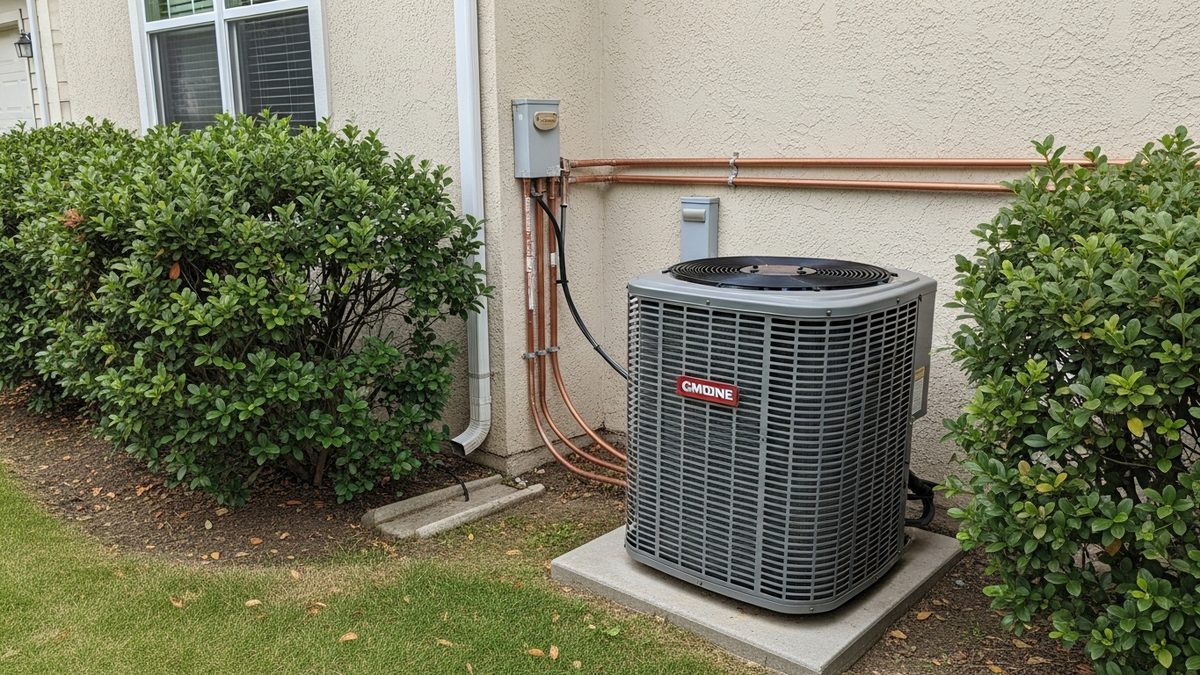
When your air conditioner breaks down in the middle of summer, the first question you ask is: "How much is this going to cost me?" For most common repairs, homeowners in the US pay somewhere between $150 and $650, with the national average landing around $350–$375. Simple fixes — a clogged drain line, a blown fuse, a bad capacitor — stay well under $300. Major repairs like compressor or coil replacements can push past $1,500 or more.
All figures below are approximate for 2025–2026 and vary by region, brand, refrigerant type, and whether the unit is still under warranty.
Typical AC repair cost range
Before any repair work starts, a technician has to figure out what is wrong. That diagnostic visit — sometimes called a service call or troubleshooting fee — typically runs $75 to $200, and many companies credit that amount toward the repair if you proceed.
Once the problem is identified, labor runs $75 to $150 per hour during normal business hours. Emergency or after-hours calls cost more — typically $160 to $250 per hour, sometimes with a flat premium on top.
| Cost item | Typical range |
|---|---|
| Diagnostic / service call fee | $75 – $200 |
| Labor (standard hours) | $75 – $150 per hour |
| Labor (emergency / after-hours) | $160 – $250 per hour |
| Average total repair (most common jobs) | $150 – $650 |
| National average repair cost | ~$350 – $375 |
| Complex repairs (compressor, coil, etc.) | $650 – $2,500+ |
Cost by common repair
Prices include parts and labor unless noted. Ranges reflect the full national spread; your local market may be higher or lower.
| Repair | Typical cost range |
|---|---|
| Capacitor replacement | $100 – $400 |
| Contactor replacement | $200 – $450 |
| Condenser fan motor replacement | $200 – $700 |
| Refrigerant leak detection + repair | $200 – $1,500 |
| Refrigerant recharge (R-410A) | $100 – $320 |
| Refrigerant per pound — R-410A (installed) | $50 – $80 |
| Refrigerant per pound — R-22 (installed) | $90 – $150+ |
| Refrigerant per pound — R-454B (installed, newer systems) | $30 – $80 |
| Compressor replacement | $600 – $2,800 |
| Evaporator coil replacement | $1,000 – $4,500 |
| Condenser coil replacement | $300 – $4,200 |
| Thermostat replacement | $140 – $350 |
| Drain line flush (unclog) | $75 – $250 |
A few notes on the table above:
- Capacitors are one of the most common AC failures — cheap parts, quick labor. The part itself costs $8–$45; labor makes up the rest.
- Compressor replacement is the most expensive single repair. If the compressor goes on an older out-of-warranty system, replacement of the entire unit often makes more sense (more on that below).
- Evaporator coil replacement costs drop sharply if the coil is still under the manufacturer's parts warranty — you pay labor and refrigerant only, which runs $1,000–$2,500 instead of the full $2,500–$4,500.
- R-22 refrigerant is no longer manufactured in the US and has been scarce since 2020. Per-pound installed prices of $100–$150 or more are common. If your system still runs on R-22, that alone is a strong case for replacement.
- R-454B is the low-GWP refrigerant used in systems manufactured in 2025 and later, following the EPA phasedown of R-410A production. Current installed pricing runs roughly $30–$80 per pound, though market prices are still settling.
Sources: HomeGuide, Angi, This Old House, Trane
What drives the price
Parts vs. labor split. Labor often accounts for 40–50 percent of the total bill. A capacitor job takes less than an hour; a compressor swap can take four to eight hours. The harder a component is to access — a coil tucked into a cramped attic air handler, for example — the more labor time adds up.
Brand and part sourcing. OEM (original manufacturer) parts cost more than generic equivalents. Generic parts are often fine, but using them can void certain manufacturer warranties. Ask your tech which type they are installing.
Refrigerant type. As noted above, R-22 is expensive and hard to find. R-410A prices have been rising as production quotas tighten ahead of the full EPA phasedown. Systems that need a significant refrigerant recharge are always more expensive to operate than they used to be.
Emergency and after-hours calls. If your AC fails on a Saturday night in July, expect to pay a premium. That $140 service call might jump to $200–$250, and hourly labor rates go up too. If the situation is not urgent, waiting until the next business day saves money.
Age and warranty status. A five-year-old system may have a 10-year parts warranty, which means you pay only for labor on covered components. An older system out of warranty means you pay for both parts and labor — and older parts can be harder and more expensive to source.
Geographic location. Repair costs in high-cost-of-living metros like New York or California run meaningfully higher than in lower-cost states like Texas or Florida. Demand spikes during heat waves also push prices up regionally.
Repair vs. replace: the math
A new central AC system costs $5,000 to $8,300 installed on average, and more if you also need ductwork. So when does it make more sense to replace than repair?
The 50% rule is the most widely used guideline: if the repair cost is 50% or more of what a new system would cost, replacement is almost always the better financial move — especially on an aging unit.
The Rule of 5,000 is a more precise version: multiply the system's age (in years) by the cost of the repair. If the result exceeds $5,000, lean toward replacing. For example, a 14-year-old system needing an $800 compressor fix: 14 x $800 = $11,200. That math points clearly toward a new system.
Other signals that replacement wins:
- The system is 10–15 years old or older. Most central AC units last 12–15 years with regular maintenance. ENERGY STAR suggests considering replacement once a unit passes 10 years if it is experiencing problems.
- It still uses R-22 refrigerant. The ongoing cost and scarcity of R-22 makes repair bills climb fast, and the system will never get more efficient.
- You have had multiple repairs in the past two seasons. One repair can be bad luck. A pattern of repairs usually signals the system is wearing out.
- The system is inefficient. Older units may have SEER ratings of 8–10; modern units run 16–20 SEER or higher. The energy savings from a newer unit can help offset the cost of replacement over time.
If your unit is under 10 years old and in otherwise good shape, repair usually wins unless the job is a compressor or coil replacement on an out-of-warranty system.
How to avoid overpaying
Get an itemized quote. Before authorizing work, ask for a written breakdown of parts and labor. This makes it easy to compare quotes from multiple companies and spot anything unusual.
Get at least two or three quotes for major repairs. For anything over $500, it is worth a few phone calls. Prices for the same repair can vary by hundreds of dollars between companies.
Ask whether the diagnostic fee applies to the repair. Most reputable companies credit it — but confirm upfront.
Schedule maintenance in the off-season. Spring tune-ups ($70–$200) catch small problems before they become expensive failures and often come with shorter wait times and lower rates than mid-summer emergency calls.
Be cautious when a tech says you only need a refrigerant recharge. Refrigerant does not get "used up" in a normally functioning system. If your system is low on refrigerant, there is a leak somewhere. A recharge without finding and fixing the leak is a short-term patch — the refrigerant will leak out again, and you will pay again. Ask the tech to perform a leak test first.
Check for warranty coverage. Look up your unit's model number and check the manufacturer's site (or call them directly). Many homeowners do not realize a parts warranty is still active.
When it's an emergency vs. can wait
Some AC problems need same-day attention. Others can hold until a scheduled appointment, which keeps costs down.
Call immediately if:
- The outdoor unit is making a loud grinding, banging, or screeching noise — this can indicate a failing compressor or motor that, if ignored, will cause more damage.
- You smell burning electrical odors from the unit or vents.
- The circuit breaker for the AC keeps tripping repeatedly — possible electrical fault.
- Elderly family members, infants, or people with health conditions are in the home and heat is dangerous.
Can usually wait a day or two:
- The system is cooling, just not as well as usual (possible low refrigerant or dirty coil — uncomfortable but not urgent).
- The AC is not turning on but the breaker is fine (could be a bad capacitor or thermostat — annoying, not dangerous).
- Water is leaking from the air handler — typically a clogged drain line, which you can often temporarily address by turning the system off until a tech arrives.
- Odd smells that are not electrical or burning (musty smell is often mold in the drain pan or coil — schedule soon, but not an emergency).
If you want to understand why a running system still is not cooling your home, see our post on why your AC is running but not cooling.
FAQ
How much does it cost to recharge AC refrigerant?
A refrigerant recharge for a home AC unit running on R-410A typically costs $100 to $320 total, or roughly $50 to $80 per pound installed. Older systems using R-22 cost significantly more — often $100 to $150 per pound or higher because R-22 is no longer produced domestically. Keep in mind that a recharge alone does not fix the underlying leak. Expect to pay $200 to $1,500 for the full leak detection, repair, and refill depending on where the leak is and how bad it is.
Why is my AC repair so expensive?
A few factors push bills higher than homeowners expect. First, HVAC labor rates have risen in recent years — skilled technicians command $75 to $150 an hour, and specialized work takes time. Second, refrigerant prices have increased significantly as production is phased down. Third, replacement parts for older or less common systems can be hard to source. Finally, if you called for an emergency or after-hours appointment, you are paying a premium rate. Always ask for an itemized quote so you can see exactly where the money is going.
What is the most expensive AC repair?
Compressor and evaporator coil replacements are typically the priciest. A compressor can run $1,800 to $2,800 out of warranty. Evaporator coil replacement out of warranty ranges from $2,500 to $4,500. In both cases, if your system is 10 or more years old, replacement of the full unit is worth a serious look before committing to the repair.
How do I know if my AC needs a repair or just a tune-up?
A tune-up ($70–$200) is routine maintenance — cleaning coils, checking refrigerant levels, testing electrical components. You schedule it even when the system seems fine. A repair is what you need when something is broken: the system is not cooling, making strange noises, leaking water, tripping breakers, or not turning on at all. If you are not sure, call a tech for a diagnostic — the service call fee is usually credited toward the repair if one is needed.
Can I negotiate AC repair prices?
Yes, within reason. Getting multiple quotes is the most effective tactic. You can also ask whether the service call fee will be credited, whether generic parts are an acceptable option, and whether they offer any seasonal discounts. What you generally cannot negotiate away is the cost of refrigerant or major parts — those prices are driven by the supply chain, not the company's margin.
Get free quotes from local AC repair pros
Not sure what your repair will actually cost? The best way to find out is to have a licensed HVAC technician look at your system. Get free, no-obligation quotes from vetted AC repair pros near you and compare before you commit.
Sources
- HomeGuide — AC Repair Cost (2026)
- Angi — HVAC Repair Cost Guide (2026)
- This Old House — AC Capacitor Replacement Cost (2026)
- HomeGuide — AC Freon Recharge Cost (2026)
- Angi — R-410A Refrigerant Cost Per Pound (2026)
Disclaimer
The information on this page is provided for general educational purposes only and is offered "as is" and "as available," without warranties of any kind, whether express or implied — including, without limitation, any warranties of accuracy, completeness, reliability, merchantability, or fitness for a particular purpose. It is not professional advice and is not a substitute for inspection, diagnosis, or repair by a licensed, qualified professional.
Home systems involving gas, electricity, water, refrigerant, fire, or structural components can be hazardous, and requirements vary by local code and jurisdiction. Any inspection, diagnosis, repair, installation, or other action referenced on this page should be performed by a licensed professional. You should not rely on this content to perform such work yourself. To the fullest extent permitted by law, [Company Name] and its owners, employees, and contributors assume no responsibility or liability for any injury, death, property damage, or other loss arising out of or in connection with the use of, or reliance on, this information.
If you smell gas or suspect a carbon monoxide leak, leave the area immediately and call 911 or your gas utility from a safe location.