AC Fan Not Spinning on the Outside Unit? Here's Why
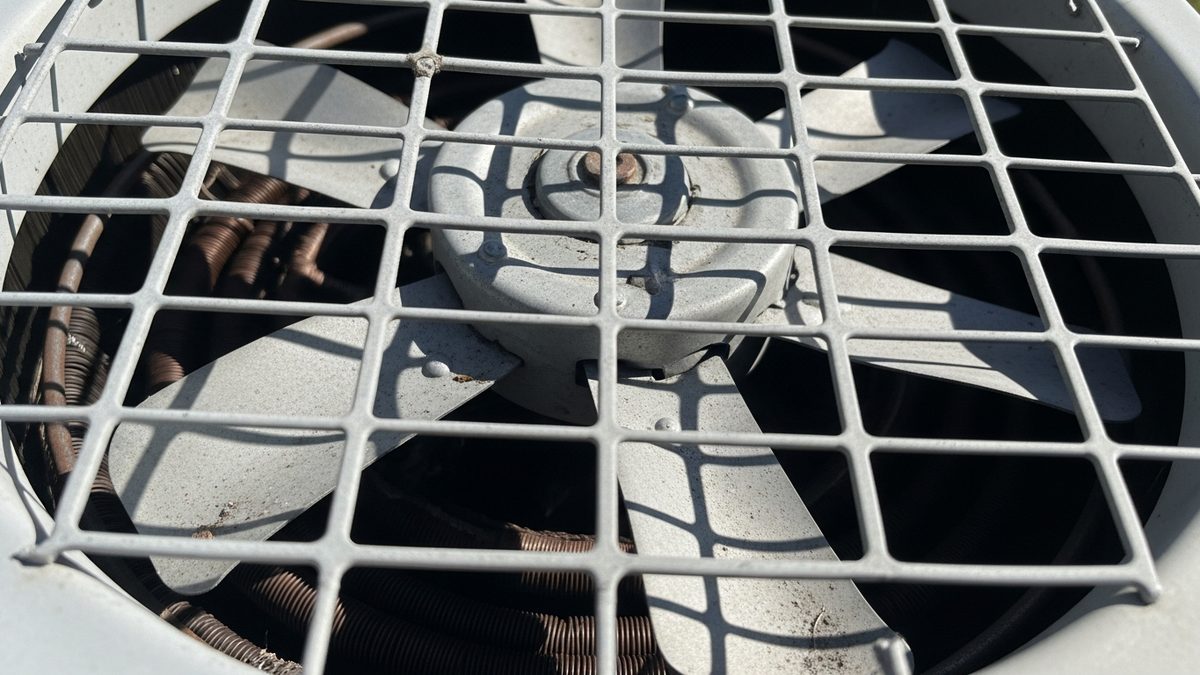
Walk outside on a hot day and notice the outdoor AC unit is running but the fan on top isn't spinning? That's a clear sign something is wrong. Without that fan pulling air through the condenser coils, your system can't shed heat — and the compressor will overheat and shut down fast.
The good news: the most common cause is a failed run capacitor, which is a relatively inexpensive fix. The bad news: a few of the other causes require a licensed technician. Here's how to tell them apart.
Most likely causes
1. Failed run capacitor (most common) The run capacitor is a small metal cylinder inside the outdoor unit's electrical compartment. It stores a charge and delivers the burst of power needed to start and keep the fan motor spinning. When it fails, the motor hums but the blades just sit still. According to Carrier, a malfunctioning run capacitor is one of the top reasons an outdoor fan stops working. Capacitors typically last 5–15 years, and heat accelerates wear.
2. Worn-out contactor The contactor is an electrical relay that receives a low-voltage signal from your thermostat and closes to send 240-volt power to the compressor and fan. If the contacts are pitted or burned, the fan may not get power at all. You might hear a faint click from the thermostat but nothing else outside.
3. Burnt or seized fan motor Fan motors can burn out over years of use, especially if the capacitor has been failing slowly and the motor has been straining. A motor that smells like burnt plastic or makes a grinding noise is likely done.
4. Debris lodged in the fan blades Sticks, leaves, or other debris can jam the blades and stop them cold. The motor may still run, causing it to overheat quickly.
5. Tripped breaker or blown disconnect fuse No power to the outdoor unit means no fan. Check your main panel and the disconnect box (the gray box on the wall near the outdoor unit).
6. Frozen evaporator coil If airflow through the system has been restricted (clogged filter, closed vents), the indoor evaporator coil can freeze. That shuts down the whole system — including the outdoor fan. See our guide on if the whole AC won't turn on.
Troubleshoot it yourself (safely)
Step 1 — Turn everything off first. Set the thermostat to "Off," then switch the breaker for the outdoor unit to the off position. Do not skip this step.
Step 2 — Check the breaker and disconnect. Go to your main electrical panel. Look for a tripped breaker labeled "AC," "condenser," or "compressor." Also open the outdoor disconnect box. If a cartridge fuse is blown, replace it with an identical-rated fuse and try again. If the breaker keeps tripping, call a pro — something downstream is drawing too much current.
Step 3 — Look for debris. Peer through the wire grille on top of the unit with the power still off. If you can see a stick, pinecone, or clump of leaves touching the blades, carefully remove it with a long tool. Never stick your hand through the grille.
Step 4 — Listen for a hum. With power restored and the thermostat calling for cooling, listen at the outdoor unit. A steady hum with no fan spinning almost always points to a failed capacitor. Report this to your HVAC technician — it's a common, quick repair.
Step 5 — Check the air filter inside. A clogged filter restricts airflow and can cause the evaporator coil to freeze, which then trips a safety switch and stops the outdoor fan. Replace the filter if it's visibly grey with dust.
Safety first
- Capacitors hold a lethal charge even when the power is off. An AC run capacitor stores 370–600 volts. Do not open the electrical access panel on the outdoor unit unless you are a trained technician with the proper tools to discharge the capacitor first.
- Never use a stick or finger to spin the fan blades while the unit is powered on. If a technician ever suggests "just spinning it to start it," that is a temporary test — not a fix — and is done only with proper precautions by a pro.
- The outdoor unit runs on 240 volts. Even with the disconnect pulled, the line side of the disconnect box is still live. Only a licensed electrician or HVAC tech should work inside that panel.
When to call a licensed pro
Call a technician if:
- The breaker trips again after you reset it
- You hear a hum but the fan still won't start after replacing a fuse
- The fan motor makes a grinding, squealing, or burning smell
- There is visible scorching or melted plastic inside the unit
- The unit runs but still isn't cooling after clearing debris and replacing the filter
Capacitor replacement is one of the most common HVAC service calls and usually takes under an hour. Don't delay — running an AC with a failed fan will overheat and potentially destroy the compressor, turning a $250 repair into a $2,000+ one.
What it typically costs
| Repair | Typical 2025–2026 Range |
|---|---|
| Run/dual-run capacitor replacement | $200–$400 (parts + labor) |
| Contactor replacement | $300–$500 |
| Condenser fan motor replacement | $400–$700 |
| Compressor replacement (if damaged) | $1,500–$3,500+ |
Source: Angi cost data, 2026 (https://www.angi.com/articles/how-much-does-it-cost-replace-ac-capacitor.htm)
Common mistakes
- Resetting a tripping breaker repeatedly without finding the cause. This can fry the compressor.
- Running the AC with the fan not spinning, even for a few minutes. Heat builds up fast and triggers a thermal overload — or worse.
- Guessing it's the motor and buying one before confirming the capacitor is fine. The capacitor costs $15–$45 and fails far more often.
- Ignoring an annual tune-up. A tech checks capacitor voltage every spring and can catch a weak one before it fails in a heat wave.
How to prevent it
- Schedule a spring AC tune-up each year. The technician will test capacitor microfarad readings and spot a weak one before it quits.
- Keep vegetation trimmed at least two feet from the unit on all sides to ensure good airflow and prevent debris from entering the fan.
- Replace your air filter every 1–3 months during cooling season to avoid coil freeze and restricted airflow.
- Keep the area around the outdoor unit clear of leaves and grass clippings after mowing.
FAQ
My AC fan stopped but the compressor is still running. Is that an emergency? Yes, treat it that way. The compressor will overheat within minutes without the fan. Turn the system off at the thermostat and call a technician promptly.
Can I replace the run capacitor myself? Technically, the part is inexpensive and the swap is straightforward — but capacitors hold a high-voltage charge that can be fatal if not properly discharged first. Unless you have HVAC electrical training and a proper discharge tool, leave this to a licensed technician.
The fan spins if I give it a gentle push through the grill. What does that mean? That is a classic sign of a failed start/run capacitor. The motor has enough power to keep spinning once started but not enough to begin on its own. Confirm power is off before touching anything, and call a tech.
How long do run capacitors last? Typically 5–15 years, per Angi data. Heat, overvoltage, and age are the main killers. Units in very hot climates or direct sun tend to go through them faster.
Will my AC freeze up if the fan stops? If the outdoor fan stops, the condenser can't release heat, causing high pressure that will trip a safety switch and shut everything down. The indoor evaporator can then freeze as refrigerant pressures destabilize. Either way, you'll lose cooling quickly.
Ready to get your fan spinning again? Use the form below to connect with a vetted local HVAC professional in your area — no obligation, free quote.
Sources
- Carrier — Why is My AC Fan Not Working? https://www.carrier.com/residential/en/us/products/air-conditioners/air-conditioner-service/ac-fan-not-spinning/
- Trane — AC Fan Not Working? Reasons Why It Stopped Spinning https://www.trane.com/residential/en/resources/troubleshooting/air-conditioners/ac-fan-not-working/
- U.S. Department of Energy — Common Air Conditioner Problems https://www.energy.gov/energysaver/common-air-conditioner-problems
- Angi — How Much Does AC Capacitor Replacement Cost? (2026) https://www.angi.com/articles/how-much-does-it-cost-replace-ac-capacitor.htm
- UC Berkeley EHS — Injury Caused by High Voltage Capacitor Discharge https://ehs.berkeley.edu/news/injury-caused-high-voltage-capacitor-discharge
Disclaimer
The information on this page is provided for general educational purposes only and is offered "as is" and "as available," without warranties of any kind, whether express or implied — including, without limitation, any warranties of accuracy, completeness, reliability, merchantability, or fitness for a particular purpose. It is not professional advice and is not a substitute for inspection, diagnosis, or repair by a licensed, qualified professional.
Home systems involving gas, electricity, water, refrigerant, fire, or structural components can be hazardous, and requirements vary by local code and jurisdiction. Any inspection, diagnosis, repair, installation, or other action referenced on this page should be performed by a licensed professional. You should not rely on this content to perform such work yourself. To the fullest extent permitted by law, [Company Name] and its owners, employees, and contributors assume no responsibility or liability for any injury, death, property damage, or other loss arising out of or in connection with the use of, or reliance on, this information.
If you smell gas or suspect a carbon monoxide leak, leave the area immediately and call 911 or your gas utility from a safe location.