Water Heater Making Popping or Rumbling Sounds? Here's Why
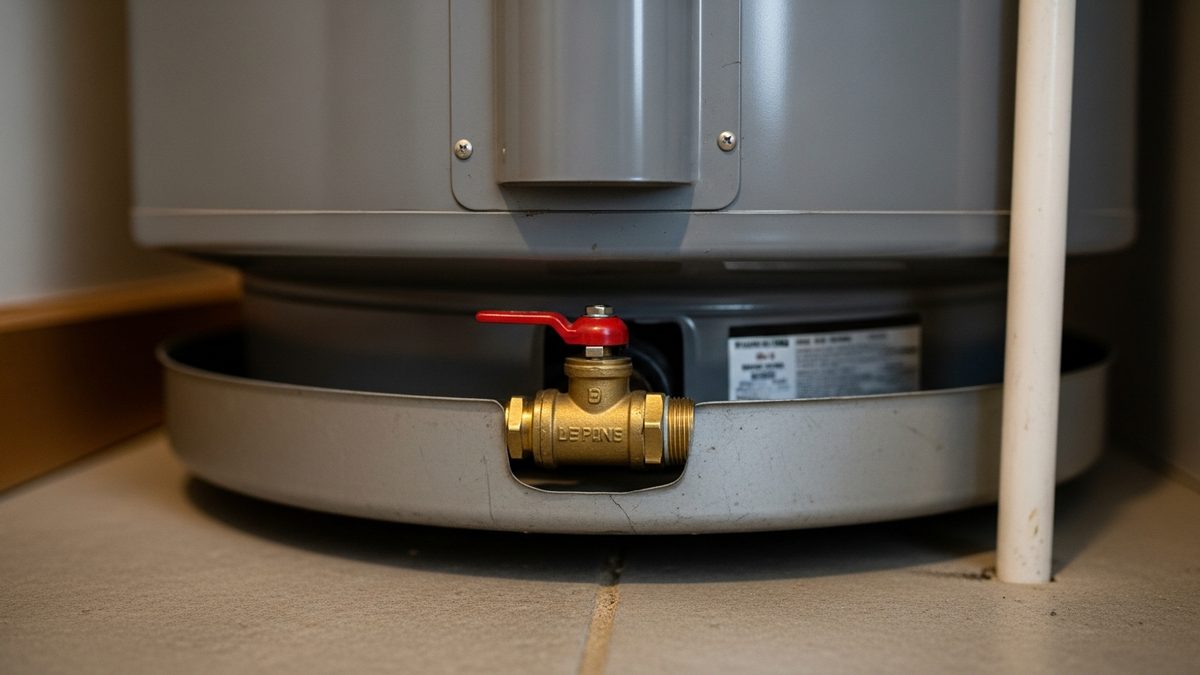
If your water heater has started making popping, rumbling, crackling, or banging noises, you are probably wondering whether it is about to blow up. Most of the time, those sounds are not an immediate safety emergency — but they do mean your water heater has a sediment problem that will shorten its life and drive up your energy bill if you ignore it.
Most likely causes, ranked
1. Sediment buildup at the bottom of the tank (most common)
Hard water carries dissolved calcium and magnesium. As your water heater heats water to 120°F or higher, those minerals drop out of solution and collect at the bottom of the tank. Over time they form a thick, gritty layer. When the burner or heating element cycles on, steam bubbles get trapped under the sediment and pop free — making that knocking or rumbling noise.
The Department of Energy notes that sediment acts as insulation between the heat source and the water, forcing the unit to run longer and burn more energy. [1]
2. Scale on the heating element (electric heaters)
Electric water heaters can develop a heavy crust of mineral scale directly on the lower element. The sound is similar to sediment noise. If flushing the tank doesn't stop it, the element itself may need replacement.
3. Thermal expansion (ticking or tapping)
Pipes expand slightly as they heat up and contract as they cool. A mild ticking or tapping at the start and end of a heating cycle is normal and harmless. Loose pipe straps can amplify it.
4. High tank pressure (rumbling or groaning)
If the thermostat is set too high, or if you have a closed plumbing system with no expansion tank, pressure can build above normal. A groaning or rumbling sound — combined with a T&P valve that drips — points here. This needs a plumber.
5. Failing tank liner (deep booming, older units)
On a water heater that is 10-plus years old, the glass-ceramic inner lining can crack and pit. The sounds become deeper and more structural. Rusty or brown hot water alongside this noise means the tank is corroding from the inside — replacement is the right answer.
What the noise tells you
- Light popping or crackling: Early-stage sediment. A flush will often fix it.
- Heavy rumbling or banging: Heavy sediment. Flush, but if the unit is over 8 years old, start budgeting for replacement.
- Deep booming on an older unit: Possible liner failure. Have a plumber take a look.
How to flush the tank yourself
Flushing removes the sediment layer. The DOE recommends flushing a quart of water every three months as routine maintenance; a full flush once or twice a year is more effective. [2]
What you need: a garden hose long enough to reach a drain, work gloves, and 30–45 minutes.
- Turn the heater off — pilot setting (gas) or circuit breaker off (electric). Let the water cool for a few hours if possible.
- Connect a garden hose to the drain valve at the bottom. Run it to a floor drain or outside.
- Shut off the cold water supply to the tank (valve on the cold inlet pipe above the unit).
- Open a hot faucet somewhere in the house to break the vacuum.
- Open the drain valve. Water and sediment will flow out. Let it run until clear — 10–30 minutes.
- Flush with fresh water: Turn the cold supply back on briefly while the drain valve is still open to stir up remaining sediment. Repeat until clear.
- Close the drain valve, remove the hose, and turn the cold supply back on.
- Refill the tank completely before turning the heater back on. Running an electric element dry burns it out immediately.
Note: if the drain valve drips after closing, have a plumber replace it with a brass ball valve — old plastic valves often fail to reseal after first use.
Safety first
Scalding: The CPSC recommends keeping the water heater set to 120°F. [3] Water coming out of the drain valve during a flush will be very hot if you have not let the tank cool first.
Gas models: If you smell gas near the unit, do not touch any switches or valves. Leave immediately, leave a door open, and call your gas company from outside.
T&P valve: Do not use the T&P valve as a drain point. Tripping it repeatedly can cause it to fail to reseal. Its only job is safety, and it needs to reseal properly. [3]
Electric models: Keep the breaker off until the tank is fully refilled with water.
When to call a licensed plumber
- Drain valve won't close after flushing (it needs replacement)
- T&P valve is dripping or discharging
- Noise continues after flushing on a unit 8-plus years old
- Rusty or brown water on the hot side only
- You're not comfortable working with the gas shutoff or water supply valves
What it typically costs
| Service | Typical Range (2025–2026) |
|---|---|
| Professional tank flush | $100 – $200 |
| Drain valve replacement | $100 – $200 |
| Heating element replacement | $200 – $400 |
| Anode rod replacement | $150 – $250 |
| New 40–50 gal. gas tank (installed) | $900 – $1,800 |
| New 40–50 gal. electric tank (installed) | $700 – $1,400 |
Common mistakes
Running the heater with an empty tank. If you refilled but forgot to fully open the cold supply before flipping the breaker, an electric element can burn out in minutes. Confirm water flows from an open hot tap before energizing.
Skipping annual flushes. One flush after 10 years of neglect rarely fully clears heavy scale. Annual maintenance from the start makes a big difference.
Ignoring the anode rod. This sacrificial rod protects the tank from internal corrosion. The DOE recommends inspecting it every 3–4 years and replacing it when depleted. [2] A dead anode rod leads directly to the deep booming sounds of a dying tank.
How to prevent sediment from coming back
- Flush at least once a year — every 6 months in hard water areas.
- Consider a whole-house water softener or sediment filter if you have very hard or mineral-heavy water.
- Keep the temperature at 120°F — higher temps accelerate scale formation.
- Replace the anode rod every 3–5 years (more often with a water softener).
FAQ
Is a popping water heater dangerous? Sediment noise alone is not an immediate safety hazard. The T&P valve is there to handle true pressure and temperature emergencies. That said, it is a symptom of reduced efficiency and possibly reduced lifespan.
My water heater is 3 years old and already noisy. Is that normal? In hard water areas, yes. Annual flushing from the start prevents significant buildup even in newer units.
Can I add a chemical descaler to the tank? Most plumbers and manufacturers do not recommend chemical agents for storage tank heaters. Flushing with fresh water is safer and effective for sediment removal.
The drain valve is stuck. What do I do? Do not force it — a plastic valve can crack under pressure. Call a plumber to replace it. It is a minor repair, typically under $200.
How long will the tank last after flushing? Regular flushing from the start, combined with anode rod maintenance, can keep a quality tank running well for 12–15 years. A single flush on a badly neglected old unit won't add years — it just buys a little time.
Get a free quote
If your water heater is noisy, inefficient, or past its prime, a licensed plumber can give you an honest assessment. Contact Local Service Group for a free, no-obligation quote.
Sources
- https://www.energy.gov/energysaver/water-heating
- https://www.energy.gov/energysaver/storage-water-heaters
- https://www.energy.gov/energysaver/do-it-yourself-savings-project-lower-water-heating-temperature
Disclaimer
The information on this page is provided for general educational purposes only and is offered "as is" and "as available," without warranties of any kind, whether express or implied — including, without limitation, any warranties of accuracy, completeness, reliability, merchantability, or fitness for a particular purpose. It is not professional advice and is not a substitute for inspection, diagnosis, or repair by a licensed, qualified professional.
Home systems involving gas, electricity, water, refrigerant, fire, or structural components can be hazardous, and requirements vary by local code and jurisdiction. Any inspection, diagnosis, repair, installation, or other action referenced on this page should be performed by a licensed professional. You should not rely on this content to perform such work yourself. To the fullest extent permitted by law, [Company Name] and its owners, employees, and contributors assume no responsibility or liability for any injury, death, property damage, or other loss arising out of or in connection with the use of, or reliance on, this information.
If you smell gas or suspect a carbon monoxide leak, leave the area immediately and call 911 or your gas utility from a safe location.