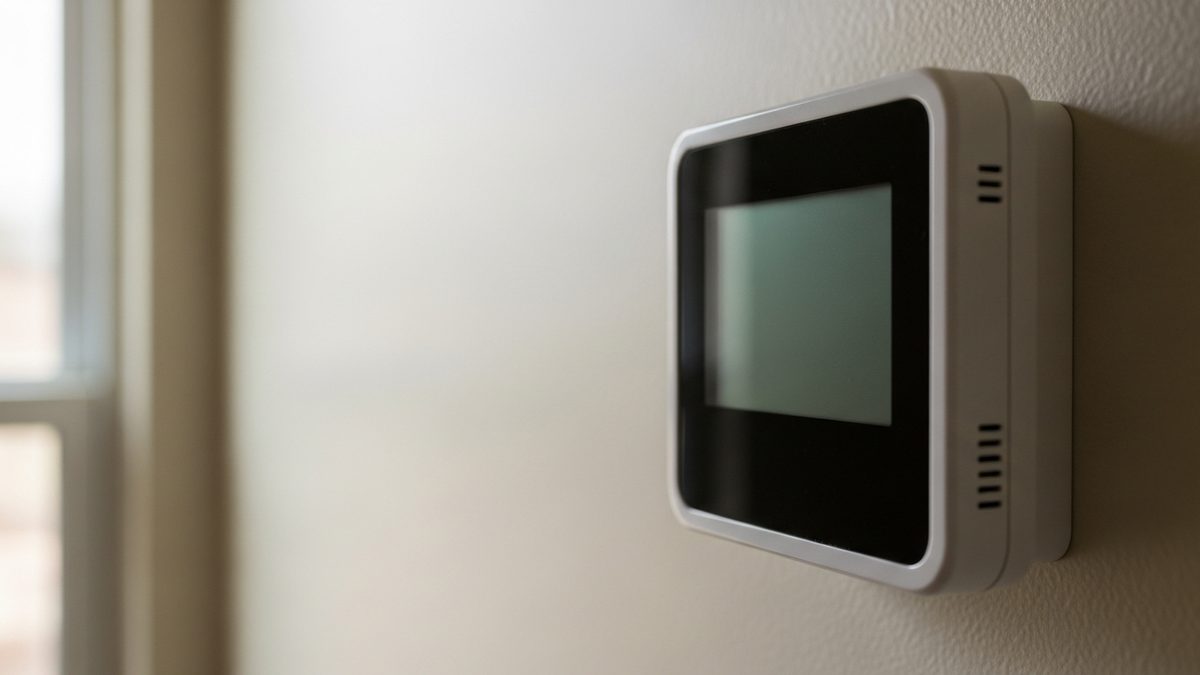
You walk over to adjust the heat and the thermostat screen is completely dark. Or maybe there is a faint display but nothing responds when you press buttons. Before you assume the thermostat is dead and needs replacing, know this: in the large majority of cases, a blank or unresponsive thermostat has a simple, fixable cause. This guide works through the most likely ones in the order you should check them.
Most Likely Causes
1. Dead batteries
Battery-powered thermostats are by far the most common type in American homes — including many "smart" thermostats that have a battery backup. When the batteries die, the display goes blank. The fix is exactly as simple as it sounds.
Most thermostats use AA or AAA batteries; some use lithium coin cells. The battery compartment is usually on the back of the thermostat body (after you pull it off the wall plate) or on the side. Replace them with fresh alkaline batteries, snap the thermostat back onto the plate, and wait 30 seconds for it to power up.
If the thermostat has been blank for a while, a fresh set of batteries should also restore any programmed schedules. Write down your settings before removing the batteries if your model does not store them in non-volatile memory.
2. Tripped furnace door switch
Many furnaces have a safety push-button switch on the blower compartment door. When the door is firmly closed, the button is depressed and power flows to the system. If the door is slightly ajar — even a quarter inch — the switch cuts power to the whole system, which includes the 24-volt signal that powers most thermostats.
Check the furnace cabinet. Make sure every access panel is fully seated and latched. Press firmly on each panel to confirm it is flush. If you recently changed the filter or had someone service the furnace and the thermostat went blank shortly after, this is the first thing to check.
3. Tripped breaker or blown low-voltage fuse
Breaker: Your furnace, air handler, or heat pump has its own circuit breaker in the main electrical panel. A tripped breaker cuts 120V or 240V power to the system, which means no 24V transformer output, which means a blank thermostat. Locate the breaker labeled "furnace," "air handler," "HVAC," or "heat pump." If it is tripped (handle in the middle), push it firmly to OFF then back to ON.
If the breaker trips again right away, stop. A repeatedly tripping breaker indicates a wiring short or overload that needs a licensed electrician or HVAC technician — not another reset.
Low-voltage fuse: Most furnace and air handler control boards have a small inline fuse — usually a 3-amp or 5-amp automotive-style blade fuse or a glass cartridge fuse — protecting the 24V transformer circuit. This fuse blows when there is a wiring fault or a short in the thermostat wiring (a wire that touches a metal duct, for example). When it blows, the thermostat goes dead.
The fuse is typically found on the control board inside the furnace or air handler. If you are comfortable locating the control board, look for a small colored plastic fuse in a holder and check it visually or with an inexpensive fuse tester. Replace it with an identical fuse. If it blows again immediately, there is a wiring fault that needs a technician.
4. Tripped condensate float switch
High-efficiency furnaces and central air conditioning systems produce condensation. If the condensate drain line gets clogged, water backs up into a collection pan. A float switch sits in that pan — when the water level rises too high, the float switch trips and cuts power to the system, producing a blank thermostat as a side effect.
To check: locate the condensate pan, usually under the air handler or in the furnace cabinet. If there is standing water in the pan, the drain is clogged. Clear the drain (a wet/dry vacuum applied to the drain outlet works well) and the float switch should reset automatically once the water level drops. Flush the line with diluted white vinegar afterward to prevent algae from clogging it again.
5. Loose, corroded, or missing C-wire
The C-wire (common wire) completes the 24V circuit between the furnace control board and the thermostat. Many older homes were wired without a C-wire, and many smart thermostats (Nest, Ecobee, Honeywell smart models) require a C-wire to power themselves continuously.
Without a C-wire, some smart thermostats try to "steal" power from other wires, which can cause intermittent blank screens, random reboots, or the system short-cycling. If you recently installed a new smart thermostat and it goes blank periodically, a missing or improperly connected C-wire is the most common cause.
Check the thermostat wiring terminal block (visible when you pull the thermostat off the wall plate). The wire connected to the "C" terminal should be intact and firmly seated. If there is no wire on the C terminal at all, you may need to run a new wire or use an add-a-wire adapter — or have a technician install one.
6. The thermostat itself has failed
If you have worked through all of the above and the thermostat is still blank with confirmed good power, the thermostat itself may have failed. Thermostats can fail from power surges, age (most last 10–15 years), or physical damage. A basic programmable thermostat replacement costs $25–$80; smart thermostat models run $100–$300 and up.
Troubleshoot It Yourself (Safely)
Work through this sequence in order:
- Replace the batteries. Even if you think they are fine, try fresh ones.
- Check all furnace/air handler panels — press them firmly to confirm the door switch is engaged.
- Check the circuit breaker for the furnace or air handler.
- Check the low-voltage fuse on the furnace control board if you are comfortable opening the cabinet.
- Check the condensate pan for standing water.
- Inspect the C-wire connection if you have a smart thermostat.
- Try a hard reset on smart thermostats — most have a pinhole reset button or a sequence in the settings menu.
Safety First
The thermostat circuit itself runs at low voltage (24V AC) and is generally safe to handle. However, the equipment it controls involves real hazards.
- Never reach inside the air handler or furnace cabinet near the transformer, blower motor, or capacitor without turning off the breaker first. Capacitors store electrical charge even after power is cut — if you are not trained to handle them, leave internal component work to a technician.
- If you smell gas at any point while checking the furnace cabinet, leave the home immediately, leave the door open, and call your gas utility from outside.
- The CDC states that gas furnaces are a known source of carbon monoxide poisoning when heat exchangers crack or venting is improper. Install CO detectors on every level of your home and outside sleeping areas. Replace them per manufacturer instructions or every five years, per CPSC guidance.
- A blown fuse that keeps blowing is not a fuse problem — it is a wiring problem. Do not keep replacing fuses; find and fix the fault.
When to Call a Licensed Pro
Stop DIY troubleshooting and call a licensed technician when:
- A breaker or low-voltage fuse keeps tripping or blowing after replacement
- You see any scorching, burn marks, or melted wiring near the control board or thermostat base
- The thermostat went blank after a flooding event or water leak near the HVAC system
- You are uncomfortable opening the furnace cabinet
- The condensate pan is overflowing and you cannot clear the drain
- A new thermostat installation is not powering up (possible wiring fault or C-wire issue)
What It Typically Costs
| Fix | Typical Cost (2025–2026) |
|---|---|
| Battery replacement (DIY) | $5–$15 |
| Low-voltage fuse (DIY, if comfortable) | Under $5 |
| Thermostat replacement — basic (DIY-installed) | $25–$80 |
| Thermostat replacement — smart model (DIY) | $100–$300 |
| Professional thermostat installation | $100–$250 |
| C-wire addition or add-a-wire adapter | $75–$175 |
| Condensate drain clearing | $75–$175 |
| Control board diagnosis and repair | $150–$500 |
Common Mistakes
- Assuming the thermostat is dead without checking the batteries. Dead batteries cause the vast majority of "blank screen" service calls.
- Leaving a furnace panel slightly open after a filter change. The door safety switch is sensitive — even a small gap cuts power to the whole system.
- Replacing a blown fuse without investigating why it blew. A fuse that blows again immediately means a short is still present in the wiring.
- Wiring a new smart thermostat without a C-wire and wondering why it acts erratically. Most smart thermostats need a dedicated C-wire. Read the compatibility requirements before buying.
- Not checking the condensate pan. A tripped float switch looks identical to a blown fuse or tripped breaker from the thermostat's perspective — blank screen, no function.
How to Prevent Thermostat Problems
- Replace batteries once a year — most thermostats will warn you with a low-battery indicator, but setting an annual reminder is easier.
- Keep the furnace door securely latched at all times and after any service.
- Flush the condensate drain twice a year with diluted white vinegar to prevent algae buildup that triggers the float switch.
- Have the thermostat wiring inspected if you notice intermittent blank screens — a wire rubbing against a sharp metal edge will eventually short and blow the fuse.
- Replace thermostats older than 15 years proactively during a routine HVAC service — older mechanical and early electronic thermostats become inaccurate and unreliable.
FAQ
Why did my thermostat go blank but the furnace still works? Some thermostats have enough stored charge to display briefly, and some systems have a manual override. More likely, if the furnace is still running, it is in a previous state. Check the batteries and door switch first.
My thermostat screen says "RC" or shows a partial display — is that a battery issue? A partial display often means the batteries are very low but not completely dead. Replace them and the display should return to normal.
Can a power surge damage a thermostat? Yes. A nearby lightning strike or significant utility surge can damage the thermostat's circuit board. If the thermostat went blank immediately after a storm and new batteries do not help, replacement is likely needed.
I replaced the fuse and it blew again. What should I do? Stop replacing fuses and call a technician. A fuse that keeps blowing means a wiring short is present somewhere in the 24V control circuit — common locations are a thermostat wire that has been pinched or abraded against a metal edge inside a wall or duct.
How do I know if my thermostat needs a C-wire? Check the specifications for your thermostat model. If it is a smart thermostat (Nest, Ecobee, most Honeywell smart models), it almost certainly needs a C-wire. Pull the thermostat off the wall and look at the wiring block — if there is nothing on the C terminal, you likely need one added.
Ready to Get a Free Quote?
A licensed HVAC technician can diagnose a blank thermostat, trace any wiring faults, and get your system running again. Use our free quote tool to connect with pros near you.
Sources
- U.S. Department of Energy — Programmable Thermostats: https://www.energy.gov/energysaver/programmable-thermostats
- CDC — Carbon Monoxide Poisoning Basics: https://www.cdc.gov/carbon-monoxide/about/index.html
- U.S. Consumer Product Safety Commission — Carbon Monoxide Information Center: https://www.cpsc.gov/Safety-Education/Safety-Education-Centers/Carbon-Monoxide-Information-Center
- U.S. Department of Energy — Furnaces and Boilers: https://www.energy.gov/energysaver/furnaces-and-boilers
- U.S. EPA — Indoor Air Quality and HVAC Maintenance: https://www.epa.gov/indoor-air-quality-iaq/what-merv-rating
Disclaimer
The information on this page is provided for general educational purposes only and is offered "as is" and "as available," without warranties of any kind, whether express or implied — including, without limitation, any warranties of accuracy, completeness, reliability, merchantability, or fitness for a particular purpose. It is not professional advice and is not a substitute for inspection, diagnosis, or repair by a licensed, qualified professional.
Home systems involving gas, electricity, water, refrigerant, fire, or structural components can be hazardous, and requirements vary by local code and jurisdiction. Any inspection, diagnosis, repair, installation, or other action referenced on this page should be performed by a licensed professional. You should not rely on this content to perform such work yourself. To the fullest extent permitted by law, [Company Name] and its owners, employees, and contributors assume no responsibility or liability for any injury, death, property damage, or other loss arising out of or in connection with the use of, or reliance on, this information.
If you smell gas or suspect a carbon monoxide leak, leave the area immediately and call 911 or your gas utility from a safe location.