Stove Burner Won't Light or Igniter Keeps Clicking?
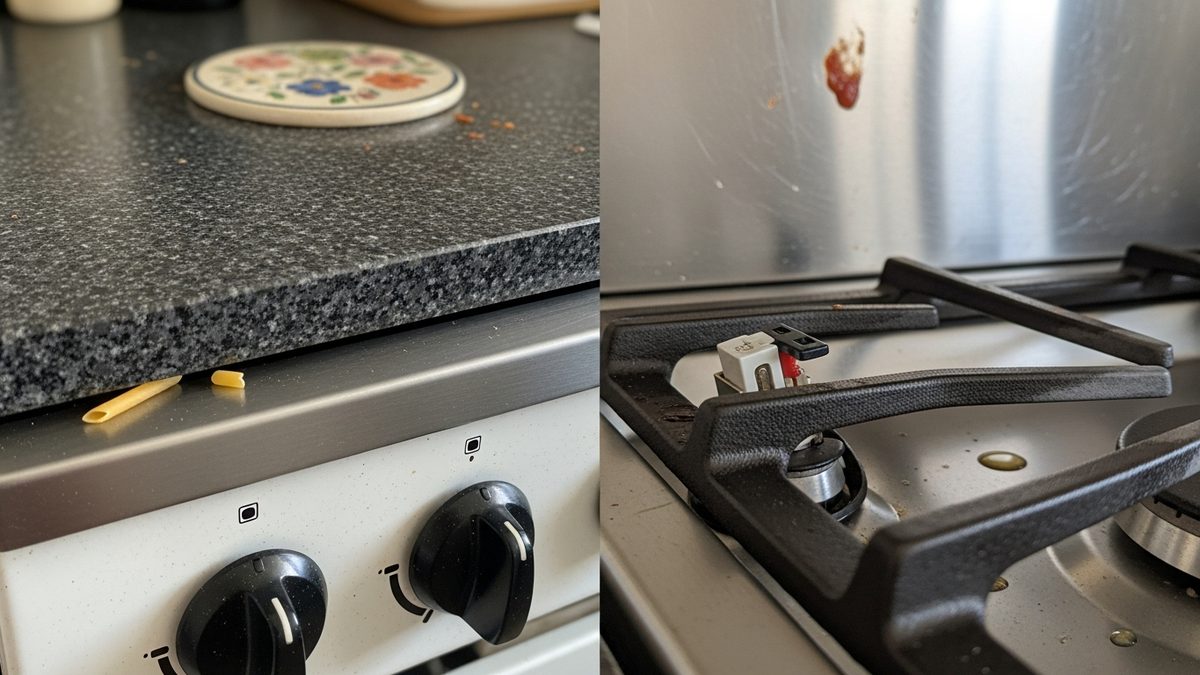
You turn the knob to light a burner and nothing happens — no flame, just clicking. Or the burner lights fine but the igniter keeps clicking even after the flame is going. Or one burner on your stove just stopped working while the others are fine. These are some of the most common and most fixable gas range problems homeowners deal with, and in most cases the cause is something you can see and address yourself.
This guide covers every common cause, how to clean and fix the problem, when it becomes a safety concern, and when to call a professional.
Most likely causes
1. Food or debris clogging the igniter or burner ports This is the single most common cause of a burner that won't light or an igniter that sparks but produces no flame. Boil-overs, grease splatters, and food particles block the small gas ports in the burner cap and contaminate the ceramic igniter tip. When the ports are clogged, gas can't flow properly even though the igniter is sparking normally. When the igniter tip is coated with food residue, it sparks weakly or not at all. This is a cleaning problem, not a mechanical one.
2. Moisture inside the igniter assembly After cleaning the stovetop — especially if you used a lot of water, steam-cleaned it, or spilled a significant amount of liquid — moisture can get into the igniter module. Wet igniters click continuously because the spark is tracking across the moisture film rather than jumping the designed gap. The igniter may also refuse to spark effectively until it dries out. This is extremely common after a vigorous cleaning session.
3. Misaligned burner cap The round burner cap sits on top of the burner base and must be centered precisely. When it's off-center — even slightly, often from being wiped down and set back carelessly — gas doesn't distribute evenly through the ports. The burner may light on one side only, produce a weak uneven flame, or refuse to light at all. This is the second most common cause after debris and it requires no tools to fix.
4. Clogged burner ports Even with the igniter sparking correctly and the cap aligned, gas must flow through small holes (ports) around the burner base and cap. These ports can be partially or fully blocked by baked-on food, grease, or mineral deposits from hard water. The ports are small enough that even a thin layer of residue restricts gas flow.
5. Worn or damaged igniter Over time, the ceramic spark igniter tip cracks, chips, or wears down. A physically damaged igniter may spark erratically, spark but too far from the gas ports to light the flame, or stop sparking altogether. If the igniter is visibly chipped or cracked, it needs replacement.
6. Faulty igniter switch Behind each knob, there's a micro-switch that tells the igniter module to spark when you turn that knob to "light." When the switch wears out or gets contaminated with grease, the igniter for that burner may not respond to the knob — or may spark continuously even when the knob is in the off position. An igniter that clicks when no knob is turned often points to a faulty switch rather than food or moisture.
7. Wiring issue or failed spark module The spark module is the central box that receives the signal from each igniter switch and sends voltage to the individual igniters. A failed spark module usually causes multiple burners to stop sparking at the same time. Wiring damage — from spills soaking into the cooktop cavity, rodents, or heat damage — can interrupt the circuit to a single igniter.
Troubleshoot and clean it yourself (safely)
These steps handle the majority of burner ignition problems. Always turn the gas off at the stove knobs and unplug the range from the wall outlet before doing any cleaning inside the burner area or cooktop cavity.
-
Turn the knob to off and unplug the range. Even if you think the problem is just debris, unplug the range so the igniter can't spark while your hands are near it.
-
Remove the grate, burner cap, and burner base. Lift off the grate. The burner cap lifts straight up — it's not fastened. On most ranges, the burner base also lifts out (some have a small screw). Set everything on a counter.
-
Inspect the igniter tip. The igniter is the small white or brown ceramic post next to the burner base. Look for food buildup on the tip. Clean it gently with a dry toothbrush or a Q-tip lightly dipped in rubbing alcohol. Do not use water directly on the igniter. Do not scrub with anything metal.
-
Clear the burner ports. Use a straightened paper clip or a toothpick to clear each small port hole around the burner base and cap. Brush away loosened debris. Do not use a toothpick if it might break off inside a port — wooden toothpicks are risky; a metal paperclip is safer. Rinse the burner cap and base under warm water, scrub with a small brush, and dry thoroughly before reinstalling.
-
Dry everything completely. If you suspect moisture from cleaning, leave the burner parts out on a towel for 30 to 60 minutes. You can also use a hair dryer on a low setting (with the range still unplugged) to speed drying of the igniter area. Make sure no moisture remains before reassembling.
-
Reinstall the burner base and cap carefully. Set the burner base back in its seat, then set the cap precisely on top, centered. The cap usually has a small notch or flat side that aligns with a matching feature on the base — make sure it's properly seated, not tilted.
-
Plug the range back in and test. Turn one burner knob to the light position. The igniter should spark and the burner should light within two to three seconds. If it still doesn't light or the clicking persists, move to the next steps.
-
For persistent clicking with no ignition: unplug the range again and look at the igniter switch behind the knob. If the switch looks wet, contaminated with grease, or visibly damaged, it may need replacement.
Gas safety — read this before you start
-
If you smell gas when the burner knob is off, or if you smell gas strongly and persistently when trying to light a burner, do not attempt to light it and do not try to troubleshoot. Leave the house, leaving doors open as you go. Call your gas utility company or 911 from outside or from a neighbor's home. Do not use any switches, outlets, or flames until the utility company clears the area.
-
A brief smell of gas for one to two seconds when first turning on a burner is normal — that's gas flowing to the ports just before the igniter lights it. A persistent smell, or a smell that doesn't go away after the flame lights, is not normal.
-
If a burner produces a very lazy, orange-yellow flame rather than a crisp blue flame, the air-to-gas mixture may be off. This can indicate a port clog, a mis-seated cap, or a deeper burner issue. Orange flames also produce more carbon monoxide. Have it inspected.
-
Never attempt to repair, replace, or adjust any gas supply valve, gas line fitting, or gas orifice yourself. These are licensed-professional-only repairs.
When to call a licensed pro
Call a technician when:
- Cleaning and re-seating the cap don't fix the problem and the igniter is visibly cracked or chipped.
- Multiple burners stopped sparking at the same time — this points to a failed spark module.
- The igniter sparks continuously even with all knobs off and the range plugged in — this indicates a stuck igniter switch inside the panel that requires disassembly to reach.
- You suspect a wiring issue inside the cooktop cavity.
- You notice an orange or yellow flame on any burner after cleaning.
- Any gas smell that persists or occurs when the stove is not in use.
What it typically costs
National averages for 2025–2026:
- Igniter cleaning (as part of a service call): $75–$130 diagnostic visit; cleaning alone is a DIY task
- Igniter switch replacement: $100–$200 parts and labor per switch
- Igniter replacement (one burner): $120–$220 parts and labor
- Spark module replacement: $150–$300 parts and labor
- Gas stove burner repair (general): $150–$400 depending on the component
Common mistakes to avoid
- Reinstalling the burner cap off-center. This is the single most common mistake after cleaning a gas range. Take an extra few seconds to make sure the cap is perfectly centered and seated before testing.
- Using water to clean the igniter directly. The ceramic igniter tip is porous and soaks up water. Wet igniters click for hours. Use alcohol and let it evaporate, or simply use a dry brush.
- Forcing a toothpick into the burner ports and breaking it off inside. A broken wooden piece inside a port blocks gas flow and is difficult to remove. Use a metal paperclip or a burner port cleaning needle instead.
- Running the range with a clogged port. Even if the burner lights with only some ports open, the uneven flame can eventually damage the burner base and overheat the igniter.
- Ignoring a continuously clicking igniter. Constant sparking strains the igniter switch and spark module. Find the cause and fix it rather than waiting for something else to break.
How to prevent ignition problems
- Wipe up spills on the stovetop as soon as the surface cools after cooking. Don't let boil-overs bake onto the burner area.
- When cleaning the cooktop, remove the burner caps and bases and clean them in the sink regularly — every two to four weeks if you cook often.
- Dry burner caps thoroughly after washing and before putting them back. Never run the stove with wet caps.
- After reassembling the stovetop, take five seconds to center each cap before using the range.
- Avoid using excessive water near the igniter area when cleaning. A lightly damp cloth is enough for most day-to-day cleaning.
Frequently asked questions
Why does one burner click but not the others? If only one igniter clicks, the problem is isolated to that burner's igniter, switch, or wiring — not the central spark module. Cleaning the igniter and re-seating the cap are the first things to try.
My range keeps clicking even when all the knobs are off. Why? Continuous clicking with knobs off usually means one of the igniter switches is stuck — either from moisture, a spill that got into the knob area, or a worn switch mechanism. Unplug the range (to stop the clicking), allow any moisture to dry, then test. If it continues after drying, the switch likely needs replacement.
Can I still use the other burners if one igniter is broken? Yes, if the others are working normally. You can also light a non-functioning burner with a long lighter or match — hold the flame at the ports before turning the knob to release gas. This is safe as a temporary workaround if no gas has built up.
My burner lights but the flame is yellow and uneven. Is that dangerous? An orange or yellow flame on a gas burner produces incomplete combustion and more carbon monoxide than a clean blue flame. It's not a call-the-fire-department emergency, but it's worth fixing promptly. Clean the ports thoroughly and make sure the cap is centered. If the flame doesn't improve, have it inspected.
My range is fairly new and a burner already stopped working. Should I call the manufacturer? If the range is within the manufacturer's warranty period (typically one year), contact the manufacturer or authorized service center — repair costs should be covered. Common manufacturers like GE, Whirlpool, Samsung, LG, and Maytag all have warranty service programs.
Ready to cook again?
If cleaning and re-seating the caps don't solve the problem, a technician can diagnose the igniter, switch, or module in a single visit. Contact Local Service Group for a free quote from a qualified appliance repair pro in your area.
Sources
- Mr. Appliance — Why Is My Gas Stove Clicking: https://www.mrappliance.com/blog/why-is-my-gas-stove-clicking-/
- iFixit Utah — My Gas Stove Keeps Clicking: https://www.ifixutah.com/my-gas-stove-keeps-clicking-what-should-i-do/
- D3 Appliance — How to Fix a Gas Stove That Keeps Clicking: https://d3appliance.com/oven-repair/how-to-fix-a-gas-stove-that-keeps-clicking/
- Fixr — Gas Stove Repair Cost: https://www.fixr.com/costs/gas-stove-repair
- HomeAdvisor — Stove and Oven Repair Cost: https://www.homeadvisor.com/cost/kitchens/oven-repair/
- Aviv Appliance Pros — Igniters Clicking After Burner Turned Off: https://avivpros.com/ovens/igniters-clicking-when-off/
Disclaimer
The information on this page is provided for general educational purposes only and is offered "as is" and "as available," without warranties of any kind, whether express or implied — including, without limitation, any warranties of accuracy, completeness, reliability, merchantability, or fitness for a particular purpose. It is not professional advice and is not a substitute for inspection, diagnosis, or repair by a licensed, qualified professional.
Home systems involving gas, electricity, water, refrigerant, fire, or structural components can be hazardous, and requirements vary by local code and jurisdiction. Any inspection, diagnosis, repair, installation, or other action referenced on this page should be performed by a licensed professional. You should not rely on this content to perform such work yourself. To the fullest extent permitted by law, [Company Name] and its owners, employees, and contributors assume no responsibility or liability for any injury, death, property damage, or other loss arising out of or in connection with the use of, or reliance on, this information.
If you smell gas or suspect a carbon monoxide leak, leave the area immediately and call 911 or your gas utility from a safe location.