Should You Test for Radon? What the Levels Mean
Radon is the second leading cause of lung cancer in the United States, responsible for about 21,000 deaths each year according to the EPA.1 You cannot smell it, see it, or taste it. The only way to know whether your home has a problem is to test.
Testing is cheap and easy. Deciding what to do with the results is where most homeowners get confused. This guide explains what radon is, what the numbers mean, how to test, and when to call a professional.
What Radon Is and Where It Comes From
Radon is a naturally occurring radioactive gas. It forms when uranium in soil, rock, and water breaks down. That process happens everywhere beneath your feet—radon rises through the ground and enters homes through cracks in foundation walls, floors, gaps around pipes, and sump pits.
Once inside, radon can build up to dangerous levels, especially in basements and lower floors with limited ventilation. Homes in any state can have elevated radon. The EPA estimates that about 1 in 15 homes in the U.S. has radon levels at or above the action threshold.2
What the Numbers Mean
Radon is measured in picocuries per liter of air (pCi/L). The EPA's guidance breaks down like this:
4 pCi/L or higher: Fix your home. The EPA recommends taking action to reduce radon levels in any home at or above 4 pCi/L. This is the established action level.3
2 to 4 pCi/L: Consider mitigation. The EPA recommends that homeowners consider fixing their home even at levels between 2 and 4 pCi/L, because there is no known completely safe level of radon exposure.3
Below 2 pCi/L: Average indoor level. The national average indoor radon level is about 1.3 pCi/L. While technically lower risk, the EPA still recommends taking steps to reduce exposure where possible.
For context, the average outdoor radon level is about 0.4 pCi/L. Any indoor concentration above that carries some level of risk—it is a question of how much.
How to Test Your Home
Testing is the logical first step, and it does not require a contractor.
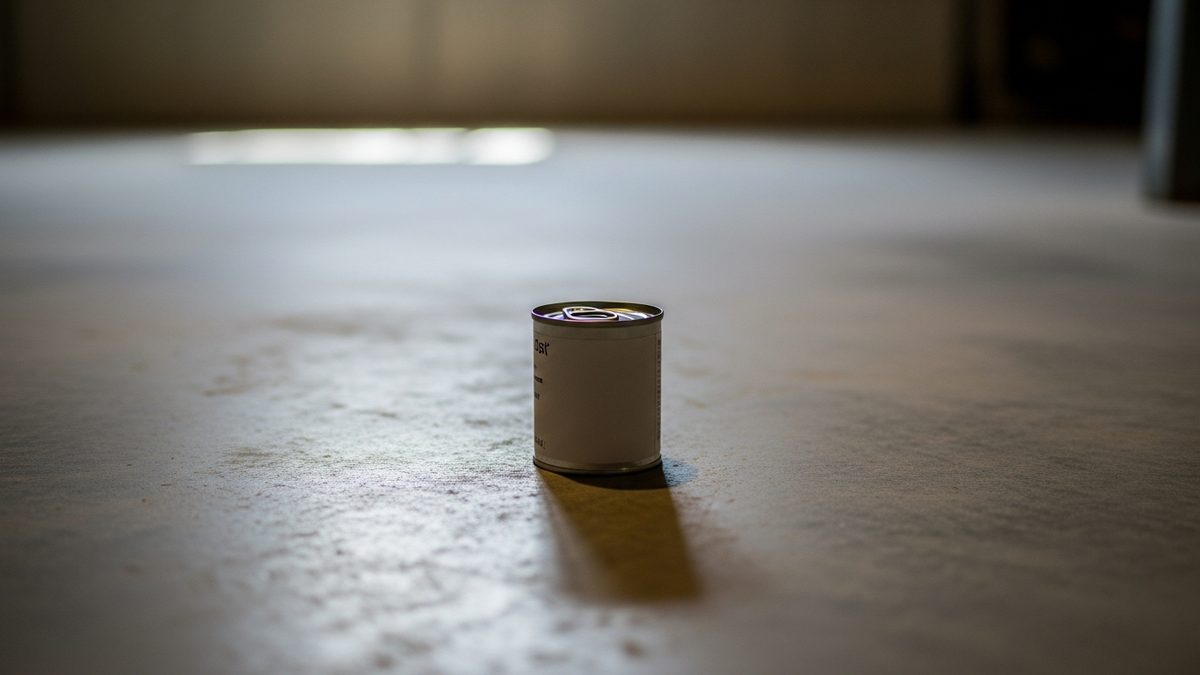
Short-term DIY test kits are the most common starting point. These use activated charcoal and are placed in the lowest lived-in area of your home for 2 to 7 days. You then mail the canister to a lab (the cost is usually included in the kit price). Short-term kits are available at hardware stores, pharmacies, and online for roughly $15 to $30.4
Long-term DIY test kits use alpha track detectors and measure radon for 90 days to a year. They give a more accurate picture of your actual average exposure because radon levels fluctuate with weather and seasons. These kits cost roughly $25 to $50.
Professional testing uses the same basic technology but is conducted by a state-certified or EPA-approved radon measurement professional. Some states require professional testing as part of real estate transactions. A professional test typically costs $100 to $200.
Free kits are sometimes available through your state radon program or county health department. The EPA's website can help you find your state contact.4
For the most reliable baseline, the EPA recommends placing the short-term test in the lowest level of your home that is used regularly—a finished basement where family spends time, for example, rather than an unfinished crawl space that nobody enters.
What to Do If Your Level Is High
If a short-term test comes back at 4 pCi/L or higher, the EPA recommends doing a follow-up long-term test or a second short-term test before committing to mitigation—unless the initial result was very high (10 pCi/L or above), in which case take action promptly.3
If two tests confirm elevated levels, contact a certified radon mitigation contractor. Do not try to mitigate yourself. Mitigation requires precise placement of fans, piping, and pressure differentials that vary based on your foundation type and soil conditions. An improperly installed system can actually make levels worse or create other moisture problems.
What Mitigation Costs
The EPA states that retrofitting a home with a radon reduction system typically costs between $800 and $2,500, with most homeowners paying around $1,200.5 The most common method—sub-slab depressurization—involves drilling a hole through the foundation, inserting a pipe, and using a small fan to draw radon-laden air from beneath the slab and vent it outdoors.
Annual electricity cost for the fan is minimal, usually $25 to $75 per year depending on the fan size and local utility rates.
After installation, the EPA recommends testing again to confirm the system is working. A well-installed system can typically reduce radon levels by up to 99 percent.
When to Call a Pro
You can handle the initial test yourself. But call a certified professional if:
- Either test result is at or above 4 pCi/L
- You are buying or selling a home and need a certified test result
- Your home has a complex foundation (block walls, crawl space, multiple slabs at different levels)
- You want a radon-resistant new construction feature installed
Look for contractors certified through the National Radon Proficiency Program (NRPP) or the National Radon Safety Board (NRSB). Your state radon program can provide a referral list.
Common Mistakes
Testing in the wrong location. Radon levels are highest near the ground. Test in the basement or lowest regularly occupied floor, not on the second floor or main living level.
Opening windows during the test. Short-term tests require "closed-house conditions"—windows and doors closed as much as possible for 12 hours before and during the test. Ventilating before the test gives you a falsely low reading.
Acting on a single short-term result. One test in one location during one week is a starting point, not a definitive answer. Confirm with a second test, especially if the first result was between 2 and 8 pCi/L.
Ignoring elevated levels after a renovation. Sealing a basement, finishing a lower level, or adding living space changes airflow patterns. Re-test any time significant work is done below grade.
How to Prevent Radon Buildup
In new construction, radon-resistant features such as a gas-permeable layer under the slab, a plastic sheeting vapor barrier, and a passive vent pipe are relatively inexpensive to build in and can be activated later with a fan if needed.
In existing homes: seal visible cracks in foundation walls and floors (though sealing alone rarely reduces levels enough to matter), increase ventilation in basements and crawl spaces, and install a mitigation system if testing confirms the need.
Frequently Asked Questions
Do I really need to test if my neighbors tested and their levels were fine? Yes. Radon levels can vary dramatically from house to house even on the same street. Soil type, foundation construction, and ventilation habits all affect concentration. Your neighbor's result tells you nothing about your own home.
How often should I test? The EPA recommends testing every two years, and any time you make significant changes to your home or lifestyle—finishing a basement, spending more time on a lower floor, changing heating systems, or after any major renovation.
Can radon enter through well water? Yes. Radon can dissolve into groundwater and be released indoors when you run the tap, shower, or run appliances. If your home uses a well and has elevated airborne radon, testing your water is also worthwhile.
Is radon a problem in every state? Radon has been found at elevated levels in all 50 states. The EPA has published radon zone maps by county, but these are planning guides—they do not predict any individual home's level.
Will sealing my foundation fix the problem? Usually not on its own. Sealing cracks helps but is rarely sufficient because radon can still enter through tiny gaps that are difficult to find and seal completely. Active mitigation with a fan-driven system is far more reliable.
Get a Free Quote
If your radon test came back high and you want to understand your mitigation options, a certified local contractor can walk you through what your home needs and what it will cost. Request your free estimate today.
Sources
Disclaimer
The information on this page is provided for general educational purposes only and is offered "as is" and "as available," without warranties of any kind, whether express or implied — including, without limitation, any warranties of accuracy, completeness, reliability, merchantability, or fitness for a particular purpose. It is not professional advice and is not a substitute for inspection, diagnosis, or repair by a licensed, qualified professional.
Home systems involving gas, electricity, water, refrigerant, fire, or structural components can be hazardous, and requirements vary by local code and jurisdiction. Any inspection, diagnosis, repair, installation, or other action referenced on this page should be performed by a licensed professional. You should not rely on this content to perform such work yourself. To the fullest extent permitted by law, [Company Name] and its owners, employees, and contributors assume no responsibility or liability for any injury, death, property damage, or other loss arising out of or in connection with the use of, or reliance on, this information.
If you smell gas or suspect a carbon monoxide leak, leave the area immediately and call 911 or your gas utility from a safe location.
Footnotes
-
U.S. Environmental Protection Agency — Radon in Homes, Schools and Buildings ↩
-
U.S. Environmental Protection Agency — A Citizen's Guide to Radon ↩
-
U.S. Environmental Protection Agency — What is EPA's Action Level for Radon and What Does it Mean? ↩ ↩2 ↩3
-
U.S. Environmental Protection Agency — How do I get a radon test kit? ↩ ↩2
-
U.S. Environmental Protection Agency — How much can a radon mitigation system cost? ↩