Oven Won't Heat or Won't Turn On? Troubleshooting Guide
You set the oven to 375 degrees, come back in 20 minutes, and the oven is stone cold. Or you press the bake button and nothing happens at all — no preheat indicator, no temperature display change, nothing. An oven that won't heat or turn on is one of those failures that immediately disrupts your household, and the fix depends heavily on whether you have an electric or gas oven and exactly what symptom you're seeing.
This guide walks you through every common cause for both types, what you can safely check yourself, gas safety considerations, and what professional repairs typically cost.
Most likely causes
Electric ovens
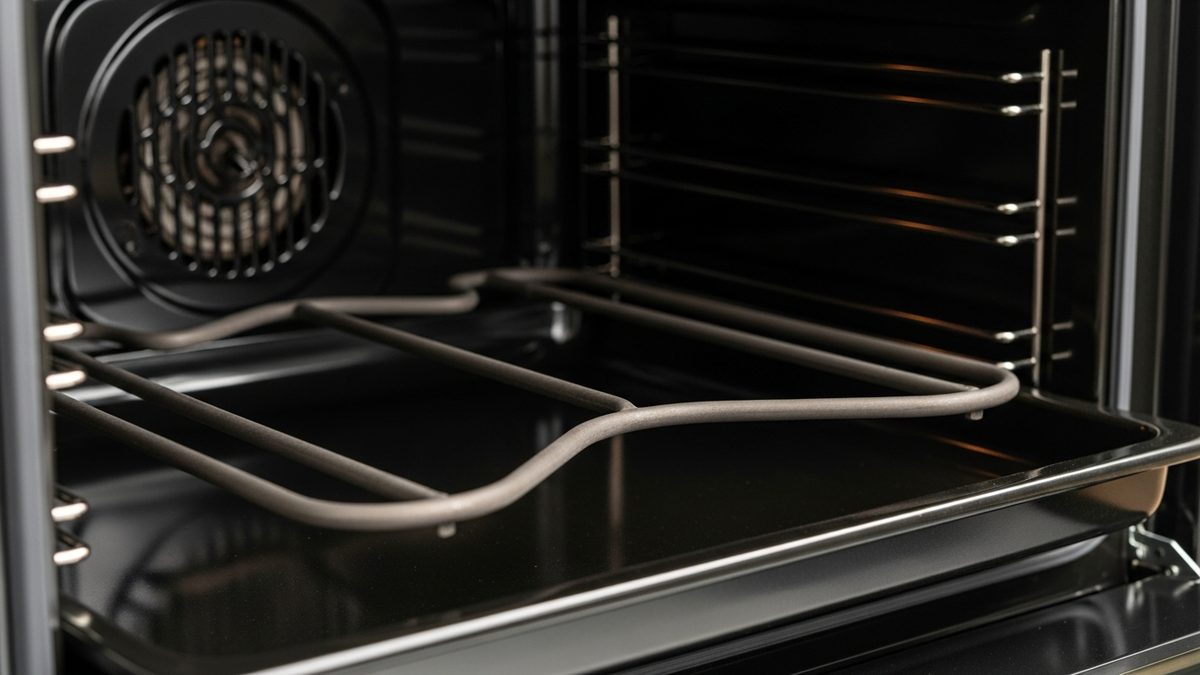
1. Burned-out bake or broil element Electric ovens heat the oven cavity with one or two large resistance elements — the bake element sits on the oven floor and the broil element is at the top. When these elements fail, they often show a visible sign: a crack, a burn hole, or a section that glows brighter than the rest. When the bake element burns out completely, the oven either won't heat at all or won't reach the set temperature. If only the broil element has failed, you'll lose the broil function but bake may still work.
2. Blown thermal fuse Many ovens have a thermal fuse — a safety device that permanently opens the circuit if the oven overheats. A blown thermal fuse typically causes the oven to go completely dead: no display, no response, nothing. It requires testing with a multimeter to confirm.
3. Tripped oven circuit breaker Like an electric dryer, a wall oven or range runs on 240 volts, supplied by a double-pole circuit breaker. If this breaker trips — or if one leg trips internally without the handle fully flipping — the oven may go dead or lose heating ability while the clock and control panel still work. Check the breaker panel first before anything else.
4. Faulty bake igniter — wait, that's gas. For electric ovens: a faulty oven sensor (temperature probe) can cause the oven to heat incorrectly or not at all. The sensor tells the control board what temperature the oven has reached. When the sensor fails open or reads far outside the expected range, many control boards will stop the heat cycle entirely as a safety measure. A bad sensor often shows as an error code on the display.
5. Control board or relay board failure Modern electronic ranges control the heating elements through relays on the control board. A burned relay or failed control board can prevent the bake or broil element from ever energizing, even if all the other components are fine. Control board failures are among the pricier oven repairs.
Gas ovens
6. Weak or failed gas igniter This is by far the most common reason a gas oven won't heat. The igniter does two jobs: it glows hot enough to light the gas burner, and it draws enough electrical current to open the safety gas valve. Most gas oven igniters last 5 to 10 years. When an igniter weakens, it may glow orange but not get hot enough to trip open the gas valve — so you see glow, smell a faint gas odor, but the burner never lights. A fully dead igniter produces nothing at all.
7. Gas supply issue If your gas oven suddenly doesn't work at all — no igniter glow, nothing — check whether other gas appliances in the home (stovetop burners, water heater) are working. If nothing gas-powered works, the issue may be with the gas supply to the house, not the oven itself.
8. Safety valve (oven valve) failure The oven safety valve (also called the gas valve) stays closed until the igniter draws enough current to open it. If the valve itself fails mechanically, gas never reaches the burner even when the igniter is working correctly. This requires professional diagnosis.
9. Control board or igniter circuit failure On newer gas ranges with electronic ignition, the control board manages the igniter circuit. A failed relay on the board can prevent the igniter from receiving power.
Troubleshoot it yourself (safely)
For electric ovens: unplug the range or turn off the circuit breaker before reaching inside the oven cavity or accessing any components. For gas ovens: close the gas supply valve and unplug the range before accessing any parts.
-
Check the circuit breaker first (electric ovens). Find the double-pole breaker for the oven or range in your electrical panel. Push both halves to the OFF position firmly, then back to ON. Try the oven again.
-
Look at the bake element (electric ovens). Open the oven door and look at the lower element. If you see a crack, burn hole, or blister mark, the element has failed and needs replacement. This is one of the most DIY-friendly oven repairs — on most electric ranges, the bake element is held by two screws and two wire connectors.
-
Watch the igniter (gas ovens). Turn on the oven to bake mode. Stand and watch through the oven door's window or through the door ajar. Within about 30 to 90 seconds, the igniter should begin glowing orange-red. If it glows strongly and the burner lights within 90 seconds, the igniter is working. If it glows dimly and the burner doesn't light after 90 seconds, the igniter is too weak to open the gas valve and needs replacement. If nothing glows at all, the igniter is dead.
-
Check for error codes. Most digital control panels display a fault code when a sensor, element, or board component fails. Look up your model number and the fault code on the manufacturer's support page (GE, Whirlpool, Samsung, LG, Maytag, Frigidaire all maintain online support libraries).
-
Check the oven door latch on self-cleaning models. Ovens with a self-clean cycle have a door lock mechanism. If this lock fails or sticks in the locked position, the oven may be locked out of normal bake mode. Check whether the door opens and closes freely and whether the control panel shows any lock indicator.
Gas safety — read this section
If you smell gas:
- Do not touch any light switches, outlets, or appliances.
- Leave the house immediately, leaving doors open as you go.
- Call your gas utility company or 911 from outside or a neighbor's home.
- Do not re-enter until cleared by the utility company.
A faint gas smell when first starting a gas oven is normal — gas flows for a second or two before the igniter lights it. But a persistent gas smell during operation, or any smell of gas when the oven is completely off, is an emergency. Gas appliance repairs must be done by a licensed technician.
Do not attempt to replace the gas valve, safety valve, or any gas-line component yourself. These repairs require the proper tools and training to ensure a safe, leak-free connection.
When to call a licensed pro
Call a technician when:
- The breaker checks out but the electric oven is still completely dead (possible thermal fuse or control board failure).
- The bake element is burned out but you're not comfortable handling electrical connections inside the oven cavity.
- The gas igniter needs replacement — especially on newer slide-in ranges where the burner assembly requires significant disassembly.
- Any component that connects to or includes the gas supply line.
- The oven displays a fault code pointing to the control board, sensor, or relay.
What it typically costs
National averages for 2025–2026:
- Bake or broil element replacement: $150–$300 parts and labor; part alone is $20–$60 DIY
- Gas igniter replacement: $150–$250 parts and labor
- Oven temperature sensor replacement: $100–$200 parts and labor
- Thermal fuse replacement: $100–$175 parts and labor
- Gas safety valve replacement: $175–$350 parts and labor (licensed tech required)
- Control board replacement: $200–$450 parts and labor
- Service call / diagnostic fee: $75–$125, often applied toward the repair if you proceed
Note: Range and oven repair costs increased 5 to 20 percent in 2025 due to tariffs on imported parts, particularly circuit boards and sensors.
Common mistakes to avoid
- Running the oven repeatedly hoping it starts working. If the igniter is weak, each failed ignition attempt releases a small amount of gas into the oven cavity. Repeated attempts can allow gas to accumulate.
- Replacing an expensive part without testing first. A multimeter and a model-specific wiring diagram can tell you whether the element, fuse, sensor, or board is at fault. Guessing costs more.
- Skipping the circuit breaker check on electric ovens. A partially tripped breaker is a free fix. It should always be the first step.
- Using aluminum foil on the oven floor. It traps heat against the bake element and the bottom of the oven, causing hot spots and element failures much earlier than normal.
How to prevent oven heating failures
- Avoid lining the oven floor with foil or oven liners that block the element or airflow.
- Don't slam the oven door — this stresses the door hinges, the door latch, and eventually the control panel.
- Clean the oven regularly. Baked-on spills can heat unevenly and build up on the bake element.
- If you use the self-clean cycle, do it no more than once or twice a year — self-clean runs the oven at very high temperatures (900 degrees F or more) and can stress components, particularly the thermal fuse and control board.
- Have any error codes diagnosed promptly rather than clearing them and ignoring the underlying issue.
Frequently asked questions
My electric oven bakes but the broil doesn't work. Does that mean both elements need replacing? Not necessarily. The bake and broil elements fail independently. If broil doesn't work, the broil element (top of the oven cavity) may be burned out. Check for visible damage on that element.
My oven preheats but can't hold temperature and takes forever to reach 350 degrees. Is that the heating element? Possibly, or it may be a failing temperature sensor that's reading lower than the actual temperature, causing the control to underheat. Both are worth testing.
The gas oven igniter clicks when I turn it on — but that's the stovetop, not the oven, right? Correct. The gas oven igniter is a different component from the surface burner igniters. The oven igniter typically glows (it's a glow-bar igniter) rather than clicking (which is a spark igniter). They fail independently.
My oven turns on after I reset the breaker but then stops working again within a week. What's causing that? Repeated tripping of the oven circuit breaker usually means there's a short in the heating element or a problem with the wiring inside the oven. Have a technician inspect the element and wiring before resetting again.
How long does an oven typically last? Electric ranges average 13 to 15 years; gas ranges average 15 to 17 years with normal use. If your oven is more than 12 years old and faces a major repair, weigh the repair cost against replacement.
Ready to get your oven working again?
If these steps don't identify the problem, or if you're dealing with a gas appliance, a trained technician can diagnose and repair most ovens in a single visit. Contact Local Service Group for a free quote from a qualified appliance repair pro in your area.
Sources
- HomeAdvisor — Oven Repair Cost: https://www.homeadvisor.com/cost/kitchens/oven-repair/
- Angi — How Much Does Oven Repair Cost: https://www.angi.com/articles/how-much-does-oven-repair-cost.htm
- Fixr — Oven Repair Cost: https://www.fixr.com/costs/oven-repair
- B&C Appliance — Symptoms of a Bad Oven Igniter: https://www.bandcecomllc.org/blog/symptoms-of-a-bad-oven-igniter-and-how-to-replace-it
- HomeGuide — Appliance Repair Costs 2026: https://homeguide.com/costs/appliance-repair-costs
- Liberty Home Guard — Average Appliance Repair Costs: https://www.libertyhomeguard.com/blog/home-maintenance/average-appliance-repair-costs-with-prices/
Disclaimer
The information on this page is provided for general educational purposes only and is offered "as is" and "as available," without warranties of any kind, whether express or implied — including, without limitation, any warranties of accuracy, completeness, reliability, merchantability, or fitness for a particular purpose. It is not professional advice and is not a substitute for inspection, diagnosis, or repair by a licensed, qualified professional.
Home systems involving gas, electricity, water, refrigerant, fire, or structural components can be hazardous, and requirements vary by local code and jurisdiction. Any inspection, diagnosis, repair, installation, or other action referenced on this page should be performed by a licensed professional. You should not rely on this content to perform such work yourself. To the fullest extent permitted by law, [Company Name] and its owners, employees, and contributors assume no responsibility or liability for any injury, death, property damage, or other loss arising out of or in connection with the use of, or reliance on, this information.
If you smell gas or suspect a carbon monoxide leak, leave the area immediately and call 911 or your gas utility from a safe location.