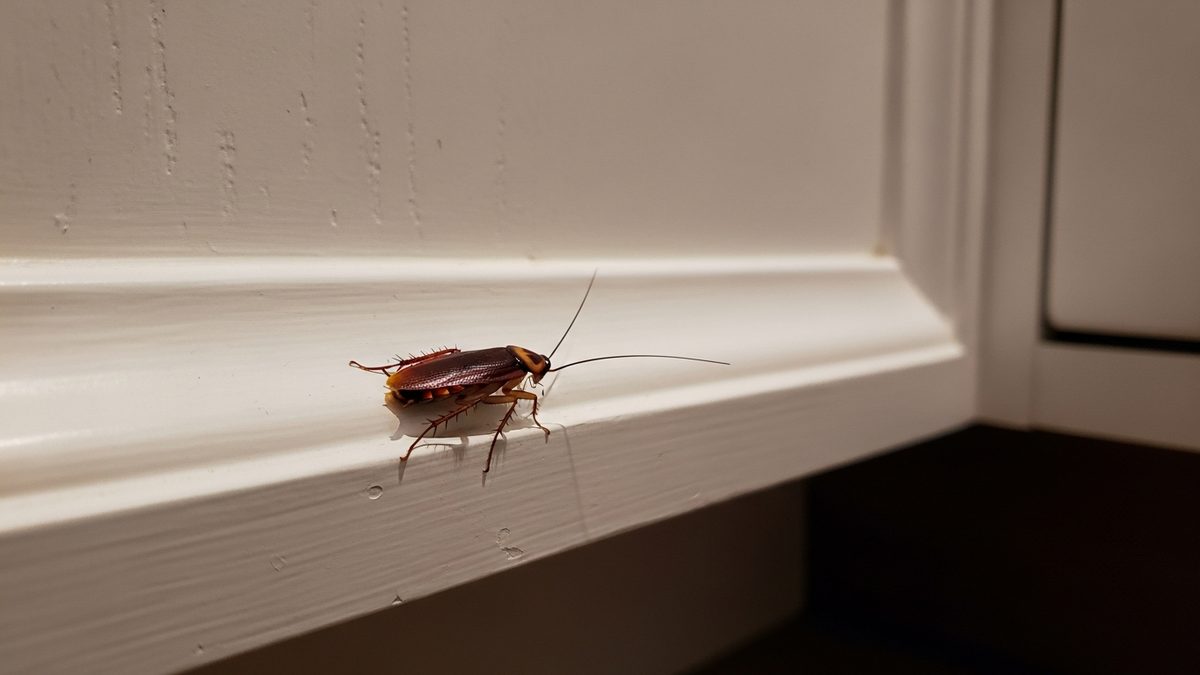
Finding a cockroach in your kitchen is one of those moments that does not leave you feeling calm. Roaches are among the hardest household pests to fully eliminate, but a clear, step-by-step plan really does work. Most people fail because they skip to the wrong steps first. This guide covers what to do, in order, based on guidance from university extension entomology programs and public health agencies.
Why roaches are so hard to get rid of
Roaches have been around for roughly 300 million years. They did not survive that long by being easy to kill.
A single German cockroach female and her offspring can produce more than 30,000 individuals in a year, per the UC ANR Statewide IPM Program. Their egg cases resist many surface sprays. Adults hide in cracks as narrow as 1/16 of an inch, and because they are nocturnal, the few you see at night represent a much larger hidden population.
The health risks are real. The CDC identifies cockroach allergens as a leading indoor asthma trigger, especially for children. Shed skins, droppings, and saliva become airborne and can be inhaled. Roaches also spread bacteria such as Salmonella and Staphylococcus onto food and surfaces.
Identify what you're dealing with
Knowing the species helps you focus your efforts in the right places.
German cockroach — The most common indoor species in the U.S. About half an inch long, light brown with two dark stripes. Found near food and water: behind the stove, under the refrigerator, inside cabinet hinges near the sink. If you have roaches in your kitchen or bathroom, this is almost certainly what you have.
American cockroach — Much larger, about 1.5 to 2 inches, reddish-brown. Usually comes up from sewers, basements, and floor drains. More common in warm, damp areas and tends to enter from outdoors.
Oriental cockroach — Dark brown to nearly black, sometimes called a "water bug." Prefers cool, damp spaces like basements and utility rooms.
To find them, use a flashlight late at night and check behind the refrigerator, under the stove, and around the water heater. Look for dark fecal spots (like ground pepper), shed skins, and egg cases in crevices — those mark active harborage sites.
Step-by-step plan to get rid of them
Roach control is not a one-day fix. Plan on four to six weeks of consistent effort. Follow these steps in order.
1. Deep clean and cut off food and water. Roaches need food, water, and shelter — remove them and you put pressure on the population while making baits far more effective. Wipe down counters and stovetops, store food in sealed containers, fix dripping pipes or faucets, and clean behind the refrigerator and stove where grease and crumbs build up. Vacuum cracks and crevices using a HEPA-filter vacuum — the UC ANR IPM Program recommends this because roach particles become airborne and can worsen allergies.
2. Seal cracks and entry points. Caulk gaps where plumbing enters walls, add door sweeps to exterior doors, and replace worn weatherstripping. Inspect secondhand furniture and cardboard boxes before bringing them inside — egg cases are sometimes glued to undersides.
3. Apply gel bait in the right spots. Gel baits use a slow-acting insecticide in an attractive food base. Roaches eat it, return to the harborage, and die there — and other roaches that contact them or their droppings pick up the insecticide too. Place pea-sized dabs inside cabinet hinges, along shelf edges, under and behind appliances, and near fecal spots. Common consumer products include indoxacarb (Advion) and fipronil (Combat Max). Do not spray anything near the bait — repellent sprays drive roaches away from it.
4. Add an insect growth regulator (IGR). IGRs prevent nymphs from maturing into reproducing adults, cutting off the next generation. Look for hydroprene (Gentrol is a common consumer brand) and apply it inside cabinets and wall voids. Paired with gel bait, IGRs are especially useful against heavy German cockroach infestations.
5. Monitor with sticky traps. Glue boards placed in corners and along walls tell you whether the program is working. Check every few days. Steadily falling catches over two to three weeks mean it is. Keep traps in place for four to six weeks — a well-set-up program can take two full weeks before numbers visibly drop.
What does NOT work well
Bug bombs and total-release foggers. These release insecticide into open air, but roaches live inside cracks, wall voids, and under appliances — exactly where fog never reaches. The UC ANR IPM Program calls foggers "often ineffective" for cockroaches because they do not penetrate harborage sites. They also scatter roaches into new areas of the home.
Spray insecticides used alone. Sprays knock down roaches you can see but miss the population hiding in walls. Many are repellent, which drives roaches away from any gel bait you have placed nearby — undermining your entire program.
Ultrasonic repellers. No peer-reviewed evidence supports them as effective against cockroaches.
When to call a pro
DIY works well for mild to moderate infestations caught early. Call a professional when:
- Sticky traps are catching dozens of roaches per night, or roaches are appearing in daylight (a sign the harborage is severely overcrowded).
- You live in an apartment or townhouse with shared walls. Roaches move freely between units through plumbing conduits, and treating only your unit will not solve the problem.
- Six weeks of proper treatment has not produced a clear improvement.
- Someone in the home has asthma or severe allergies. Because cockroach allergens are a documented asthma trigger, a heavy infestation in a home with asthmatic family members warrants faster, professional-grade intervention.
For a broader look at what a professional visit involves — what to expect, how treatments work, and how to compare quotes — read the general guide on what to expect from professional pest control.
How to keep roaches from coming back
Once the infestation is resolved, a few habits keep it from coming back:
- Keep food sealed and counters wiped down every day.
- Fix plumbing leaks promptly — even a slow drip sustains a colony.
- Seal new gaps around pipes and utility work as you find them.
- Inspect used furniture and boxes before bringing them inside.
- Leave a sticky trap under the refrigerator and check it monthly. Catching two or three roaches early is trivial. Ignoring the same signs for six months is how infestations restart.
FAQ
How do I know if I have one roach or an infestation?
One roach at night may have wandered in from outside. But German cockroaches rarely live alone indoors. Look for fecal spots (tiny dark specks like ground pepper), shed skins, or egg cases in crevices near your kitchen or bathroom. Any of those signs means there are more.
Are roaches dangerous to my health?
Yes. The CDC identifies cockroach allergens as one of the leading indoor asthma triggers in the U.S., especially for children. Airborne roach particles — droppings, shed skin, and saliva — can trigger or worsen asthma. Roaches also spread bacteria to food and surfaces. This is a public health concern, not just a nuisance.
How long does gel bait take to work?
Most homeowners see a drop in activity within one to two weeks. A full knockdown of a moderate infestation takes four to six weeks. The slow-acting insecticide is intentional — it lets roaches carry it back to the harborage before dying, spreading the effect through the colony.
Can roaches come back after treatment?
Yes, especially in apartments where neighboring units may still harbor them. Sealing entry points, eliminating food and water sources, and monitoring with sticky traps are what keep a treated home roach-free long term.
Is boric acid safe to use at home?
Boric acid has a long, low-toxicity track record. Applied as a thin dust in enclosed spaces such as under appliances or in wall voids, it poses minimal risk to people and pets. Keep it dry, apply it lightly, and keep it away from areas children or pets can directly contact. Always follow the label.
Ready to let a professional handle it? Get a free quote from a vetted pest control pro in your area. Local Service Group connects homeowners with licensed, reviewed exterminators — no spam, no obligation.
Sources
- University of California Agriculture and Natural Resources Statewide IPM Program. "Pest Notes: Cockroaches." UC ANR Publication 7467. Authors: Andrew M. Sutherland, Dong-Hwan Choe, Michael K. Rust. https://ipm.ucanr.edu/PMG/PESTNOTES/pn7467.html
- U.S. Centers for Disease Control and Prevention. "Asthma Triggers." National Center for Environmental Health. https://www.cdc.gov/asthma/triggers.html
Disclaimer
The information on this page is provided for general educational purposes only and is offered "as is" and "as available," without warranties of any kind, whether express or implied — including, without limitation, any warranties of accuracy, completeness, reliability, merchantability, or fitness for a particular purpose. It is not professional advice and is not a substitute for inspection, diagnosis, or repair by a licensed, qualified professional.
Home systems involving gas, electricity, water, refrigerant, fire, or structural components can be hazardous, and requirements vary by local code and jurisdiction. Any inspection, diagnosis, repair, installation, or other action referenced on this page should be performed by a licensed professional. You should not rely on this content to perform such work yourself. To the fullest extent permitted by law, [Company Name] and its owners, employees, and contributors assume no responsibility or liability for any injury, death, property damage, or other loss arising out of or in connection with the use of, or reliance on, this information.
If you smell gas or suspect a carbon monoxide leak, leave the area immediately and call 911 or your gas utility from a safe location.