Heat Pump Not Heating in Cold Weather? Here's Why
Cold weather arrives and your heat pump is running — but the air coming out of the vents feels lukewarm at best. Before you conclude something is broken, it helps to know that heat pumps work very differently from gas furnaces in cold weather. Some of what feels wrong is actually normal. But a few causes are genuinely worth addressing, and knowing which is which saves you a service call or keeps you from ignoring something real.
Most Likely Causes
1. The defrost cycle is running (normal — not a failure)
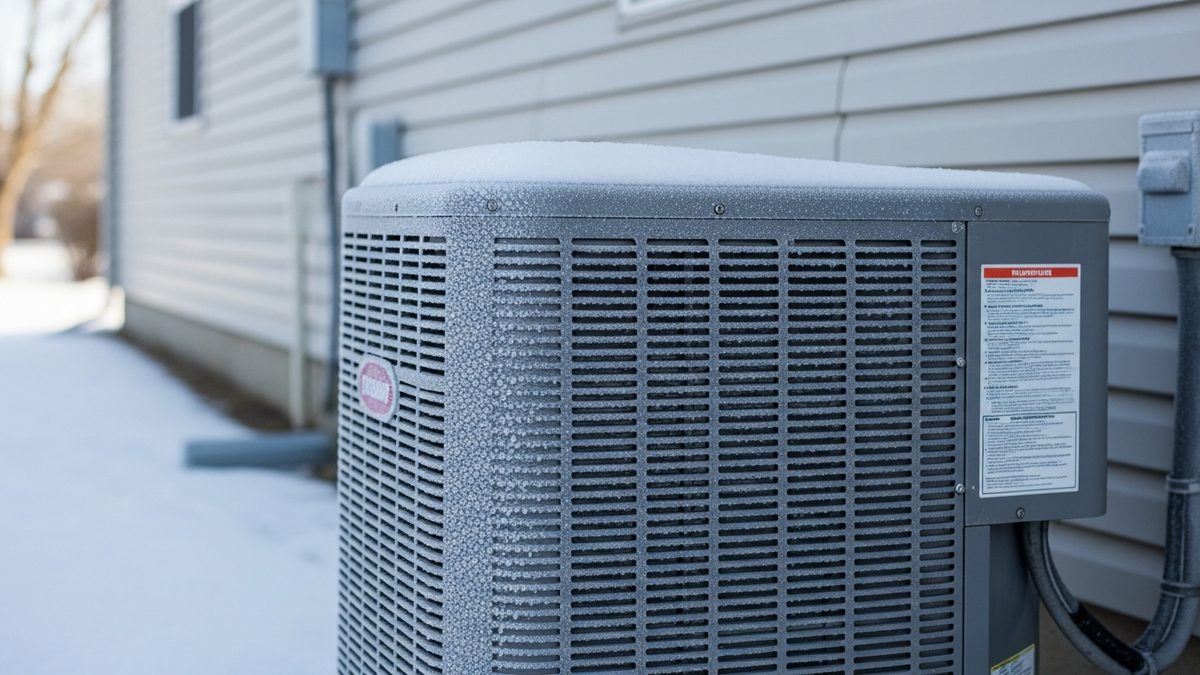
When outside temperatures drop near or below freezing, moisture in the air freezes onto the outdoor unit's coil. This is normal. Your heat pump has an automatic defrost cycle that temporarily reverses operation — essentially running in cooling mode for a few minutes — to melt the ice. During defrost, the outdoor fan stops, the unit may emit a hissing or whooshing sound, and steam or vapor may rise from the unit. Inside, the air from your vents will feel cool or even cold for 5–15 minutes.
This is not a malfunction. It is the system doing exactly what it was designed to do. The U.S. Department of Energy notes that heat pumps are designed to operate in cold weather and that defrost cycles are a normal part of winter operation.
If defrost cycles seem to happen constantly or last longer than 15 minutes, something may be wrong with the defrost control board or sensors — and that is worth a technician visit.
2. Thermostat set incorrectly or set to "Emergency Heat" when it should not be
Many heat pump thermostats have an "Emergency Heat" or "Aux Heat" mode. Emergency Heat bypasses the heat pump entirely and runs only the backup electric resistance strips — which are far less efficient and far more expensive. If someone accidentally switched to Emergency Heat mode, your bill goes up and the heat pump never runs.
Also check:
- Is the thermostat set to HEAT, not COOL?
- Is the set temperature above the current room temperature by at least 3–4 degrees?
- Are the batteries fresh?
3. Outdoor unit is frozen solid (not normal — needs attention)
A light frost on the outdoor coil is normal. A thick layer of ice completely encasing the unit — covering the top, the sides, and the coil fins — is not. A fully iced-over unit cannot exchange heat and will not heat your home effectively.
Causes of excessive icing:
- Defrost controls or sensors have failed
- Outdoor unit is in a low-lying area where water pools and freezes around the base
- Airflow is blocked by snow, leaves, or debris packed around the unit
- Low refrigerant is causing the coil to run too cold
Do not chip or pry ice off the unit — you can damage the fragile aluminum fins. You can gently pour warm (not boiling) water over a lightly iced unit to help it along. For heavy or persistent icing, call a technician.
4. Auxiliary heat is not engaging when it should
Most central heat pumps are paired with a backup heat source — usually electric resistance strips in the air handler, sometimes a gas furnace in a "dual fuel" setup. The backup heat, often labeled "Aux Heat" on the thermostat, is supposed to kick in automatically when outdoor temperatures drop too low for the heat pump alone to meet demand.
If Aux Heat is not working, your home will not reach the set temperature on very cold days even though the heat pump is running. Signs: the thermostat calls for heat, the heat pump runs, but indoor temperature just slowly drops. A technician needs to test the aux heat strips or backup furnace.
5. Low refrigerant
Refrigerant does not get "used up" like fuel, but it can leak out of a system over time. Low refrigerant in a heat pump reduces its ability to transfer heat in both directions. In heating mode, the most common sign is a unit that runs constantly but never fully warms the home. You may also see ice building up on the outdoor unit coil.
Refrigerant work — locating the leak, repairing it, and recharging the system — requires an EPA Section 608 certified technician. This is not a DIY repair.
6. Reversing valve stuck or failed
The reversing valve is the component that switches the heat pump between heating and cooling modes. If it is stuck in cooling mode, your heat pump will blow cold air no matter how you set the thermostat. Signs of a stuck reversing valve: the system cools when you ask for heat, or vice versa. Reversing valve replacement requires a licensed HVAC technician and is a moderately expensive repair ($200–$600 in parts plus labor).
7. Dirty air filter or blocked airflow
A clogged filter starves the indoor coil of the airflow it needs to release heat into your home. The heat pump works harder, efficiency drops, and in severe cases the indoor coil can ice over. Check and replace your filter first — it is free troubleshooting.
Troubleshoot It Yourself (Safely)
- Check the thermostat mode. Confirm it is on HEAT, not COOL or Emergency Heat.
- Replace the filter. If it has not been changed in 3 months, change it now.
- Look at the outdoor unit. A light frost coating is normal. A solid block of ice is not. Clear any snow, leaves, or debris from around the unit and the top of the unit.
- Wait out a defrost cycle. If the outdoor fan just stopped and steam is rising, give it 15 minutes before deciding something is wrong.
- Check that outdoor unit is running at all. If the fan and compressor are not running, check the breaker for the outdoor unit (there is usually a disconnect box near the unit and a breaker in the main panel).
- Look at the thermostat display for any error codes or indicators that Aux Heat is running when it should not be.
Safety First
Heat pumps run on electricity, not gas, so there is no carbon monoxide or gas leak risk from the heat pump itself. However:
- Never attempt electrical work on the outdoor disconnect box or air handler wiring. Heat pumps use high-voltage power (240V). Always shut off power at the breaker before any physical inspection inside the air handler.
- Do not attempt refrigerant work yourself. Refrigerant under pressure can cause frostbite and is regulated under federal law. Only EPA Section 608 certified technicians may purchase and handle refrigerants.
- If your system uses a gas furnace as backup heat (a dual-fuel setup), all the gas safety rules apply. If you smell gas, leave the home and call your gas utility.
When to Call a Licensed Pro
Call a licensed HVAC technician when:
- The outdoor unit is frozen solid and does not clear within a few hours
- The heat pump runs constantly but the home never reaches set temperature
- You suspect the reversing valve is stuck (system cools when set to heat)
- Aux or Emergency Heat is not working
- You see ice on indoor components (the air handler coil)
- The system was recently serviced for a refrigerant issue and performance has declined again
What It Typically Costs
| Issue | Typical Repair Cost (2025–2026) |
|---|---|
| Refrigerant recharge (after leak repair) | $200–$600+ |
| Refrigerant leak repair | $150–$400 |
| Reversing valve replacement | $400–$900 |
| Defrost board/sensor replacement | $150–$400 |
| Aux heat strip replacement | $200–$600 |
| Thermostat replacement | $100–$300 installed |
| Annual maintenance visit | $75–$150 |
Common Mistakes
- Switching to Emergency Heat and leaving it there. Emergency Heat costs significantly more to run. Use it only when the heat pump is confirmed broken and you need temporary heat while waiting for a repair.
- Chipping ice off the outdoor unit with a tool. The aluminum fins are thin and easy to damage, reducing efficiency permanently.
- Concluding the heat pump is broken during a normal defrost cycle. Wait it out before calling.
- Ignoring a continuously running heat pump. A heat pump that runs all day without reaching the set temperature on a moderately cold day usually signals low refrigerant or a failing component.
How to Prevent Heat Pump Heating Problems
- Change filters every 1–3 months. The DOE recommends regular filter changes to keep heat pump efficiency in the range manufacturers intended.
- Keep the outdoor unit clear. Maintain at least 18–24 inches of clearance on all sides. Clear snow off the top of the unit after storms, but do not block the sides or airflow.
- Schedule annual professional maintenance. The DOE recommends annual service by a qualified technician, including refrigerant charge verification, coil cleaning, and electrical connection checks.
- Do not set back the thermostat drastically at night. Unlike gas furnaces, heat pumps recover slowly from large temperature setbacks. The DOE advises against large setbacks that cause the backup heat to run, which eliminates the efficiency advantage of the heat pump.
FAQ
Why does my heat pump blow lukewarm air instead of hot air? Heat pumps deliver air that is typically 90–100°F — noticeably cooler than the 120–140°F from a gas furnace. This feels "lukewarm" compared to a furnace but is still warming your home. If the air is consistently below room temperature, there is a problem.
At what outdoor temperature does a heat pump stop working? Older heat pumps lose significant efficiency below about 35°F. Cold-climate heat pumps designed to ENERGY STAR Cold Climate specifications can operate effectively down to 5°F. If you have an older system in a cold climate, this is a real limitation.
What is the difference between Aux Heat and Emergency Heat? Aux Heat engages automatically alongside the heat pump when the outdoor temperature drops too low for the heat pump to meet demand alone. Emergency Heat shuts off the heat pump entirely and runs only the backup strips. Emergency Heat is for when the heat pump is broken — not for everyday cold weather.
My outdoor unit is making a loud grinding noise. Should I turn it off? Yes. A grinding or scraping sound from the outdoor unit usually means a failing compressor or fan motor bearing. Running it further risks expensive secondary damage. Shut it off at the disconnect and call a technician.
How long should a heat pump defrost cycle last? Typically 5–15 minutes. If your unit seems to be in defrost for 30 minutes or more at a stretch, the defrost board or sensors may have failed and a technician should check it.
Ready to Get a Free Quote?
A licensed HVAC technician can diagnose heat pump heating problems quickly and accurately. Use our free quote tool to connect with certified pros near you.
Sources
- U.S. Department of Energy — Heat Pump Systems: https://www.energy.gov/energysaver/heat-pump-systems
- U.S. Department of Energy — Operating and Maintaining Your Heat Pump: https://www.energy.gov/energysaver/operating-and-maintaining-your-heat-pump
- U.S. Department of Energy — Air-Source Heat Pumps: https://www.energy.gov/energysaver/air-source-heat-pumps
- ENERGY STAR — Certified Air-Source Heat Pumps: https://www.energystar.gov/products/air_source_heat_pumps
- U.S. Department of Energy — Residential Cold Climate Heat Pump Challenge: https://www.energy.gov/cmei/buildings/residential-cold-climate-heat-pump-challenge
Disclaimer
The information on this page is provided for general educational purposes only and is offered "as is" and "as available," without warranties of any kind, whether express or implied — including, without limitation, any warranties of accuracy, completeness, reliability, merchantability, or fitness for a particular purpose. It is not professional advice and is not a substitute for inspection, diagnosis, or repair by a licensed, qualified professional.
Home systems involving gas, electricity, water, refrigerant, fire, or structural components can be hazardous, and requirements vary by local code and jurisdiction. Any inspection, diagnosis, repair, installation, or other action referenced on this page should be performed by a licensed professional. You should not rely on this content to perform such work yourself. To the fullest extent permitted by law, [Company Name] and its owners, employees, and contributors assume no responsibility or liability for any injury, death, property damage, or other loss arising out of or in connection with the use of, or reliance on, this information.
If you smell gas or suspect a carbon monoxide leak, leave the area immediately and call 911 or your gas utility from a safe location.