Gas Smell From Your Oven or Stove: When It's Normal and When It's an Emergency
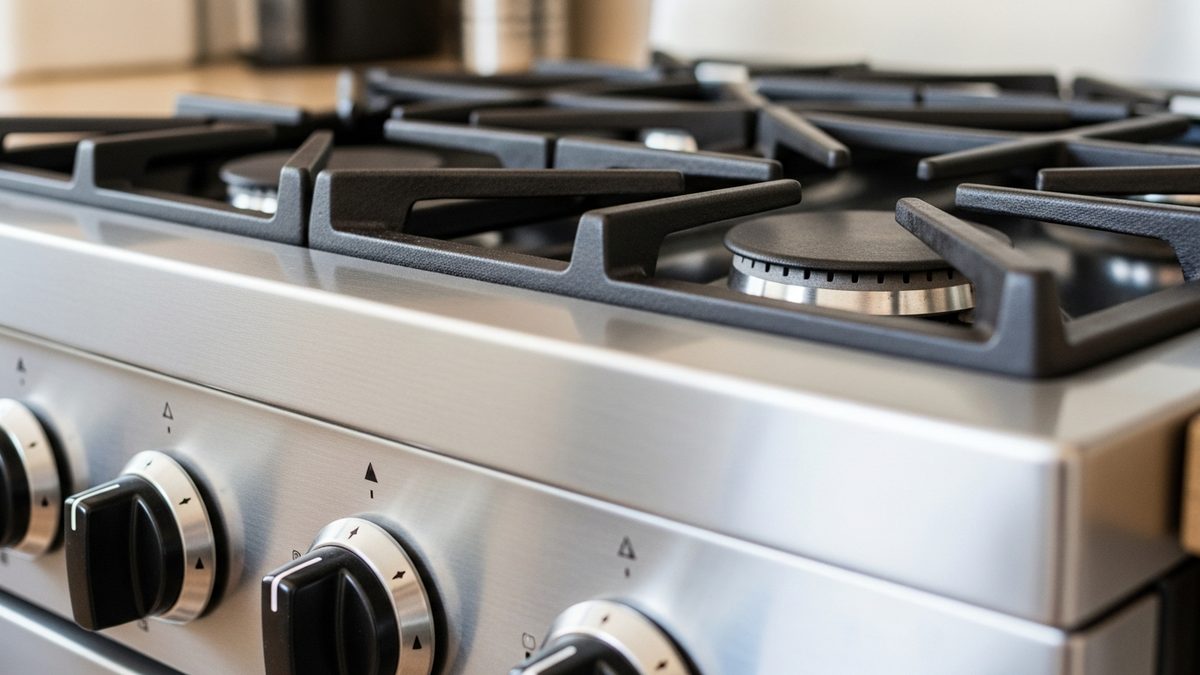
A faint gas smell the moment a burner ignites is something most gas stove owners have noticed. In most cases it lasts only a second or two and then vanishes — and that is completely normal. A strong, persistent odor that smells like rotten eggs or sulfur, on the other hand, is not normal. That smell means unburned natural gas is present, which can be a serious fire and health hazard.
This guide will help you tell the difference, explain what can cause a gas smell from your stove or oven, and walk you through exactly what to do if you suspect a real leak.
Is a gas smell from the oven dangerous?
It depends on the type of smell and how long it lasts.
A brief, faint odor at the moment a burner or oven ignites is a normal part of how gas appliances work. Gas flows for a split second before the igniter sparks and lights it. That tiny amount of unburned gas produces a mild smell that disappears once the flame is established.
A strong smell that sticks around — especially one described as rotten eggs, sulfur, or a skunk — is a different story. That smell is the warning odorant that gas companies add to natural gas on purpose so you can detect a leak. According to GE Appliances, "It is not normal to smell unburned gas in your home." If you are smelling it, there is unburned gas accumulating somewhere, and that is an emergency.
When a gas smell is normal
At burner ignition. When you turn a burner knob to "light," gas flows for a brief moment before the igniter sparks. A faint whiff during those first one to two seconds is expected. Once the flame appears, the smell should be gone almost immediately.
When preheating the oven. A gas oven ignites at the burner inside the oven cavity. According to GE Appliances, "When the oven first starts, it is normal to detect an unusual odor coming from the range. This odor is caused by the combustion of gas at the burner and it will go away within a few minutes as the oven heats up."
With a brand-new appliance. New ovens often have manufacturing oils, protective coatings, and tape on internal components. These can burn off during the first few uses and produce odors that may seem gas-like. Running an empty bake cycle at 350°F for an hour with windows open is the standard manufacturer recommendation for breaking in a new oven.
During or after a self-clean cycle. Self-cleaning cycles burn food residue at very high temperatures. The resulting smoke and odors can trigger a faint gas-adjacent smell as the oven cools. This is generally not a gas leak — it is combustion byproducts from the burnt food residue — but good ventilation during and after the cycle is important.
Warning signs of a real gas leak
Take the following signs seriously. Any one of them warrants immediate action.
- Persistent rotten-egg or sulfur smell. This is the clearest warning. Natural gas is odorless by nature; gas utilities add mercaptan, a sulfur-based compound, specifically so people can detect it. If the smell does not disappear within a minute or two of the burner lighting — or is present when nothing is on — assume there is a leak.
- Smell when the stove is off. Your stove or oven should not smell like gas when everything is turned off. A smell in this situation almost always points to a leak somewhere in the supply line, valve, or appliance connections.
- You can hear hissing. A hissing or blowing sound near the stove or behind it is a sign of escaping gas.
- A burner will not light but you smell gas. If the igniter is clicking and the burner is not lighting but you can smell gas, unburned gas is escaping into your kitchen.
- You feel unwell. Headache, dizziness, nausea, or eye and throat irritation that improves when you go outside may indicate exposure to accumulating gas or combustion byproducts. Whirlpool's safety guidance notes that "a leak in the gas line or in faulty oven parts may contribute to headaches and dizziness."
For a broader look at gas leak signs throughout your home, see our guide on how to tell if you have a natural gas leak.
What to do right now
If you are dealing with a brief, faint smell that clears as soon as the burner lights, no immediate action is needed beyond keeping the area ventilated.
If you are dealing with a strong, persistent, or unexplained gas smell, follow these steps:
- Do not light anything. No matches, lighters, candles, or cigarettes.
- Do not flip any electrical switches. That includes light switches, exhaust fans, and appliance controls. Electrical sparks can ignite accumulated gas.
- Do not use your phone inside the building. Wait until you are outside.
- Turn off the burner or appliance controls if you can do so without leaning over an open flame area and without touching electrical switches. If this feels unsafe, skip it and just leave.
- Leave the building immediately. Take everyone with you, including pets. Leave doors open if you can do so quickly, to allow ventilation.
- Once outside and at a safe distance, call 911 and your gas company's emergency line. Gas utilities provide 24-hour emergency response and come out at no charge to inspect for leaks. The Connecticut PURA (a state regulatory authority) confirms that your local gas company "will come and make the area safe at no charge to you."
- Do not go back inside until emergency responders say it is safe.
The U.S. Consumer Product Safety Commission (CPSC) and Spire Energy both state the same rule: never try to find or fix a gas leak yourself.
What causes oven and stove gas smells
When a persistent smell is not an emergency-level leak, one of these underlying causes is usually at work:
Unlit or partially open burner. A knob that is not fully in the "off" position allows a small amount of gas to escape continuously. Always verify knobs are turned all the way off.
Faulty igniter. The igniter on a gas oven opens the gas valve and must produce enough heat to ignite the gas promptly. A weak or failing igniter opens the valve but takes too long to light, letting unburned gas accumulate before ignition. KitchenAid explains it this way: a faulty igniter "can either delay gas ignition, causing temporary gaseous odors, or fail to ignite the gas at the oven's burner." This is a repair-service issue.
Loose or damaged gas connection. If the range has been moved recently, supply line fittings may have loosened or been bent. Gas leaks at connection points are a common source of persistent odors at or below appliance level.
Failing gas regulator or valve assembly. The pressure regulator controls how much gas reaches the burner. A worn or cracked regulator or valve can allow gas to seep even when the appliance is off.
Blocked burner ports. Food debris clogging burner openings can cause incomplete combustion, producing both odors and higher carbon monoxide output.
When to call a pro: appliance repair vs. gas line
Call a licensed appliance repair technician when the issue appears to be inside the appliance itself — a failing igniter, a stuck valve, a worn burner, or a loose fitting on the appliance's internal supply tube. These are appliance parts problems.
Call a licensed plumber or gas line contractor when the smell is strongest near the wall connection, the shut-off valve, or the flexible supply line running from the wall to the stove. Work on the gas supply line from the meter to the appliance connection is typically regulated and must be performed by a licensed pro.
If you are not sure which it is, err toward calling your gas utility's non-emergency line first. Their technicians can confirm whether the leak is on the utility side or the appliance side, and many utilities will tell you which type of contractor to call.
Carbon monoxide and ventilation note
A gas smell and carbon monoxide (CO) are two different hazards. Natural gas itself (methane) is what produces the rotten-egg smell via its added odorant. Carbon monoxide is a colorless, odorless byproduct of incomplete combustion — meaning you cannot smell it at all.
A properly functioning gas stove produces very low CO levels. The CPSC notes, however, that incomplete combustion from blocked burners, poor ventilation, or a malfunctioning appliance can raise CO output to dangerous levels. CPSC recommendations include:
- Never use a gas oven to heat your home — this is a leading cause of CO buildup.
- Do not cover oven bottoms with aluminum foil, which blocks combustion air flow and increases CO.
- Install battery-operated CO alarms on every level of the home, outside sleeping areas. CPSC does not recommend placing CO alarms directly in the kitchen or above fuel-burning appliances, as normal appliance operation can trigger false alarms; a hallway adjacent to the kitchen is the right location.
- Use a range hood vented to the outdoors whenever cooking on a gas stove.
If your CO alarm sounds, treat it the same as a fire alarm: get everyone out immediately, call 911 from outside, and do not go back in until responders clear the building.
FAQ
Is it normal to smell gas briefly when you first turn on a gas burner? Yes. A very brief, faint whiff at the moment of ignition is normal. Gas flows for a moment before the spark lights it. The smell should disappear as soon as the flame is established.
What does a gas leak smell like? Natural gas has no smell of its own. Gas utilities add a chemical called mercaptan that smells like rotten eggs or sulfur. If that smell is strong, lingers, or is present when nothing is on, treat it as a potential leak.
My oven smells like gas when it preheats — should I be worried? A mild smell during the first minute or two of preheating is normal combustion odor. If the smell is strong, does not clear as the oven heats, or is accompanied by a hissing sound or physical symptoms, shut off the oven and ventilate the kitchen. If the smell persists, call a technician.
Can a gas stove cause carbon monoxide poisoning? Yes, if the burners are malfunctioning, dirty, or the kitchen is poorly ventilated. A properly maintained stove produces minimal CO under normal use. Install a CO alarm outside your kitchen and service the appliance if flames are yellow or orange rather than blue.
Who do I call for a gas smell — 911 or the gas company? Call both, from outside the building. Call 911 first for any immediate emergency, then call your gas utility's 24-hour emergency line. Gas companies respond at no charge and have detection equipment to pinpoint leaks.
Get a licensed pro near you
Whether the issue is a failing igniter, a cracked supply fitting, or something you just want a professional set of eyes on, a licensed appliance repair technician or gas line contractor can diagnose and fix it safely. Get a free quote from a vetted local pro today.
Sources
- GE Appliances — Gas Range: What is Normal Operation vs. What Requires Service: https://products.geappliances.com/appliance/gea-support-search-content?contentId=22102
- U.S. Consumer Product Safety Commission — Carbon Monoxide Fact Sheet: https://www.cpsc.gov/safety-education/safety-guides/carbon-monoxide/carbon-monoxide-fact-sheet
- Connecticut PURA (.gov) — What To Do If You Smell Natural Gas: https://portal.ct.gov/pura/gas-pipeline-safety/what-to-do-if--you-smell-natural-gas
- Washington Gas — Natural Gas Safety: https://www.washingtongas.com/safety-education/safety/natural-gas-safety
- Spire Energy — What to Do If You Smell Gas: https://www.spireenergy.com/if-you-smell-gas
- Whirlpool — Why Does My Oven Smell Like Gas?: https://www.whirlpool.com/blog/kitchen/why-does-my-oven-smell-like-gas.html
- KitchenAid — 7 Reasons an Oven Smells Like Gas: https://www.kitchenaid.com/pinch-of-help/major-appliances/oven-smells-like-gas.html
Disclaimer
The information on this page is provided for general educational purposes only and is offered "as is" and "as available," without warranties of any kind, whether express or implied — including, without limitation, any warranties of accuracy, completeness, reliability, merchantability, or fitness for a particular purpose. It is not professional advice and is not a substitute for inspection, diagnosis, or repair by a licensed, qualified professional.
Home systems involving gas, electricity, water, refrigerant, fire, or structural components can be hazardous, and requirements vary by local code and jurisdiction. Any inspection, diagnosis, repair, installation, or other action referenced on this page should be performed by a licensed professional. You should not rely on this content to perform such work yourself. To the fullest extent permitted by law, [Company Name] and its owners, employees, and contributors assume no responsibility or liability for any injury, death, property damage, or other loss arising out of or in connection with the use of, or reliance on, this information.
If you smell gas or suspect a carbon monoxide leak, leave the area immediately and call 911 or your gas utility from a safe location.