Furnace Keeps Shutting Off After a Few Minutes? Here's Why
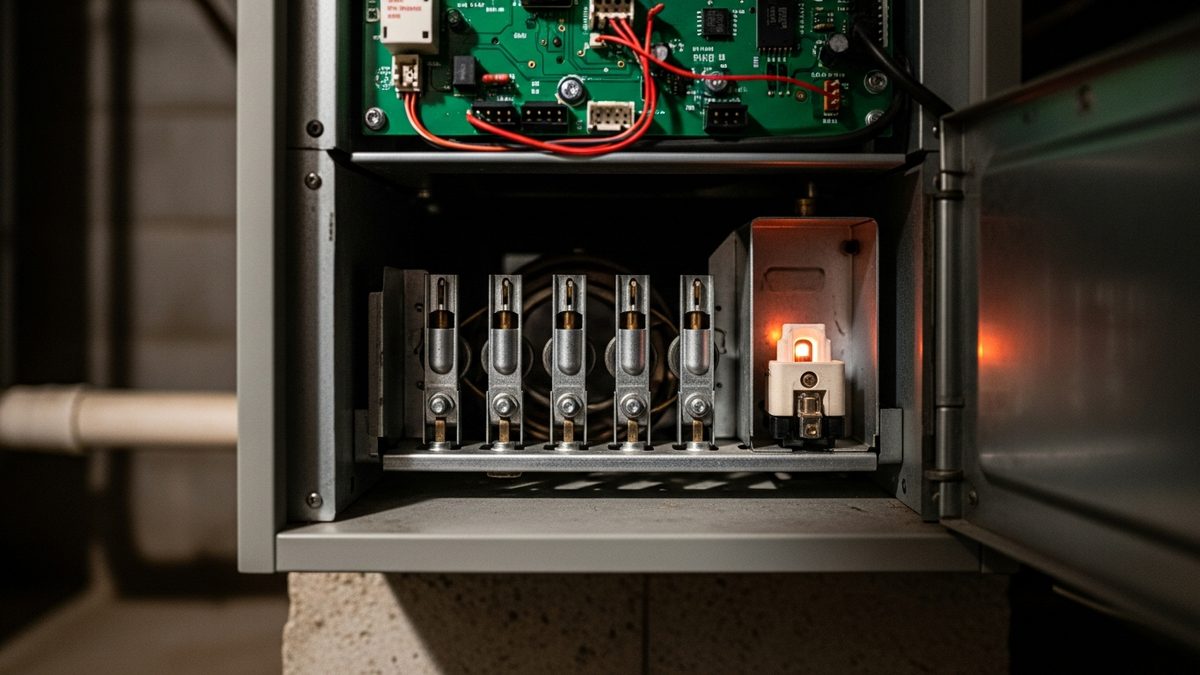
Your furnace fires up, you feel a little heat — and then it stops. A few minutes later it tries again, shuts off again, and the cycle keeps repeating. This is called short cycling: the furnace ends its heating cycle way too early instead of running until the house reaches your set temperature.
Short cycling wastes energy, wears out parts faster, and leaves your home cold. The most important thing to understand up front: some short cycling is triggered by your furnace overheating, and the shutoff is a built-in safety feature. That safety switch should never be bypassed or ignored.
Most likely causes
Dirty air filter — the number one culprit
A clogged filter blocks airflow. Heat builds up inside the furnace cabinet, and a safety device called the high-limit switch shuts the burners off before anything gets damaged. Once the furnace cools, it tries again — and the cycle repeats. ENERGY STAR recommends checking your filter every month during heavy-use seasons and replacing it at least every three months.
Blocked or closed supply vents
Even with a clean filter, shutting too many supply vents or having furniture sitting in front of them creates the same airflow problem. Restricted air movement causes heat to pile up, and the limit switch trips.
Dirty flame sensor
The flame sensor is a small rod that confirms a flame is present after the gas valve opens. When it gets coated with oxidation or buildup, it can't "see" the flame reliably. The control board interprets this as a failure and shuts everything down — usually within seconds of ignition. This is one of the most common reasons a furnace lights and then clicks off almost immediately.
Thermostat problems
Dead batteries cause erratic signals. A thermostat near a heat source — a lamp, a sunny window, a floor register — reads the nearby air as warm and shuts the furnace off before the rest of the house catches up.
Oversized furnace
A furnace that's too large heats the space so fast the thermostat is satisfied in just a few minutes. Those very short run times mean the furnace never runs efficiently, and the constant starts and stops wear out the heat exchanger, igniter, and blower motor faster.
Clogged condensate drain (high-efficiency furnaces)
High-efficiency furnaces (AFUE 90% or above) produce condensation that drains through a PVC line. When that line clogs with algae or debris, water backs up into a safety float switch that cuts the furnace off.
Blocked exhaust or flue pipe
The exhaust vent carries combustion gases out of your home. Birds, insects, or debris can partially block the vent opening, especially after a long off-season. When exhaust gases can't escape, pressure builds and a pressure switch shuts the furnace down. This is a safety issue that goes beyond short cycling — more on that below.
What you can safely check
Before calling a technician, a few simple checks are worth doing yourself:
-
Replace the air filter. Hold it up to the light — if you can't see through it, replace it now. This single step fixes a large share of short-cycling complaints.
-
Open all supply and return vents. Make sure vents aren't closed or blocked by rugs and furniture. Return-air grilles (the larger unpainted ones) need to be clear too.
-
Check thermostat batteries and placement. Swap in fresh batteries if the display looks dim. Make sure the thermostat isn't near a lamp, vent, or sunny window.
-
Check the condensate drain (high-efficiency only). If water is pooled under the furnace or the PVC drain line looks backed up, the drain may be clogged.
If the furnace still short cycles after these checks, it's time to call a professional.
Safety first
A furnace that repeatedly trips its high-limit switch is telling you something is wrong. Repeated overheating stresses the heat exchanger — the metal barrier that keeps combustion gases separated from the air you breathe. A cracked heat exchanger can allow carbon monoxide (CO) to leak into your living space.
A blocked or damaged flue pipe carries the same risk. The U.S. Consumer Product Safety Commission (CPSC) warns that blocked chimneys, vents, and flues are a leading cause of carbon monoxide poisoning from home heating equipment. The CPSC urges annual professional inspection of heating systems, including all vents and flues, to prevent CO deaths. The Centers for Disease Control and Prevention (CDC) notes that CO is a colorless, odorless gas — you cannot detect it without an alarm.
Two rules that could save your life:
- Never bypass, tape, or override any safety switch on your furnace. Those switches exist for a reason.
- Install a carbon monoxide detector on every floor of your home, and test the batteries regularly. If a CO alarm sounds, leave the house immediately and call 911.
If you notice any of the following, treat it as an emergency: the smell of exhaust inside the home, a yellow or orange burner flame (it should be blue), soot marks around the furnace, or any CO alarm activation.
For more on a related furnace problem, see our guide on a furnace that's running but only blowing cold air.
When to call a pro
If the easy checks don't solve it, call a licensed HVAC technician. You need a pro for: flame sensor cleaning or replacement; high-limit switch failure; blower motor or capacitor problems; gas valve issues; flue or exhaust blockage; and a suspected cracked heat exchanger. In short — anything inside the cabinet that involves gas, combustion, or electrical components is a job for a licensed technician. If you suspect the furnace is oversized, a tech can run a load calculation to confirm.
Cost
Repair costs vary by region, furnace brand, and the age of the system. Here are rough ranges based on current 2025–2026 pricing data:
| Repair | Typical Cost Range |
|---|---|
| Air filter (DIY replacement) | $10 – $30 |
| Flame sensor cleaning | $75 – $150 (service call) |
| Flame sensor replacement | $100 – $250 (parts + labor) |
| High-limit switch replacement | $150 – $400 (parts + labor) |
| Condensate drain clearing | $75 – $200 |
| Blower motor replacement | $400 – $900 |
| Diagnostic service call | $75 – $150 |
These are estimates only. Get at least two quotes from licensed HVAC contractors in your area before committing to a repair, especially for higher-cost jobs.
Common mistakes
Ignoring it. Short cycling almost never fixes itself. Every extra start-stop cycle wears the igniter and heat exchanger. Catching it early is cheaper.
Bypassing safety switches. Some homeowners tape or disable the high-limit switch to keep the furnace running — this is dangerous and removes the only protection against overheating and CO.
Skipping filter changes. A clogged filter is the most preventable cause of furnace overheating. If it looks gray, it's overdue.
Overlooking the thermostat. Weak batteries and poor placement cause more furnace problems than most homeowners expect.
How to prevent it
Change the filter regularly. Most 1-inch filters need replacement every one to three months; thicker media filters can last up to a year. Check yours monthly during heating season.
Schedule an annual tune-up. A fall inspection covers flame sensor cleaning, heat exchanger check, flue verification, and pressure switch testing. ENERGY STAR recommends annual HVAC maintenance for efficiency and safety. Catching a small problem in October beats a breakdown in January.
Keep vents and registers clear. Make it a habit to check that furniture hasn't drifted in front of return-air grilles during redecorating, and that no one has closed off vents in unused rooms.
FAQ
How long should a furnace run before shutting off? Normal cycles last roughly 10 to 20 minutes. Shutting off after two or three minutes is short cycling.
Can I run my furnace if it keeps short cycling? Occasional use while you troubleshoot is unlikely to cause immediate harm, but repeated short cycling accelerates wear. Fix it as soon as you can.
My furnace shuts off after 30 seconds — is that the flame sensor? Very likely. A furnace that lights and shuts off in under a minute almost always has a dirty or failing flame sensor.
Will a new air filter really fix short cycling? Yes — if restricted airflow is the cause, a fresh filter often solves it immediately. It takes five minutes and costs under $20, so always start there.
How much does a furnace tune-up cost? Annual visits typically run $80–$150 for a standard gas furnace inspection and cleaning.
Not sure what's causing your furnace to short cycle? A vetted local HVAC professional can diagnose the problem quickly and give you a clear repair estimate. Get a free quote from a licensed HVAC technician near you — no commitment required.
Sources
- U.S. Consumer Product Safety Commission (CPSC). Inspect Home Furnace System For Hazards, Carbon Monoxide. https://www.cpsc.gov/Newsroom/News-Releases/1991/Inspect-Home-Furnace-System-For-Hazards-Carbon-Monoxide
- U.S. Consumer Product Safety Commission (CPSC). Install a Carbon Monoxide Alarm in Your Home: CPSC Urges Annual Furnace Inspection to Prevent CO Deaths. https://www.cpsc.gov/Newsroom/News-Releases/2005/Install-a-carbon-monoxide-alarm-in-your-homeCPSC-Urges-Annual-Furnace-Inspection-to-Prevent-CO-Deaths
- U.S. Consumer Product Safety Commission (CPSC). Carbon Monoxide Fact Sheet. https://www.cpsc.gov/safety-education/safety-guides/carbon-monoxide/carbon-monoxide-fact-sheet
- ENERGY STAR / U.S. Department of Energy. Heat and Cool Efficiently. https://www.energystar.gov/saveathome/heating-cooling
- ENERGY STAR. Does changing my furnace or air conditioning filter each month save energy? https://energystar.my.site.com/ENERGYSTAR/s/article/Does-changing-my-furnace-or-air-conditioning-filter-each-month-save-energy-1748921040665
- Carrier. What Is Furnace Short Cycling? Causes and Solutions. https://www.carrier.com/us/en/residential/hvac-resources/furnaces/furnace-short-cycling/
- HomeAdvisor. How Much Does It Cost to Repair a Furnace? (2025 Data). https://www.homeadvisor.com/cost/heating-and-cooling/repair-a-furnace/
- HomeGuide. Furnace Limit Switch Replacement Cost (2026). https://homeguide.com/costs/furnace-limit-switch-replacement-cost
Disclaimer
The information on this page is provided for general educational purposes only and is offered "as is" and "as available," without warranties of any kind, whether express or implied — including, without limitation, any warranties of accuracy, completeness, reliability, merchantability, or fitness for a particular purpose. It is not professional advice and is not a substitute for inspection, diagnosis, or repair by a licensed, qualified professional.
Home systems involving gas, electricity, water, refrigerant, fire, or structural components can be hazardous, and requirements vary by local code and jurisdiction. Any inspection, diagnosis, repair, installation, or other action referenced on this page should be performed by a licensed professional. You should not rely on this content to perform such work yourself. To the fullest extent permitted by law, [Company Name] and its owners, employees, and contributors assume no responsibility or liability for any injury, death, property damage, or other loss arising out of or in connection with the use of, or reliance on, this information.
If you smell gas or suspect a carbon monoxide leak, leave the area immediately and call 911 or your gas utility from a safe location.