Ceiling Water Stain? How to Tell Where the Leak Is Coming From
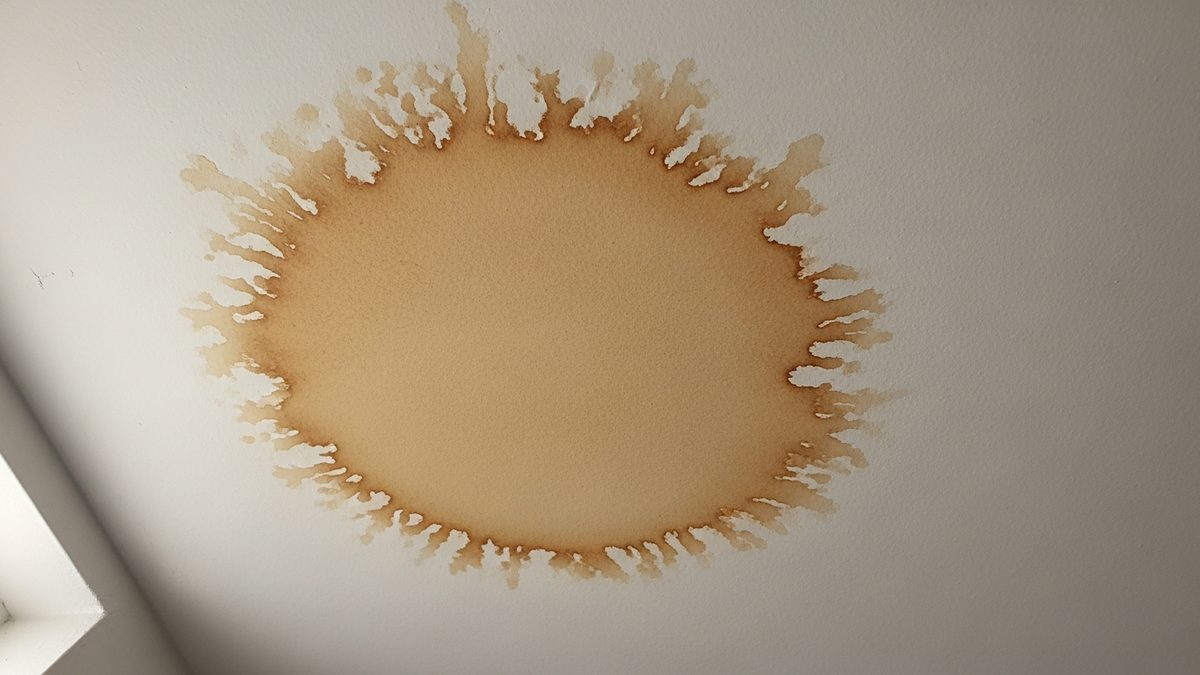
You glance up and spot a tan or brown ring on your ceiling. Your first thought is probably the roof. But a ceiling stain can come from four very different places, and fixing the wrong one wastes both money and time. This guide helps you narrow it down before you call anyone.
First, is it active or old?
Start by figuring out whether the leak is still happening.
Touch test. Press a dry finger against the stain. Soft or damp drywall means it is active. Firm and dry means the source may have stopped — though it still needs attention.
Mark the edge. Trace the stain with a pencil and date it. Check in 48 hours. Growth past your line means the leak is ongoing — act fast.
Note the timing. Does it grow after rain, after a shower upstairs, or after the AC runs? Timing is your single best diagnostic clue.
The main suspects (and how to tell them apart)
Roof
A roof leak is the obvious first guess, and it is often right — but not always.
Signs it is the roof:
- The stain is on the top floor (or single-story home with no living space above).
- It gets worse after rain or snow, with no connection to water use inside.
- The ceiling spot is near a chimney, vent pipe, skylight, or roof valley — the most common leak entry points.
Water entering the roof can travel several feet along a rafter before it drips, so the stain may not line up with the damaged spot. See our guide on how to find the source of a roof leak to trace it.
Plumbing
Plumbing is the cause in a lot of ceiling stains, especially in two-story homes.
Signs it is plumbing:
- The stain sits directly under a bathroom, kitchen, or laundry room on the floor above.
- It appears or gets worse when water is used upstairs — flushing, showering, running the dishwasher.
- It can happen on a dry, sunny day. Weather is irrelevant.
Common culprits: a worn wax ring under a toilet, a slow drain leak at a tub flange, or a loose supply line. If the leak is inside a wall rather than directly under a fixture, see our article on a pipe leaking behind a wall.
HVAC condensation
AC systems drain moisture through a condensate line. When that line clogs or the drain pan cracks, the overflow often ends up on the ceiling below the air handler.
Signs it is HVAC:
- The stain is below or near the attic air handler or an attic duct.
- It is worst in summer and may shrink or disappear in winter.
- No connection to rain or plumbing use.
A related cause is duct sweating: cold supply ducts in a hot attic pick up condensation on the outside, like a cold drink on a humid day. InterNACHI notes that poorly insulated attic ducts are often misdiagnosed as roof leaks.
Ice dam (winter only)
If you live in a cold-weather state and the stain shows up in late winter or early spring, an ice dam may be the culprit.
Signs it is an ice dam:
- Stain appears after snow, near the eaves (ceiling edge closest to the gutters).
- Large icicles hanging from the gutters.
- Snow melting on the upper roof but staying frozen along the edges.
Ice dams form when attic heat melts snow on the upper roof. The meltwater runs down and refreezes at the cold eaves, building an ice wall. Water pools behind it and backs up under the shingles. The University of Minnesota Extension notes that without improving attic insulation and ventilation, the dam will return every winter.
How to trace it
Measure from two fixed walls to locate the stain, then carry those measurements into the attic. Bring a flashlight and look directly above the spot for:
- Dark or wet roof sheathing — roof leak
- A wet or corroded pipe — plumbing
- A sweating duct or wet drip pan — HVAC
- Daylight visible through the roof deck — damaged shingle or gap
Do the check during or right after rain for a suspected roof leak. For plumbing, have someone run water upstairs while you watch from below.
Safety first
Sagging or bulging ceiling. A water-logged drywall ceiling can collapse. Keep people out of the room. To relieve pressure, poke a small hole at the lowest point of the bulge with a screwdriver and hold a bucket ready — stand to the side.
Mold. The EPA warns mold can begin growing within 24 to 48 hours of a moisture event. Fuzzy or discolored growth needs professional remediation, not paint.
Electrical. A stain near a light fixture or ceiling fan is a shock hazard. Stop using the fixture, and if water is dripping from it, flip the circuit breaker and call an electrician.
When to call which pro
- Roofer — stain after rain, top floor, near a penetration
- Plumber — stain under a bathroom or kitchen, tied to water use
- HVAC technician — stain near the air handler or ducts, worst in summer
- Water damage restoration — active drip, large area, or visible mold
Not sure? Call a roofer and plumber at the same time for competing free estimates.
What it typically costs
Rough 2025–2026 ranges for finding and fixing the source plus patching the ceiling:
| Work | Typical range |
|---|---|
| Minor roof repair (flashing, shingles) | $150–$600 |
| Larger roof repair (valley, chimney) | $500–$2,500 |
| Plumbing repair (wax ring, supply line) | $175–$800 |
| Plumbing with ceiling/floor access | $800–$3,000+ |
| HVAC condensate line and pan | $100–$400 |
| Ceiling patch and repaint (small) | $200–$500 |
| Drywall section replacement | $500–$1,500 |
| Water damage restoration | $1,200–$8,500 |
Sources: Angi, HomeAdvisor (2025–2026 data).
Common mistakes
Painting over the stain. Stain-blocking primer hides the ring, but moisture is still in the drywall above. It bleeds through again, usually faster, with more damage done.
Assuming roof when plumbing is the real cause. In two-story homes, many ceiling stains are plumbing. Check what is directly above before calling anyone.
Waiting it out. Hidden damage builds long before a stain appears. Act early.
How to prevent it
- Roof inspection every 3–5 years and after major storms.
- Clean gutters so water does not back up under the drip edge.
- In snowy climates, ensure adequate attic insulation and ventilation to prevent ice dams.
- Flush the HVAC condensate drain annually with diluted bleach.
- Check supply lines under sinks and behind appliances every couple of years.
FAQ
Can a stain appear with no actual leak? Yes. In cold weather, warm humid air can condense on a cold ceiling — especially near recessed lights or a thin attic. It looks just like a water stain and is most common in winter.
How fast does a stain appear after a leak starts? A fast drip can show in hours. A slow seep may take days or weeks. The stain you see today likely started earlier than you think.
Does homeowners insurance cover this? Sudden and accidental damage — a burst pipe, an ice dam — is often covered. Slow leaks from deferred maintenance typically are not. Document with photos and call your insurer before major repairs.
Do I need a full roof replacement? Not necessarily. Many ceiling leaks trace to bad flashing or a handful of cracked shingles. Replacement makes sense when shingles are past their lifespan and multiple areas are failing.
A ceiling stain is your home telling you something is wrong. The sooner you pin down which of the four sources — roof, plumbing, HVAC, or ice dam — is responsible, the sooner you can fix the right thing and stop the damage from spreading.
Ready to get it diagnosed? Connect with a vetted local roofer, plumber, or HVAC tech in your area who offers free estimates.
Sources
- InterNACHI — Inspecting Uninsulated Exhaust Ducts in the Attic
- InterNACHI — Moisture Intrusion Course
- EPA — Moisture Control Guidance for Building Design, Construction and Maintenance
- University of Minnesota Extension — Dealing with and Preventing Ice Dams
- DOE Building America Solution Center — Attic Air Sealing for Ice Dam Prevention
- Angi — Ceiling Repair Cost Guide 2026
- HomeAdvisor — How Much Does Ceiling Repair Cost?
Disclaimer
The information on this page is provided for general educational purposes only and is offered "as is" and "as available," without warranties of any kind, whether express or implied — including, without limitation, any warranties of accuracy, completeness, reliability, merchantability, or fitness for a particular purpose. It is not professional advice and is not a substitute for inspection, diagnosis, or repair by a licensed, qualified professional.
Home systems involving gas, electricity, water, refrigerant, fire, or structural components can be hazardous, and requirements vary by local code and jurisdiction. Any inspection, diagnosis, repair, installation, or other action referenced on this page should be performed by a licensed professional. You should not rely on this content to perform such work yourself. To the fullest extent permitted by law, [Company Name] and its owners, employees, and contributors assume no responsibility or liability for any injury, death, property damage, or other loss arising out of or in connection with the use of, or reliance on, this information.
If you smell gas or suspect a carbon monoxide leak, leave the area immediately and call 911 or your gas utility from a safe location.