AC Short Cycling: Why Your AC Keeps Turning On and Off
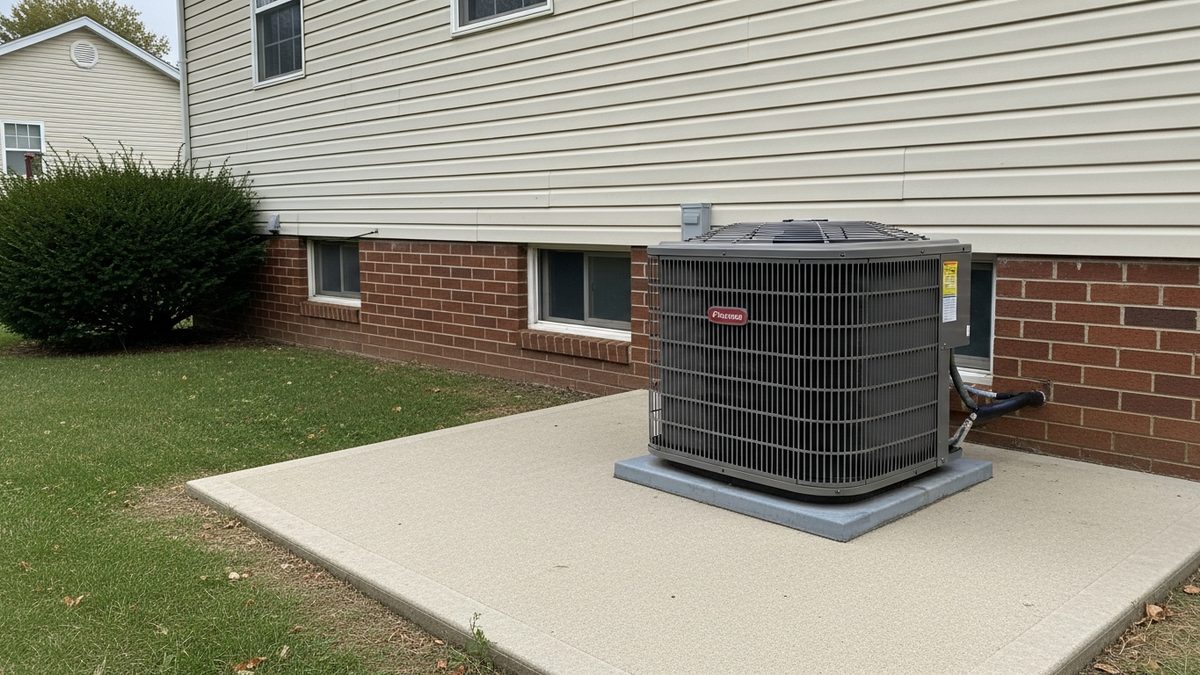
A healthy air conditioner runs in steady cooling cycles — typically 15–20 minutes per cycle in moderate weather. When your system starts, runs for only 2–5 minutes, shuts off, and then repeats that cycle over and over, that's called short cycling. It's not just annoying. Short cycling strains the compressor, drives up your energy bill, and leaves your home too warm and humid because the AC never runs long enough to do its job.
The causes range from something you can fix in two minutes (a dirty filter) to something that requires a licensed technician (low refrigerant or an oversized system). Here's how to work through them.
Most likely causes
1. Dirty or clogged air filter (most common, easiest fix) A severely clogged filter blocks airflow over the evaporator coil. The coil gets too cold, ice starts to form, and a safety switch detects the abnormal condition and shuts the system down. The ice melts, the system restarts, and the cycle repeats. The U.S. Department of Energy identifies inadequate maintenance — including dirty filters — as a leading cause of AC problems.
2. Frozen evaporator coil The coil can freeze from a dirty filter, from closed or blocked supply vents, or from low refrigerant. Once frozen, the system's safety controls shut it off. It partially thaws, restarts, and freezes again. If you see frost on the refrigerant lines going into your air handler, you have a frozen coil.
3. Low refrigerant from a leak Refrigerant doesn't get "used up" — if levels are low, there's a leak somewhere. Low refrigerant causes the evaporator coil to run at abnormally low pressure and temperature, triggering freeze-ups and low-pressure safety switches. This requires a certified technician to locate the leak, repair it, and recharge the system. Under EPA Section 608, only EPA-certified technicians may purchase and handle refrigerants.
4. Oversized AC unit An air conditioner that is too large for your home cools the space so quickly that it satisfies the thermostat set point before running through a full cycle. It does this while removing very little humidity, leaving your home cool but clammy. This is a design problem — the only real fix is proper sizing, which means replacing the unit. An oversized unit typically short cycles from the day it's installed.
5. Thermostat problems
- Bad placement. A thermostat mounted near a supply vent, in direct sunlight, above a lamp, or near a kitchen will sense artificially high or low temperatures and short-cycle the system accordingly. The thermostat thinks the house is cooler or warmer than it really is.
- Faulty thermostat. An aging or malfunctioning thermostat can send intermittent signals that cause the compressor to start and stop erratically.
- Dead or weak batteries. In battery-powered thermostats, weak batteries can cause intermittent signals.
6. Electrical problems A failing contactor, a weak capacitor, or loose wiring can cause the outdoor unit to drop power mid-cycle and restart when the compressor cools down. This can look and sound just like short cycling from another cause.
7. Tripping high-pressure or low-pressure safety switches If the refrigerant pressure in the system goes outside safe limits — from low refrigerant, a refrigerant overcharge, or a blocked condenser — a pressure switch shuts the compressor off. The system restarts when pressure normalizes, creating a short-cycling pattern.
Troubleshoot it yourself (safely)
Step 1 — Check and replace the air filter. Pull the filter out and hold it up to the light. If you can't see light through it, replace it now. This is the single highest-payoff thing you can do. Use the correct size and a filter rated for your system. Replace filters every 1–3 months.
Step 2 — Check all supply and return vents. Walk through your home and confirm that all supply vents (where cold air comes out) and return vents (larger grilles that pull air back to the system) are open and unobstructed. Furniture, rugs, and curtains pushed against vents reduce airflow and can trigger coil freezing.
Step 3 — Look for ice on the indoor unit or refrigerant lines. If you see frost, turn the system off at the thermostat and let it thaw. Do not run it again until the ice is completely gone — this may take several hours. Once thawed, restart with a fresh filter. If it freezes again, call a technician (likely a refrigerant issue).
Step 4 — Check thermostat placement and settings. Is the thermostat near a supply vent? In direct sunlight in the afternoon? Is anything generating heat (a lamp, a TV, a computer) near it? If so, that's likely causing premature shutoff. Also confirm the thermostat is set to "Cool" and not "Fan Only," and replace batteries.
Step 5 — Check the outdoor unit. Make sure the condenser fins aren't caked with dirt, and that vegetation isn't blocking airflow. A restricted condenser can cause the high-pressure switch to trip and short-cycle the system. Turn off the unit before inspecting, and gently rinse the fins from the inside out with a garden hose if they're dirty.
Safety first
- Refrigerant is EPA-regulated. Under Section 608 of the Clean Air Act, handling or purchasing refrigerant requires EPA certification. Don't attempt to add refrigerant yourself — it's illegal without certification and potentially dangerous.
- Do not run a frozen system repeatedly. Running an AC with a frozen coil can cause liquid refrigerant to flood back to the compressor, which can destroy it. When you see ice, turn it off.
- Electrical components hold charge. Capacitors in the outdoor unit store high voltage. Never open the electrical compartment without proper training and discharge tools.
When to call a licensed pro
Call a technician if:
- The AC still short cycles after you've replaced the filter and cleared all vents
- You see ice on the coil or refrigerant lines, and it comes back after the unit thaws
- The system short cycles and is also not cooling the home well (likely low refrigerant)
- The unit has short cycled since installation (likely an oversized unit — call the installer)
- The outdoor unit is making unusual noises during the on/off cycles
- The breaker trips during a short cycle
What it typically costs
| Repair | Typical 2025–2026 Range |
|---|---|
| Air filter (DIY) | $5–$30 |
| Thermostat replacement | $150–$500 |
| Capacitor or contactor replacement | $200–$500 |
| Refrigerant leak repair + recharge | $500–$1,500+ |
| System replacement (oversized unit) | $5,000–$15,000+ depending on size and model |
Note: R-410A refrigerant prices have climbed roughly 40–60% since the January 2025 phase-down began, making refrigerant repairs on older systems more expensive than in prior years.
Common mistakes
- Only replacing the filter when the system short cycles — without verifying there is no frozen coil or refrigerant issue. A clean filter is necessary but may not be sufficient.
- Closing vents in unused rooms to "save energy." This reduces system airflow and pressure balance, contributing to coil freeze and short cycling. Modern forced-air systems are designed with all vents open.
- Oversizing a replacement unit to "ensure it's powerful enough." Bigger is not better in HVAC. A system should be sized using a Manual J heat load calculation for your specific home.
- Moving the thermostat to a warmer spot to make the system run longer. This masks the problem rather than solving it.
How to prevent it
- Replace your air filter every 1–3 months. Set a phone reminder so it doesn't slip.
- Have your system professionally maintained every spring. A technician will check refrigerant levels, test the capacitor and contactor, and inspect the coil — all the things that lead to short cycling when they go wrong.
- When replacing an AC system, insist that the contractor perform a Manual J load calculation to size the new unit correctly. Skipping this step is one of the most common and costly HVAC mistakes.
- Keep supply and return vents clear of furniture and obstructions year-round.
- Set your thermostat on a consistent cooling schedule. Extremely large temperature swings (setting it to 65°F when you've let the house warm to 85°F) can cause temporary high-pressure conditions.
FAQ
How do I know if my AC is short cycling vs. just running normally? Normal cycles in moderate weather are about 15–20 minutes of runtime before reaching the set temperature and shutting off. If your system shuts off after just 2–5 minutes without reaching the set point — and then immediately restarts — that's short cycling.
Can short cycling damage my AC? Yes. Every startup puts extra stress on the compressor. Frequent short cycling dramatically increases compressor wear and can shorten the system's lifespan. It also increases electricity consumption, because the startup draw is the highest-power moment of every cycle.
My brand-new AC is short cycling. Is it defective? Possibly, but more likely it was oversized for your home. An oversized unit is a very common installation mistake. Contact the installer — proper sizing requires a Manual J calculation.
Will short cycling go away on its own? Not unless the cause resolves itself, which only happens with a filter — and only if you replace it. Low refrigerant doesn't resolve on its own, a misplaced thermostat doesn't fix itself, and an oversized unit stays oversized.
Is short cycling expensive to fix? It depends on the cause. A dirty filter costs $10–$30 to fix yourself. A refrigerant leak can run $500–$1,500. An oversized unit, unfortunately, means system replacement. That's why ruling out the simple causes first is always the right approach.
Still short cycling after checking the filter and vents? A licensed HVAC technician can diagnose the root cause quickly. Use the form below to get a free quote from a vetted local pro — no commitment required.
Sources
- U.S. Department of Energy — Common Air Conditioner Problems https://www.energy.gov/energysaver/common-air-conditioner-problems
- Trane — AC Short Cycling https://www.trane.com/residential/en/resources/troubleshooting/air-conditioners/ac-short-cycling/
- Carrier — AC Short Cycling https://www.carrier.com/residential/en/us/products/air-conditioners/ac-short-cycling
- EPA — Section 608 Technician Certification Requirements https://www.epa.gov/section608/section-608-technician-certification-requirements
- One Hour Heating and Air — AC Short Cycling Fix to Improve Cooling Performance https://www.onehourheatandair.com/warner-robins/about-us/blog/2026/june/ac-short-cycling-fix/
- HomeGuide — AC Condenser Fan Motor Replacement Cost (2026) https://homeguide.com/costs/condenser-fan-motor-replacement-cost
Disclaimer
The information on this page is provided for general educational purposes only and is offered "as is" and "as available," without warranties of any kind, whether express or implied — including, without limitation, any warranties of accuracy, completeness, reliability, merchantability, or fitness for a particular purpose. It is not professional advice and is not a substitute for inspection, diagnosis, or repair by a licensed, qualified professional.
Home systems involving gas, electricity, water, refrigerant, fire, or structural components can be hazardous, and requirements vary by local code and jurisdiction. Any inspection, diagnosis, repair, installation, or other action referenced on this page should be performed by a licensed professional. You should not rely on this content to perform such work yourself. To the fullest extent permitted by law, [Company Name] and its owners, employees, and contributors assume no responsibility or liability for any injury, death, property damage, or other loss arising out of or in connection with the use of, or reliance on, this information.
If you smell gas or suspect a carbon monoxide leak, leave the area immediately and call 911 or your gas utility from a safe location.