AC Making a Loud Noise (Buzzing, Banging, or Hissing)?
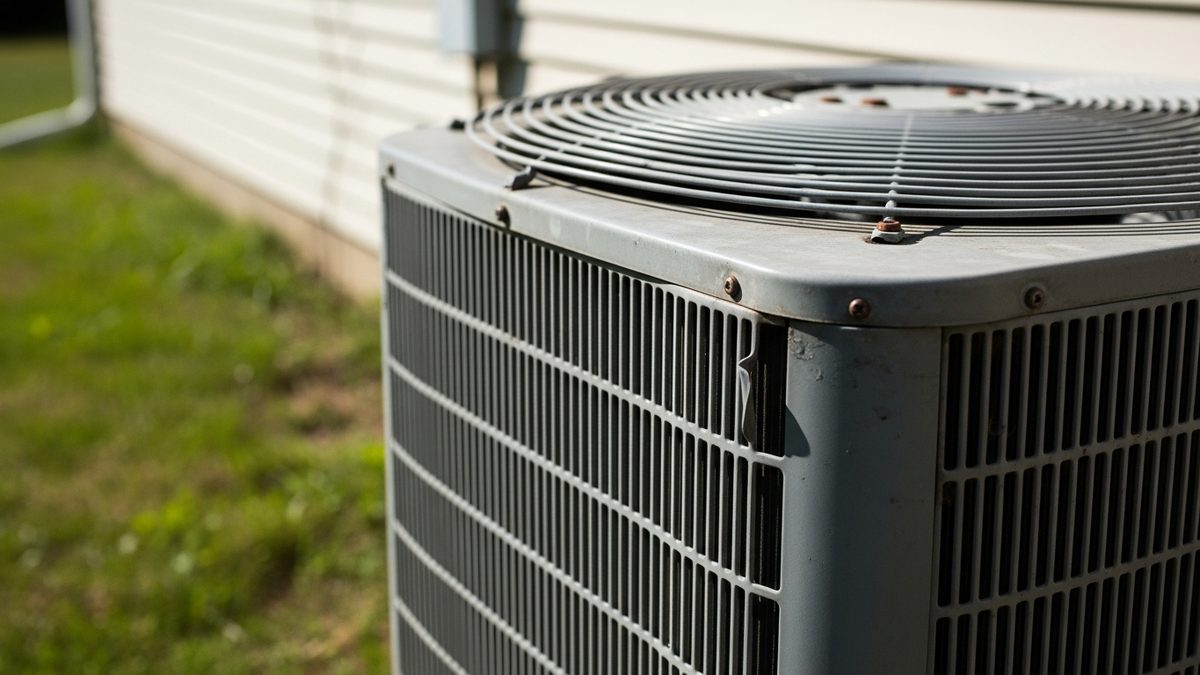
Your air conditioner is supposed to hum along quietly in the background. When it starts making a new, loud, or unusual noise, it's telling you something is wrong. The sound is actually one of the best diagnostic clues you have — different noises point to very different problems.
This guide breaks down the most common AC noises by type, explains what each one likely means, and tells you what to do next.
Most likely causes (by sound type)
Buzzing
A buzzing sound from the outdoor unit is almost always electrical in nature.
- Failing contactor. The contactor is a relay that opens and closes to send power to the compressor. When its contacts are pitted or about to fail, it buzzes as it struggles to maintain a clean electrical connection.
- Weak or failing capacitor. A capacitor that's degrading may buzz before it fails completely. It may also cause the motor it serves to buzz as the motor strains without proper starting power.
- Loose wiring or a bad relay. Loose electrical connections vibrate and buzz, especially under the load of a 240-volt circuit. This is a fire and shock risk — turn the unit off and call a technician.
- Debris hitting the fan blades. A small piece of debris (twig, leaf, hardened dirt) hitting the outdoor fan blades creates a repetitive buzz or rattle. Turn the unit off and inspect through the grill before restarting.
- Refrigerant bubbling (low-level hum/buzz). Very low refrigerant can cause a bubbling or gurgling buzz at the indoor unit as the refrigerant changes state unevenly.
Banging or clanking
A loud bang or repeated clanking from either unit is serious.
- Loose or broken part inside the compressor. A banging or clanking from the outdoor unit often means something inside the compressor has broken loose — a connecting rod, a piston, or a mount. This is a major failure. Turn the system off immediately.
- Loose fan blade. The outdoor condenser fan blades can loosen from their hub over time. A loose blade wobbles and strikes the fan guard, creating a rhythmic clanking with each rotation.
- Blower wheel (indoor). The indoor blower wheel can accumulate debris or crack. A cracked or debris-laden wheel will knock and clank inside the air handler during operation.
- Loose panel or mounting hardware. Sometimes a metal panel on the outdoor unit vibrates loose and resonates. Check that all access panels are secured with their screws.
Hissing or bubbling
This is the noise that requires the fastest response.
- Refrigerant leak. A hissing sound from the indoor or outdoor unit — especially near the refrigerant lines or the coil — strongly suggests refrigerant escaping under pressure. Refrigerant in the system is under high pressure, and leaks at fittings, coil cracks, or line joints produce a noticeable hiss.
- Bubbling. A bubbling or gurgling sound usually indicates air or moisture in the refrigerant lines, which happens when refrigerant is low or a leak has allowed contamination into the system.
If you hear hissing: Turn the system off. Don't try to find or fix the leak yourself. Refrigerant handling requires EPA Section 608 certification. Older systems use R-22 (now phased out and extremely expensive to replace); newer systems use R-410A or R-454B. All of them can cause frostbite on contact and displace oxygen in enclosed spaces.
Screeching or squealing
A high-pitched squeal or screech is usually a mechanical friction problem.
- Worn fan motor bearings. The condenser fan motor (outdoor) or blower motor (indoor) has sealed bearings that wear over time. When they fail, they produce a metal-on-metal screech that gets worse over time.
- Failing belt (older systems). Older systems with belt-driven blowers can squeal when the belt is worn, misaligned, or dry. Most modern residential systems are direct-drive, but older equipment may still have belts.
A screeching motor is telling you it is about to fail. Running it to complete failure will usually cause additional damage. Call a technician promptly.
Clicking that won't stop
A single click when your AC starts or stops is normal — that's the relay operating. Rapid or continuous clicking is not normal.
- Continuous clicking often points to a failed capacitor, a control board trying to restart repeatedly, or a thermostat with a bad connection. Have a technician diagnose it.
Troubleshoot it yourself (safely)
Step 1 — Identify which unit the sound is coming from. Indoor unit (the air handler/furnace)? Outdoor unit (the condenser)? This narrows the cause significantly.
Step 2 — Turn the system off immediately if you hear: banging, clanking, hissing, or screeching. These sounds almost always mean something serious that gets worse if you keep running the system.
Step 3 — For buzzing only: with the power off, open the outdoor unit's access panel (after cutting the breaker) and look for visible debris touching the fan blades. If you find debris, remove it with a tool — not your hand. Clear vegetation from around the unit. If you don't see debris, the issue is electrical — call a technician.
Step 4 — For a loose panel: check all metal access panels for missing screws and tighten. This occasionally resolves a buzzing rattle without a service call.
Step 5 — Check the air filter. A severely clogged filter causes restricted airflow that strains motors and can lead to odd noises as components run harder than they should.
Safety first
- Hissing from a refrigerant leak. Turn the system off and ventilate the area. Refrigerant in high concentrations can displace oxygen. Under EPA Section 608 of the Clean Air Act, technicians must be certified to handle refrigerants. Do not attempt to find or patch refrigerant leaks.
- Capacitors hold a lethal charge. Even with the breaker off, the run capacitor in the outdoor unit can hold 370–600 volts. Never open the electrical compartment of an outdoor unit unless you are a certified technician.
- Don't keep running a banging unit. A broken part inside the compressor will cause more damage to the compressor housing and surrounding components with every second it runs.
When to call a licensed pro
Call a technician if you hear:
- Any banging or clanking from the compressor area of the outdoor unit
- Hissing or bubbling suggesting a refrigerant leak
- Screeching from a motor (indoor or outdoor)
- Continuous clicking with no startup
- Buzzing that persists after you've cleared all visible debris and checked the access panels
For buzzing only: it's reasonable to rule out debris yourself first. But electrical buzzing (contactor, capacitor, loose wiring) requires a technician.
What it typically costs
| Repair | Typical 2025–2026 Range |
|---|---|
| Contactor replacement | $300–$500 |
| Capacitor replacement | $200–$400 |
| Condenser fan motor replacement | $400–$700 |
| Blower motor replacement | $400–$600 |
| Refrigerant leak repair + recharge | $500–$1,500+ |
| Compressor replacement | $1,500–$3,500+ |
Source: Angi and HomeGuide, 2026.
Common mistakes
- Ignoring a hissing sound because the AC is still cooling. A refrigerant leak that goes unrepaired will eventually cause the compressor to fail from running with insufficient refrigerant — far more expensive than fixing the leak promptly.
- Running the system with banging in hopes it will "settle down." It won't. A loose or broken part in the compressor damages the compressor housing with every cycle.
- Assuming all squealing is a belt. Most modern residential AC systems don't have belts. A squeal is usually a bearing, and bearing-equipped motors need replacement, not lubrication with household oils.
- Ignoring continuous clicking. The system is trying and failing to start on every thermostat call. This can wear out the contactor and other components quickly.
How to prevent it
- Schedule an annual spring tune-up. A technician will tighten connections, test the capacitor, inspect the contactor, lubricate moving parts where applicable, and check refrigerant pressure.
- Replace your air filter every 1–3 months to reduce motor strain.
- Keep the area around the outdoor unit clear of debris, grass clippings, and vegetation. Trim any shrubs to at least two feet of clearance.
- Listen to your system briefly when it starts each cooling season. A new noise is far easier to fix early than after it has caused secondary damage.
FAQ
My outdoor unit is buzzing when the AC is off. Is that normal? No. The outdoor unit should be completely silent when the thermostat is in "Off" or "Fan Only" mode. A buzz with the system off can mean a contactor that is stuck in the closed position — it's sending power to the unit continuously. Turn the system off and call a technician.
The noise started right after a thunderstorm. What could it be? Power surges from storms can damage capacitors and contactors. A surge that trips the breaker may also leave minor damage that causes buzzing or clicking on restart. Have a technician inspect the electrical components.
Is a refrigerant leak dangerous to my family? Common residential refrigerants (R-410A, R-22, R-454B) are not acutely toxic at typical leak concentrations in an open home. However, they can displace oxygen in very enclosed spaces (like tight mechanical closets) and cause frostbite on direct skin or eye contact. The bigger concern is that refrigerant is a greenhouse gas and its release is regulated by the EPA. Turn the system off and call a pro promptly.
My AC is making a gurgling or dripping sound inside. Is that a refrigerant issue? Not necessarily. A gurgling sound from the indoor unit is often condensate water draining through a partially clogged drain line — a much simpler fix. If the gurgling is accompanied by reduced cooling and occurs near the refrigerant lines themselves, then refrigerant may be involved. A technician can tell the difference.
How often should a well-maintained AC make noise? A healthy system should make a consistent, low hum. You might hear a brief click at startup and shutdown. Anything beyond that — squealing, banging, hissing, or loud buzzing — is worth a call to a technician.
An unusual noise is an early warning. Acting on it now is almost always cheaper than waiting. Use the form below to get a free quote from a vetted HVAC pro near you.
Sources
- Thomas Galbraith HVAC — AC Making Noise: Air Conditioner Sounds to Listen For https://thomasgalbraith.com/knowledge-center/ac-making-weird-noises/
- WM Henderson — 8 Common Types of Air Conditioner Noises: Causes and How to Fix https://www.wmhendersoninc.com/blog/bad-noises-coming-from-your-air-conditioner/
- Angi — 11 Reasons Your AC Unit Is Making Loud Noise and How to Fix It https://www.angi.com/articles/5-hvac-system-sounds-you-dont-want-hear.htm
- EPA — Section 608 Technician Certification Requirements https://www.epa.gov/section608/section-608-technician-certification-requirements
- Christmas Air Conditioning — Strange AC Noises Explained https://christmasair.com/strange-ac-noises-causes-fixes/
Disclaimer
The information on this page is provided for general educational purposes only and is offered "as is" and "as available," without warranties of any kind, whether express or implied — including, without limitation, any warranties of accuracy, completeness, reliability, merchantability, or fitness for a particular purpose. It is not professional advice and is not a substitute for inspection, diagnosis, or repair by a licensed, qualified professional.
Home systems involving gas, electricity, water, refrigerant, fire, or structural components can be hazardous, and requirements vary by local code and jurisdiction. Any inspection, diagnosis, repair, installation, or other action referenced on this page should be performed by a licensed professional. You should not rely on this content to perform such work yourself. To the fullest extent permitted by law, [Company Name] and its owners, employees, and contributors assume no responsibility or liability for any injury, death, property damage, or other loss arising out of or in connection with the use of, or reliance on, this information.
If you smell gas or suspect a carbon monoxide leak, leave the area immediately and call 911 or your gas utility from a safe location.